The Essential Guide to Cloud Computing Security Textbooks: Core Curricula and Recommendations
Selecting an effective cloud computing security textbook requires balancing theoretical computer science principles with practical enterprise architecture. A comprehensive textbook must address virtualized infrastructure, identity mana...
Selecting an effective cloud computing security textbook requires balancing theoretical computer science principles with practical enterprise architecture. A comprehensive textbook must address virtualized infrastructure, identity management, data encryption, compliance standards, and risk mitigation across multi-cloud environments to prepare students and security professionals for technical implementation and risk governance.
Contents
Core Theoretical and Practical Pillars Covered in Cloud Security Textbooks
Academic institutions and industry credentialing bodies structure cloud computing security curricula around several foundational domain areas. A rigorous textbook moves systematically from low-level virtualization mechanics to high-level governance and compliance frameworks.
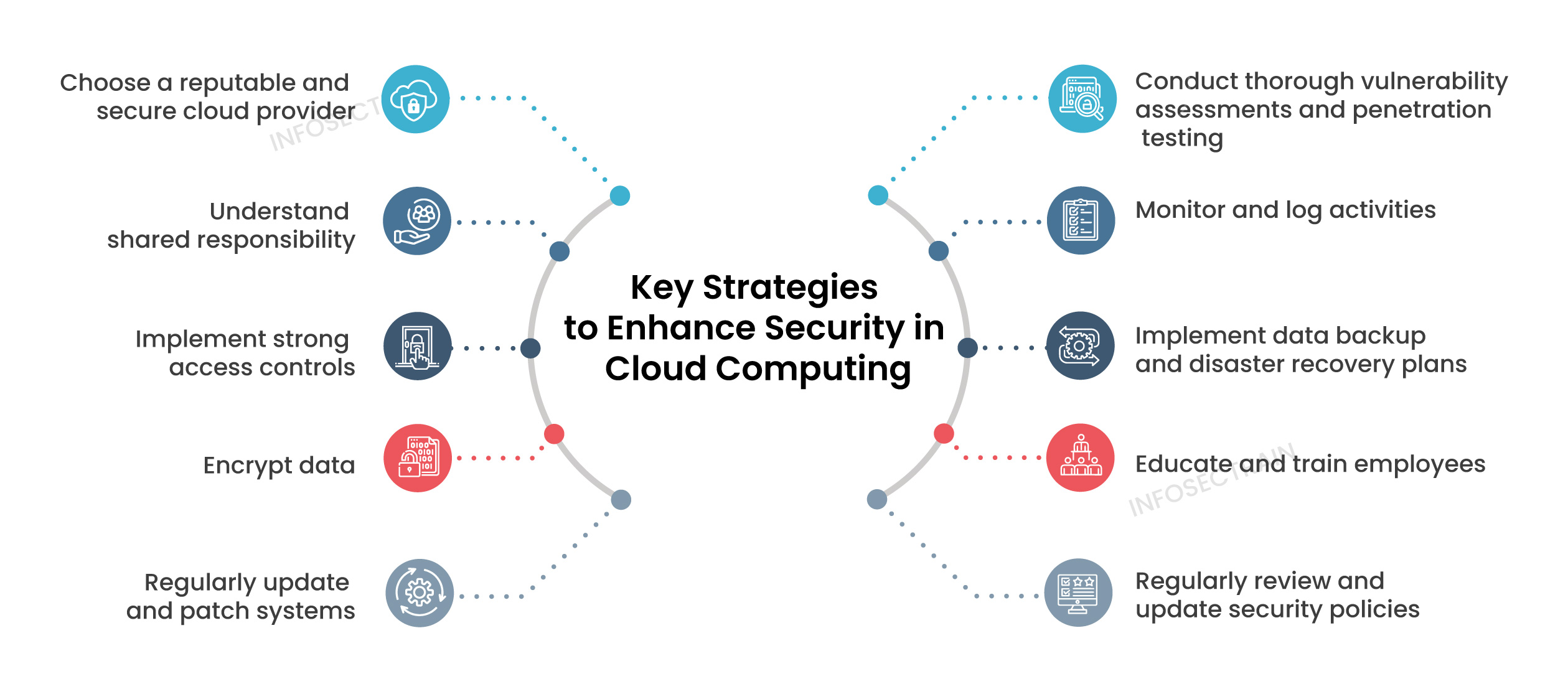
Cloud Computing Security Curriculum
- Shared Responsibility & Infrastructure Security
- Hypervisor Isolation, Multi-Tenancy, Microservices
- Identity & Access Management (IAM)
- Zero Trust Architecture, RBAC/ABAC, Federation, SSO
- Data Security & Cryptography
- Encryption at Rest/Transit/Use, KMS, Tokenization
- Governance, Compliance & Incident Response
- ISO/IEC 27017, NIST SP 800-145, SOC 2, Forensics
Architecture, Shared Responsibility, and Governance
Every standard cloud security textbook introduces the NIST SP 800-145 definition of cloud computing and the fundamental Shared Responsibility Model. This model delineates security obligations between the Cloud Service Provider (CSP) and the customer across deployment models:
- Infrastructure as a Service (IaaS): The provider secures the physical data centers, hardware, and hypervisors, while the customer maintains responsibility for operating systems, middleware, applications, and data configuration.
- Platform as a Service (PaaS): The provider abstracts the underlying OS and runtime, shifting responsibilities so the customer focuses primarily on application logic, API security, and access management.
- Software as a Service (SaaS): The provider manages the entire application stack, leaving the customer responsible only for data management, endpoint access control, and credential hygiene.
Textbooks detail hypervisor architectures (Type 1 bare-metal vs. Type 2 hosted), containerization isolation mechanisms, and multi-tenancy vulnerabilities such as VM escape and side-channel attacks.
Identity and Access Management (IAM) and Infrastructure Security
Identity serves as the primary security perimeter in cloud environments. Textbooks dedicate substantial coverage to identity federation using protocols such as Security Assertion Markup Language (SAML 2.0), OpenID Connect (OIDC), and OAuth 2.0.
Core concepts include:
- Role-Based Access Control (RBAC) and Attribute-Based Access Control (ABAC): Granular access policies tailored to cloud resource hierarchies.
- Zero Trust Architecture (ZTA): Principles guiding continuous verification, least-privilege access enforcement, and micro-segmentation as defined in NIST SP 800-207.
- Privileged Identity Management (PIM): Managing service accounts, programmatic API keys, and temporary credential generation.
Data Protection, Cryptography, and Privacy
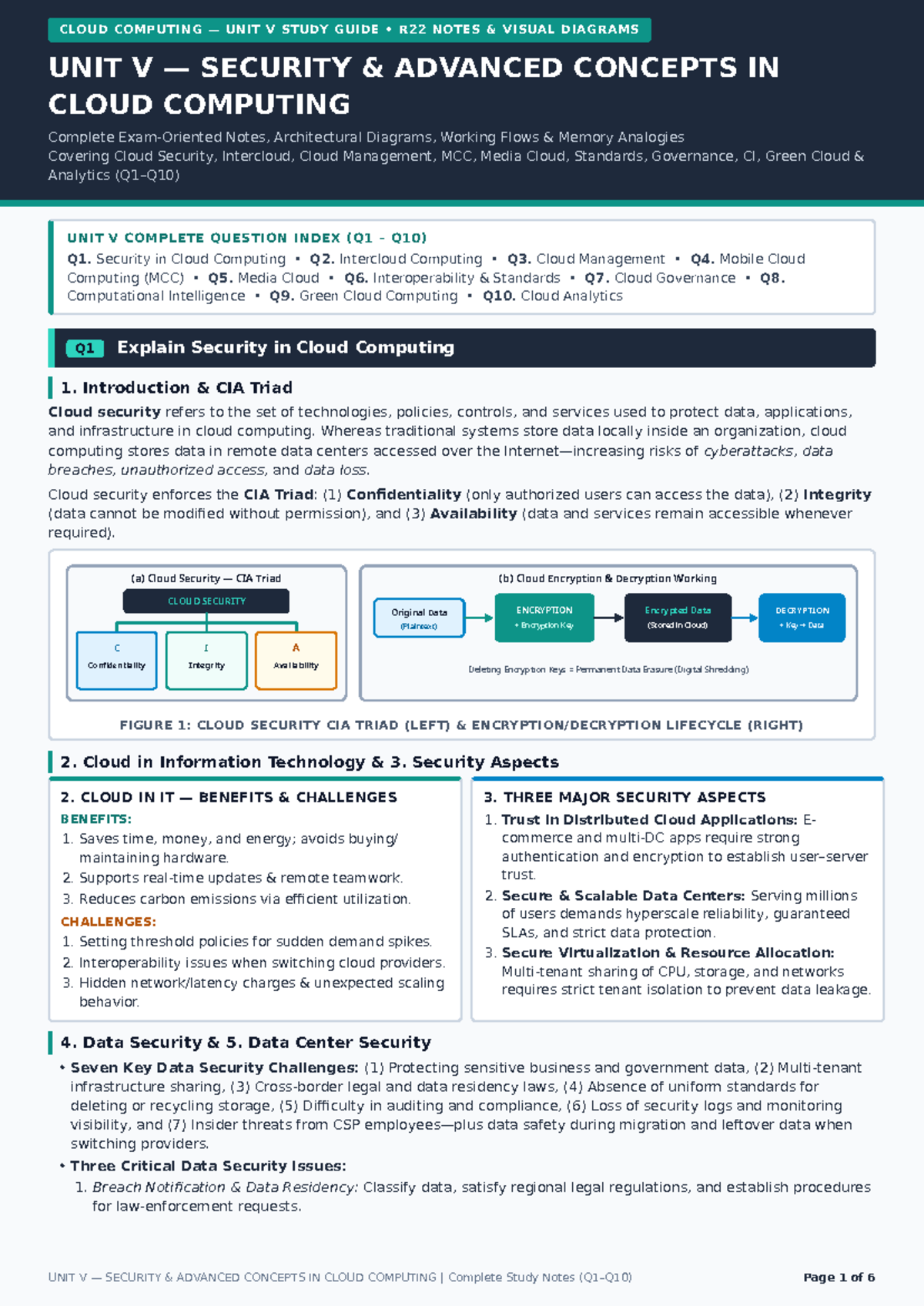
Data protection chapters address data in three states: at rest, in transit, and in use. Textbooks detail symmetric encryption (such as AES-256) for block and object storage, alongside Transport Layer Security (TLS 1.3) for data transit.
Advanced topics cover Key Management Services (KMS), hardware security modules (HSMs), envelope encryption, key rotation policies, confidential computing (enclaves like Intel SGX and AMD SEV), and privacy-preserving techniques including homomorphic encryption and tokenization.
Compliance, Auditing, and Risk Management
Cloud security textbooks equip readers to evaluate vendor assurance artifacts and adhere to global regulatory mandates. Key standards explored include:
- ISO/IEC 27017: Security controls for cloud services.
- ISO/IEC 27018: Protection of personally identifiable information (PII) in public clouds.
- SOC 2 Type II Reports: Independent auditing of security, availability, processing integrity, confidentiality, and privacy trust services criteria.
- Cloud Security Alliance (CSA) Cloud Controls Matrix (CCM): A baseline framework mapping cloud security controls to industry regulations like GDPR, HIPAA, and PCI-DSS.
Leading Academic and Professional Cloud Security Textbooks
Depending on whether your objective is academic instruction, foundational learning, or professional certification prep (such as the ISC2 Certified Cloud Security Professional), specific textbooks stand out in higher education and industry.
Cloud Computing Security: Foundations and Challenges (Edited by John R. Vacca)
Published by CRC Press, this comprehensive academic text compiles research and operational insights from industry experts. It focuses heavily on infrastructure design, hypervisor vulnerabilities, distributed denial-of-service (DDoS) mitigation, and cryptographic protocols tailored for cloud platforms.
- Target Audience: Graduate students, computer science faculty, research engineers, and senior system architects.
- Primary Strengths: Broad theoretical background, deep mathematical treatment of cryptography, and exhaustive theoretical security models.
- Best Used For: Upper-level university courses and structural reference for research projects.
Official (ISC)² Guide to the CCSP CBK
Published by Wiley and maintained as the official reference for the Certified Cloud Security Professional (CCSP) exam, this text presents a structured approach to cloud security across six critical domains.
- Target Audience: IT security professionals, auditors, systems engineers, and CCSP candidates.
- Primary Strengths: Direct alignment with enterprise security frameworks, practical risk management guidelines, and clear vendor-neutral explanations of cloud security operations.
- Best Used For: Professional certification preparation and enterprise security policy reference.
Cloud Security: A Comprehensive Guide to Secure Cloud Computing (by Ronald L. Krutz and Russell Dean Vines)
A foundational classic published by Wiley, this textbook outlines the structural mechanics of cloud risk management, network perimeter defenses, continuous monitoring, and identity management.
- Target Audience: Undergraduate computer science students, IT managers, and security analysts transitioning from on-premises to cloud paradigms.
- Primary Strengths: Accessible writing style, historical context on virtual system evolution, clear diagrams, and practical review questions.
- Best Used For: Introductory cloud security courses and early-career professional development.
Cloud Security and Privacy: An Enterprise Perspective on Risks and Compliance (by Tim Mather, Subra Kumaraswamy, and Shahed Latif)
Published by O'Reilly Media, this seminal work concentrates on enterprise risk management, privacy frameworks, and the business implications of migrating workloads to public and hybrid cloud environments.
- Target Audience: Chief Information Security Officers (CISOs), risk officers, IT directors, and enterprise architects.
- Primary Strengths: Detailed coverage of regulatory compliance, legal risk, cloud audit strategies, and operational governance.
- Best Used For: Enterprise planning, strategic security roadmap creation, and business management courses.
Comparative Analysis of Primary Cloud Security Textbooks
The table below compares standard cloud computing security textbooks across core metrics, audience levels, and pedagogical focus areas.
| Textbook Title | Primary Authors / Editors | Publisher | Target Audience | Primary Focus Area | Key Industry Alignment |
|---|---|---|---|---|---|
| Cloud Computing Security: Foundations and Challenges | John R. Vacca | CRC Press | Graduate Students & Researchers | Cryptography, Virtualization & Theoretical Models | Computer Science / Academic Research |
| Official (ISC)² Guide to the CCSP CBK | Gordon Wiseman et al. / ISC2 | Wiley | Enterprise Security Professionals | 6 CCSP Domains & Operational Cloud Governance | ISC2 CCSP Certification |
| Cloud Security: A Comprehensive Guide | Ronald L. Krutz & Russell Dean Vines | Wiley | Undergraduates & IT System Administrators | Network Security, IAM & Virtualization Basics | NIST SP 800-145 Framework |
| Cloud Security and Privacy | Tim Mather, Subra Kumaraswamy, Shahed Latif | O'Reilly Media | CISOs, Risk Officers & Managers | Enterprise Compliance, Risk Management & Privacy | ISO/IEC 27001 / CSA CCM |
| Practical Cloud Security | Chris Dotson | O'Reilly Media | Cloud Engineers & Architects | Hands-on Implementation across AWS, Azure, & GCP | Cloud Native / DevOps Environments |
Selecting the Right Textbook: Academic vs. Professional Pathways
Choosing the optimal cloud computing security textbook depends on the learning format, prior technical prerequisites, and primary professional goals.
For University Faculty and Curriculum Designers
When building an academic syllabus, select textbooks that balance conceptual foundation with practical exercises.
- Assess Prerequisites: Ensure students possess foundational knowledge in operating systems, computer networking (TCP/IP model), and basic cryptography before introducing advanced cloud isolation concepts.
- Combine Theory and Practical Labs: Pair theoretical textbooks (like Vacca's) with practical lab platforms (such as AWS Academy, Microsoft Learn, or Google Cloud Skills Boost) to allow students to construct Secure VPCs, configure IAM policies, and analyze audit logs.
- Evaluate Mapping to Standards: Select books that map chapters to the National Initiative for Cybersecurity Education (NICE) Framework or ABET accreditation criteria.
For Certification Candidates and IT Professionals
Working engineers and security analysts should align their study materials directly with certification blueprints and hands-on skill development.
- Certification Prep: Select vendor-neutral study guides like the Official (ISC)² Guide to the CCSP CBK or the CSA Certificate of Cloud Security Knowledge (CCSK) Security Guidance. These texts focus explicitly on industry terminology, governance frameworks, and audit methodologies.
- Practical Architecture: Engineers responsible for deploying controls should pair vendor-neutral textbooks with cloud-native, hands-on guides (such as Chris Dotson's Practical Cloud Security) that showcase infrastructure-as-code (IaC) templates, key rotation pipelines, and cloud-native security tools (e.g., AWS GuardDuty, Azure Defender, Google Cloud Security Command Center).
Modern Gaps in Traditional Textbooks: Cloud-Native SecOps, Containerization, and AI
While foundational cloud security textbooks cover fundamental virtualization and cryptographic principles, rapid technological shifts introduce topics that older print editions may under-represent. Readers should supplement textbook reading with current whitepapers and standards documentation in the following areas:
Container Security and Microservices Architecture
Traditional textbooks frequently focus on Virtual Machine (VM) hypervisors. However, modern cloud architectures rely heavily on containerization (Docker, Podman) and orchestration engines (Kubernetes). Supplemental study must include:
- Container Image Scanning: Detecting vulnerabilities in base images and software supply chain dependencies.
- Kubernetes Security Posture Management: RBAC within clusters, Pod Security Admission (PSA), network policies, and API server hardening.
- Service Mesh Security: Implementing Mutual TLS (mTLS) for microservices communication via proxies like Istio or Linkerd.
DevSecOps and Infrastructure as Code (IaC) Security
Modern enterprise deployment shifts security left into the Software Development Life Cycle (SDLC). Security learning must address:
- IaC Static Analysis: Scanning Terraform, CloudFormation, or Bicep templates for misconfigurations prior to deployment using tools like Checkov or tfsec.
- CI/CD Pipeline Security: Protecting deployment keys, signing build artifacts (Sigstore/Cosign), and maintaining Software Bill of Materials (SBOM) compliance.
- Cloud Security Posture Management (CSPM): Automated detection of drift and misconfigurations across runtime cloud environments.
Security for Artificial Intelligence and Machine Learning Workloads
As organizations deploy AI models in public cloud platforms, security professionals must understand specialized protection strategies:
- Securing Machine Learning Pipelines (MLOps): Safeguarding training data repositories in cloud storage buckets against unauthorized access or data poisoning.
- Model Ingress and API Security: Protecting model inference endpoints against prompt injection, model inversion, and data extraction attacks.
- Hardware and Confidential Compute Integration: Utilizing cloud confidential VMs equipped with secure enclaves to protect sensitive AI training jobs in multi-tenant hardware environments.
Frequently Asked Questions
What is the best cloud computing security textbook for beginners?
Cloud Security: A Comprehensive Guide to Secure Cloud Computing by Ronald L. Krutz and Russell Dean Vines offers an accessible entry point for beginners. It explains foundational networking, virtualization mechanics, and access management without assuming deep prior expertise in cloud operations.
How often should cloud security textbooks be updated?
Due to rapid evolution in cloud provider services, security threat vectors, and compliance standards, core concepts (such as cryptography and hypervisor design) remain stable for 5–7 years, while practical operational chapters (such as provider dashboard configs or toolings) require updates or supplemental material every 2–3 years.
Is reading a textbook sufficient to pass the CCSP exam?
No. While reading the Official (ISC)² Guide to the CCSP CBK provides essential coverage of all six exam domains, candidates should supplement textbook study with official practice tests, hands-on experience in cloud environments (AWS, Azure, GCP), and current Cloud Security Alliance (CSA) guidance documentation.
What is the difference between general cybersecurity textbooks and cloud security textbooks?
General cybersecurity textbooks focus on broad concepts applicable to on-premises IT, including physical security, endpoint protection, operating system security, and legacy network architecture. Cloud security textbooks specifically address risks unique to multi-tenancy, shared responsibility models, API-driven management, identity federation, hypervisor escape, and cloud compliance auditing.
Are vendor-specific security books better than academic textbooks?
It depends on your goal. Academic and vendor-neutral textbooks teach foundational architectural concepts, threat modeling principles, and compliance frameworks that remain constant across platforms. Vendor-specific books (focused on AWS, Azure, or GCP security) are better suited for immediate implementation, configuration management, and technical platform operations.
Recommendations and Next Actions
To master cloud computing security using academic and professional textbooks, implement the following structured pathway:
- Define Your Primary Goal: Select an academic foundational text (such as Vacca) if your objective is theoretical research, or an industry reference (such as the Official CCSP Guide) if preparing for enterprise deployment or credentialing.
- Establish Prerequisites: Ensure proficiency in fundamental network security (IPsec, TLS, firewalls) and fundamental Linux/Windows system administration before diving into advanced cloud IAM or hypervisor security.
- Cross-Reference Standards Documents: Supplement textbook readings with free, updated framework documentation, including NIST SP 800-145 (Cloud Definitions) and the Cloud Security Alliance Security Guidance.
- Integrate Hands-on Practice: Apply concepts learned in textbook chapters by building isolated lab environments on free-tier cloud platforms. Configure custom IAM roles, deploy encrypted object storage, set up continuous log auditing, and scan Infrastructure as Code templates to bridge theory and practice.
Image Gallery