The Turkish CRM Software Market: Growth Drivers, Compliance, and Solutions
The Turkish customer relationship management (CRM) software market experienced a major structural transformation throughout 2025, driven by aggressive SME digitization, stringent updates to personal data protection regulations, and hig...
The Turkish customer relationship management (CRM) software market experienced a major structural transformation throughout 2025, driven by aggressive SME digitization, stringent updates to personal data protection regulations, and high demand for omni-channel messaging platforms. Global vendors face increasing competition from localized solutions that offer native Turkish Lira billing, direct e-transformation connectivity, and out-of-the-box WhatsApp integration.
Contents
Market Landscape and Economic Drivers
The demand for CRM platforms in Türkiye expanded across both enterprise and small-to-medium enterprise (SME) sectors through 2025. This growth occurred within a complex macroeconomic environment characterized by foreign currency volatility and sustained high inflation. Organizations operating in Türkiye have increasingly viewed digital infrastructure—specifically CRM, enterprise resource planning (ERP), and marketing automation tools—as vital efficiency instruments rather than optional administrative upgrades.
For years, large Turkish enterprises in banking, telecommunications, automotive, and retail relied almost exclusively on global software suites. However, the corporate landscape broadened significantly as mid-market firms and SMEs (known locally as KOBİ'ler) prioritized localized digital transformation. SMEs represent over 99% of all registered businesses in Türkiye. Their rapid transition from basic spreadsheet tracking to automated sales pipelines created a surging demand for accessible, lower-friction SaaS platforms.
Exchange rate fluctuations heavily influenced software procurement strategies throughout 2025. Subscriptions billed in US Dollars or Euros became unpredictable operational expenses for Turkish companies earning revenue in Turkish Lira (TRY). Consequently, vendor pricing models became a decisive procurement metric. Platforms offering localized currency billing, annual price locks, or flexible local hosting models gained a distinct commercial advantage over global platforms that maintained rigid foreign currency pricing tiers.
Deployment models also shifted. While private cloud and hybrid architectures remain dominant among financial institutions and state-regulated entities due to compliance mandates, public cloud SaaS models achieved widespread adoption across B2B services, e-commerce, logistics, and manufacturing sectors.
- TURKISH CRM MARKET DRIVERS (2025)
- Macroeconomic Realities: Local Currency Billing Demand
- Regulatory Enforcement: KVKK Cross-Border Data Rules
- Tax & Billing Compliance: Mandatory GİB e-Transformation Integrations
- Customer Preference: WhatsApp & Omni-channel Communication
Global Platforms vs. Local Turkish Vendors
The vendor ecosystem in Türkiye is divided into international software enterprise suites and specialized domestic platforms. Each category serves distinct operational priorities, technical capabilities, and budgetary constraints.
International Enterprise Platforms
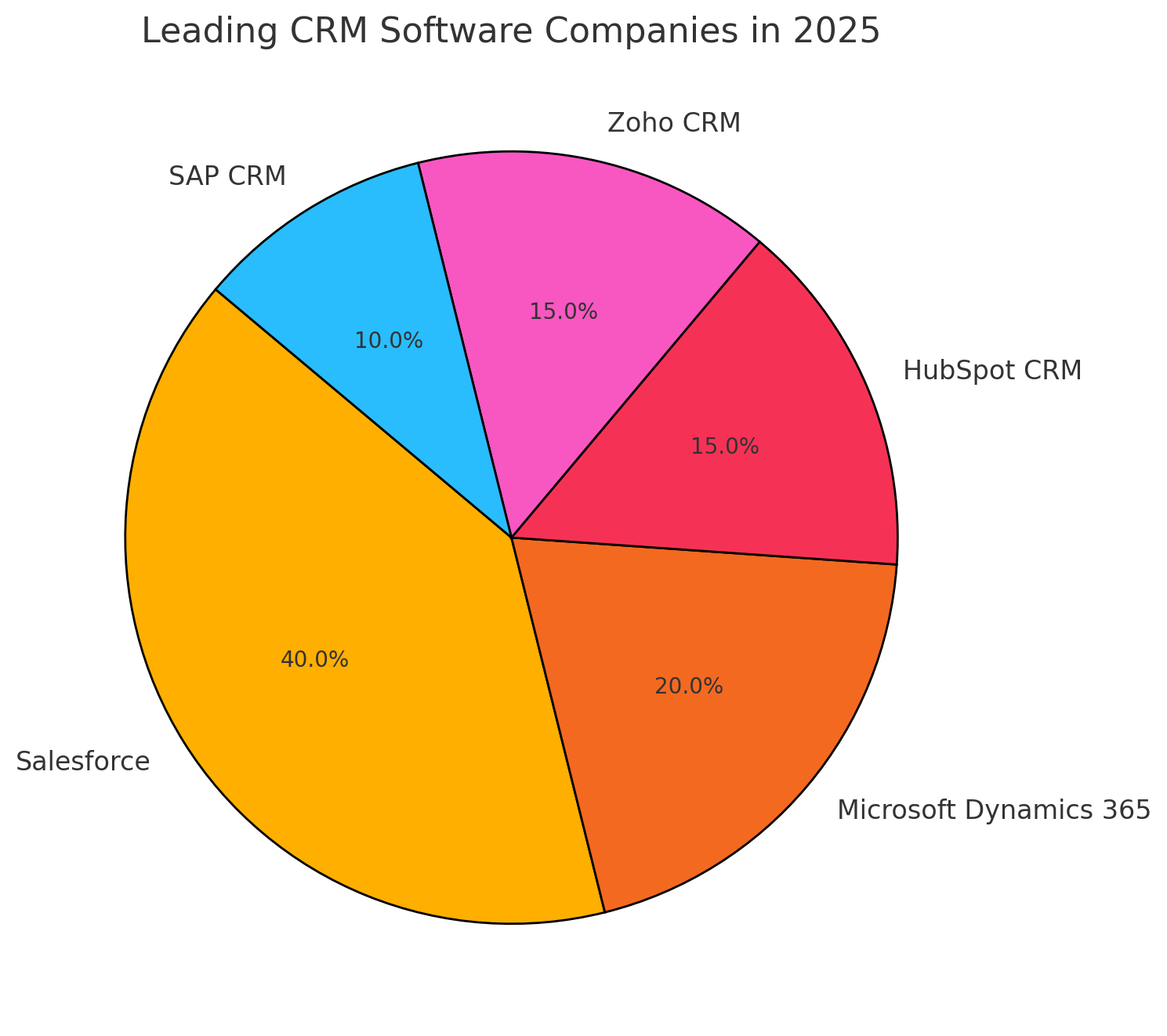
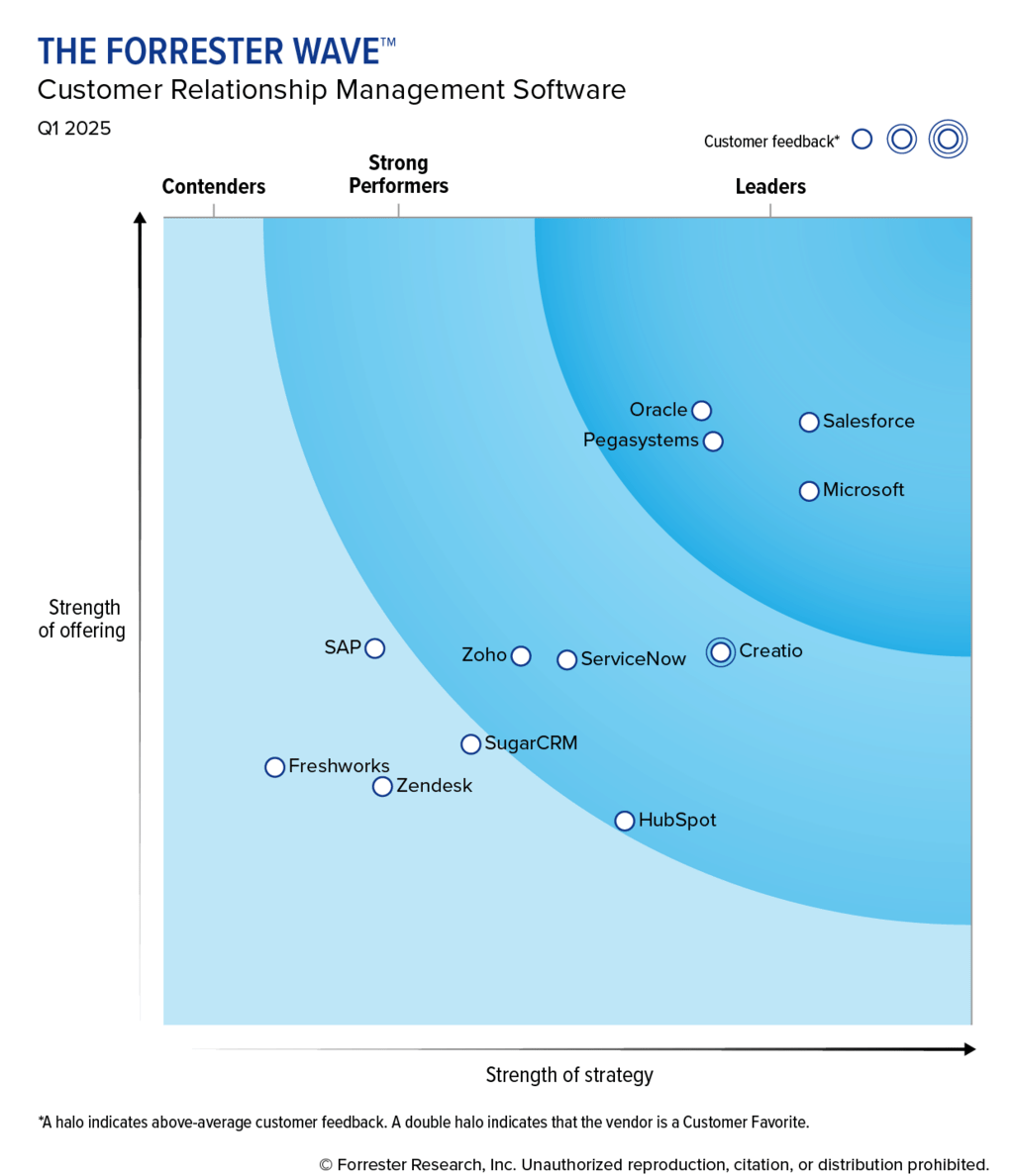
Global vendors—including Salesforce, Microsoft Dynamics 365, HubSpot, Zoho, and SAP—continue to hold a strong market position among multinational corporations, enterprise exporters, and large-scale domestic conglomerates operating in Türkiye.
- Salesforce remains the primary choice for global enterprises seeking deep customization, extensive application ecosystems, and sophisticated multi-cloud sales and service automation. However, its foreign currency pricing and complex implementation requirements often present barriers for mid-sized domestic firms.
- Microsoft Dynamics 365 benefits from deep integration with existing Microsoft enterprise agreements, local partner networks, and flexible cloud-or-hybrid deployment options supported by regional system integrators.
- HubSpot and Zoho maintain strong market share among fast-growing mid-market companies and technology startups requiring rapid onboarding, strong inbound marketing automation, and lower entry pricing.
Domestic Vendors and Localized Solutions
Domestic software providers have expanded their market share by engineering platforms specifically tailored to Turkish legal frameworks, operational practices, and communication habits. Companies such as Logo Software (Logo CRM), TeamGram, Infoset, and Nebim provide native capabilities that address localized pain points without requiring expensive third-party plugins.
Domestic solutions stand out in several operational areas:
- Native Currency Stabilization: Invoicing directly in Turkish Lira eliminates foreign exchange exposure for subscribers.
- Turnkey Revenue Administration Integration: Native bridges to government-mandated digital invoice systems avoid custom API development.
- Localized Customer Support: On-ground, native-language support teams shorten resolution times compared to global ticketing systems.
| Feature / Dimension | International Platforms (e.g., Salesforce, HubSpot) | Localized/Domestic Vendors (e.g., Logo CRM, TeamGram, Infoset) |
|---|---|---|
| Primary Pricing Model | USD / EUR per user/month | TRY per user/month or fixed local tiers |
| KVKK Compliance Alignment | Standard Contractual Clauses / Add-ons required | Built-in local data residency / KVKK templates |
| GİB e-Fatura Integration | Requires third-party middleware or custom API | Native, out-of-the-box integration |
| Primary Messaging Channel | Email / Native SMS / Add-on WhatsApp | Deep, native WhatsApp Business API integration |
| Implementation Complexity | Moderate to High (Requires specialized partner) | Low to Moderate (Faster deployment cycles) |
| Customization Depth | Unlimited enterprise scalability | Highly optimized for standard Turkish workflows |
Regulatory Mandates: KVKK Compliance and Data Sovereignty
Data protection compliance forms a core requirement of software selection in Türkiye. Law No. 6698 on the Protection of Personal Data (Kişisel Verilerin Korunması Kanunu or KVKK) governs how organizations collect, process, store, and transfer personal data.
Key regulatory changes entering force prior to 2025 significantly impacted foreign cloud deployments. Amendments to Article 9 of the KVKK established stricter standards for cross-border data transfers, aligning Turkish regulations more closely with Europe’s General Data Protection Regulation (GDPR). Under these rules, transferring customer data—such as names, contact information, purchase history, or support tickets—to servers located outside Türkiye requires one of the following legal grounds:
- Adequacy Decision: An official determination by the Personal Data Protection Board (Kişisel Verileri Koruma Kurulu) regarding the recipient country.
- Appropriate Safeguards: Legally binding mechanisms, including Standard Contractual Clauses (SCCs) approved by the Board, or Binding Corporate Rules (BCRs).
- Explicit Consent: Used under specific, limited exceptions rather than broad institutional operations.
Because many global SaaS providers host data in European or North American cloud data centers, Turkish companies using these systems must execute formally approved data transfer agreements or implement data masking and localization protocols. Failure to comply exposes data controllers to severe administrative fines from the Personal Data Protection Authority (KVKK Kurumu) and legal liabilities.
Furthermore, public sector organizations, health institutions, financial entities, and companies managing critical infrastructure are subject to even stricter data residency mandates under Presidential Circular 2019/12 on Information and Communication Security Measures. These policies often mandate that primary data repositories and backup systems remain physically hosted within local data centers located inside Turkish borders, such as facilities operated by Turkcell, Türk Telekom, Vodafone Türkiye, or Equinix Istanbul.
Organizations must also ensure their CRM platform integrates with the Data Controllers Registry Information System (VERBİS). This system requires controllers to maintain audit trails, enforce data retention and destruction policies, and log customer consent records directly within the sales workflow.
- KVKK DATA TRANSFER COMPLIANCE
- Domestic Server Hosting
- Data remains within TR
- Automatic Data Sovereignty
- Simplified VERBİS Auditing
- International SaaS Cloud
- Requires Standard Contractual Clauses (SCCs)
- Explicit Consent / Mandatory Transfer Protocols
- Risk of KVKK Administrative Penalties
- Domestic Server Hosting
Essential Integrations in the Turkish Ecosystem
A standalone CRM system cannot operate effectively in the Turkish market without connecting to local financial, regulatory, and communication networks. Procurement evaluations routinely prioritize pre-built integrations over core features.
Revenue Administration (GİB) e-Transformation Systems
Türkiye operates an advanced mandatory electronic tax administration environment directed by the Revenue Administration (Gelir İdaresi Başkanlığı or GİB). Businesses exceeding specific annual gross sales thresholds must use e-Transformation applications:
- e-Fatura (e-Invoice): Electronic invoicing between registered B2B companies.
- e-Arşiv (e-Archive Invoice): Electronic invoicing issued to non-registered businesses and end consumers.
- e-İrsaliye (e-Waybill): Digital documentation tracking physical goods in transit.
Modern CRM platforms operating in Türkiye must seamlessly sync customer profiles, commercial quotes, and deals with localized ERP systems or direct GİB Special Integrators (Özel Entegratörler) such as Logo, e-Finans, Uyumsoft, or Digital Planet. When a salesperson closes a deal in the CRM, the platform should automatically trigger draft e-Invoices and verify the customer's tax identification number (VKN) or National ID number (TCKN) against live GİB registries. This automated verification prevents billing errors and ensures regulatory compliance.
The WhatsApp Messaging Ecosystem
Unlike Western markets where email and SMS serve as the primary channels for B2B and B2C customer outreach, messaging in Türkiye is dominated by WhatsApp. It functions as the practical standard for deal negotiation, document sharing, service requests, and customer engagement.
Consequently, basic email tracking features are often insufficient for sales teams in Türkiye. High-performing CRM implementations require robust WhatsApp Business API integration. This functionality enables teams to:
- Centralize all WhatsApp conversations into unified customer records.
- Automatically assign incoming messaging chats to designated sales representatives.
- Trigger automated notifications for invoice receipts, delivery tracking, and meeting reminders.
- Track conversation histories to ensure business continuity if team members leave the company.
Virtual POS and Local Payment Gateways
E-commerce businesses and subscription services operating in Türkiye rely on integrations between CRM platforms, local banking infrastructure, and payment gateways. Standard foreign gateways like Stripe operate with limited availability or strict structural limits within Türkiye due to local licensing laws administered by the Banking Regulation and Supervision Agency (BDDK) and the Central Bank of the Republic of Türkiye (TCMB).
As a result, CRM platforms must integrate directly with local Virtual POS (Sanal POS) systems from major national banks (such as Garanti BBVA, İşbank, Yapı Kredi, and Akbank) or regional payment aggregators like Iyzico, PayTR, and Param. These integrations allow sales representatives to send payment links directly from a deal record, process recurring credit card charges in TRY, and automatically update deal statuses upon settlement.
Procurement Selection Framework for Businesses Operating in Türkiye
Selecting a CRM software solution requires evaluating technical parameters, legal considerations, and long-term operating costs. Organizations evaluating platforms should follow a structured decision framework tailored to local market conditions.
- PROCUREMENT DECISION MATRIX
- Audit Data Sovereignty & KVKK Transfer Requirements
- Calculate TCO (Accounting for FX Fluctuation Risks)
- Validate Native Integrations (GİB e-Fatura & WhatsApp API)
- Verify Local Support Availability & SLA Response Times
Step 1: Audit Data Sovereignty and Legal Risk
Identify the classification of customer data managed within the system. If your organization handles sensitive personal data, operates in regulated industries (such as healthcare, finance, or education), or serves government clients, prioritize platforms offering local data residency or clear, legally audited KVKK cross-border mechanisms.
Step 2: Model Total Cost of Ownership (TCO) Over a Three-Year Period
Calculate software license fees, implementation costs, support packages, and third-party integration charges. For global platforms priced in foreign currencies, build financial risk models that account for currency fluctuations. Ensure domestic vendors provide clear SLA terms and predictable contract renewal adjustments to prevent sudden budget variances.
Step 3: Test and Validate Local Integrations
Request live demonstrations of critical operational integrations rather than relying on technical spec sheets. Confirm how easily the CRM handles:
- Automatic VKN/TCKN validation against GİB databases.
- Conversion of approved quotes into e-Fatura/e-Arşiv drafts.
- Two-way WhatsApp message logging and template management.
- Integration with domestic ERP systems like Logo, Micro, Netsis, or Nebim.
Step 4: Evaluate Local Vendor Support Networks
Assess the availability of local implementation partners and system integrators. A less complex CRM with robust, local system-integrator support often delivers a better return on investment than a feature-dense platform lacking experienced local consultants.
Frequently Asked Questions
What is the impact of KVKK data transfer amendments on foreign CRM platforms in Turkey?
Amendments to Article 9 of the KVKK mandate that personal data transfers outside Türkiye rely on formal legal mechanisms, such as Personal Data Protection Board-approved Standard Contractual Clauses (SCCs), binding corporate rules, or explicit statutory exemptions. Foreign CRM vendors operating without local data centers must provide compliant data transfer agreements or enable local hosting options to protect users from regulatory penalties.
Why do domestic CRM solutions continue to gain market share over international vendors?
Domestic CRM vendors offer native compliance with local tax infrastructure (GİB e-Fatura), out-of-the-box WhatsApp integration, localized Turkish support, and billing in Turkish Lira. Fixed local currency pricing protects companies from foreign exchange rate volatility, making domestic platforms cost-effective for mid-market businesses and SMEs.
How does e-Fatura integration work within a CRM system?
e-Fatura integration connects the CRM directly to GİB-authorized Special Integrators via APIs. When a sales opportunity reaches completion, the CRM automatically verifies the buyer's Tax Identification Number (VKN), generates the required XML format, and routes the document for digital signing and official tax submission without requiring manual data entry across separate systems.
Can cloud-based CRM software be legally used by companies in Türkiye?
Yes, cloud-based CRM software can be used legally in Türkiye provided the platform complies with KVKK requirements. Non-regulated commercial entities may use foreign cloud platforms if appropriate data transfer safeguards—such as Standard Contractual Clauses or explicit consent protocols—are satisfied. Companies operating in highly regulated sectors, such as banking or healthcare, must use cloud solutions hosted in local, onshore data centers.
Is WhatsApp integration required for CRM success in the Turkish market?
While not legally required, WhatsApp integration is an essential operational feature for most businesses in Türkiye. Because customers, vendors, and sales professionals use WhatsApp as their primary communication channel, centralizing messaging histories within the CRM ensures auditability, prevents loss of business data, and improves customer response times.
What is the typical timeframe for deploying a CRM platform in a Turkish mid-market enterprise?
Deployment timelines vary based on integration complexity. A standard domestic cloud CRM with pre-built e-Fatura and WhatsApp integrations typically takes between 2 to 6 weeks to deploy. Enterprise-grade global platforms requiring custom data migration, complex ERP syncing, and multi-department workflow customization generally require 3 to 9 months for full implementation.
Implementation Roadmap
Organizations preparing to procure or upgrade a CRM system should proceed with the following actionable steps:
- Conduct a Compliance Audit: Review current customer data storage locations. Ensure all data processing activities conform to KVKK requirements and verify that VERBİS filings are up to date.
- Define Integration Specifications: Document all required connections to financial systems (GİB e-Fatura, local ERPs), payment processors (Sanal POS), and communication channels (WhatsApp API, local telephony).
- Execute Vendor Evaluation RFI/RFPs: Request detailed proposals from both local and international vendors. Require vendors to provide clear disclosures regarding data center locations, regulatory compliance capabilities, integration costs, and three-year total cost of ownership projections in local currency.
- Run a Controlled Pilot Project: Before committing to an enterprise-wide rollout, test the selected software within a single sales unit or customer support team. Validate real-world performance, user adoption rates, API stability, and vendor response times under actual operating conditions.
Image Gallery