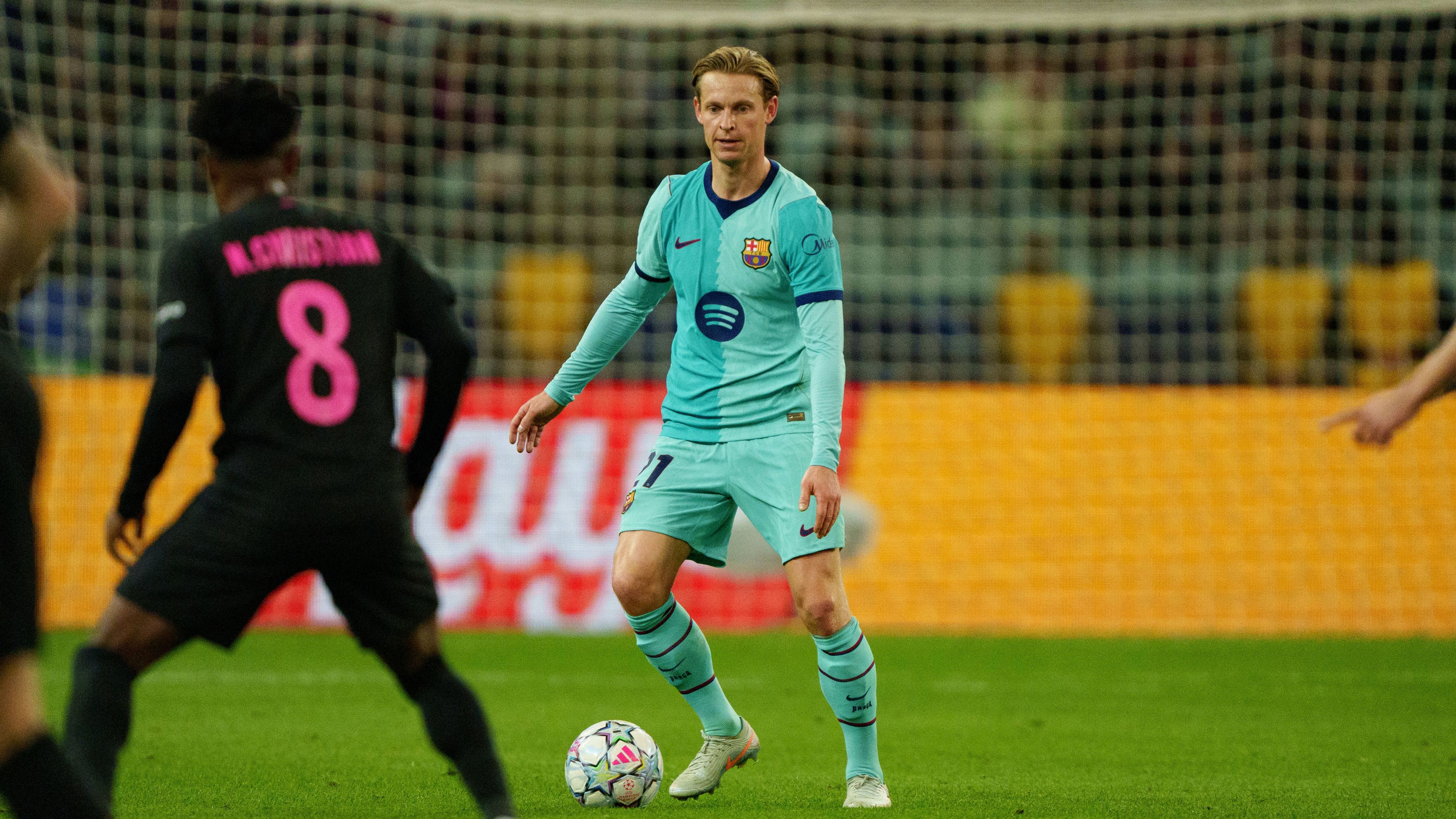
Deciphering Frenkie de Jong’s Tactical Space for the Netherlands National Team
Frenkie de Jong’s tactical space for the Netherlands national team represents the specific zones—primarily the left half-space and deep midfield channels—where he operates to bypass opposition pressing lines. By dropping between or alo...
Frenkie de Jong’s tactical space for the Netherlands national team represents the specific zones—primarily the left half-space and deep midfield channels—where he operates to bypass opposition pressing lines. By dropping between or alongside center-backs, De Jong uses progressive carries, body swerves, and line-breaking passes to dictate tempo and transition Oranje from build-up into attack.
Contents
The Anatomy of Frenkie de Jong’s Positional Profile
In modern tactical analysis, a player's "tactical space" refers not merely to a fixed position on a lineup graphic, but to the fluid spatial zones they occupy, create, and exploit throughout different phases of play. For the Netherlands national team (Oranje), Frenkie de Jong is the primary architect of first-phase ball progression. Understanding his tactical space requires examining how he manipulates opposition defensive blocks to construct forward momentum.
De Jong is neither a traditional destructive defensive midfielder nor a pure high-volume passing architect in the mold of Sergio Busquets. Instead, his profile is defined by dynamic spatial movement. He demands the ball in congested areas close to his own penalty box, using physical agility and exceptional spatial awareness to turn high-pressure defensive traps into open transition corridors for his teammates.
The Left Half-Space and Build-Up Dropping Mechanics
When the Netherlands builds out from the back, De Jong rarely remains static in the central midfield circle. Instead, his signature movement involves dropping deep into the left half-space, often positioning himself to the left of the left-sided center-back or directly between the two central defenders.
Traditional Pivot Alignment: De Jong's Dropping Movement: [CB] [CB] [CB] (De Jong) [CB] \ / \ / / [Pivot] [ LB ]
This lateral and vertical dropping pattern creates several structural advantages:
- Numerical Overloads: By dropping into the defensive line, De Jong creates a temporary three-man or four-man buildup chain, overloading two-man opposition pressing fronts.
- Passing Angle Variations: Moving into the left channel opens up wider diagonal passing lanes across the pitch, allowing him to target the right winger or overlapping full-back with sweeping passes.
- Isolation of Opposing Midfielders: When an opposing central midfielder tracks De Jong into deep defensive areas, it pulls that midfielder out of position, opening a central void behind them for the Dutch attacking midfielder or inverted winger to exploit.
Press-Resistance as a Catalyst for Spatial Creation
What sets De Jong apart in his operational space is his press-resistance. Most deep-lying playmakers rely almost entirely on quick, one-touch passing to escape pressure. De Jong combines rapid passing vision with elite progressive carrying.
When targeted by an aggressive opposition press, De Jong frequently uses subtle body feints, shoulder drops, and rapid changes of pace. By inviting contact and drawing multiple pressers toward his zone, he intentionally compresses the pitch around himself. Once the opposition commits numbers to contain him, De Jong executes a burst of acceleration or a sharp turn into open space. This action instantly renders the opposition's defensive block asymmetrical and creates expansive passing avenues forward.
Structural Variations: How Netherlands Managers Utilize De Jong’s Space
The deployment of De Jong’s tactical space has evolved depending on the managerial philosophy directing the national team. Whether operating under a 4-3-3 structure or a three-at-the-back system, coaches must adjust the team's balance to maximize De Jong’s strengths while protecting the space he vacates.
4-3-3 System Dynamics 3-5-2 / 3-4-1-2 System Dynamics [ LW ] [ ST ] [ RW ] [ ST ] [ ST ] [ AM ] [ AM ] (De Jong) [ Anchor Pivot ] [ LWB ] (De Jong) [ Mid ] [ RWB ] [ LB ] [ CB ] [ CB ] [ RB ] [ LCB ] [ CB ] [ RCB ]
The 4-3-3 Double-Pivot vs. Single-Pivot Dynamics
In the traditional Dutch 4-3-3 framework, placing De Jong as a solitary single pivot often exposes his defensive limitations. Because De Jong's natural instinct is to roam laterally and drive forward with the ball, playing him alone at the base of midfield leaves the central zone uncovered during defensive transitions.
Consequently, national team managers favor a double-pivot alignment or an asymmetrical midfield trio. In a 4-2-3-1 or 4-3-3 double-pivot setup, De Jong functions as the "roaming distributor," paired alongside a disciplined, positionally anchored midfielder. This secondary pivot partner takes on primary responsibility for central rest-defense, allowing De Jong the freedom to drop into the left channel or carry the ball into the final third without leaving the center of the pitch completely vulnerable to counter-attacks.
The Three-at-the-Back System
During tournament setups where the Netherlands has utilized a 3-5-2 or 3-4-1-2 formation—such as under Louis van Gaal—De Jong's tactical space shifts subtly. With three central defenders already occupying the backline, De Jong does not need to drop as deep between the center-backs to create numerical overloads.
Instead, his space expands into the mid-block half-spaces. The presence of wing-backs providing maximum width allows De Jong to operate in the left-central zone with clear passing options both inside to an attacking midfielder and outside to the wide wing-back. In this setup, his primary task moves from initiating basic build-up to carrying out middle-third progression, driving directly at the opponent's mid-block line.
Spatial Footprint and System Requirements Across Formations
To visualize how Frenkie de Jong’s role changes depending on the structural system deployed by the Netherlands national team, the following matrix outlines his spatial focus, primary duties, and structural requirements across major tactical setups:
| Tactical System | Primary Operational Zone | Build-Up Mechanism | Defensive Rest-Defense Responsibility | Partner Requirement |
|---|---|---|---|---|
| Single-Pivot 4-3-3 | Deep Central Midfield | Short distribution, receiving directly from center-backs | High responsibility; vulnerable when roaming | Requires two high-work-rate box-to-box central midfielders |
| Double-Pivot 4-2-3-1 / 4-3-3 | Left Half-Space & Deep Midfield Channel | Progressive carrying, creating 3-man build-up overloads | Medium responsibility; shared with holding partner | Defensive anchor with high positional discipline (e.g., holding specialist) |
| 3-5-2 / 3-4-1-2 System | Central & Left Middle-Third | Half-space progression, linking wing-backs and attackers | Low to Medium responsibility; protected by 3 center-backs | Dynamic box-to-box midfielder capable of vertical runs |
| Asymmetrical 4-3-3 (Inverted LB) | Central Channel & Advanced Pocket | Third-man combinations, short-passing triangles | Medium responsibility; supported by inverted full-back | Physical destroyer or tactical box-to-box link player |
The Tactical Balance: Complementary Midfield Partnerships
Because De Jong's style involves moving out of central zones to find the ball, his tactical success for the Netherlands relies on the complementary profile of his midfield partner. Without the right balance, the Dutch midfield risks becoming structurally unstable.
The Holding Anchor Role
The most effective midfield pairings for De Jong feature a defensive-minded holding partner. Players who maintain disciplined positional awareness—such as Jerdy Schouten, Mats Wieffer, or historically Marten de Roon—provide the necessary structural counterweight to De Jong's roaming tendencies.
When De Jong drops into the left half-space to receive the ball from the central defenders:
- The holding anchor steps slightly into the central pivot zone to offer a simple reset passing option.
- The holding partner holds a defensive position in front of the center-backs, anticipating dynamic transitions if possession is lost.
- This structural balance ensures that when De Jong completes a progressive carry into the opponent's half, the Dutch team retains a strong "rest-defense" block behind the ball to stop counter-attacks immediately.
The Dynamic Box-to-Box Facilitator
Alternatively, when paired with a more dynamic, vertically oriented midfielder like Tijjani Reijnders or Ryan Gravenberch, the spatial dynamics shift. In this configuration, De Jong remains the deeper playmaker, while his partner makes forward runs into the half-spaces or penalty box.
This pairing demands higher tactical intelligence from De Jong, as he must select his moments to carry the ball forward more conservatively to prevent the team from splitting into two disconnected units. When executed well, this setup offers Oranje tremendous fluidity, making it difficult for opposition mid-blocks to mark both midfielders effectively.
Tactical Vulnerabilities: Spatial Deficits in Transition
While De Jong's ability to manipulate space offers immense offensive progression, it introduces specific tactical vulnerabilities that opponents frequently attempt to exploit.
Vulnerability: Central Void in Rest-Defense [ Opponent Wing ] [ Opponent Wing ] ( VOID ) [ De Jong Carries Forward ] ---> [ Left CB ] [ Right CB ]
The Rest-Defense Gap Behind De Jong’s Carries
The main risk of De Jong’s game stems directly from his greatest asset: his progressive dribbling. When De Jong picks up the ball deep in his own half and drives forward past two lines of pressure, he leaves the central space behind him empty.
If the opposition forces a turnover during De Jong’s dribble, or if his forward pass is intercepted early in the transition:
- The Netherlands’ central midfield area can be entirely devoid of defensive coverage.
- Opposition counter-attacks can directly target the space between the Dutch center-backs and the advancing wing-backs.
- The remaining center-backs are forced to step out of their defensive line to challenge ball-carriers in open space, creating structural gaps in the penalty area.
To mitigate this risk, Dutch national team tactics often require the far-side full-back (typically the right-back) to invert into midfield during build-up phases, offering secondary cover alongside the other central midfielder.
Strategies Against Low-Block Teams
Another tactical challenge arises when the Netherlands encounters teams operating in a deep, passive low block. Against opponents that refuse to press high, the deep spaces De Jong prefers to drop into become overcrowded with low-value possession.
When opposition teams fall back into a compact 5-4-1 or 4-5-1 formation:
- De Jong's ability to break high-pressing lines becomes less impactful because there is no press to break.
- If he continues to drop deep between the center-backs, he removes a player from the attacking third, making the Dutch attack predictable and slow.
- In these scenarios, De Jong must adapt his spatial usage by positioning himself higher between the lines or quickening his release of the ball to wider overloads.
Tactical Applications for Coaches and Analysts
Analyzing Frenkie de Jong’s spatial behavior provides practical frameworks for football coaches, performance analysts, and tactical enthusiasts looking to design build-up structures against aggressive pressing teams.
1. Creating Asymmetry in Build-Up Shapes
Rather than forcing central midfielders to remain strictly symmetrical, coaches can design asymmetrical build-up patterns. Allowing a press-resistant midfielder to drop specifically into the left or right half-space distorts traditional 4-4-2 or 4-3-3 pressing structures, forcing opposition wingers into difficult marking decisions.
2. Utilizing Dribbling as a Line-Breaking Tool
Tactical instruction often stresses passing over dribbling in deep defensive phases to avoid dangerous turnovers. However, De Jong's playstyle shows that progressive carrying by a deep playmaker can be far more disruptive to a high-press than passing alone. It forces defenders to abandon their zonal assignments to tackle the ball-carrier, creating open passing lanes behind the defensive line.
3. Engineering Complementary Midfield Roles
Building a balanced midfield requires pairing complementary skill sets rather than stacking talent. A press-resistant, roaming distributor like De Jong requires a partner whose primary instinct is positional stability, spatial coverage, and defensive anticipation.
Frequently Asked Questions
What does "tactical space" mean in relation to Frenkie de Jong?
Tactical space refers to the specific areas of the pitch—primarily the deep left half-space and central build-up zones—that Frenkie de Jong occupies, manipulates, and creates. By moving into these spaces, he draws defenders out of position, escapes pressing traps, and opens up channels for his teammates to progress the ball.
Why does Frenkie de Jong drop into the left half-space so often for the Netherlands?
De Jong drops into the left half-space to pick up the ball face-forward with a full view of the pitch. Operating in this channel allows him to form a temporary back-three build-up structure, creating numerical overloads against opposition forwards and opening up diagonal passing lanes across the field.
Is Frenkie de Jong a central defensive midfielder (number 6) or a box-to-box midfielder (number 8)?
De Jong is best categorized as a hybrid deep-lying playmaker or "progressor." He operates deep like a traditional number 6 during the initial build-up phase, but drives forward into middle-third spaces using progressive dribbling like a number 8.
What is the biggest tactical risk when Frenkie de Jong plays for Oranje?
The primary risk is the defensive gap left behind when he carries the ball forward out of deep positions. If possession is lost mid-dribble, the space in front of the Dutch central defenders can be exposed, making the team vulnerable to quick central counter-attacks unless a disciplined holding partner covers for him.
How does De Jong’s role for the Netherlands differ from his club role at Barcelona?
While both setups rely on his press-resistance and progressive passing, his role for the Netherlands often gives him greater spatial freedom to drop into the backline and direct first-phase build-up. At Barcelona, depending on the system and manager, his spatial movement is sometimes restricted to fixed double-pivot or interior zones to fit specific positional play (Juego de Posición) constraints.
Strategic Summary and Next Actions
Frenkie de Jong’s tactical space is the operational engine of the Netherlands national team's build-up play. By combining deep lateral dropping movements into the left half-space with elite press-resistant carrying, he single-handedly alters how opponents can press the Dutch backline. However, maximizing his impact requires structural balance: an anchored midfield partner, smart rest-defense coverage from the full-backs, and spatial adaptation when facing deep low blocks.
Recommended Actions for Analysts and Coaches
- Video Analysis Focus: Study clips of the Netherlands' first-phase build-up specifically watching De Jong's head movement before receiving the ball in the left half-space to understand his spatial scanning techniques.
- Tactical Blueprinting: When implementing a similar deep-roaming playmaker in your team, establish strict rest-defense rules for your remaining midfielders and full-backs to secure the central corridor against counter-attacks.
- Opposition Counter-Strategy: To restrict De Jong's spatial effectiveness, deploy a compact mid-block that denies access to his preferred left half-space while assigning a disciplined cover-shadow midfielder to cut off his forward carrying lanes rather than diving in to tackle him.
Image Gallery