Top Country with Gender Equality: Leading Nations, Policies, and Global Rankings
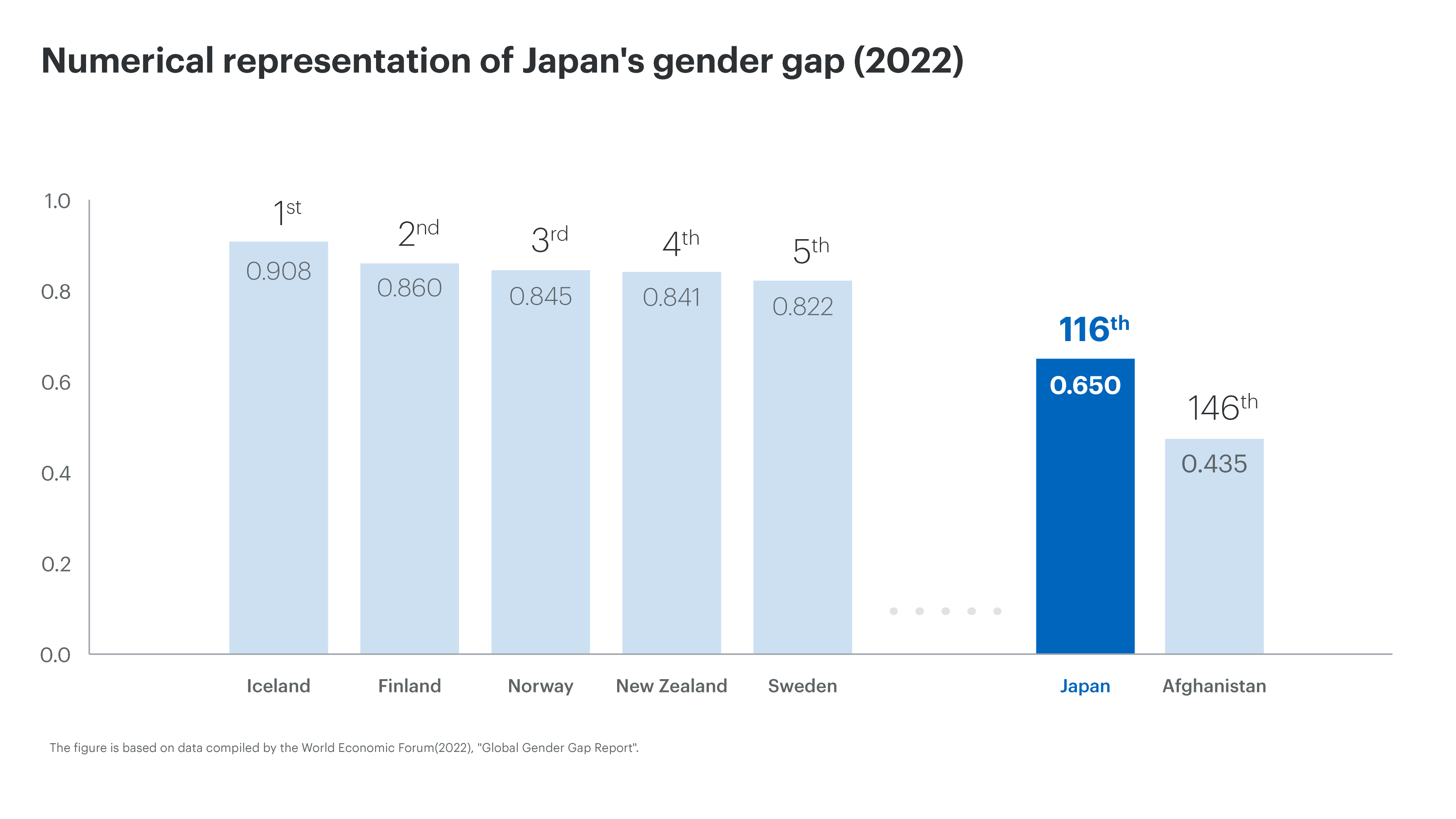
Iceland holds the title of the top country with gender equality, consistently ranking first in the World Economic Forum's Global Gender Gap Index. Iceland has closed over 90% of its overall gender gap through progressive legal framewor...
Iceland holds the title of the top country with gender equality, consistently ranking first in the World Economic Forum's Global Gender Gap Index. Iceland has closed over 90% of its overall gender gap through progressive legal frameworks, mandatory equal pay certification, shared parental leave policies, and strong female political representation.
Contents
Benchmarking Global Gender Equality: How Nations Are Measured
Evaluating which country achieves the highest level of gender equality requires standardized, multi-dimensional international frameworks. International organizations measure gender parity by comparing outcomes between women and men across economic, political, educational, and health domains rather than assessing absolute levels of national wealth or development.
Global Gender Equality Measurement Frameworks:
- World Economic Forum (WEF) Global Gender Gap Index
- Economic Participation & Opp.
- Educational Attainment
- Health & Survival
- Political Empowerment
- UNDP Gender Inequality Index (GII)
- Reproductive Health
- Empowerment (Seats & Educ.)
- Labor Market Participation
The World Economic Forum Global Gender Gap Index
The World Economic Forum Global Gender Gap Report is one of the most widely cited benchmarks. Established in 2006, the index tracks national progress toward parity across four core sub-indexes:
- Economic Participation and Opportunity: Measures the gender gap in labor force participation rates, wage equality for similar work, estimated earned income, and the ratio of women in senior managerial, executive, and professional roles.
- Educational Attainment: Tracks literacy rates and enrollment ratios across primary, secondary, and tertiary education levels.
- Health and Survival: Evaluates the sex ratio at birth (to detect gender-biased sex selection) and healthy life expectancy differences between women and men.
- Political Empowerment: Assesses the ratio of women to men in ministerial posts, parliamentary seats, and executive leadership roles over a multi-decade timeframe.
The WEF index yields a score between 0 (complete inequality) and 1 (complete parity or 100% closed gap).
UNDP Gender Inequality Index (GII)
The United Nations Development Programme tracks gender disparities through the UNDP Gender Inequality Index. Unlike the WEF index, a lower GII score signifies lower inequality. The GII focuses on three critical dimensions:
- Reproductive Health: Measured by maternal mortality ratios and adolescent birth rates.
- Empowerment: Measured by the proportion of parliamentary seats held by women and attainment levels in secondary and higher education across genders.
- Labor Market Participation: Evaluated by labor force participation rates of female and male populations aged 15 and older.
Iceland: The World Leader in Gender Parity
Iceland has maintained its position as the world's most gender-equal nation for over a decade and a half. The nation's success is not accidental; it stems from sustained social activism, cross-party political commitment, and legislative mechanisms designed to enforce structural fairness.
Iceland's Key Policy Pillars:
- Equal Pay Standard (ÍST 85:2012)
- Shifts burden of proof onto employers to prove gender-neutral pay.
- Non-Transferable Leave (Use-It-or-Lose-It)
- Encourages equal caregiving responsibilities for fathers.
- Subsidized Childcare (Pre-school Education)
- Bridges gap after parental leave ends; boosts work continuity.
Equal Pay Certification (ÍST 85)
In 2018, Iceland became the first country in the world to make equal pay enforcement legally binding through the Equal Pay Standard (ÍST 85:2012) framework. Under this law, company and government agencies employing 25 or more people must undergo an independent audit to prove they pay women and men equally for work of equal value.
- Reversal of Burden of Proof: Rather than requiring employees to file individual lawsuits or prove discrimination, employers must systematically analyze job roles, evaluate job complexity, and demonstrate pay equity to earn mandatory state certification.
- Recertification Requirements: Companies must undergo audit recertification every three years to retain their official compliance status.
Non-Transferable Parental Leave
Iceland's parental leave system actively engages fathers in child-rearing. Under current Icelandic law, parents receive 12 months of total paid parental leave following the birth or adoption of a child:
- 6 Months for Each Parent: Each parent receives six months of non-transferable leave ("use-it-or-lose-it").
- Transferable Portion: A limited portion (up to six weeks) may be transferred between parents under specific provisions, but the structure ensures fathers take substantial continuous leave.
- Impact on Labor Continuity: By standardizing male caregiving leave, the law significantly reduces the "motherhood penalty"—the structural hiring and promotion bias women face due to anticipated career disruptions.
Political and Corporate Representation
Iceland demonstrated early commitments to gender representation in governance. In 1980, Vigdís Finnbogadóttir became the world's first democratically elected female president. Today, women hold substantial proportions of seats in the Althingi (Iceland's parliament) and executive cabinet posts. Furthermore, national legislation mandates that publicly traded companies and private firms with more than 50 employees maintain at least 40% representation of each gender on corporate boards of directors.
Comparative Analysis: Top Nations for Gender Equality
While Iceland leads global rankings, several other countries maintain high levels of gender parity. Nordic nations dominate the top ranks, complemented by strong performances from nations in Europe, Latin America, Sub-Saharan Africa, and East Asia-Pacific.
| Country | WEF Parity Score | Equal Pay Mechanism | Parental Leave Model | Boardroom Quotas |
|---|---|---|---|---|
| Iceland | >0.90 (90%+ closed) | Mandatory Audit Standard (ÍST 85) | 12 months (Individual non-transferable shares) | Mandatory 40% gender quota |
| Finland | ~0.86 - 0.88 | Equal Pay Act & Salary Audits | Gender-neutral allowance (160 quota days per parent) | Voluntary codes / Public entity compliance |
| Norway | ~0.86 - 0.88 | Gender Equality Act reporting | Father's Quota (Fedrekvote) non-transferable | Mandatory 40% quota for public limited firms |
| New Zealand | ~0.84 - 0.86 | Equal Pay Amendment Act | Paid Primary Carer Leave + Unpaid Partner Leave | Target quotas for public sector boards |
| Sweden | ~0.82 - 0.85 | Annual Pay Equity Assessment | 480 days total (90 days reserved specifically per parent) | Corporate governance disclosure rules |
Finland
Finland features high levels of educational equity and female political participation. In 1906, Finland (then an autonomous Grand Duchy) became the first territory in Europe to grant women full political rights, including the right to vote and stand for election. Finland's parental leave model relies on fully gender-neutral allowances, giving each parent an equal quota of paid days to balance domestic care duties.
Norway
Norway pioneered corporate board gender quotas. In 2003, Norway introduced legislation requiring public limited company (ASA) boards to comprise at least 40% women, a model subsequently replicated across major global jurisdictions. Norway also established the Fedrekvote (father's quota) in 1993, mandating dedicated parental leave earmarked exclusively for fathers.
New Zealand
New Zealand ranks as a leading country outside Europe for gender parity. New Zealand was the first self-governing nation to grant women the right to vote in parliamentary elections in 1893. The nation enforces strict provisions under its Equal Pay Amendment Act and maintains high female representation across government branches, judicial benches, and executive leadership positions.
Sweden
Sweden integrates gender budgeting into national policy, evaluating federal spending proposals for differential impacts on men and women. Sweden provides 480 days of paid parental leave per child, with 90 days earmarked individually for each parent. Sweden's early childhood education system guarantees affordable, high-quality public care, enabling rapid re-entry into the workforce after parental leave.
Structural Pillars Driving High Gender Equality
Countries that top international gender parity benchmarks share systemic policy interventions rather than relying solely on organic social changes.
Core Structural Policy Pillars:
- Early Childhood Education
- Universal municipal childcare capped as percentage of net household income.
- Statutory Board Quotas
- Mandatory corporate thresholds break entrenched executive networking barriers.
- Reproductive Autonomy
- Guaranteed access to full healthcare, maternity care, and family planning services.
1. Universal Early Childhood Care and Education
A primary bottleneck to female labor participation is the cost and availability of early childhood care. Top-ranking gender parity nations treat early childhood education as core infrastructure.
- Capped Household Costs: In Sweden and Norway, public childcare fees are capped at a low maximum percentage of family income.
- Workforce Retention: Guaranteed enrollment for children starting around age one minimizes career interruptions, preserving long-term wage growth and pension contribution trajectories for mothers.
2. Mandatory Corporate and Political Quotas
Relying on voluntary initiatives often results in slow progress toward executive parity. Legislative quotas enforce gender balance across corporate and political spheres:
- Boardroom Compliance: Penalties for non-compliance with statutory quotas range from administrative fines to corporate dissolution (e.g., in Norway for non-compliant public limited firms).
- Electoral List Legislation: Countries like Rwanda, France, and Spain implement electoral candidate quota laws, requiring political parties to present gender-balanced candidate slates.
3. Reproductive Health and Autonomy
Gender equality relies on reproductive healthcare access. Nations with high scores on the UNDP Gender Inequality Index guarantee legal, safe, and accessible reproductive healthcare services. Free or heavily subsidized access to contraception, comprehensive sex education, and maternal healthcare drastically lowers maternal mortality rates and adolescent birth rates, enabling women to complete higher education and enter full-time employment.
Persistent Challenges in Top-Performing Nations
Even top-ranked nations like Iceland, Finland, and Norway have not completely eliminated structural gender imbalances. Understanding these remaining friction points is vital for modern policy design.
The Gender Earnings Gap vs. Unadjusted Wage Gaps
While countries like Iceland have substantially closed the adjusted gender pay gap (paying different rates for the exact same job role), an unadjusted gender earnings gap persists across overall economies. This disparity stems primarily from structural factors:
- Workplace Segregation: Labor markets in high-parity nations often remain divided along gender lines. Women are overrepresented in lower-paying public sectors (education, social care, healthcare), while men predominate in higher-paying private sector technical and engineering industries—a dynamic sometimes referred to as the "Nordic Gender Equality Paradox."
- Part-Time Employment Dynamics: Women in developed nations are statistically more likely to transition to part-time employment to balance family care, directly impacting long-term lifetime earnings, promotion velocity, and retirement pensions.
Executive Leadership and Entrepreneurship Gaps
While political representation and board seat quotas show balanced metrics in leading countries, fewer women reach top C-suite roles such as Chief Executive Officer or Managing Director. Similarly, female founders continue to receive a disproportionately small fraction of total venture capital funding compared to male-led startups worldwide, reflecting persistent barriers in capital allocation and high-growth business equity.
Frequently Asked Questions
Which country has the highest gender equality score in the world?
Iceland consistently holds the highest gender equality score globally, ranking first in the World Economic Forum's Global Gender Gap Index for over 15 consecutive years. It has closed over 90% of its overall gender gap.
What is the Equal Pay Standard used in Iceland?
Iceland's Equal Pay Standard (ÍST 85:2012) is a mandatory certification process requiring companies and public institutions with 25 or more employees to prove through independent audits that their compensation systems pay equal money for work of equal value, regardless of gender.
How does shared parental leave contribute to gender parity?
Non-transferable parental leave ("use-it-or-lose-it" leave for fathers) ensures that both parents share domestic caregiving obligations. This reduces employer bias against hiring or promoting women of childbearing age, as both male and female employees are expected to take parental leave.
Why do some countries with high political equality still have wage gaps?
Political equality measures seats in parliament and ministerial posts, whereas wage gaps are driven by economic factors like occupational segregation (women entering lower-paying fields like healthcare and education), part-time employment rates, and career breaks for caregiving.
How do corporate board quotas work in top countries like Norway?
Corporate board quotas require publicly traded or large private companies to maintain a minimum percentage (typically 40%) of each gender on their board of directors. Firms that fail to comply face regulatory sanctions, fines, or loss of corporate registration status.
What is the difference between the WEF Global Gender Gap Index and the UNDP Gender Inequality Index?
The WEF Global Gender Gap Index measures how far a country has closed its gender parity gap across four areas (Economy, Education, Health, Politics), where 1.0 represents full parity. The UNDP Gender Inequality Index (GII) measures loss of human development due to gender inequality across Health, Empowerment, and Labor, where a lower score indicates lower inequality.
Actionable Takeaways for Policy and Organizational Benchmarking
Organizations and policymakers seeking to implement gender parity models modeled after top-performing countries can take concrete structural steps:
- Implement Job Evaluation Audits: Adopt job-evaluation frameworks similar to Iceland's ÍST 85 standard. Systematically categorize roles by required skill, responsibility, and physical effort to establish objective compensation bands detached from subjective negotiation.
- Design Non-Transferable Care Policies: Structurally alter parental leave policies within organizations to include reserved leave allotments for secondary caregivers, incentivizing equal domestic responsibilities.
- Establish Transparent Promotion Pathways: Set measurable, data-driven targets for female representation across senior management and executive ranks, supported by transparent internal advancement benchmarks.
- Subsidize Workforce Continuity Infrastructure: Advocate for or directly invest in subsidized childcare stipends and flexible working arrangements that enable working parents to maintain full-time employment trajectories.
Image Gallery