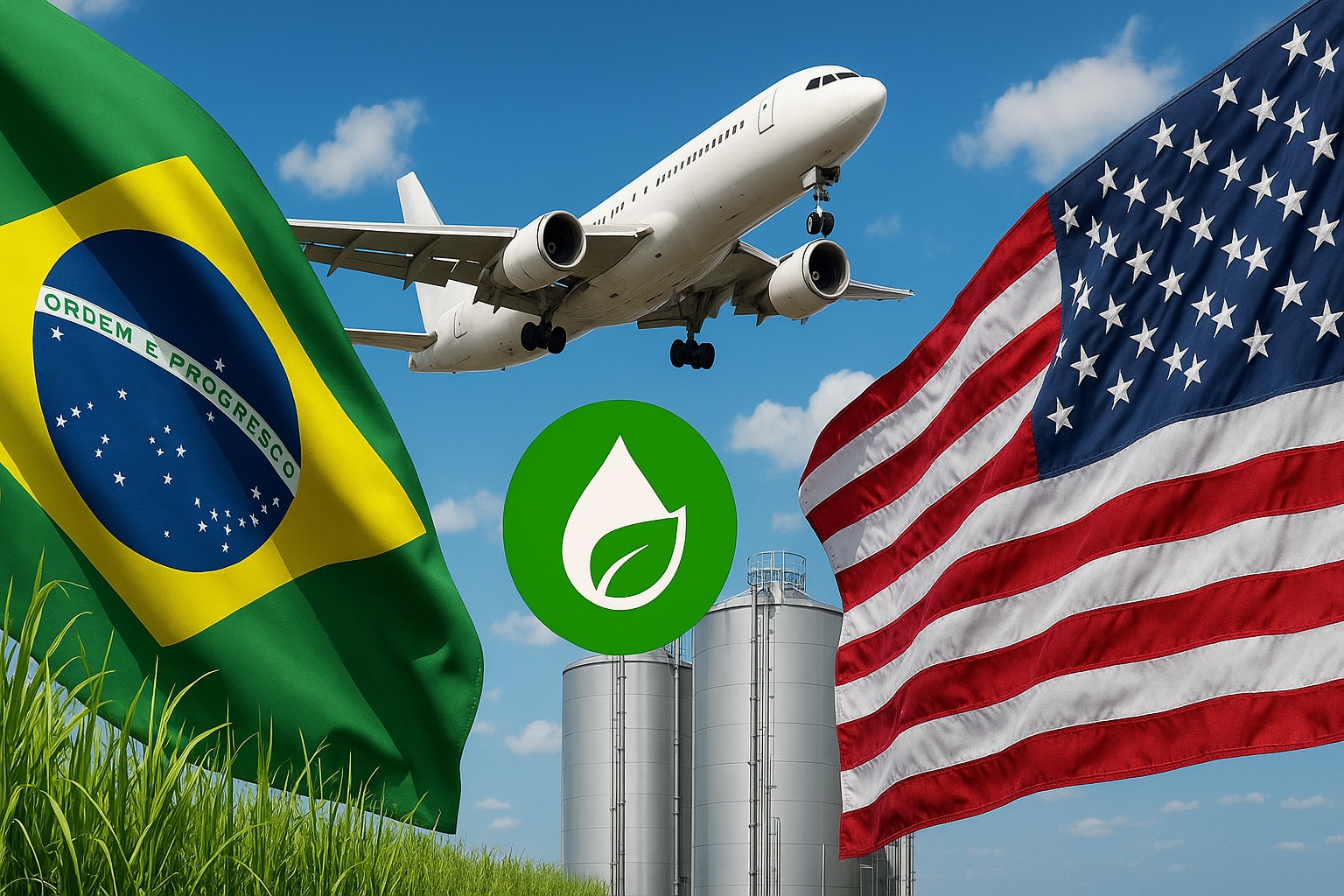
Biofuel in the United States: Policy Changes and the Continuing Debate
As of 2026, biofuels remain a central yet contentious pillar of the United States’ strategy for energy independence and decarbonization. The landscape is currently defined by a shift away from traditional corn-based ethanol toward "dro...
As of 2026, biofuels remain a central yet contentious pillar of the United States’ strategy for energy independence and decarbonization. The landscape is currently defined by a shift away from traditional corn-based ethanol toward "drop-in" fuels like renewable diesel and sustainable aviation fuel (SAF), supported by the Renewable Fuel Standard (RFS) and federal tax incentives. However, the debate persists over whether biofuels truly reduce lifecycle carbon emissions or if they inadvertently drive up food prices and accelerate habitat loss through indirect land-use changes.
Contents
The Evolution of the U.S. Biofuel Landscape
The American biofuel industry was built on the foundation of the Renewable Fuel Standard (RFS), a program created under the Energy Policy Act of 2005 and significantly expanded in 2007. Originally, the goal was simple: reduce reliance on imported oil while supporting the domestic agricultural economy. For nearly two decades, corn-starch ethanol has been the dominant product, typically blended into gasoline at a 10% ratio (E10).
By 2026, the industry has matured beyond simple blending. We are now seeing the "Second Generation" of biofuels move into the mainstream. These include cellulosic ethanol, made from wood chips or switchgrass, and renewable diesel, which is chemically identical to petroleum diesel but derived from fats and oils. Unlike biodiesel, which must be blended, renewable diesel can be used as a standalone fuel in existing engines, making it a "drop-in" solution that has seen massive investment from traditional oil refiners.
Key Policy Changes and the "Set" Rule
A significant turning point occurred after 2022, when the statutory volumes originally outlined in the 2007 legislation expired. This gave the Environmental Protection Agency (EPA) broader authority to "set" annual volume obligations based on market capacity, environmental impact, and energy security.
The 2024–2026 Volume Obligations
The EPA’s recent multi-year "set" rules have prioritized the growth of advanced biofuels. This transition reflects a policy shift toward fuels with lower Carbon Intensity (CI) scores. While corn ethanol mandates have largely plateaued, the mandates for biomass-based diesel and "other advanced" biofuels have seen steady increases. This has forced traditional petroleum refiners to either invest in renewable production or purchase Renewable Identification Numbers (RINs)—the credits used for compliance—which often leads to friction between the agricultural and refining sectors.
The Impact of the Inflation Reduction Act (IRA)
The legacy of the Inflation Reduction Act continues to shape 2026 investment strategies. Specifically, Section 45Z—the Clean Fuel Production Credit—has replaced older, blunter tax credits with a performance-based system. Under this model, the higher the carbon reduction of a fuel compared to a baseline, the larger the tax credit the producer receives. This has sparked a "race to the bottom" regarding carbon intensity, encouraging farmers to adopt climate-smart practices like cover cropping and no-till farming to lower the CI score of their grain.
The Sustainable Aviation Fuel (SAF) Revolution
One of the most notable changes in the mid-2020s is the emergence of Sustainable Aviation Fuel (SAF). Because the aviation industry cannot easily electrify, liquid biofuels are the only viable path to short-term decarbonization. The "SAF Grand Challenge," a multi-agency federal initiative, aims to scale U.S. production to 3 billion gallons per year by 2030.
SAF is currently produced through various pathways, including the conversion of used cooking oil, animal fats, and increasingly, the "alcohol-to-jet" (ATJ) process which converts ethanol into aviation fuel. This has provided a vital new market for ethanol producers who are facing a long-term decline in gasoline demand due to the rise of electric vehicles (EVs).
The Continuing Debate: Critical Friction Points
Despite the technological and legislative momentum, the biofuel industry remains at the center of a heated national debate. The arguments generally fall into three categories: environmental integrity, economic impact, and food security.
1. Indirect Land Use Change (ILUC) and Carbon Accounting
The most persistent debate involves the "lifecycle emissions" of biofuels. Critics, including many environmental NGOs, argue that when farmers clear forests or grasslands to plant more corn or soy for fuel, the stored carbon released into the atmosphere outweighs the benefits of the fuel itself. This is known as Indirect Land Use Change (ILUC).
In 2026, the focus has shifted to the GREET model (Greenhouse gases, Regulated Emissions, and Energy use in Technologies), developed by Argonne National Laboratory. Proponents of biofuels argue GREET is the most accurate measure, as it accounts for modern farming efficiencies. Opponents prefer international models that apply stricter penalties for land-use changes, claiming that U.S. policy overstates the "greenness" of biofuels.
2. The "Food vs. Fuel" Argument
Whenever commodity prices rise, the "food vs. fuel" debate resurfaces. Using nearly 40% of the U.S. corn crop for ethanol and an increasing share of soybean oil for renewable diesel puts upward pressure on feed costs for livestock and prices for consumer goods. While the industry argues that "distillers grains" (a byproduct of ethanol) return high-quality protein to the feed market, global food security organizations remain concerned that biofuel mandates make the food supply chain less resilient to climate shocks or geopolitical instability.
3. Small Refinery Exemptions (SREs) and Economic Costs
The economic tension between the "Corn Belt" and the "Refinery Belt" remains unresolved. Smaller petroleum refineries often claim that the cost of buying RINs to comply with federal mandates threatens their solvency. While the EPA has significantly tightened the criteria for granting Small Refinery Exemptions (SREs) in recent years, the legal battles continue to reach the Supreme Court, with refiners seeking relief and agricultural groups demanding a "guaranteed market" for their products.
Comparison of Major Biofuel Types in the U.S.
The following table outlines the primary biofuels currently used in the U.S. market as of 2026, focusing on their feedstocks and primary uses.
| Fuel Type | Primary Feedstocks | Infrastructure Compatibility | Relative CI Reduction* |
|---|---|---|---|
| Ethanol (E10/E85) | Corn starch, sugar cane | High (limited by "blend wall") | 20% - 45% |
| Biodiesel (FAME) | Soybean oil, animal fats | Moderate (blends up to 20%) | 50% - 80% |
| Renewable Diesel | Vegetable oils, waste fats | High (100% drop-in) | 50% - 85% |
| Sustainable Aviation Fuel (SAF) | Fats, oils, ethanol, biomass | High (standardized blends) | 50% - 90% |
| Cellulosic Biofuel | Corn stover, wood, grasses | Varies by process | 60% - 100%+ |
*CI Reduction refers to the estimated lifecycle greenhouse gas reduction compared to petroleum baselines. Actual values vary based on production methods and land-use accounting.
Infrastructure and Implementation Challenges
Even with supportive policies, the transition to higher biofuel blends faces "last-mile" hurdles. Most U.S. fueling infrastructure was designed for E10 (10% ethanol). Expanding to E15 or E85 requires significant investment in underground storage tanks and dispensers that are compatible with higher alcohol concentrations.
Furthermore, while renewable diesel is a drop-in replacement, its production is currently limited by feedstock availability. There is a finite amount of used cooking oil and animal fat available; to meet increasing mandates, the industry must rely more heavily on virgin vegetable oils, which circles back to the debate over land use and food prices.
Carbon Capture and Sequestration (CCS) Integration
A major development in 2026 is the integration of Carbon Capture and Sequestration (CCS) at ethanol facilities. Because ethanol fermentation produces a nearly pure stream of CO2, it is one of the most cost-effective industrial processes for carbon capture. By piping this CO2 to underground storage sites, ethanol plants can drastically lower their Carbon Intensity scores—sometimes even reaching "net-zero" or carbon-negative status on paper. This technology is seen as the "survival strategy" for the ethanol industry in a decarbonizing world, though it faces local opposition regarding pipeline safety and land rights.
Frequently Asked Questions
Can all cars use high-blend biofuels like E85?
No. Only "Flex-Fuel Vehicles" (FFVs) are designed to run on any blend up to 85% ethanol. However, most modern cars (manufactured after 2001) are approved by the EPA to run on E15 (15% ethanol). Using higher blends in older or non-approved engines can cause damage to fuel lines and gaskets.
Why are biofuels still debated if they come from plants?
The debate isn't about the plants themselves, but the energy and land required to grow them. If growing corn for fuel requires massive amounts of nitrogen fertilizer (which releases nitrous oxide, a potent GHG) and leads to the conversion of wild land into farmland, the net environmental benefit might be minimal or even negative.
Is renewable diesel the same as biodiesel?
No. While they use similar feedstocks, the production process is different. Biodiesel (FAME) is produced through transesterification and has different chemical properties than petroleum diesel. Renewable diesel is produced through hydrotreating, making it chemically identical to petroleum diesel, which allows it to be used in any diesel engine without modification.
How do biofuels affect gas prices at the pump?
The impact is complex. Biofuels increase the total supply of liquid fuels, which generally puts downward pressure on prices. However, the cost of RINs (compliance credits) can add to the "refining margin," which refiners may pass on to consumers. Most studies suggest that biofuels provide a net modest reduction in pump prices by expanding the fuel pool.
What is the "Blend Wall"?
The "blend wall" refers to the point where the volume of ethanol produced exceeds the amount that can be blended into the national gasoline pool at the standard 10% (E10) level. Surpassing this wall requires either higher-level blends like E15 or E85 or a shift toward non-ethanol biofuels.
Moving Forward: Recommendations for Stakeholders
For consumers, the best course of action is to verify vehicle compatibility before using blends higher than E10. For investors and policymakers, the focus must remain on feedstock diversification. Relying solely on food crops creates systemic risks; moving toward municipal solid waste, algae, and cover crops (like pennycress or camelina) provides a more sustainable path forward.
As the U.S. continues toward its 2030 and 2050 climate goals, biofuels will likely remain a "bridge" technology—essential for hard-to-abate sectors like aviation and heavy trucking, even as passenger vehicles transition to electricity. The debate will not end, but it will become more data-driven as carbon accounting models improve and the real-world impacts of land-use changes become clearer.
Image Gallery