Sister Act 2 Happy Day Unpacked: Understanding the Musical Legacy and Performance
"Sister Act 2: Back in the Habit" remains a touchstone of 1990s musical cinema, with its climactic rendition of "Joyful, Joyful" (commonly referred to by fans as "Happy Day") serving as the film's definitive emotional peak. Unpacking t...
"Sister Act 2: Back in the Habit" remains a touchstone of 1990s musical cinema, with its climactic rendition of "Joyful, Joyful" (commonly referred to by fans as "Happy Day") serving as the film's definitive emotional peak. Unpacking this performance reveals the intricate layers of gospel arrangement, choral leadership, and the cinematic storytelling that transformed a standard hymn into a cultural phenomenon.
Contents
The Musical Roots of the Performance
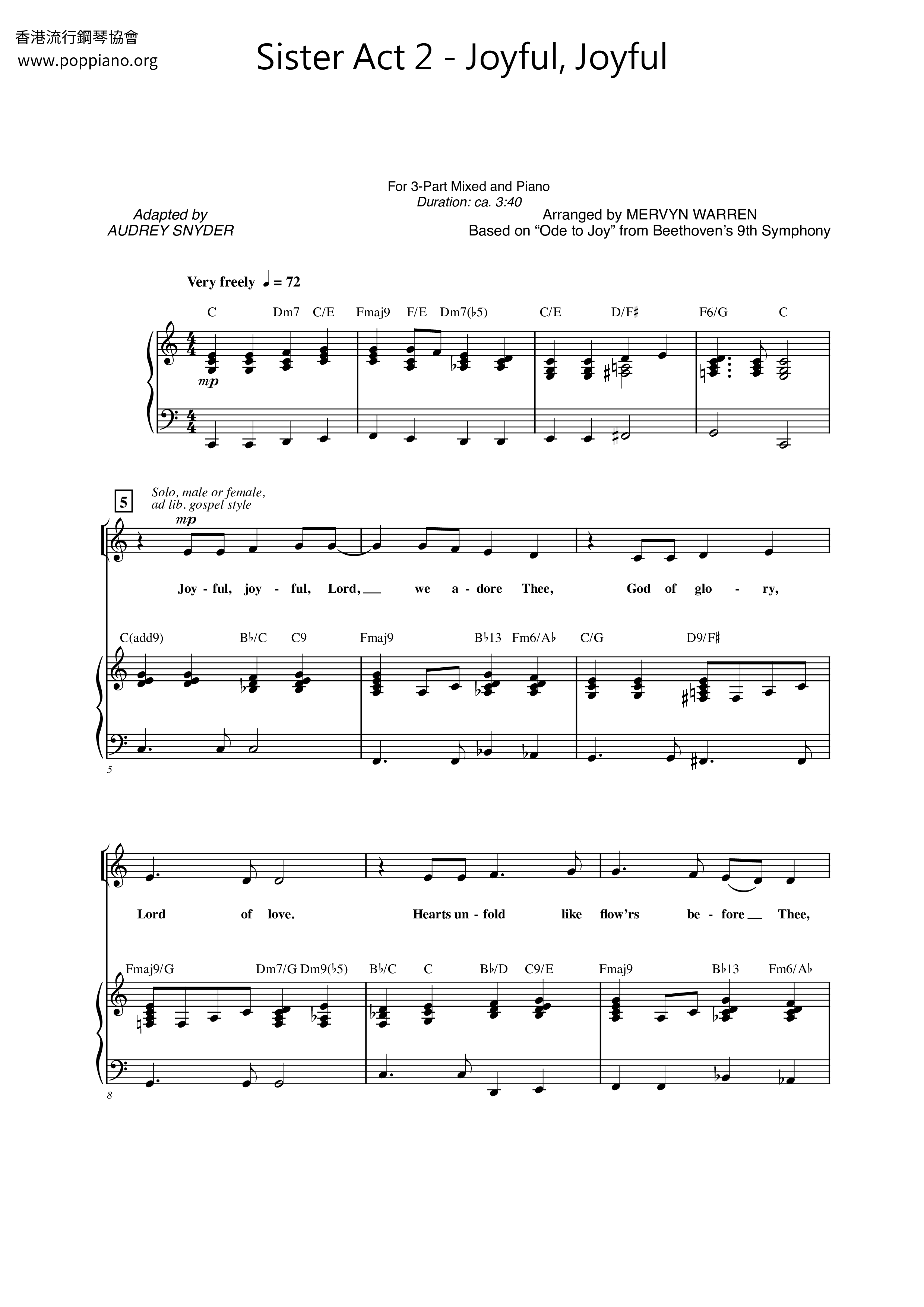
The sequence centers on the reimagining of Ludwig van Beethoven’s "Ode to Joy," adapted into a contemporary gospel arrangement. This was not a random selection; the transition from a rigid, classical composition to a spirited, rhythmic gospel anthem serves as a metaphor for the film's broader narrative: the liberation of the students at St. Francis Academy. The arrangement, credited to Mervyn Warren, utilized the vocal strengths of the cast, specifically focusing on the improvisational stylings of Lauryn Hill.
In the context of the film, "Happy Day" functions as a bridge between the stiff, traditional academic environment and the vibrant, soulful identity of the students. By stripping away the formality of the original hymn and injecting percussive vocal layers and a steady, funk-inspired backbeat, the arrangement highlights the technical evolution of the choir under the guidance of Deloris Van Cartier (Whoopi Goldberg).
Technical Execution: Behind the Choral Arrangement
To understand why the performance resonates, one must look at the technical composition of the arrangement. The piece is structured around call-and-response, a foundational element of African American gospel music. This technique allows for the democratization of the performance, where individual soloists—most notably Lauryn Hill—engage in dialogue with the supporting choir.
The arrangement relies on several distinct musical layers:
- The Foundation: A steady, syncopated rhythm section that grounds the performance, moving it away from the classical time signature of the original work.
- The Choral Support: Dense harmonies that provide the "wall of sound" required to contrast with the lead vocals.
- The Improvisational Lead: The lead vocal serves as the emotional anchor, incorporating vocal runs, melisma, and dynamic volume shifts that signify the characters' individual growth.
The pedagogical strategy shown in the film—moving from disorganized singing to a tight, professional-sounding unit—reflects the real-world rigor required to produce this recording. The performers were not merely acting as a school choir; they were participating in a professional recording session that required precise pitch, timing, and emotional cohesion.
Comparison of Performance Elements
| Feature | Classical "Ode to Joy" | "Sister Act 2" Arrangement |
|---|---|---|
| Tempo | Maestoso (Majestic/Steady) | Upbeat Gospel/Funk |
| Instrumentation | Orchestral / Piano | Percussive, Bass, Modern Keys |
| Vocal Style | Choral/Operatic | Improvisational Gospel/Soul |
| Primary Goal | Formal Presentation | Expressive Individual/Group Identity |
The Role of Lauryn Hill in the Sequence
The "Happy Day" sequence is frequently cited as a career-defining moment for Lauryn Hill. Her portrayal of Rita Watson allowed her to showcase a level of vocal proficiency that exceeded typical teen-star expectations of the early 1990s. From an analytical perspective, her performance functions as a "bridge" between the choir and the audience.
Her ability to oscillate between restrained choral support and explosive solo sections demonstrates the "unpacked" nature of the song: it is not just one song, but a collection of individual testimonies woven into a collective triumph. This performance was critical in demonstrating how a film can use a musical number to achieve character development without the need for additional dialogue.
Production and Legacy
Released in 1993, the film and its soundtrack were significant commercial successes. The music, produced during a period when gospel-infused pop was gaining mainstream traction, solidified the "Sister Act" brand. The "Joyful, Joyful" segment is often categorized under the "inspirational film performance" trope, but it remains technically superior to many of its contemporaries due to the intentionality of the arrangement.
Even in 2026, the performance is studied for its pacing. The scene begins with hesitation and skepticism, moves through a period of technical difficulty, and culminates in a high-energy, synchronized finale. The camera work, which focuses on the reactions of the skeptics in the audience (the school board and faculty), acts as a framing device that validates the musical evolution for the viewer.
Frequently Asked Questions
Why is this song often misidentified as "Happy Day"? The song is actually a version of "Joyful, Joyful, We Adore Thee." It is frequently misidentified due to the prominent, repetitive chorus featuring the words "happy day," which listeners tend to anchor on as the title of the track.
Was the choir in the film actually singing live? While the scene is a performance, the audio track used in the final cut of the film is a pre-recorded studio session. However, the actors were required to lip-sync with extreme precision, having practiced the vocal arrangements extensively to ensure the movements matched the complex layering of the studio recording.
What makes the arrangement unique compared to traditional hymns? The uniqueness lies in the fusion of genres. It takes a piece of classical literature (Beethoven) and recontextualizes it within the structural framework of Black gospel, employing elements of R&B and contemporary soul to make the traditional text feel urgent and modern.
How did this performance influence the musical genre of the 90s? It helped popularize the "gospel-choir climax" in films, a trend that saw many subsequent 90s and early 2000s movies incorporate a high-energy choral moment to resolve narrative tension. It also served as a launchpad for the visibility of gospel-trained vocalists in the pop music mainstream.
Can the arrangement be replicated by amateur groups? The arrangement is technically demanding. While the basic melody is accessible, the specific harmonies and the improvisational demands placed on the lead soloist require a high level of vocal control and a strong understanding of gospel dynamics to be performed effectively.
Final Recommendation for Enthusiasts
If you are analyzing this performance for its musical merit, focus your attention on the transition at the three-minute mark of the sequence. Observe how the choir moves from a static, seated posture to a synchronized, standing performance. This visual shift is the exact moment the "unpacked" potential of the song is realized—a shift that combines technical musical skill with the visual storytelling of the narrative. For those interested in the history of the film's music, original soundtrack liner notes provide specific credits for the vocal arrangements that define the piece’s unique sound.
Image Gallery