Understanding What to Expect from John Boyne’s New Book
As we navigate the literary landscape of 2026, John Boyne continues to solidify his reputation as one of the most prolific and polarizing authors in contemporary Irish fiction. Readers anticipating his latest release should prepare for...
As we navigate the literary landscape of 2026, John Boyne continues to solidify his reputation as one of the most prolific and polarizing authors in contemporary Irish fiction. Readers anticipating his latest release should prepare for a narrative that likely balances historical sensitivity with the character-driven psychological tension that has defined his bibliography. While specific plot synopses are guarded until the official launch, examining Boyne’s established thematic preoccupations, structural preferences, and narrative evolution provides a clear roadmap for what to expect.
Contents
The Evolution of the Boyne Narrative Style
John Boyne’s career, spanning several decades, has moved through distinct phases. Early in his career, he gained significant international recognition for The Boy in the Striped Pyjamas (2006), a work that utilized a fable-like, minimalist prose style to address profound historical trauma. However, his work in the 2020s has shifted toward a more complex, multi-layered approach to character history and identity.
Readers picking up a new release in 2026 should anticipate:
- Non-linear Chronology: Boyne frequently toys with time, often splitting his narratives between a past trauma and a present reckoning. Expect the structure to jump between decades to reveal character motivations incrementally.
- The "Unreliable Narrator": Many of Boyne’s adult protagonists are defined by their flaws, secrets, or fundamental misinterpretations of the world around them. Do not expect a traditional "heroic" protagonist; instead, prepare for a flawed individual undergoing a moral crisis.
- Profound Isolation: A recurring theme in Boyne’s work is the crushing loneliness of individuals who feel disconnected from their families, their society, or their own histories. His new book will likely explore the tension between public reputation and private reality.
Thematic Constants and Likely Explorations
While Boyne experiments with genres—from historical epic to domestic satire—certain thematic pillars remain consistent. Based on his recent trajectory, the new work is expected to grapple with the long-term impact of institutional structures on the individual. Whether the setting is the military, the clergy, or elite social circles, Boyne excels at critiquing how systems erode the humanity of the people trapped within them.
Expect the new book to engage with:
- The Burden of Heritage: Boyne often writes about the inheritance of shame or family secrets. His characters frequently struggle to reconcile their personal identities with the misdeeds of their parents or the societies they inhabit.
- Social Commentary: Expect sharp observations on contemporary social issues. Boyne is rarely a writer who ignores the present; he often uses historical or personal settings as a mirror for modern anxieties regarding gender, class, and social media-era performativity.
- Moral Ambiguity: You will likely finish the book without a clear sense of resolution. Boyne is known for endings that are melancholic rather than didactic, often leaving the reader to decide the ultimate fate or redemption of his characters.
Preparing for the Reading Experience
To maximize your enjoyment of a new John Boyne novel, it is helpful to approach the text with a clear understanding of what it is not. It is generally not a light-hearted or escapist read. His prose, while accessible and fluid, deals with heavy psychological burdens and emotional stakes.
Comparative Overview of Boyne’s Narrative Modes
| Narrative Style | Focus | Tone | Expected Reader Response |
|---|---|---|---|
| Historical Fable | Moral allegories | Sparse, quiet | Contemplation |
| Domestic Drama | Family secrets | Intimate, intense | Emotional discomfort |
| Satirical/Comic | Social critique | Sharp, witty | Intellectual amusement |
| Character Study | Personal identity | Reflective, slow-burn | Deep immersion |
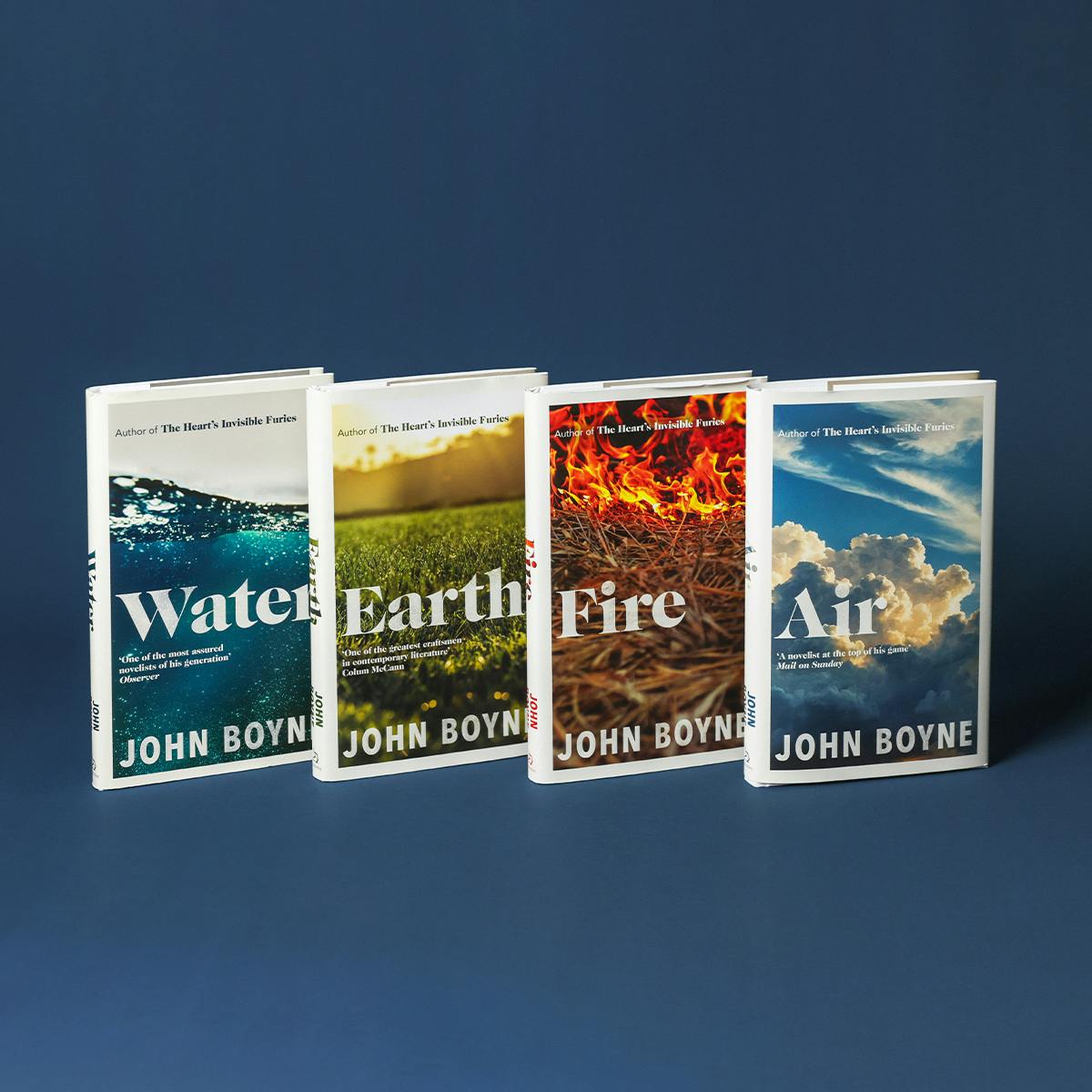
If you are a fan of his more recent, expansive novels such as The Heart's Invisible Furies or the Water trilogy, you should look for similar "epic of the self" structures. These novels don't just follow a week in a person's life; they often span a lifetime, charting how minor decisions ripple into massive life-altering events over forty or fifty years.
What to Look for in Reviews and Pre-Release Material
As the 2026 launch window approaches, literary critics will likely focus on three primary metrics: the depth of historical research, the complexity of the character arcs, and the integration of the central "secret" or "twist."
Boyne is a master of the "reveal," but he is increasingly moving away from plot-driven shock value toward character-driven realizations. If you see early reviews emphasizing the "pacing" or "twist," weigh these against your preference for literary character studies versus plot-heavy thrillers. His best work is almost always the former.
Navigating Potential Controversies
John Boyne is a writer who invites debate. His works often cross into contested territory regarding the representation of historical events and sensitive social identities. When reading his new book, expect to see public discourse surrounding the author’s choice of subject matter. As a reader, focus on the text itself: how Boyne builds the interior life of his characters is where his true technical skill lies. Do not be surprised if the book serves as a lightning rod for social media conversation; this is a hallmark of his high-profile releases.
FAQ: Common Reader Concerns
Q: Does the new book require knowledge of Boyne’s previous works? A: No. Almost all of Boyne’s novels are standalone works. While he occasionally drops subtle thematic nods to his bibliography, each book functions as a self-contained universe. You do not need to read his previous books to understand the narrative arc of the new one.
Q: Is the writing style similar to his earlier YA fiction or his later literary fiction? A: Expect the latter. His recent output has been firmly grounded in complex, adult literary fiction. The sentences are typically longer, the vocabulary is more varied, and the themes are distinctly oriented toward mature psychological analysis.
Q: Should I expect a happy ending? A: Rarely. Boyne’s endings are typically "earned" rather than "happy." They focus on closure, the acceptance of truth, and the reality of loss. Expect a bittersweet conclusion that leaves you thinking about the character's journey long after you turn the final page.
Q: How long is the reading commitment? A: Boyne is known for being a prolific writer who produces substantial novels. Expect a book in the 400–600 page range. His books are highly "readable," meaning the prose is not overly academic, but the length allows for the deep, multi-generational character exploration he is known for.
Final Recommendations for Readers
If you are planning to read the new release, the best approach is to engage with it as an immersive character study. Start by setting aside a dedicated period to read the first fifty pages in one sitting, as Boyne’s openings are crucial for establishing the "rules" of the narrator’s perspective. If you are unfamiliar with his style, consider brushing up on his recent interview discussions regarding the nature of storytelling—he often provides the "why" behind his chosen themes, which can help unlock the deeper meanings in his fiction.
Ultimately, John Boyne’s new book will be an exercise in empathy. It will challenge your perceptions of what a "good" or "bad" person is, and it will likely force you to confront the ghosts of your own history. Prepare for a story that is as much about you as it is about the characters on the page.
Image Gallery