Navigating Construction Accidents: Comprehensive Workers Compensation and Law Firm Guidance
When a construction worker is injured on the job, navigating the aftermath requires balancing strict state reporting deadlines, medical documentation requirements, and potential third-party liability claims. Securing appropriate legal...
When a construction worker is injured on the job, navigating the aftermath requires balancing strict state reporting deadlines, medical documentation requirements, and potential third-party liability claims. Securing appropriate legal and insurance guidance ensures that injured workers receive necessary medical benefits and lost-wage compensation while protecting their rights against employer or contractor disputes.
Contents
Understanding Workers Compensation in the Construction Industry
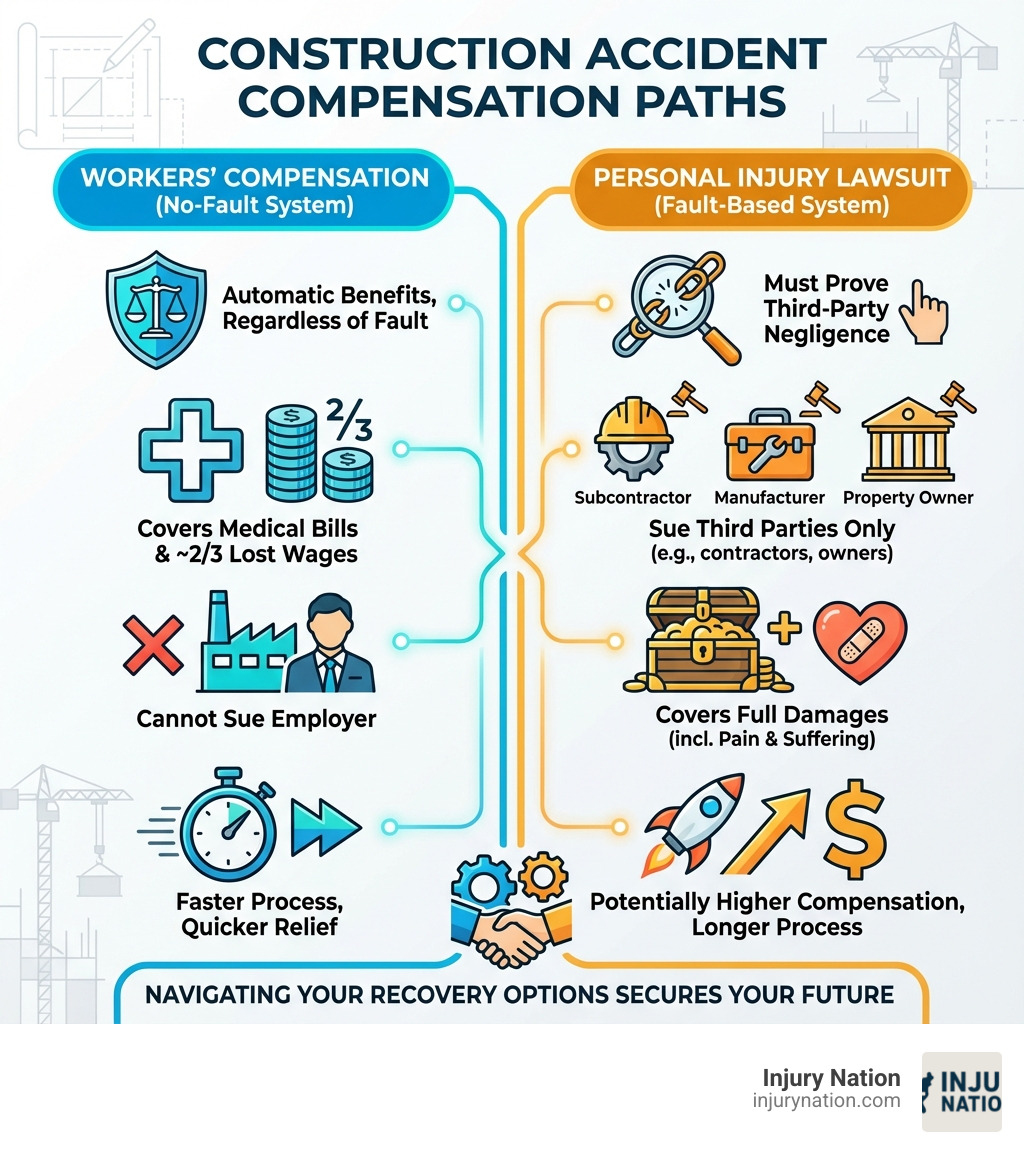
Construction remains one of the most hazardous industries, characterized by heavy machinery, elevated workspaces, structural demolition, and high-voltage electrical tasks. Because of these inherent risks, state laws generally mandate that construction employers carry workers compensation insurance. This no-fault system is designed to provide immediate medical care and partial wage replacement to injured employees without requiring them to prove employer negligence.
However, the no-fault nature of workers compensation comes with a trade-off: injured workers typically forfeit their right to sue their employers directly for negligence. Instead, they must navigate a specialized administrative claims process governed by state boards or commissions. Understanding how this system interacts with daily job-site realities is the first step toward securing rightful benefits.
The Scope of Statutory Coverage
Workers compensation coverage generally applies to full-time, part-time, and seasonal construction workers. In many jurisdictions, independent contractors may also be deemed statutory employees if they lack independent business structures or work exclusively under the direct supervision of a general contractor.
Key benefits typically secured through an approved workers compensation claim include:
- Medical Treatment: Full coverage for reasonable and necessary medical care, including emergency room visits, surgeries, prescription drugs, and physical therapy.
- Temporary Total Disability (TTD): Wage replacement benefits paid when an employee is completely unable to work during recovery.
- Temporary Partial Disability (TPD): Benefits paid when an employee returns to work on restricted duty or reduced hours earning less than pre-injury wages.
- Permanent Partial Disability (PPD): Compensation awarded when an injury results in a permanent functional impairment or loss of use of a body part.
- Vocational Rehabilitation: Retraining services for workers who cannot return to their previous construction trade due to long-term limitations.
The Role of a Construction Accident Law Firm
While the workers compensation system is ostensibly designed to function without adversarial litigation, disputes frequently arise. Insurance carriers routinely deny claims, dispute the necessity of specific medical treatments, or prematurely attempt to force injured workers back to heavy-duty construction tasks. This is where specialized legal representation becomes critical.
A qualified construction accident law firm provides comprehensive guidance by managing administrative procedures, gathering forensic evidence, and representing claimants at hearings before state workers compensation boards. Furthermore, experienced attorneys evaluate complex job sites to identify potential third-party liability claims that fall outside the standard workers compensation framework.
Core Legal Responsibilities and Advocacy
Law firms specializing in construction injuries perform several vital functions to protect a client's financial and medical future:
- Claim Filing and Documentation: Ensuring that initial injury reports and formal claim petitions meet strict statutory deadlines and contain flawless medical backing.
- Challenging Denials: Representing claimants during formal dispute resolution processes, independent medical examinations (IMEs), and administrative law judge hearings.
- Third-Party Investigation: Uncovering negligence by entities other than the direct employer, such as equipment manufacturers, property owners, architects, or distinct subcontractors.
- Lien Resolution: Negotiating medical provider liens and insurance subrogation interests to maximize the net recovery from any settlements.
Navigating Immediate Post-Accident Procedures
The actions taken immediately following a construction accident significantly influence the success of both the workers compensation claim and any subsequent legal proceedings. Delays in reporting or seeking treatment provide insurance adjusters with grounds to dispute the validity of the claim.
Step-by-Step Immediate Action Plan
- Seek Immediate Medical Attention: Prioritize health and safety above all else. Inform the treating physician explicitly that the injury occurred while performing job-related duties.
- Notify the Employer in Writing: Most jurisdictions require written notice to the employer within a narrow window (ranging from a few days to 30 days). Failing to meet this deadline can result in a complete forfeiture of benefits.
- Document the Scene: If physically able, take photographs of the hazardous condition, defective equipment, or lack of safety gear. Collect contact information from coworker witnesses.
- Request an Incident Report: Ensure that a formal workplace injury report is filed with the employer or site safety manager, and request a copy for personal records.
- Consult Legal Counsel: Before giving recorded statements to insurance adjusters or signing independent medical releases, speak with a specialized construction accident attorney.
Workers Compensation Versus Third-Party Liability Claims
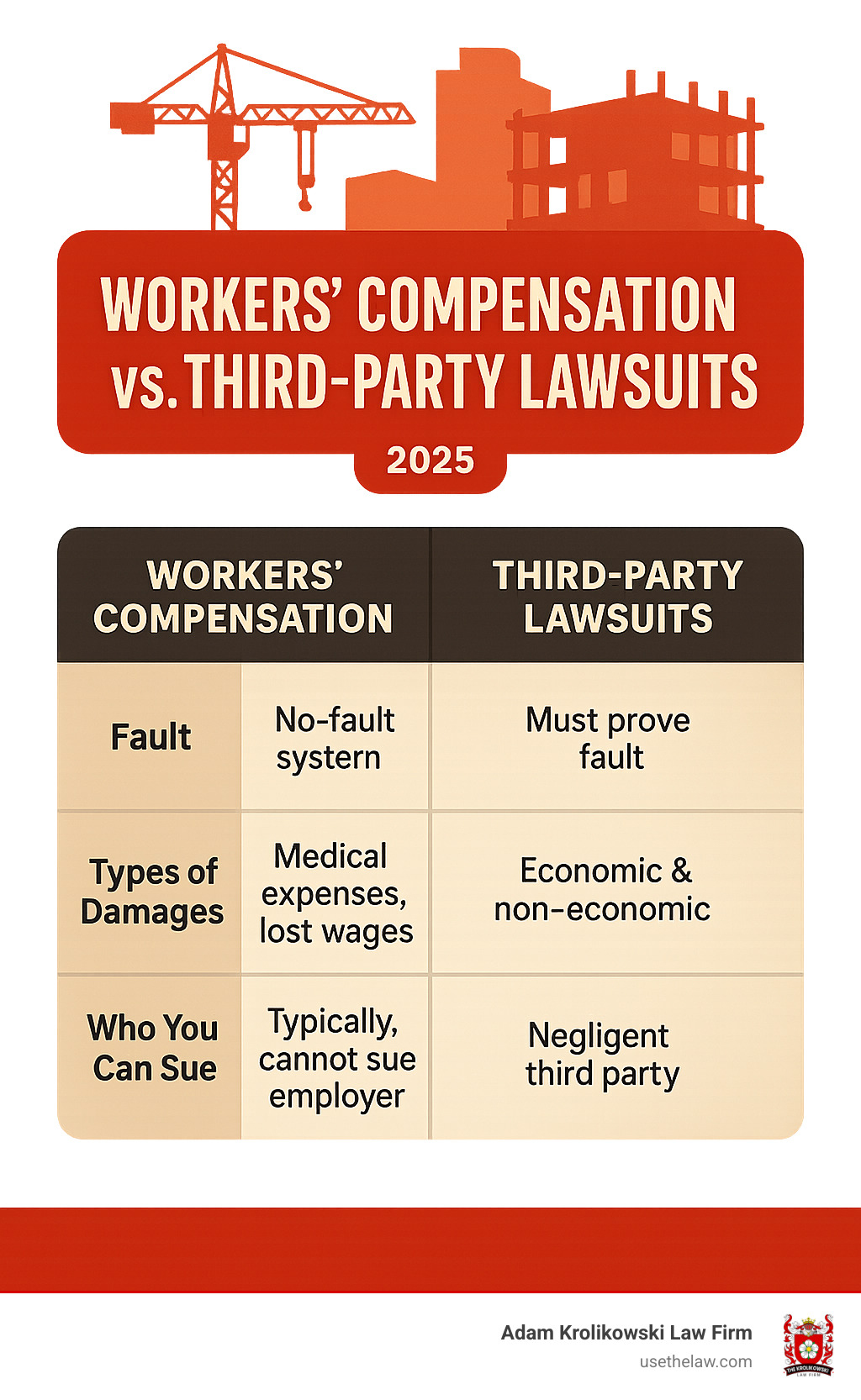
A fundamental aspect of construction accident law firm guidance involves distinguishing between standard workers compensation claims and third-party lawsuits. On a modern multi-employer construction site, workers interact daily with employees from various independent subcontracting companies, equipment rental providers, and general contractors.
When an injury is caused by the negligence of someone other than the direct employer or a direct coworker, the injured worker retains the legal right to file a personal injury lawsuit against that third party in civil court, alongside the standard workers compensation claim.
| Claim Type | Primary Target | Standard of Proof | Available Damages |
|---|---|---|---|
| Workers Compensation | Employer's Insurance Carrier | No-Fault (Strict Liability) | Medical bills, partial wage replacement, vocational rehabilitation. |
| Third-Party Personal Injury | Equipment Manufacturers, Subcontractors, Property Owners | Negligence (Must prove fault) | Medical bills, full lost wages, pain and suffering, emotional distress, loss of future earning capacity. |
Common Challenges and Pitfalls in Construction Claims
Navigating the workers compensation and legal landscape involves overcoming numerous bureaucratic and tactical hurdles. Insurance carriers employ dedicated adjusters and defense attorneys whose primary goal is minimizing payout liabilities.
Prevalent Issues Faced by Injured Workers
- Independent Medical Examinations (IMEs): Insurance carriers often require injured workers to be evaluated by a physician of the insurer's choosing. These doctors frequently downplay the severity of injuries or declare workers fit for duty prematurely.
- Pre-Existing Conditions: Insurers frequently argue that a current construction injury is merely an aggravation of an old, non-work-related degenerative condition. Detailed medical testimony is required to prove the causal link to the specific workplace incident.
- Independent Contractor Misclassification: Some employers improperly label construction workers as independent contractors to evade workers compensation insurance requirements, leaving workers vulnerable after an accident. Legal guidance is essential to establish statutory employment status.
- Retaliation Concerns: Workers are sometimes hesitant to file claims due to fears of termination or retaliation. State laws and federal Occupational Safety and Health Administration (OSHA) regulations strictly prohibit retaliatory firing for filing legitimate safety complaints or workers compensation claims.
Frequently Asked Questions
What should I do if my workers compensation claim is denied?
If an insurance carrier denies a claim, do not panic. Request a written explanation for the denial, gather all relevant medical records and incident reports, and consult a construction accident attorney immediately to file an appeal or request a formal hearing before the state workers compensation board.
Can I choose my own doctor for a construction injury?
State laws vary significantly regarding medical provider selection. Some states permit employees to choose their treating physician immediately, while others require treatment through an employer-approved managed care organization (MCO) or medical provider network (MPN) for a specified initial period.
How long do I have to file a workers compensation claim?
Statutes of limitations for reporting injuries and filing formal compensation claims vary widely by jurisdiction, ranging from 30 days for initial notice to several years for formal claim petitions. Meeting these deadlines is mandatory; missing them typically bars recovery permanently.
Will hiring a lawyer affect my relationship with my employer?
Workers compensation is a statutory insurance system funded by employer premiums. Filing a claim or seeking legal counsel to ensure proper benefit administration is a legal right, not a lawsuit against the employer. Employers are legally prohibited from retaliating against employees for exercising these rights.
What costs are associated with hiring a construction accident law firm?
Most construction accident and workers compensation law firms operate on a contingency fee basis. This means clients pay no upfront or hourly fees; the attorney's compensation is an agreed-upon percentage of the financial recovery secured through settlement or award.
Next Actions and Professional Guidance
Navigating a construction accident recovery requires prompt administrative action and rigorous legal oversight. Injured workers should immediately prioritize medical treatment, document every aspect of the incident, and adhere to strict state reporting deadlines. Because insurance rules and third-party liability frameworks vary considerably by jurisdiction, securing a consultation with an experienced construction accident law firm remains the most effective method to protect medical rights and secure maximum financial compensation.
Image Gallery