Why Get Life Insurance When You’re Young: The Financial Case for Early Coverage
Purchasing life insurance when you are young allows you to lock in significantly lower premium rates and guarantee your insurability before age-related health issues develop. It provides a vital safety net for co-signed debts, covers e...
Purchasing life insurance when you are young allows you to lock in significantly lower premium rates and guarantee your insurability before age-related health issues develop. It provides a vital safety net for co-signed debts, covers end-of-life expenses, and, in the case of permanent policies, creates a long-term, tax-advantaged vehicle for wealth accumulation.
Contents
For many young adults in their 20s or 30s, life insurance often feels like a distant priority, overshadowed by immediate financial pressures like student loans, rising housing costs, or career development. However, 2026 market data suggests that waiting even a decade to secure coverage can result in premiums that are 50% to 100% higher. Beyond the monthly cost, the "insurability" factor is the most critical asset a young person possesses. Once a medical condition is diagnosed, the window for affordable—or even available—coverage can close permanently.
The Financial Logic of Locking in Low Premiums
The primary driver of life insurance pricing is risk assessment, specifically mortality risk. Actuarially speaking, a 25-year-old is statistically less likely to pass away during the policy term than a 45-year-old. Because of this lower risk, insurance companies offer their most aggressive pricing to younger applicants.
When you purchase a level-term life insurance policy in your early 20s, you effectively freeze your premium at that "youthful" rate for the duration of the term, which could be 20 or 30 years. This means you could still be paying the same low monthly rate in 2056 that you started paying in 2026. If you wait until you are 40 to buy that same policy, your starting rate will be significantly higher because you are closer to the statistical likelihood of developing health issues.
Furthermore, the "cost of waiting" is not just the difference in monthly premiums; it is the cumulative extra expense over the life of the policy. A young adult might pay $25 a month for a substantial death benefit, while someone twenty years older might pay $80 for the same coverage. Over a 30-year term, the older applicant pays nearly $20,000 more for the exact same product.
Protecting Your Insurability for the Future
Perhaps the most overlooked reason to get life insurance when you are young is the protection of your "insurability." In the insurance world, insurability refers to your ability to qualify for a policy based on your health, lifestyle, and medical history.
Most young adults are at the peak of their physical health. However, health status can change in an instant due to a sudden diagnosis of chronic conditions such as Type 2 diabetes, hypertension, or autoimmune disorders. If you wait until a health issue arises to apply for insurance, you may face "rated" premiums (which are significantly higher than standard rates) or a flat-out denial of coverage.
By securing a policy while you are healthy, you ensure that you have coverage regardless of what happens to your health later in life. Many policies also offer a guaranteed insurability rider. This allows the policyholder to purchase additional coverage at specific intervals or life events (like marriage or the birth of a child) without having to undergo a new medical exam. This is an invaluable tool for someone whose financial responsibilities are expected to grow over the next two decades.
Managing Debt and Protecting Co-signers
A common misconception is that life insurance is only necessary for those with children or a spouse. However, the modern financial landscape for young adults involves significant debt, much of which may not disappear upon death.
Private Student Loans
While federal student loans are typically discharged if the borrower passes away, many private student loans are not. If a parent or grandparent co-signed a private loan for your education, they could remain legally responsible for the balance if something were to happen to you. A life insurance policy ensures that your loved ones are not burdened with tens of thousands of dollars in debt during an already traumatic time.
Mortgages and Shared Expenses
As more young adults enter the housing market with partners or roommates, the loss of one income can lead to immediate foreclosure or eviction for the survivor. Life insurance provides the liquidity needed to pay off a mortgage or cover rent, allowing the surviving partner to remain in their home and maintain their standard of living.
Final Expenses and Funeral Costs
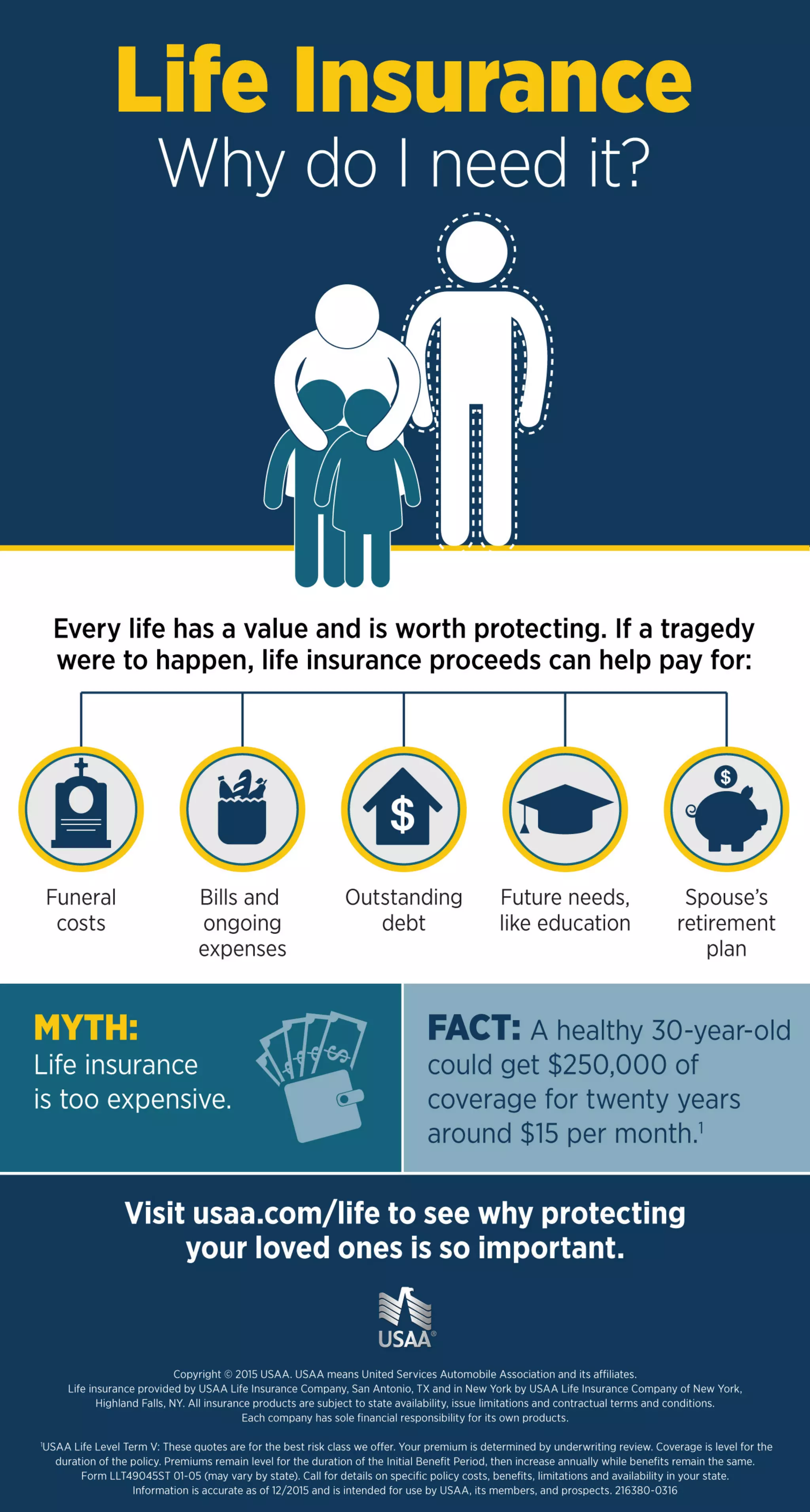
According to data from the National Funeral Directors Association (NFDA), the median cost of a funeral with a viewing and burial in 2026 continues to hover between $8,500 and $12,000, depending on the region. Without life insurance, these costs often fall on parents or siblings. Even a modest "final expense" or term policy can cover these immediate costs, preventing a family's financial hardship.
Comparing Policy Types for Young Adults
When choosing a policy, young adults generally weigh the simplicity of Term Life against the long-term growth potential of Permanent (Whole or Universal) Life insurance.
| Feature | Term Life Insurance | Whole/Permanent Life Insurance |
|---|---|---|
| Duration | Fixed period (10, 20, or 30 years) | Lifelong coverage |
| Initial Cost | Very low/Affordable | High (often 5-10x Term) |
| Cash Value | None | Accrues over time |
| Premium Stability | Level for the term duration | Generally level for life |
| Best For | Debt protection, young families | Wealth transfer, lifelong protection |
| Flexibility | Can often convert to permanent | Can borrow against cash value |
The Case for Term Life
For most young professionals, term life is the most efficient choice. It provides the largest death benefit for the lowest out-of-pocket cost. This allows you to protect your income during your highest years of financial vulnerability—when your mortgage is high and your savings are low.
The Case for Permanent Life
While more expensive, permanent life insurance serves as a financial "multitool." Because it accumulates cash value, it can function as a forced savings vehicle. In 2026, many high-earning young adults use permanent policies as part of a diversified portfolio, utilizing the tax-deferred growth of the cash value and the ability to take out policy loans for major purchases or supplemental retirement income.
The "Employer-Provided" Trap
Many young employees believe they don't need individual life insurance because their company provides a "group" policy, often equal to one or two times their annual salary. While this is a great benefit, it is rarely sufficient and carries significant risks:
- Non-Portability: If you leave your job—whether by choice, layoff, or disability—you usually lose the coverage. In an era of frequent job hopping, relying on an employer for your only life insurance is a dangerous gamble.
- Insufficient Coverage: A policy worth $50,000 or $100,000 might sound like a lot, but it can be exhausted quickly by funeral costs, lingering medical bills, and debt.
- No Control: The employer chooses the carrier and the terms. You have no guarantee that the benefit will remain part of the compensation package in future years.
An individual policy that you own independently of your employer ensures that your protection remains constant throughout your career transitions.
Wealth Building and Tax Advantages
For those who opt for permanent life insurance early, the power of compound growth is on their side. Because you have a longer time horizon, the cash value portion of a whole or universal life policy has decades to grow.
Under current tax laws, the growth of the cash value is tax-deferred. Furthermore, the death benefit paid to beneficiaries is generally income-tax-free. For young adults in high tax brackets, or those who have already maximized their contributions to 401(k)s and IRAs, life insurance can serve as an additional layer of tax-efficient wealth management.
Common Mistakes to Avoid When Buying Early
Buying life insurance in your 20s or 30s is a smart move, but it requires careful planning to avoid common pitfalls:
- Underestimating Needs: Many people pick a round number like $250,000 without calculating their actual needs. Consider your current debts, future income replacement for a spouse, and potential education costs for children.
- Waiting for the "Perfect" Time: People often wait until they are married or have a child. However, the best time to buy is when you are at your healthiest. You can always increase coverage later, but you can't go back and get the rates of a 25-year-old once you're 35.
- Ignoring the Fine Print: Ensure you understand the difference between "Level Term" (where the premium stays the same) and "Increasing Term" (where premiums rise over time). For most, level term is the superior choice for budgeting.
Frequently Asked Questions
Do I need life insurance if I am single and have no children?
Yes, if you have any co-signed debt (like private student loans), own a business, or wish to ensure your funeral expenses are covered without burdening your parents. Additionally, buying now locks in low rates for the future when you may have a family.
Is it better to buy term and invest the difference?
This is a popular strategy. Because term insurance is so cheap, you can take the money you saved (compared to the cost of a whole life policy) and invest it in a brokerage account or Roth IRA. This works well for disciplined savers, but it does not provide the lifelong guarantee or the specific tax benefits of permanent insurance.
Can I get life insurance if I have a pre-existing condition?
Yes, but it may be more expensive. In 2026, many insurers offer "simplified issue" or "guaranteed issue" policies that don't require a full medical exam, though they often have lower coverage limits and higher premiums. This highlights why it is better to apply while you are healthy.
How much coverage do I actually need?
A common rule of thumb is 10 to 15 times your annual income. However, a more accurate way to calculate is the DIME formula: Debt, Income replacement, Mortgage, and Education. Totaling these four categories gives you a clear picture of your necessary death benefit.
Can I cancel my policy later if I don't need it?
Yes. Term policies can be cancelled at any time by simply stopping premium payments. Permanent policies can be "surrendered," and you may receive the accumulated cash value (minus any fees or loans).
Final Recommendation
If you are under the age of 40, the most cost-effective financial move you can make today is to secure a 20-year or 30-year level-term life insurance policy. The "youth discount" provided by insurance carriers is a one-time opportunity that diminishes with every passing birthday. By acting now, you protect your future family, your co-signers, and your own financial legacy at the lowest possible price point. Reach out to an independent insurance broker to compare quotes from multiple carriers to ensure you are getting the best "Preferred Plus" rates available for your age bracket.
Image Gallery