Why Is Beverly Hills a Rich Area? The Factors Behind Its Wealth and Prestige
Beverly Hills became a rich area through a combination of intentional suburban planning, early adoption by Hollywood celebrities, autonomous local governance, strict zoning laws, and premier commercial luxury infrastructure. Developed...
Beverly Hills became a rich area through a combination of intentional suburban planning, early adoption by Hollywood celebrities, autonomous local governance, strict zoning laws, and premier commercial luxury infrastructure. Developed in the early 20th century on land originally intended for oil extraction, the city crafted an exclusive identity that continuously attracts high-net-worth residents and global capital.
Contents
Historical Beginnings: From Oil Exploration to Planned Luxury Enclave
The transformation of Beverly Hills from agricultural ranchland into one of the world's most affluent municipalities began in the late 19th and early 20th centuries. Originally inhabited by the Tongva Native Americans, the region was named El Rancho Rodeo de las Aguas ("The Ranch of the Gathering of the Waters") during Spanish and Mexican rule, referring to the natural streams flowing from the Santa Monica Mountains.
In 1900, a syndicate led by oil prospector Burton Green formed the Amalgamated Oil Company and purchased the ranch to drill for petroleum. When commercial quantities of oil failed to materialize in the immediate area, Green and his partners reorganized as the Rodeo Land and Water Company in 1906. Rather than abandoning the investment, they hired landscape architect Wilbur David Cook to design an exclusive residential subdivision.
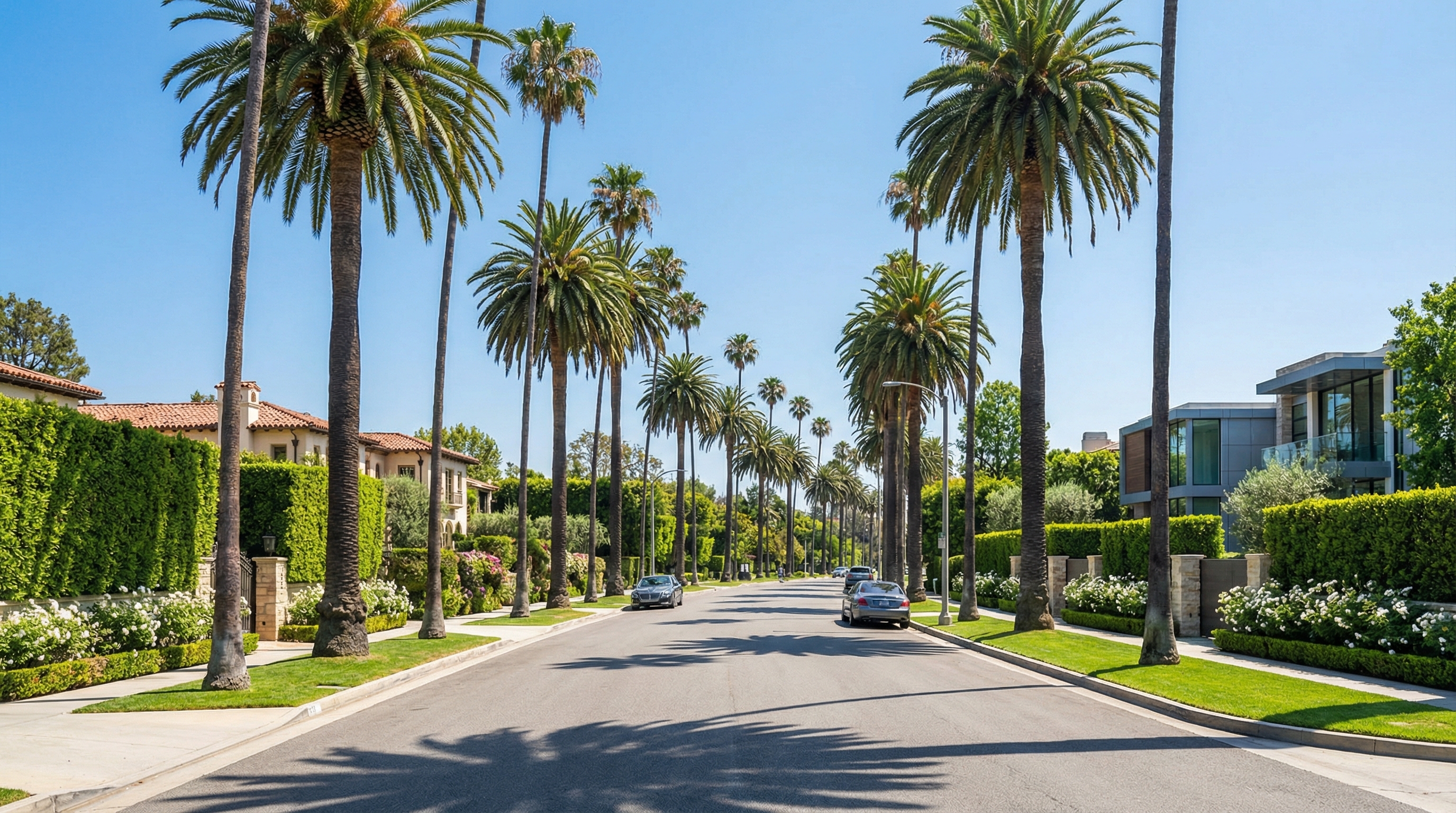
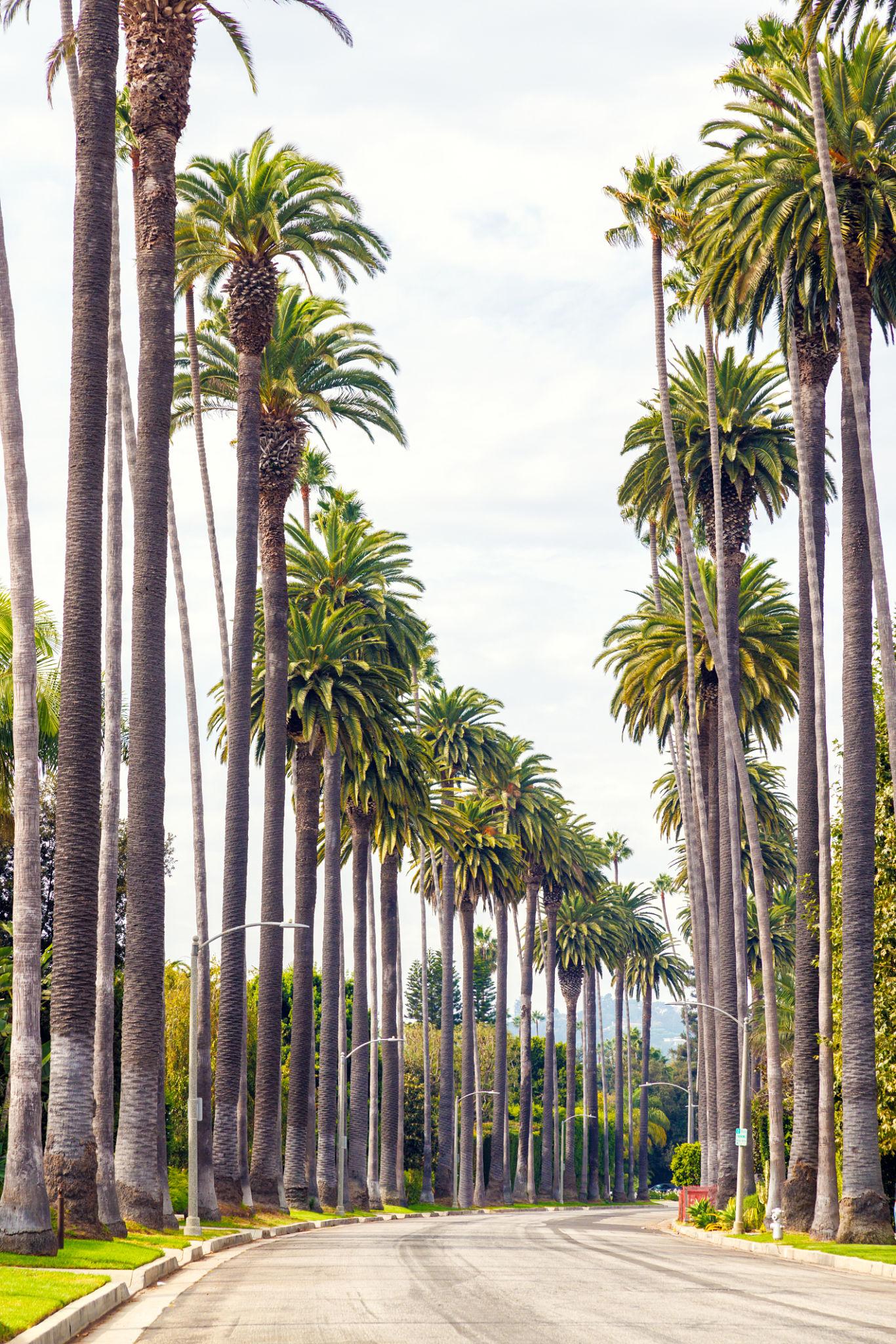
Cook envisioned a garden-city layout featuring wide, curving avenues that followed the natural contours of the hills, planted with thousands of palm, acacia, and eucalyptus trees. To attract wealthy buyers to a then-remote location between downtown Los Angeles and the Pacific Ocean, the developers recognized the need for an anchor destination. In 1912, they built The Beverly Hills Hotel on Sunset Boulevard. The hotel served as a social hub, drawing affluent Easterners and Midwesterners seeking winter retreats, thereby establishing the community's reputation for luxury real estate before significant residential construction had even finished.
The Hollywood Effect: Celebrity Clustering and Social Capital
While luxury urban planning laid the foundation, the emerging motion picture industry accelerated the concentration of extreme wealth in Beverly Hills during the 1920s. As film production migrated to Southern California, early cinema pioneers sought private residential land within driving distance of major studios in Hollywood and Culver City.
- 1906: Land subdivided by Rodeo Land and Water Co.
- 1912: Opening of The Beverly Hills Hotel establishes luxury anchor
- 1919: Pickfair built; Hollywood stars relocate to the area
- 1920s-Present: Persistent concentration of global wealth and high net worth capital
In 1919, actors Mary Pickford and Douglas Fairbanks purchased a hunting lodge on Summit Drive, transforming it into a 56-acre estate known as "Pickfair." The residence became an informal cultural center for international royalty, business leaders, and entertainment figures. Their move triggered a migration of Hollywood luminaries, including Charlie Chaplin, Rudolph Valentino, Gloria Swanson, and later Will Rogers, who became the honorary mayor of Beverly Hills in 1926.
This concentration of high-profile residents created a self-reinforcing economic mechanism known to urban economists as luxury agglomeration:
- Prestige Equity: Living near influential industry figures signaled elite social status, raising local property values faster than regional averages.
- Network Effects: Executives, studio heads, talent agents, and financiers settled in the same neighborhood to maintain proximity to deals and social circles.
- Privacy Controls: High earnings allowed residents to purchase expansive multi-acre lots in the foothill sections ("North of Sunset"), providing privacy and security unavailable in denser Los Angeles tracts.
By mid-century, Beverly Hills had cemented its reputation as the global residential benchmark for entertainment wealth, drawing high-net-worth industrialists, international real estate investors, and diplomatic figures.
Autonomous Governance and Independent Municipal Services
A major structural reason Beverly Hills remains exceptionally wealthy is its political independence from the City of Los Angeles. In 1923, Los Angeles attempted to annex Beverly Hills to control its burgeoning tax base and incorporate its land mass. Residents, led by celebrity activists like Will Rogers and Mary Pickford, voted overwhelmingly to remain an independent, incorporated city—a status achieved in 1914.
Maintaining municipal autonomy allows Beverly Hills to control its property taxes, commercial revenue, civic regulations, and public services without sharing resources across the broader Los Angeles metropolitan area.
- Independent Governance Infrastructure
- Beverly Hills Police Department (BHPD): Sub-3-minute emergency response time
- Beverly Hills Fire Department (BHFD): Specialized urban-wildland protection
- Beverly Hills Unified School District: Locally funded public education
- Independent Public Works & Water Supply: Dedicated municipal maintenance
Dedicated Public Safety Infrastructure
The city operates its own independent police and fire departments. The Beverly Hills Police Department (BHPD) maintains a officer-to-resident ratio significantly higher than neighboring jurisdictions, supporting average emergency response times under three minutes. Enhanced security infrastructure, including thousands of closed-circuit surveillance cameras linked to a centralized monitoring facility, provides security guarantees that preserve residential market premiums.
Highly Rated Independent School District
Unlike many Southern California neighborhoods that rely on the vast Los Angeles Unified School District (LAUSD), Beverly Hills operates the independent Beverly Hills Unified School District (BHUSD). High property tax valuations fund public schools such as Beverly Hills High School, providing facilities, low student-to-teacher ratios, and advanced academic programs that attract affluent families who might otherwise pay for private schooling.
Municipal Financial Independence
Because the city retains high local sales tax revenue generated by its commercial districts alongside substantial property taxes, municipal budgets remain well funded. This allows for meticulous street maintenance, undergrounding of utility lines, proactive urban forestry management, and high-end public infrastructure without reliance on federal or state subsidies.
Strict Zoning Laws and Land Scarcity Economics
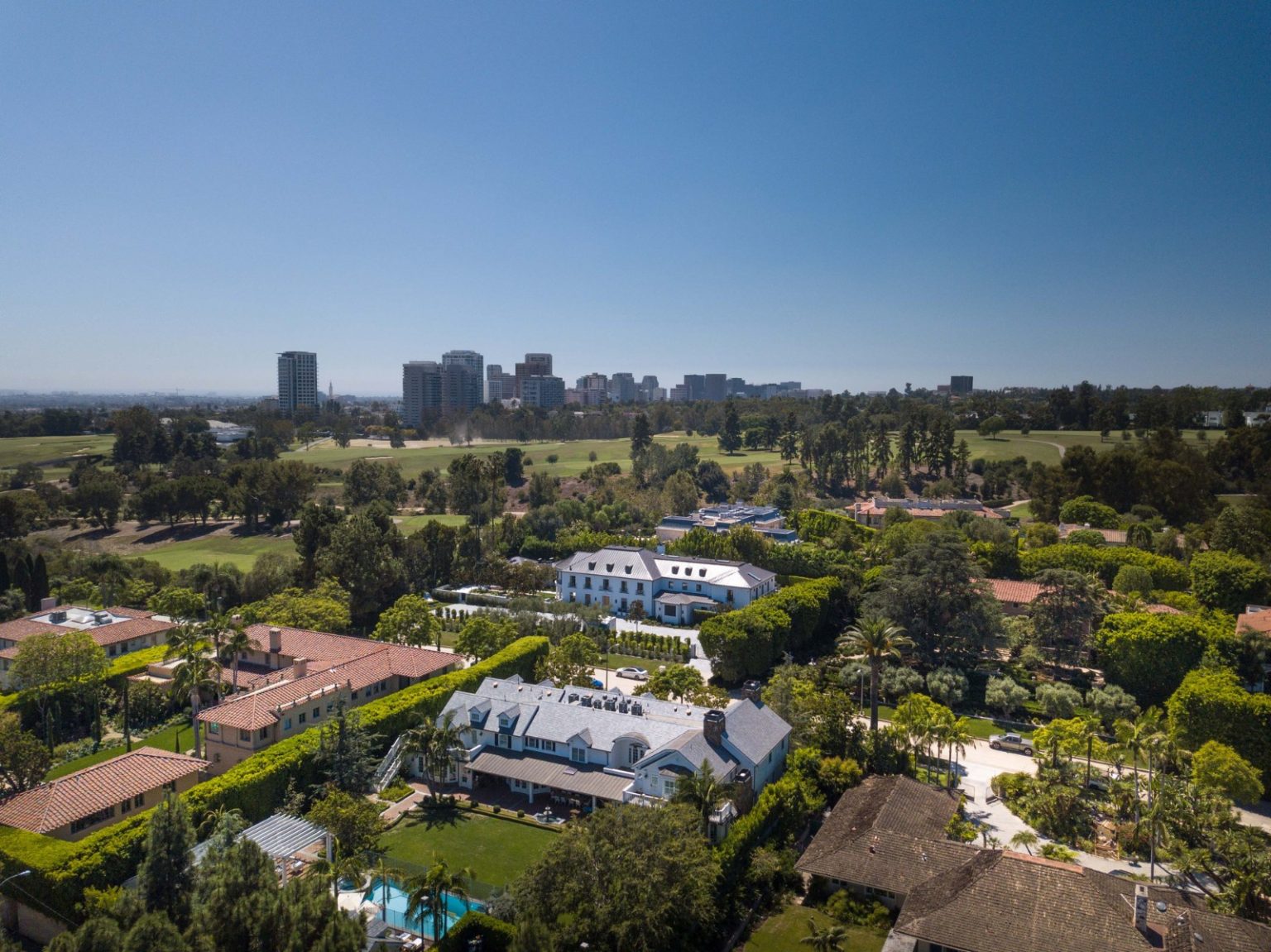
The long-term preservation of real estate values in Beverly Hills relies heavily on protective zoning ordinances and geographical boundaries. Spanning just 5.7 square miles, the city is completely landlocked by the City of Los Angeles and West Hollywood, eliminating the physical possibility of geographic expansion.
- BEVERLY HILLS (5.7 Sq. Miles)
- North: Santa Monica Mountains
- West: City of Los Angeles West (Bel-Air / Westwood)
- East: City of West Hollywood
- South/East: City of Los Angeles
The municipal government enforces rigid land-use regulations designed to prevent high-density residential encroachment and maintain neighborhood aesthetics:
- Single-Family Residential Preservation: Large swathes of the city north of Santa Monica Boulevard are zoned strictly for single-family residences. Regulations mandate minimum lot sizes, substantial front-yard setbacks, and maximum floor-area ratios (FAR), limiting modern "mansionization" that would compromise neighbor privacy or streetscape harmony.
- Height Restrictions: In both commercial and residential sectors, strict building height limits prevent high-rise developments from blocking sunlight, mountain views, or natural sightlines, protecting property values in adjacent blocks.
- Architectural and Design Review: Proposed constructions and major renovations must undergo review by local design commissions. Criteria evaluate architectural style, exterior materials, lighting, and landscape integration to protect community character.
- Commercial Containment: Retail, office, and hospitality developments are restricted to designated zones, primarily within the "Golden Triangle" and along major thoroughfares like Wilshire Boulevard and Olympic Boulevard, preventing commercial intrusion into residential enclaves.
Because demand to live in Beverly Hills continuously exceeds the fixed supply of single-family parcels, residential real estate commands exceptional per-square-foot prices, insulating the market from severe broader downturns.
The Economic Engine: Rodeo Drive and Luxury Tourism
Beverly Hills generates substantial wealth through its commercial tax base. The heart of this economic model is the Golden Triangle, anchored by Rodeo Drive—one of the world's most lucrative retail strips per square foot.
- Golden Triangle
- Santa Monica Boulevard
- Rodeo Drive
- Wilshire Blvd
Commercial Tax Revenue and Sales Volume
Rodeo Drive hosts luxury fashion houses, fine jewelry ateliers, and haute couture brands including Chanel, Hermès, Louis Vuitton, Cartier, and Bijan. These flagship boutiques capture international tourism expenditure alongside high-volume spending from local residents. The resulting sales tax revenue directly funds city operations, allowing Beverly Hills to maintain low local taxes while delivering high-tier public services.
World-Class Commercial Real Estate Values
Commercial property within the Golden Triangle yields high lease rates globally. Institutional investors, sovereign wealth funds, and private family offices actively compete for retail holdings, driving land values to top-tier global levels. This commercial vitality offsets municipal service costs for single-family property owners.
Hospitality and Medical Service Sectors
Beverly Hills houses iconic luxury hotels—such as The Beverly Hills Hotel, The Peninsula Beverly Hills, The Beverly Wilshire, and The Maybourne—which contribute transient occupancy taxes (TOT) to city coffers. Additionally, the area features a concentration of private medical practices, plastic surgery clinics, and executive wellness centers centered around nearby Cedars-Sinai Medical Center, attracting affluent medical tourists from across the globe.
Statistical Overview: Beverly Hills vs. Regional Benchmarks
To understand how Beverly Hills compares economically to surrounding areas and national statistics, consider the following metrics derived from regional housing census data, local municipal disclosures, and civic records:
| Economic / Civic Metric | Beverly Hills (90210 / 90212) | Los Angeles County Average | United States National Average |
|---|---|---|---|
| Median Single-Family Home Price | ~$3.5M – $9.5M+ (Varies by flatland vs. hillside zone) | ~$850,000 | ~$410,000 |
| Municipal Response Time (Police) | Under 3 Minutes | 6 – 10 Minutes | 8 – 11 Minutes |
| School System Structure | Independent City District (BHUSD) | County Metropolitan District (LAUSD) | Regional Public School Districts |
| Primary Land Use Model | Single-Family Low Density / Planned Commercial | Mixed High/Low Density | Mixed Regional Standard |
| Governance Structure | Independent Incorporated City (1914) | Incorporated City / Unincorporated | Municipal / County Standard |
| Commercial Anchor District | Golden Triangle / Rodeo Drive | Diverse Regional Corridors | Standard Commercial Centers |
Data compiled from municipal civic reports, regional MLS listings, and standard census estimations.
Frequently Asked Questions
Is Beverly Hills a neighborhood or an independent city?
Beverly Hills is an independent, incorporated city located within Los Angeles County. Incorporated in 1914, it maintains its own city council, mayor, police department, fire department, public works division, and school district, operating completely separate from the government of the City of Los Angeles.
What is the difference between "North of Sunset" and the "Flatlands" in Beverly Hills?
In local real estate terminology, the "Flatlands" refers to the residential area situated between Santa Monica Boulevard and Sunset Boulevard, characterized by tree-lined streets, sidewalk grids, and large single-family homes. "North of Sunset" refers to the hillside estates located in the foothills of the Santa Monica Mountains, featuring larger acreage, private gated compounds, expansive city views, and higher average valuation tiers.
How does Beverly Hills maintain high property values during market downturns?
Beverly Hills real estate retains value due to geographic land scarcity, strict low-density zoning regulations, high international buyer demand, and independent municipal services. Because a significant portion of property buyers purchase with cash equity or institutional wealth, the local market experiences lower foreclosure rates and less distressed sales pressure during broader economic contractions.
Why did silent film stars move to Beverly Hills in the 1920s?
Silent film stars, led by Mary Pickford and Douglas Fairbanks, moved to Beverly Hills because it offered expansive agricultural acreage close to major studios in Hollywood and Culver City, while providing privacy from urban Los Angeles. The opening of The Beverly Hills Hotel in 1912 established the region as a luxury destination, making it attractive for high-earning entertainment figures to build custom estates.
Does Beverly Hills collect income tax from its residents?
No, Beverly Hills does not levy a municipal personal income tax. California state income tax and federal income tax apply to residents, but local municipal revenue is generated through property taxes, commercial sales taxes, business licensing fees, transient occupancy taxes from hotels, and parking utility revenues.
Essential Considerations for Prospective Buyers and Investors
For real estate buyers, urban planners, or businesses considering entry into the Beverly Hills market, navigating the local environment requires understanding its regulatory landscape:
- Verify Local Zoning and FAR Limits: Before acquiring property with intent to renovate or rebuild, review the Beverly Hills Municipal Code regarding Floor Area Ratios (FAR), maximum building heights, and site setback requirements. The city's Department of Community Development enforces strict development standards.
- Review Historic Preservation Guidelines: Properties designated as historic landmarks or located within historic districts face strict constraints regarding exterior modifications, demolitions, and structural additions.
- Understand Tax and Overlay Districts: While residential zones are primarily subject to standard property tax assessments, commercial acquisitions within the Golden Triangle are subject to business improvement district (BID) fees and specific commercial design guidelines.
- Engage Local Municipal Services Early: When planning major construction, early coordination with the Beverly Hills Fire Department for brush clearance compliance (especially in hillside zones North of Sunset) and Public Works for infrastructure impacts is required to avoid project delays.
Image Gallery