Air Conditioning Repair in Lexington, KY Explained
Air conditioning repair in Lexington, KY involves diagnosing and fixing mechanical, electrical, or refrigerant issues in residential cooling systems tailored to Central Kentucky’s humid climate. A licensed HVAC technician inspects crit...
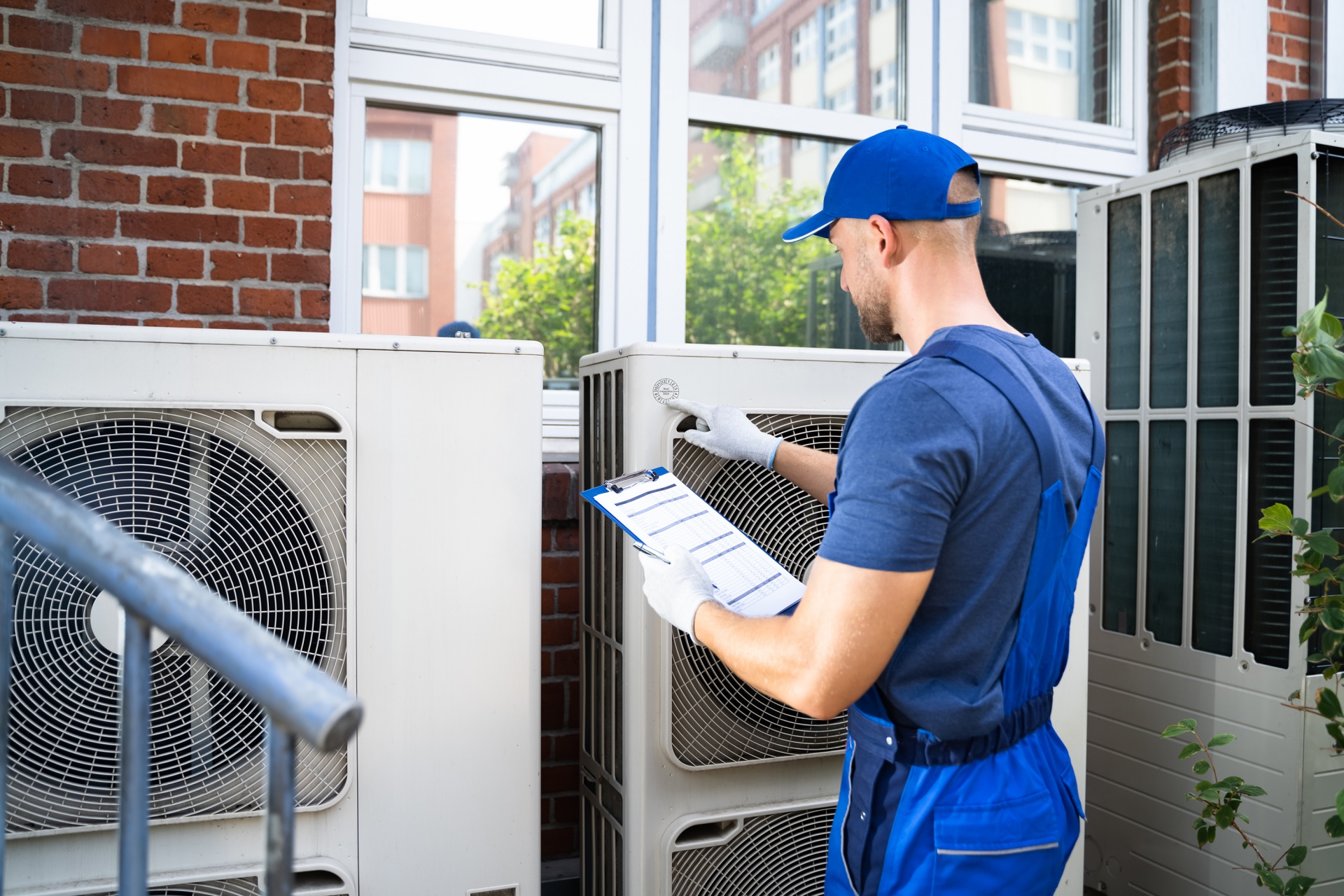
Air conditioning repair in Lexington, KY involves diagnosing and fixing mechanical, electrical, or refrigerant issues in residential cooling systems tailored to Central Kentucky’s humid climate. A licensed HVAC technician inspects critical components—including capacitors, compressors, evaporator coils, and condensate lines—to restore cooling efficiency, prevent structural water damage, and ensure compliance with Kentucky HVAC regulations.
Contents
How Central Kentucky’s Climate Impacts Air Conditioning Systems
Lexington sits in a humid subtropical climate zone (USDA Hardiness Zone 6b/7a transition) characterized by hot, sticky summers where afternoon high temperatures regularly top 90°F alongside relative humidity levels exceeding 70% to 80%. This combination creates a significant dual burden on residential air conditioning systems: sensible cooling (lowering the air temperature) and latent cooling (extracting water vapor from the air).
When relative humidity is elevated, your air conditioner must work substantially longer cycles to condense moisture out of the indoor air before it can effectively drop the ambient indoor temperature. This continuous operation accelerates thermal stress on electrical components, particularly capacitors and contactors, which are vulnerable to overheating during extended heat waves in July and August.
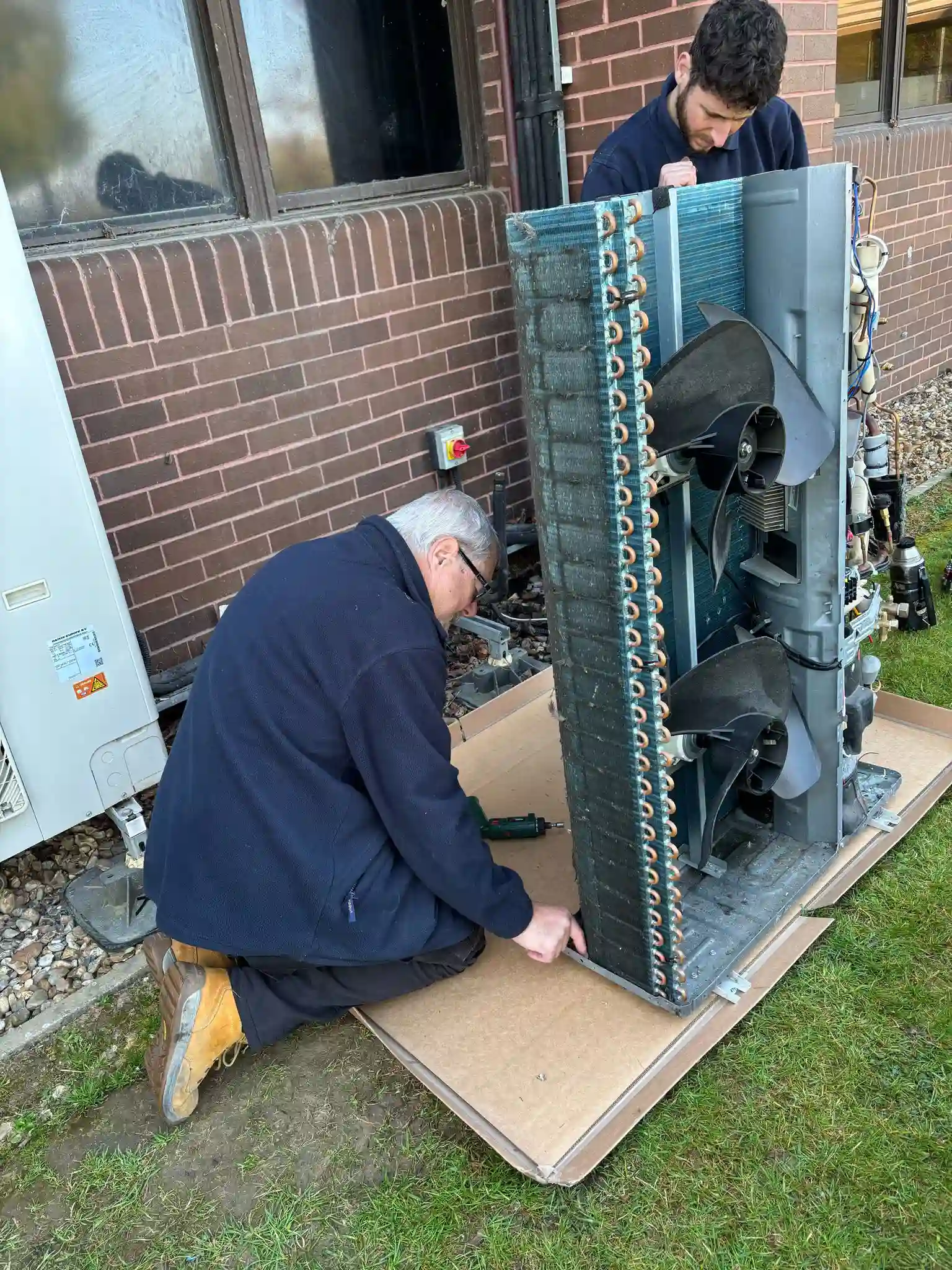
Additionally, Lexington’s lush Bluegrass landscape contributes high levels of seasonal allergens, agricultural dust, and tree pollen (such as oak, hickory, and cottonwood). When drawn into an outdoor condenser unit, airborne particulates coat the aluminum fins and copper tubing of the condenser coil. Dirt build-up acts as an insulating blanket, preventing the heat absorbed inside your home from releasing outdoors. Left uncleaned, this thermal barrier drives up head pressures within the compressor, increasing energy consumption and causing premature mechanical failure.
Common AC Failures and Their Causes
Understanding how specific components fail helps homeowners identify early warning signs before a complete system shutdown occurs.
- Indoor Air Handler / Furnace
- Evaporator Coil
- Moisture Condenses
- Drain Pan / Line
- Float Switch
- Drain Pan / Line
- Moisture Condenses
- Refrigerant Line Loop / High/Low Pressure Lines
- Evaporator Coil
- Outdoor Condenser Unit
- Compressor
- Run/Start Capacitors
- Contactor
- Condenser Coil
1. Capacitor and Contactor Degradation
The dual-run capacitor provides the electrical boost necessary to start and run the compressor motor and the outdoor fan motor. Capacitors are rated in microfarads ($\mu\text{F}$) and operate under high electrical tension. Summer heat degrades the dielectric fluid inside the capacitor, causing its capacitance value to drop.
When a capacitor falls out of its rated microfarad tolerance (typically $\pm 5%$), the motor runs hotter and draws excess amperage until it trips thermal overload protections or burns out entirely. Contactor relays, which switch high-voltage power to the condenser, can suffer from electrical arcing, pitting, or physical welding in the closed position, causing the outdoor unit to run continuously even when the indoor thermostat is satisfied.
2. Refrigerant Leaks and Evaporator Coil Freezing
Air conditioners operate on a closed loop; refrigerant is not consumed or "used up" over time. A drop in refrigerant charge indicates a leak within the copper or aluminum tubing, service valves, or flare connections.
In Lexington homes, formicary corrosion—a chemical reaction between copper lines, moisture, and trace volatile organic compounds (VOCs) inside the home—frequently creates microscopic pinhole leaks in indoor evaporator coils.
As refrigerant escapes, the internal pressure drops, causing the evaporating temperature inside the indoor coil to fall below the freezing point ($32^\circ\text{F}$). Moisture condensing out of the humid room air freezes onto the coil fins, compounding airflow restriction until the entire indoor unit becomes encased in a block of ice.
3. Condensate Drain Clogs and Float Switch Trips
During a peak Lexington summer day, a standard 3-ton residential AC unit can extract up to 10 to 15 gallons of water per day from the indoor air. This water drains into a drain pan and flows out through a 3/4-inch PVC condensate line.
Because the condensate water contains airborne dust, mold spores, and algae, a gelatinous biofilm frequently forms inside the PVC pipe. If the line becomes clogged, water backs up into the drain pan. Modern installations in Fayette County require an inline float switch (an overflow safety switch). When water levels rise, the float switch breaks the low-voltage thermostat wire (typically the $R$ or $Y$ wire), turning off the cooling system to prevent ceiling collapses and water damage to structural framing.
4. Blower Motor and Airflow Bottlenecks
Indoor airflow issues stem from dirty media filters, closed supply registers, or failing blower motors. When airflow across the indoor evaporator coil falls below roughly 350 to 400 cubic feet per minute (CFM) per ton of cooling capacity, heat cannot transfer efficiently into the refrigerant liquid. This leads to inefficient cooling performance, elevated electricity bills, and excessive wear on the indoor blower motor bearings.
The Air Conditioning Diagnostic Process
When a technician arrives for an AC repair service in Lexington, they follow a systematic diagnostic sequence to isolate the root cause of cooling failure rather than replacing parts at random.
System Diagnostics Sequence:
Thermostat & Electrical Verification (Low/High Voltage, Contactors)
Airflow & Filtration Inspection (Static Pressure, Filter, Blower)
Refrigerant Circuit Analysis (Superheat, Subcooling, Pressure Gauges)
Drain & Safety Controls Check (Float Switch, Condensate Line)
Thermostat and Control Circuit Verification: The technician confirms that the thermostat is sending a 24-volt AC signal to the air handler and outdoor condenser contactor relay.
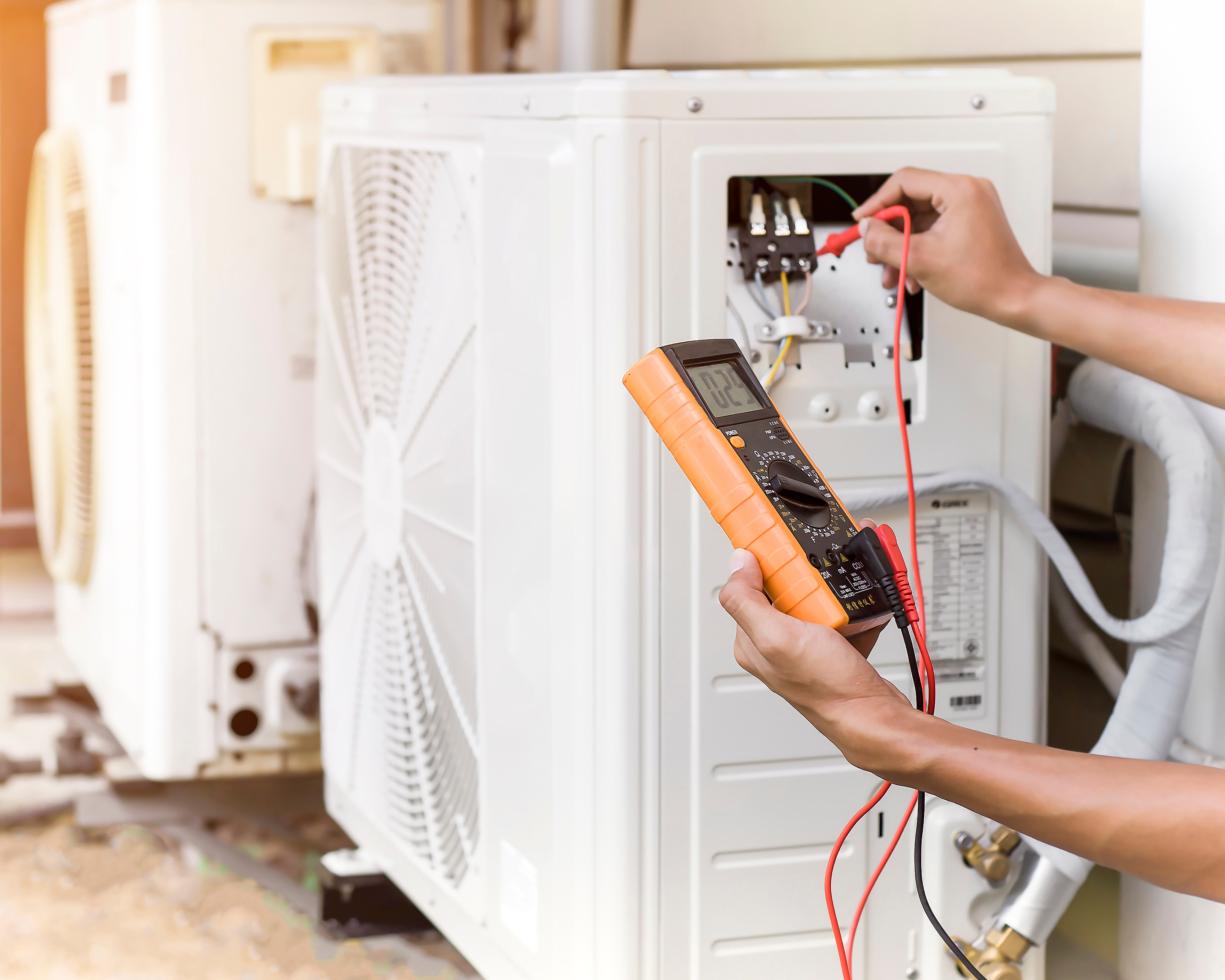
Electrical Measurements: Using a digital multimeter and clamp meter, the technician measures incoming line voltage, control voltage, motor winding resistance (ohms), running amperage (amps), and capacitor microfarad ratings against manufacturer specifications listed on the unit dataplate.
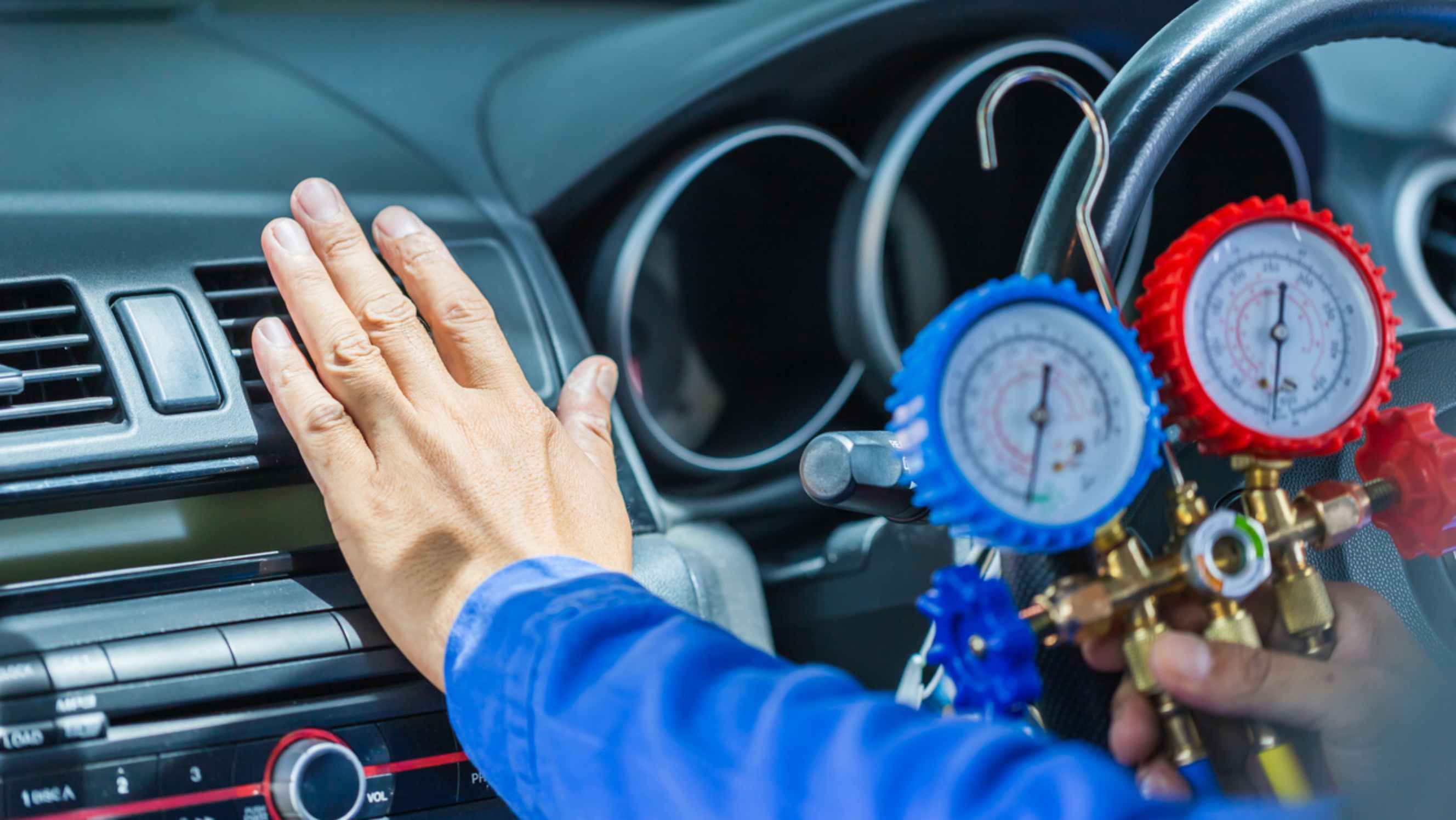
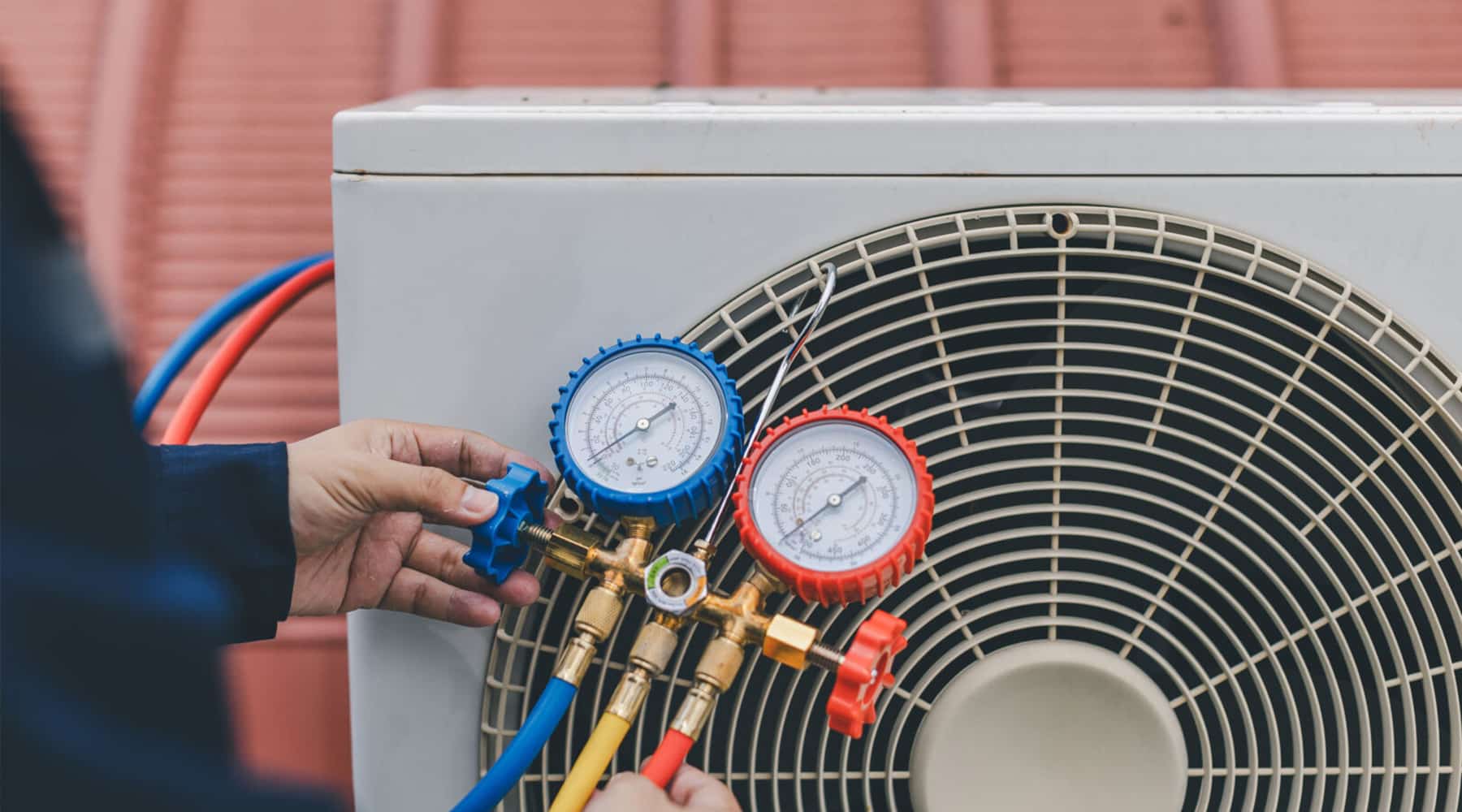
Refrigerant Pressure and Temperature Analysis: Digital manifold gauges are attached to the liquid line and suction line service ports. The technician calculates two crucial parameters:
- Superheat: The temperature rise of the refrigerant vapor above its saturation temperature as it leaves the evaporator. This confirms whether the liquid expansion device (TXV or fixed orifice) is feeding the correct amount of refrigerant into the coil.
- Subcooling: The temperature drop of the liquid refrigerant below its saturation temperature as it exits the outdoor condenser. Subcooling is the primary metric used to accurately charge systems equipped with Thermostatic Expansion Valves (TXVs).
Airflow and Static Pressure Testing: A dual-port manometer measures total external static pressure (TESP) in inches of water column ($\text{in. w.c.}$) across the air handler to determine if duct restrictions, dirty filters, or undersized returns are impeding heat exchange.
Condensate System Flushing and Safety Testing: Technicians clear the drain line using high-pressure nitrogen or vacuum extraction, verify the slope of the PVC piping, and test the automatic float switch cutoff mechanism.
Estimated AC Repair Costs in Lexington, KY
Repair costs vary based on system age, component type, refrigerant classification, and whether emergency off-hours labor applies. The table below outlines common AC repair scenarios, typical symptoms, and standard market price ranges in the Lexington area.
| Component / Repair Type | Typical Failure Symptoms | Estimated Cost Range (Parts & Labor) | Average Time to Complete |
|---|---|---|---|
| Dual-Run Capacitor Replacement | Outdoor fan or compressor humming but not starting; warm air blowing indoors. | $150 – $350 | 30 – 60 minutes |
| AC Contactor Replacement | Outdoor unit runs continuously or fails to turn on; chattering noise from outdoor disconnect switch. | $150 – $300 | 30 – 40 minutes |
| Condensate Line Drain Flush & Clear | AC shuts off unexpectedly (float switch tripped); standing water in drain pan or near furnace. | $125 – $250 | 45 – 75 minutes |
| Blower Motor Replacement | Weak or no airflow from room vents; burning smell near air handler; grinding metal noises. | $450 – $950 | 1.5 – 3 hours |
| Evaporator Coil Replacement | Recurring low refrigerant leaks; indoor coil freezing into a block of ice; persistent warm air. | $1,200 – $2,800 | 4 – 6 hours |
| Outdoor Fan Motor Replacement | Outdoor fan blade immobile; compressor trips internal thermal overload due to high head pressure. | $350 – $750 | 1 – 2 hours |
| Refrigerant Leak Repair & Recharge | System running continuously without dropping indoor temperature; hiss sound near coil. | $400 – $1,500+ (varies by refrigerant type & leak location) | 2 – 5 hours |
| Compressor Replacement | Breaker trips immediately upon cooling call; locked rotor amps (LRA); complete loss of cooling. | $1,500 – $3,200 | 4 – 8 hours |
Kentucky HVAC Licensing, Codes, and Safety Standards
In the Commonwealth of Kentucky, HVAC repairs and installations are governed strictly to protect public safety, property values, and environmental health.
Licensing Requirements
HVAC contractors operating in Lexington must hold an active license issued by the Kentucky Department of Housing, Buildings and Construction (DHBC) Division of HVAC. Individual technicians performing work must hold either a Master HVAC Contractor License or a Journeyman HVAC License. These credentials require documented field hours under supervision, passing comprehensive trade exams, maintaining general liability insurance, and completing annual continuing education.
Federal EPA Section 608 Certification
Any technician who opens a sealed refrigerant circuit or handles regulated refrigerants must hold EPA Section 608 Certification (Type I, Type II, Type III, or Universal). Federal law prohibits the intentional venting of fluorinated refrigerants, including R-22 and R-410A. Technicians must use specialized recovery machines and certified recovery cylinders to capture refrigerant during coil or compressor replacements.
Transition to Low-GWP Refrigerants
Under the AIM Act passed by the U.S. Congress, the HVAC industry is transitioning away from R-410A toward next-generation A2L refrigerants (such as R-454B and R-32) which feature lower Global Warming Potential (GWP). When repairing or replacing cooling equipment, technicians must adhere to updated safety standards regarding flammable refrigerant handling, proper leak detection sensor integration, and specific tool compatibility.
Repair vs. Replace: Evaluating Your Options
When faced with a major component failure—such as a cracked evaporator coil or a burned-out compressor—homeowners must evaluate whether repairing the existing air conditioner makes financial sense or if replacing the outdoor condenser and indoor coil is the better investment.
- Major AC Failure Occurs
- Is the unit > 10–12 years old?
- YES:
- Multiply Age × Repair Cost
- Is product > $5,000?
- YES: REPLACE
- NO: REPAIR
- NO:
- Evaluate Warranty & Repair Cost
- Is repair under 50% of new system?
- YES: REPAIR
- NO: REPLACE
- YES:
The $5,000 Rule
A practical industry guideline for evaluating repair viability is the $5,000 Rule: multiply the age of the cooling system (in years) by the total estimated repair cost (in dollars). If the product exceeds $5,000, system replacement is generally recommended over repair.
$$\text{Age of Unit (Years)} \times \text{Repair Cost ($)} = \text{Decision Index}$$
- Example A: A 4-year-old system needing a $600 fan motor replacement ($4 \times 600 = 2,400$). Because $2,400$ is below $5,000$, choosing to repair the unit is logical.
- Example B: A 13-year-old system needing a $1,800 evaporator coil repair ($13 \times 1,800 = 23,400$). Because $23,400$ far exceeds $5,000$, choosing to replace the system is financially wiser.
SEER2 Efficiency Ratings
Older systems (installed before 2023) were rated under the original SEER standard, often delivering seasonal efficiency between 10 and 13 SEER. Current Department of Energy regulations for the Southeastern region dictate a minimum efficiency standard of 14.3 SEER2 (or 15 SEER under the previous standard) for residential split systems. Upgrading from an inefficient, frequent-repair system to a modern SEER2-compliant heat pump or air conditioner can yield up to a 20% to 30% reduction in monthly summer electric bills.
Troubleshooting Guide for Homeowners
Before calling a professional technician for emergency AC repair in Lexington, perform these preliminary checks to rule out simple control or power issues:
- Inspect the Thermostat: Ensure the thermostat is set to "Cool" and the target temperature is set at least 3 to 5 degrees below the current room temperature. Replace dead AA/AAA batteries in electronic thermostats.
- Check the Circuit Breaker: Locate your main electrical panel and inspect the double-pole breaker dedicated to the air conditioner or heat pump. If the breaker has tripped to the middle position, flip it firmly to "Off" and then back to "On" once. If it trips again immediately, do not continue resetting it—this indicates a dangerous high-amp ground fault or short circuit that requires a professional diagnosis.
- Verify the Air Filter: A clogged air filter restricts airflow, causing coils to freeze and safety switches to trip. Replace disposable fiberglass or pleated filters every 30 to 90 days.
- Check the Condensate Pan Safety Switch: If your air handler is installed in an attic or utility closet, inspect the secondary drain pan. If the pan is full of standing water, clear the primary PVC drain line using a wet/dry shop vacuum attached to the exterior drain exit outside your home foundation.
Frequently Asked Questions
Why is my AC blowing warm air even though the fan is running?
When the indoor blower fan runs but the system blows warm air, the issue typically resides in the outdoor unit. Common causes include a failed dual-run capacitor preventing the compressor from starting, a tripped outdoor circuit breaker, low refrigerant levels from an unaddressed leak, or a clogged outdoor condenser coil preventing heat dissipation.
How often should I have my air conditioner serviced in Lexington?
HVAC systems in Central Kentucky should receive professional preventative maintenance once per year for the cooling system (typically in spring) and once per year for the heating system (in autumn). Annual service includes cleaning condenser coils, testing capacitor microfarads, verifying refrigerant subcooling, clearing condensate drains, and tightening electrical terminations.
What causes an AC unit to freeze up into a block of ice?
System freeze-ups are caused by either restricted indoor airflow (dirty filters, blocked returns, failed blower motor) or insufficient refrigerant pressure (caused by a leak). Both conditions cause the evaporator coil surface temperature to drop below $32^\circ\text{F}$, turning normal humidity condensation into solid ice. Running a frozen system can cause liquid refrigerant to flood back into the compressor, causing catastrophic hydraulic compression failure. Turn the system to "Off" and the thermostat fan setting to "On" to defrost the coil safely before calling a technician.
Are R-22 air conditioning systems still repairable?
Production and importation of R-22 refrigerant (Freon) was completely banned in the United States on January 1, 2020. While technicians can legally perform mechanical repairs on older R-22 systems, virgin R-22 refrigerant supplies are scarce and cost-prohibitive. If an R-22 system develops a major leak, replacing the system with modern equipment utilizing approved refrigerants is typically the only cost-effective solution.
How do I know if my AC issue is an electrical emergency?
Electrical issues that present immediate fire or shock hazards require prompt attention. Indicators include a burning plastic odor coming from air vents or the air handler, metallic buzzing/chattering sounds from electrical panels, a breaker that trips repeatedly upon resetting, or visible scorching on the outdoor disconnect box. Turn off power to the HVAC system at the main breaker panel immediately if these symptoms occur.
Actionable Next Steps for Homeowners
When your air conditioner shows signs of distress during a hot Lexington summer, follow a deliberate action plan to protect your home and equipment:
- Isolate the System: If you notice ice on copper refrigerant lines, water leaking through ceilings, or loud metallic noises, turn the AC off at the thermostat immediately to minimize structural water damage or compressor ruin.
- Document Symptoms: Write down specific observations—such as error codes on smart thermostats, peculiar noises (clicking, squealing, humming), or specific timing of power trips—to share with your service technician.
- Verify Credentials: Before hiring an HVAC service provider in Fayette County, verify that the company holds an active Kentucky HVAC Master license, carries current liability insurance, and employs EPA Section 608 certified technicians.
- Establish a Preventative Routine: Schedule seasonal tune-ups early in the spring before peak heat waves hit Central Kentucky. Keeping filters fresh and coils clear extends equipment life span, stabilizes monthly utility expenses, and minimizes unexpected emergency repair fees.
Image Gallery