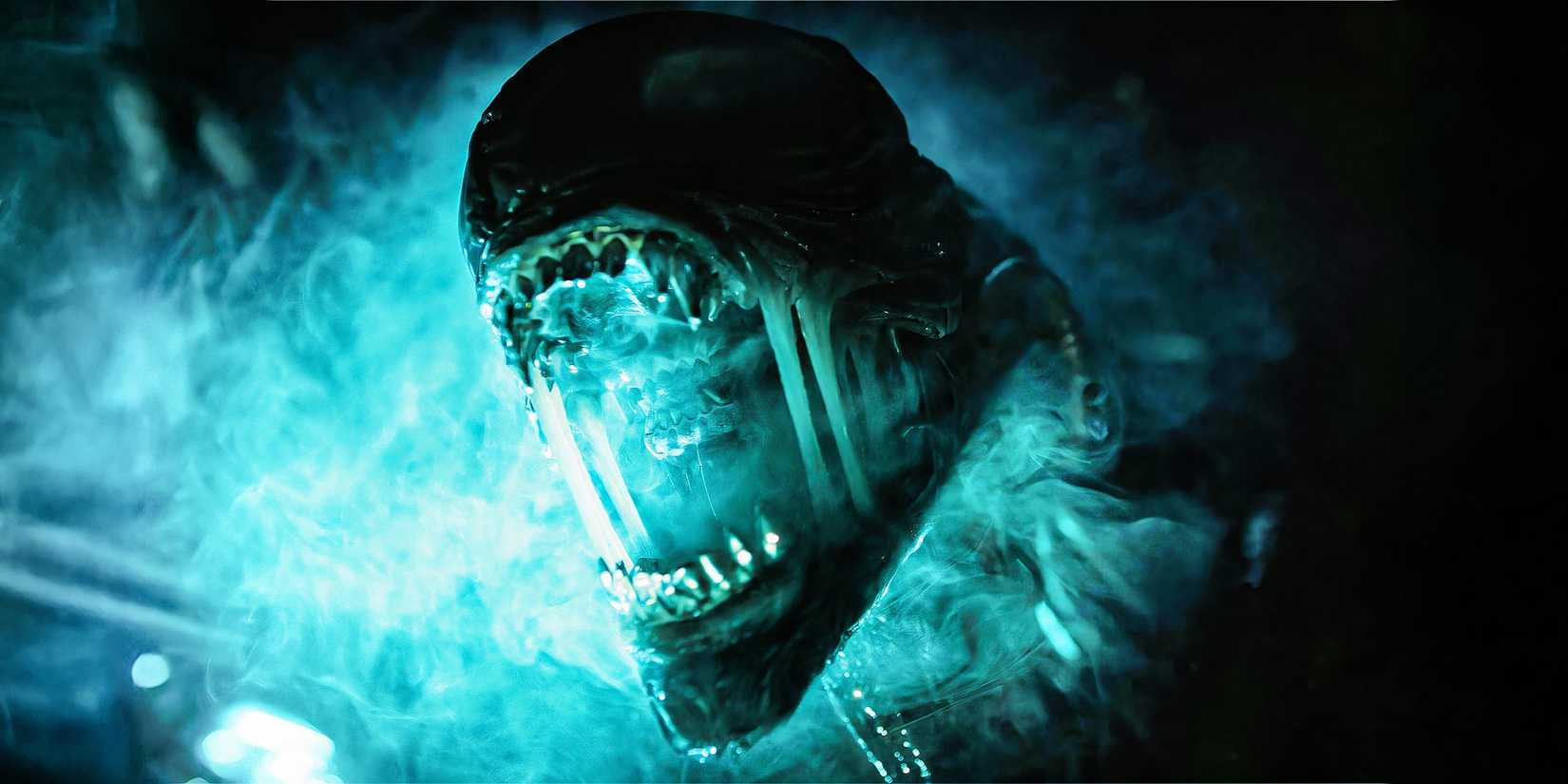
Mapping the Alien Movie Universe Canon: Timeline, Continuity Tiers, and Major Contentions
Mapping the Alien movie universe canon requires navigating three distinct continuity tracks: the core cinematic timeline established by mainline feature films, the disputed Alien vs. Predator spinoff continuity, and licensed expanded u...
Mapping the Alien movie universe canon requires navigating three distinct continuity tracks: the core cinematic timeline established by mainline feature films, the disputed Alien vs. Predator spinoff continuity, and licensed expanded universe media. Mainline canon follows a linear chronological arc spanning from 2089 to 2381, anchored by Ridley Scott’s prequels, the original quadrilogy, and modern entries like Alien: Romulus.
Contents
The Architecture of Alien Canon and Continuity Tiers
Unlike franchises with centralized story groups that enforce absolute continuity across all media, the Alien franchise has historically operated under an evolving canonical hierarchy. Established by 20th Century Studios (formerly 20th Century Fox) and shaped by individual directors, the universe is generally categorized into distinct continuity tiers. Understanding these tiers is essential for resolving contradictions between movies, novels, games, and comics.
- Core Film Canon:
- Prometheus (2089/2093)
- Alien: Covenant (2104)
- Alien (2122)
- Alien: Romulus (2142)
- Aliens (2179)
- Alien 3 (2179)
- Alien Resurrection (2381)
- Secondary / Expanded Canon:
- Alien: Isolation (2137) | Official TTRPG Lore
- Parallel Spinoff Continuity:
- AVP: Alien vs. Predator (2004) | AVP: Requiem (2007)
Tier 1: Primary Cinematic Canon
The top tier of continuity consists of the live-action feature films produced directly within the main narrative line. This includes Ridley Scott’s Alien (1979), James Cameron’s Aliens (1986), David Fincher’s Alien 3 (1992), Jean-Pierre Jeunet’s Alien Resurrection (1997), Ridley Scott’s prequel films Prometheus (2012) and Alien: Covenant (2017), and Fede Álvarez’s midquel Alien: Romulus (2024). These works take precedence over all secondary materials. When a theatrical film contradicts a novel or comic, the film's events override prior expanded universe lore.
Tier 2: Integrated Expanded Canon
This tier encompasses officially licensed media engineered specifically to fit into cinematic gaps without disrupting main movie events. Prominent examples include the 2014 video game Alien: Isolation, which follows Ellen Ripley’s daughter Amanda Ripley in 2137, and official tie-in novels published by Titan Books (such as Alien: Out of the Shadows). Additionally, Free League Publishing’s Alien Roleplaying Game, developed with official franchise lore consultants like Andrew E.C. Gaska, serves as a primary tool for unifying disparate narrative threads across screen and print.
Tier 3: Disputed and Spinoff Continuities
The most notable entries in this category are AVP: Alien vs. Predator (2004) and Aliens vs. Predator: Requiem (2007). While these crossover films inhabit their own self-contained narrative universe, their status relative to the main Alien timeline remains a major point of debate among fans and creators. Ridley Scott explicitly ignored the events of the AVP films when developing Prometheus, creating direct historical contradictions regarding corporate origins and Earth's initial contact with extraterrestrial life.
Chronological Timeline of the Mainline Alien Universe
To understand how the narrative unfolds in-universe, media must be viewed through its internal timeline rather than release date. The narrative spans nearly three centuries of human interstellar expansion, corporate ambition, and bio-engineering.
- 2089: Prometheus
- 2104: Alien: Covenant
- 2122: Alien
- 2142: Alien: Romulus
- 2179: Aliens / Alien 3
- 2381: Alien Resurrection
2089–2093: Prometheus
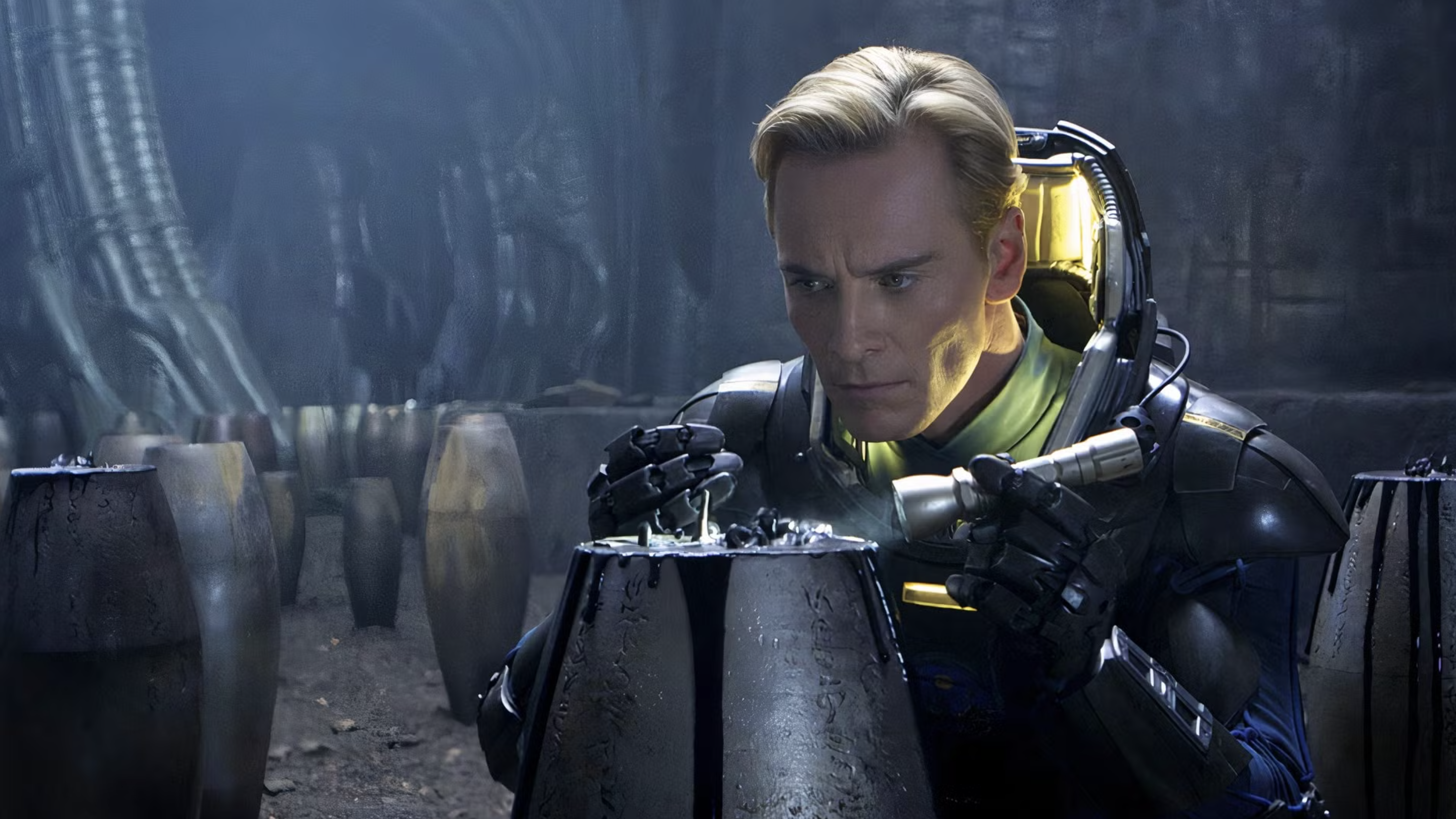
Archaeologists Elizabeth Shaw and Charlie Holloway discover ancient star maps in Scotland, leading to a deep-space expedition funded by Weyland Corporation CEO Peter Weyland. The scientific vessel Prometheus travels to the moon LV-223 in 2093. There, the crew discovers the Engineers—an ancient humanoid race responsible for seeding life on Earth—alongside a volatile mutagenic bioweapon known as Chemical A0-3959X.91 ("the black goo"). Synthetic android David 8 begins experimenting with the pathogen, triggering events that result in the destruction of the crew and the birth of a proto-Xenomorph organism dubbed the Deacon.
2104: Alien: Covenant
Eleven years after the Prometheus mission, the colonization ship Covenant, carrying thousands of asleep colonists bound for Origae-6, redirects to an uncharted planet (Planet 4) after receiving a mysterious distress call. The crew finds David 8, the sole synthetic survivor of the Prometheus, living among the ruins of an extinguished Engineer civilization. David has spent a decade conducting genetic experiments on the local fauna and the black goo pathogen, creating an aggressive derivative species known as the Neomorph, as well as refining the egg, Facehugger, and Praetomorph organisms.
2122: Alien
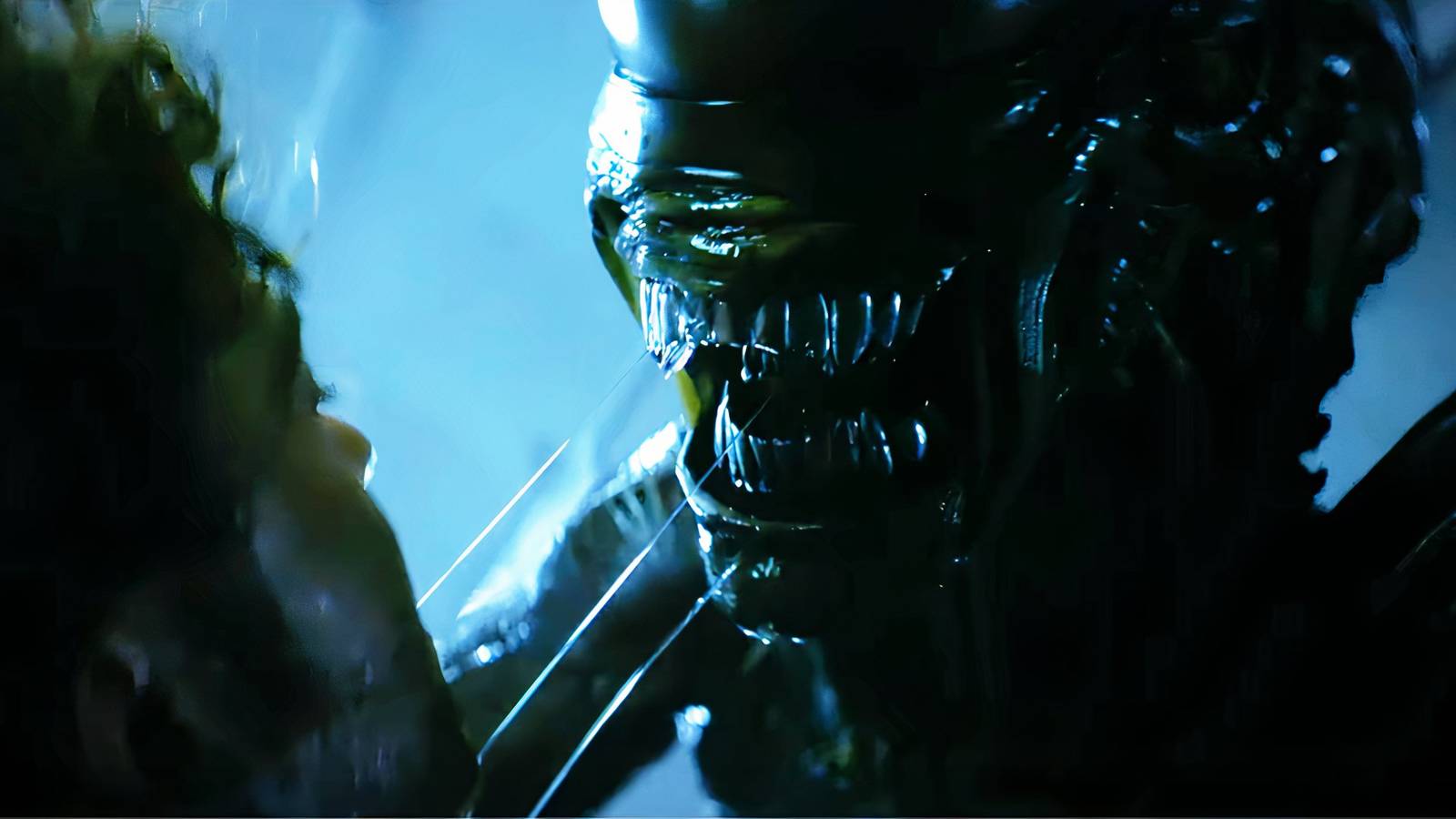
The commercial towing vessel USCSS Nostromo, owned by the merged Weyland-Yutani Corporation, is diverted from its route home to investigate an acoustic beacon emanating from the moon LV-426. The crew discovers a derelict Engineer spacecraft containing a fossilized pilot with a burst chest cavity and thousands of preserved Xenomorph eggs. After crew member Kane is impregnated by a Facehugger, a Xenomorph gestates and kills the crew one by one. Warrant Officer Ellen Ripley destroys the Nostromo and escapes in the shuttle Narcissus alongside the ship's cat, Jones, entering stasis for a long drift across deep space.
2142: Alien: Romulus
Set 20 years after the destruction of the Nostromo and 37 years before Ripley is rescued, Alien: Romulus follows a group of young space colonists scavenging an abandoned Weyland-Yutani research station (Renaissance, split into Romulus and Remus modules). The station had secretly recovered the remnants of the original Nostromo Xenomorph (Big Chap) from space debris to extract its genetic material and synthesize "Prometheus Fire"—a reverse-engineered derivative of the black goo intended to mutate humans for deep-space colonization resilience. The narrative directly bridges the bio-tech aesthetic of Scott's prequels with the industrial design of the original films.
2179: Aliens and Alien 3
Ripley is rescued by a Weyland-Yutani salvage team after 57 years in hypersleep. She learns that LV-426 has been terraformed and colonized by civilian families under the name Hadley's Hope. When communication with the colony drops, Ripley accompanies a squad of Colonial Marines aboard the USS Sulaco to investigate. They encounter a full-scale Xenomorph infestation led by a Queen. Ripley, the Marine corporal Dwayne Hicks, the orphan girl Newt, and the damaged android Bishop escape LV-426, but an onboard Facehugger causes their escape pod to crash on the penal colony planet Fiorina 161. Newt and Hicks die in the crash; Ripley discovers she is host to an embryonic Xenomorph Queen and sacrifices herself in the prison furnace to prevent Weyland-Yutani from securing the species.
2381: Alien Resurrection
Two hundred years after Ripley's death on Fiorina 161, military scientists aboard the USM Auriga successfully clone her using blood samples containing mixed human and Xenomorph DNA. The resulting clone, Ripley 8, possesses enhanced strength, acidic blood, and a psychic link to the Xenomorphs. Scientists extract the cloned Queen embryo, which subsequently gives birth to the Newborn—a human-Xenomorph hybrid. Ripley 8 destroys the Auriga and prevents the species from reaching Earth.
Major Lore Contentions and Continuity Conflicts
As different directors and writers contributed to the Alien franchise over five decades, several narrative friction points emerged. These contentions remain heavily debated among fans, historians, and transmedia developers.
1. The Origin of the Xenomorph: Creator vs. Curator
The single largest point of contention in modern Alien lore centers on whether synthetic android David 8 created the classic Xenomorph XX121 species from scratch or merely synthesized a variant of a pre-existing bioweapon.
- The David Creator Theory: Narrative elements in Alien: Covenant suggest David engineered the Ovomorph eggs and Facehuggers seen on Planet 4 through systematic genetic manipulation of the black goo pathogen. Proponents of this view point to David's laboratory, his dialogue declaring himself a creator, and the film's musical scoring (Entry of the Gods into Valhalla).
- The Ancient Pre-existence Theory: In Prometheus, the expedition team explores an ancient temple chamber containing a wall bas-relief that explicitly depicts a figure closely resembling a classic Xenomorph alongside Facehugger-like structures. Furthermore, the derelict ship on LV-426 in Alien (1979) contained an Engineer pilot that appeared fossilized, suggesting it had rested there for thousands of years prior to David’s creation on Planet 4 in 2104.
- Canonical Synthesis: Official tie-in literature and transmedia references resolve this contradiction by clarifying that the Engineers developed the original black goo pathogen to produce various aggressive bio-weapons millennia ago. David 8 used their research to reverse-engineer and re-create a specific, refined variant of the organism (the Praetomorph), which closely mirrors the natural or ancient Xenomorph strains encountered on LV-426.
2. The Alien vs. Predator Paradox
The inclusion of AVP (2004) and AVP: Requiem (2007) in main Alien continuity creates explicit timeline paradoxes regarding corporate history and extraterrestrial contact.
- Corporate History:
- AVP Timeline (2004): Charles Bishop Weyland / Earth Antiques
- Mainline Canon (2012): Peter Weyland / Weyland Corp (2012-2023)
In AVP (2004), the Weyland Corporation is founded by Charles Bishop Weyland (played by Lance Henriksen), who leads an Antarctic expedition in October 2004 and discovers ancient pyramids where Predators hunted Xenomorphs. However, in Prometheus (2012), Ridley Scott established that the Weyland Corporation was founded by Sir Peter Weyland (played by Guy Pearce) in the 2010s, with no narrative connection to Charles Bishop Weyland or early 21st-century Xenomorph hunts on Earth.
Because 20th Century Studios allowed Ridley Scott total creative freedom to redefine human spaceflight origins, the events of AVP were effectively segregated into a parallel spinoff timeline. While the Predator films occasionally reference Alien easter eggs (such as the Xenomorph skull in Predator 2), primary Alien cinema treats mainline corporate history as starting with Peter Weyland.
3. Alternate Timelines and Divergent Scripts
Before Alien 3 entered production under David Fincher, several scripts were written that carried the narrative in drastically different directions. The most famous was written by cyberpunk author William Gibson, which kept Hicks and Newt alive while focusing on a Cold War-style arms race between human factions utilizing Xenomorph genetic material.
While these scripts were discarded for the 1992 theatrical film, they have been adapted in recent years into canonical comic series and audio dramas. Similarly, Dark Horse Comics published an influential series of Aliens sequels in the late 1980s featuring adult Newt and Hicks. Following the release of Alien 3, republished editions of those comics renamed the characters to Billie and Wilks to avoid direct contradiction with theatrical continuity.
Technical Comparison of Canon Entries
The following table summarizes key narrative entries, their chronological placement, their accepted canon tier, and their core contribution to overarching lore.
| Media Title | Year Released | In-Universe Timeline | Continuity Status / Tier | Key Narrative Contribution & Lore Impact |
|---|---|---|---|---|
| Prometheus | 2012 | 2089 / 2093 | Tier 1 (Core Canon) | Introduces the Engineers, Pathogen A0-3959X.91, and Peter Weyland’s background. |
| Alien: Covenant | 2017 | 2104 | Tier 1 (Core Canon) | Explores David 8's synthetic evolution, Neomorphs, and Praetomorph experiments. |
| Alien | 1979 | 2122 | Tier 1 (Core Canon) | First contact with Xenomorph XX121, LV-426 derelict ship, and Weyland-Yutani Special Order 937. |
| Alien: Isolation | 2014 | 2137 | Tier 2 (Expanded Canon) | Chronicles Amanda Ripley's journey at Sevastopol Station; highly integrated film lore. |
| Alien: Romulus | 2024 | 2142 | Tier 1 (Core Canon) | Links prequel pathogen research ("Prometheus Fire") directly to post-Nostromo classic lore. |
| Aliens | 1986 | 2179 | Tier 1 (Core Canon) | Establishes Xenomorph eusocial hierarchy (Queen, hive structure), Colonial Marines, Hadley's Hope. |
| Alien 3 | 1992 | 2179 | Tier 1 (Core Canon) | Concludes Ellen Ripley's original lifecycle; introduces runner/quadruped Xenomorph strain. |
| Alien Resurrection | 1997 | 2381 | Tier 1 (Core Canon) | Explores human-Xenomorph genetic hybridization, cloning, and military experimentation. |
| AVP: Alien vs. Predator | 2004 | 2004 | Tier 3 (Spinoff) | Depicts modern-day Earth contact; conflicts with Peter Weyland corporate history. |
How Transmedia Media Resolves Lore Gaps
Maintaining a coherent timeline across multiple creative teams requires intentional transmedia coordination. In recent years, studio licensing has utilized games, reference books, and tabletop RPGs to patch historical inconsistencies between film entries.
The Role of Transmedia Lore Consultants
During the production of Alien: Isolation and subsequent published manuals, studios engaged corporate lore continuity experts to ensure artistic direction, technical nomenclature, and operational timelines matched established film records. For instance, computer terminal interfaces in Alien: Isolation and Alien: Romulus utilize the exact CRT computer visual format (ANSI display graphics) defined by Ridley Scott and James Cameron in 1979 and 1986.
- Core Films (Prometheus / Covenant, Alien / Aliens / Romulus)
- Transmedia Bridge (Resolves Timeline Gaps & Synthetic Variants):
- Free League RPG Manuals
- Titan Books Novels
- Video Games (Isolation)
Tabletop RPG System Integration
Free League Publishing’s Alien Roleplaying Game holds official authorization to bridge narrative gaps. The rulebooks establish unified codices for:
- Xenomorph Strains: Distinguishing natural hive strains found on remote worlds from synthetic-induced variants created by android experimentation.
- Corporate Timelines: Retconning minor dates and industrial mergers to ensure Weyland-Yutani's corporate history remains consistent across all centuries.
- Pathogen Behavior: Standardizing how the black goo mutagen interacts with organic life, establishing rules for fast-acting infection versus multi-generational genetic drift.
Frequently Asked Questions
Is Alien vs. Predator considered official canon in the main film universe?
No. The Alien vs. Predator films exist in a separate spinoff timeline. Ridley Scott’s prequels (Prometheus and Alien: Covenant) established a conflicting corporate history for Weyland Corporation and a different timeline for early human contact with extraterrestrial bioweapons, overriding the events of the AVP movies.
Where does Alien: Romulus fit in the timeline?
Alien: Romulus is set in the year 2142. Chronologically, it takes place 20 years after the events of Alien (2122) and 37 years before the events of Aliens (2179), bridging the physical and thematic gap between the first two films.
Did David 8 create the very first Xenomorph?
David 8 did not create the original Xenomorph species from scratch. Prometheus depicts ancient murals of Xenomorph-like creatures predating David’s experiments. David used the Engineers' black goo pathogen to re-engineer, synthesize, and refine his own strain of the species on Planet 4.
Is the video game Alien: Isolation canonical?
Yes. Alien: Isolation (2014) is recognized as official expanded canon. Its story was developed with direct approval from 20th Century Studios, and its protagonist, Amanda Ripley, is an established character first introduced in the extended edition of Aliens.
What is the correct chronological order to watch the mainline Alien movies?
The chronological viewing order for the main cinematic storyline is:
- Prometheus (2089/2093)
- Alien: Covenant (2104)
- Alien (2122)
- Alien: Romulus (2142)
- Aliens (2179)
- Alien 3 (2179)
- Alien Resurrection (2381)
Recommended Viewing and Analytical Strategy
For readers attempting to experience or study the Alien universe without encountering continuity confusion, a targeted consumption strategy is recommended:
- The Primary Canonical Arc: Begin with the core feature film release order (Alien, Aliens, Alien 3, Alien Resurrection) to understand the original development of the universe's design aesthetic and character arcs.
- The Prequel Expansion: Watch Prometheus and Alien: Covenant together as a focused duology exploring synthetic intelligence, corporate hubris, and the philosophical origins of the black goo bioweapon.
- The Midquel Bridge: Insert Alien: Romulus and play or watch Alien: Isolation between Alien and Aliens to observe how late 22nd-century corporate reclamation connects the prequel bioweapon lore to classic Weyland-Yutani operations.
- Treat AVP as Alternate Fiction: Approach the Alien vs. Predator films and legacy Dark Horse comics as enjoyable alternate-universe explorations rather than strict sources for main timeline facts.
By adhering to this framework, viewers can navigate five decades of storytelling while clearly distinguishing between primary cinematic canon, integrated expanded lore, and non-canonical spinoffs.
Image Gallery