How Much Does a Real T. Rex Skull Cost? Price Guide and Market Value
A real, standalone Tyrannosaurus rex skull costs between $6 million and $20 million at private auctions, while near-complete T. rex skeletons containing intact skulls have sold for as much as $31.8 million. Isolated skull fragments or...
A real, standalone Tyrannosaurus rex skull costs between $6 million and $20 million at private auctions, while near-complete T. rex skeletons containing intact skulls have sold for as much as $31.8 million. Isolated skull fragments or single teeth range from $500 for small, worn pieces to over $30,000 for large, rooted crown teeth in pristine condition.
Contents
The Financial Landscape: Current Market Value of T. Rex Skulls
The commercial market for prehistoric fossils has experienced unprecedented inflation over the past two decades, elevating top-tier dinosaur specimens to the status of fine art and high-value physical assets. Among all prehistoric collectibles, the skull of Tyrannosaurus rex remains the undisputed apex predator of the auction world.
Valuing a T. rex skull requires understanding that no two fossilized skulls are identical. Because fossilization is an extraordinarily rare biological event, pricing depends heavily on bone completeness, state of preservation, and the structural integrity of key cranial elements.
| Category | Valuation Spectrum |
|---|---|
| Isolated Tooth / Fragment | $500 - $35,000 |
| Partial Jaw / Bone Element | $150,000 - $1,500,000 |
| Composite / Partial Skull | $2,000,000 - $5,500,000 |
| High-Completeness Skull | $6,000,000 - $20,000,000+ |
| Full Skeleton with Skull | $8,000,000 - $31,800,000+ |
Complete and Substantially Intact Skulls
A standalone T. rex skull with high anatomical completeness—meaning more than 50% to 75% of the original fossilized bone is present—commands between $6 million and $20 million on the open market. These rare specimens include critical structures such as the braincase (neurocranium), paired maxillae, dentaries (lower jaws), and intact surangular bones. When a complete skull is sold as part of an articulated, high-completeness full skeleton, the total valuation frequently surpasses $30 million.
Partial Skulls and Isolated Cranial Elements
Partial skulls—specimens missing significant sections like the braincase or upper snout, or constructed from mixed individuals (composite skulls)—typically range from $2 million to $5.5 million. Individual cranial bones, such as an isolated, intact dentary bone holding multiple teeth or a pristine maxilla, consistently sell for $150,000 to $1.5 million depending on bone density, surface detail, and tooth retention.
Individual Teeth and Bone Chips
For private collectors operating outside the multi-million-dollar institutional range, individual T. rex teeth represent the primary entry point into ownership:
- Small, partial, or worn teeth (under 2 inches): $500 to $2,500.
- Medium teeth with visible serrations (2 to 4 inches): $3,000 to $12,000.
- Large, complete crown teeth with intact roots (5+ inches): $15,000 to $35,000+.
- Unidentified bone fragments (chips): $50 to $300 per gram depending on provenance.
Landmark Sales: Benchmark Auction Prices
To understand how pricing reaches multi-million-dollar levels, one must examine historical auction benchmarks. These sales demonstrate how private collectors, investment funds, and public museums compete for top-tier specimens.
| Specimen Name / Id | Year of Sale | Final Auction Price (USD Equivalent) | Key Distinguishing Feature |
|---|---|---|---|
| "Sue" (FMNH PR2081) | 1997 | $8.36 Million | 85% complete body; iconic 5-foot skull |
| "Stan" (BHI 3033) | 2020 | $31.8 Million | Near-perfect skull; extreme bidding war |
| "Maximus" | 2022 | $6.1 Million | Standalone 6.7-foot isolated skull |
| "TRX-293 Trinity" | 2023 | $6.7 Million | Composite skeleton (3 specimens) |
"Sue" (1997) – $8.36 Million
Discovered in South Dakota in 1990, "Sue" set the baseline for modern fossil valuation when auctioned by Sotheby's in 1997. Fetching $8.36 million (equivalent to roughly $15 million to $16 million in adjusted currency), the specimen was acquired by the Field Museum of Natural History in Chicago with financial backing from corporate sponsors. Sue's skull was so dense and complete (weighing over 600 pounds) that it had to be separated from the mounted skeleton for display, allowing researchers direct access to study its braincase.
"Stan" (2020) – $31.8 Million
Sold by Christie’s in October 2020, "Stan" smashed all previous paleontology records by fetching $31.8 million. The specimen's 4.5-foot skull is widely considered one of the finest T. rex skulls ever recovered, boasting near-flawless surface preservation and complete jaw elements. The skull’s exceptional condition was the primary catalyst driving the intense international bidding war. The specimen was purchased for inclusion in the Natural History Museum Abu Dhabi.
"Maximus" (2022) – $6.1 Million
In December 2022, Sotheby's auctioned "Maximus," a standalone 6.7-foot, 200-pound skull excavated in Harding County, South Dakota. Unlike Sue or Stan, Maximus was offered purely as a cranial fossil without the remainder of the skeleton. Despite initial pre-sale estimates ranging between $15 million and $20 million, the hammer fell at $6.1 million. The sale proved that while isolated skulls command massive capital, market dynamics favor full, articulated skeletons.
"TRX-293 Trinity" (2023) – $6.7 Million
Auctioned in Zurich by Koller Auctions, "Trinity" brought $6.7 million (5.6 million Swiss francs). Trinity was a composite specimen assembled from the fossilized bones of three distinct T. rex individuals excavated from the Hell Creek and Lance Formations. The skull was constructed using elements from these different specimens paired with scientific restoration, highlighting how composite origins impact final valuation compared to single-individual skeletons.
Key Factors That Determine T. Rex Skull Valuation
Determining the market price of a T. rex skull requires rigorous physical, scientific, and legal appraisal. Commercial fossil appraisers and auction houses evaluate four primary variables:
- Valuation Criteria Matrix
- Completeness: % Real Bone vs. Restoration Resin
- Preservation: Crush Depth, Taphonomic Quality
- Provenance: Legal Title & Land Ownership
- Anatomy: Braincase, Teeth, Pathologies Present
1. Bone Completeness vs. Resin Restoration Ratio
No fossilized skull is 100% complete. During the fossilization process, delicate bone structures are frequently crushed or dissolved.
Appraisers measure the real bone percentage. A skull composed of 65% real bone and 35% sculpted synthetic matrix (acrylic or resin) will command significantly more value than one that is 30% real bone and 70% fill. If a skull relies heavily on composite bones from other dinosaurs to fill gaps, its value drops relative to single-individual skulls.
2. Taphonomy and Distortion
T. rex skulls were subjected to millions of years of rock pressure. Many discovered skulls suffer from severe lateral crushing, where tectonic forces flatten the skull laterally like a pancake.
- 3D Intact Skulls: Skulls that retain their original three-dimensional architecture—with uncrushed fenestrae (skull openings) and minimal warping—fetch top-tier prices ($10 million+).
- Crushed/Flattened Skulls: Highly crushed skulls, while scientifically valuable, suffer a 30% to 50% discount in private aesthetic sales because they are harder to mount for display.
3. Anatomical Completeness: The "Braincase" Factor
Certain anatomical regions of the skull carry disproportionate financial weight:
- The Neurocranium (Braincase): The thick, heavy back portion of the skull housing the brain cavity is exceptionally rare. A fossilized braincase drastically inflates market value because of its scientific utility in neuro-anatomical research.
- Premaxilla and Dentary Teeth: A skull retaining its original, rooted teeth in the tooth sockets commands a major premium over a hollow jaw requiring artificial tooth inserts.
4. Legal Provenance and Title Clarity
A fossil’s value falls to zero on the legitimate commercial market if its ownership chain is tainted by illegal excavation or export violations. Clear, indisputable legal title—showing explicit written consent from private landowners—is mandatory for high-value sales.
Legal Ownership and Excavation Rules
The legality of owning, buying, or selling a real T. rex skull depends entirely on where the fossil was discovered and the property rights governing that land.
- Jurisdictional Legality
- United States Land
- Private Land: Legal to Buy, Sell, & Export
- Federal/Public: STRICTLY ILLEGAL to Sell Privately
- International Land
- Export Ban Nations (Mongolia, China, Brazil): Seizable
- Regulated Sales (UK, Canada, Europe): Permits Required
- United States Land
United States: Private vs. Federal Land
The United States is the primary source of legally tradable T. rex fossils due to its unique property laws governing the Hell Creek Formation (spanning Montana, North Dakota, South Dakota, and Wyoming):
- Private Land: Under US common law, fossils discovered on privately owned land belong entirely to the landowner. If a commercial excavator obtains a signed lease or contract from the landowner, the resulting T. rex skull can be legally bought, sold, auctioned, and exported globally.
- Federal and State Public Land: Under the U.S. Paleontological Resources Preservation Act (PRPA), any fossil collected on federal land (managed by the Bureau of Land Management, U.S. Forest Service, or National Park Service) remains public property. Commercial excavation on federal land is illegal, and selling these fossils is a federal felony carrying severe prison sentences and asset forfeiture.
International Export Restrictions
Many foreign nations designate all paleontological resources as state property, regardless of whether they were found on private or public soil:
- Mongolia and China: Enforce strict national ownership laws over all dinosaur fossils. High-profile enforcement actions have resulted in federal seizures of imported specimens (such as Asian Tarbosaurus bataar skulls smuggled under false manifests) and forced repatriations.
- Canada: The province of Alberta, home to rich fossil deposits, strictly regulates historical resource exports under the Historical Resources Act; specimens excavated there generally cannot leave the province or enter private commercial trade.
How Experts Authenticate Real T. Rex Skulls
Given the multi-million-dollar stakes, counterfeit fossils, misidentified species (such as confusing a large Nanotyrannus or Gorgosaurus with a juvenile T. rex), and heavily restored resin replicas are major market risks. Professional appraisers and paleontologists employ rigorous verification protocols:
| Testing Method | Technical Process | Objective |
|---|---|---|
| Computed Tomography (CT Scanning) | Industrial 3D X-ray mapping of internal skull density | Exposes hidden resin, pins, and structural adhesives |
| UV Light Scanning | Fluorescence exposure under ultraviolet light frequency wavelength | Reveals fill material vs. fossilized bone |
| Histological Analysis | Micro-sectioning or high-res imaging of bone grain structure | Confirms cellular bone structure matrix |
| Stratigraphic Audit | Matrix rock residue chemical matching to geological layer | Verifies Hell Creek or formation origins |
1. Industrial CT Scanning
High-resolution CT scanning allows scientists to peer inside the fossilized matrix without damaging the skull. Bone and synthetic acrylic resins possess different material densities, which show up clearly on a CT scan. This process exposes hidden steel supports, internal glue joints, or restored resin sections hidden underneath paint layers.
2. Ultraviolet (UV) Light Analysis
Under long-wave ultraviolet light, fossilized bone mineralized over 66 million years fluoresces at a distinctly different wavelength than modern epoxy resins, glues, and polyester body fillers. Holding a UV lamp to a T. rex skull instantly illuminates filled cracks, artificial tooth sockets, and restored bone patches.
3. Petrographic and Matrix Testing
Extracted rock sediment (matrix) surrounding the skull undergoes mineralogical testing. Real T. rex fossils from North America reside within specific geological formations—most notably the Hell Creek Formation or the Lance Formation. Chemical analysis confirms whether the rock matrix matches the reported excavation site.
Comparison of Dinosaur Skull Market Values
To put the price of a T. rex skull into context, it helps to compare it to other popular dinosaur skulls traded on the commercial market.
| Dinosaur Species | Taxon Class | Average Skull Length | Completeness Range | Typical Commercial Market Price |
|---|---|---|---|---|
| Tyrannosaurus rex | Large Theropod | 4.5 ft – 6.5 ft | 50% – 85%+ | $6,000,000 – $20,000,000+ |
| Triceratops horridus | Ceratopsian | 6.0 ft – 8.0 ft | 60% – 80% | $750,000 – $3,500,000 |
| Allosaurus fragilis | Medium Theropod | 2.5 ft – 3.5 ft | 50% – 75% | $1,200,000 – $4,500,000 |
| Edmontosaurus | Hadrosaur | 3.5 ft – 4.5 ft | 50% – 80% | $150,000 – $600,000 |
| Mosasaurs (Hoffmanni) | Marine Reptile | 3.0 ft – 5.0 ft | 60% – 85% | $80,000 – $350,000 |
| Diplodocus / Apatosaur | Sauropod | 2.0 ft – 2.5 ft | 40% – 70% | $400,000 – $1,500,000 |
Accessible Alternatives for Collectors and Museums
Because authentic, high-completeness T. rex skulls cost millions of dollars, most private enthusiasts, schools, and regional museums rely on alternative acquisition paths:
| Option Category | Material Composition | Price Range | Primary Usage |
|---|---|---|---|
| Scientific Casts (Research-Grade) | High-density resin / fiberglass from 3D scan | $10,000 – $45,000 | Museums, Universities, Private Displays |
| Individual Shed Teeth | Authentic fossilized dentin / enamel | $2,500 – $15,000 | Private Cabinet of Curiosities |
| Fossil Matrix Micro-Fossils | Raw excavated sediment containing bone chips | $50 – $300 | Educational Scrubbing Kits |
Research-Grade Cast Replicas
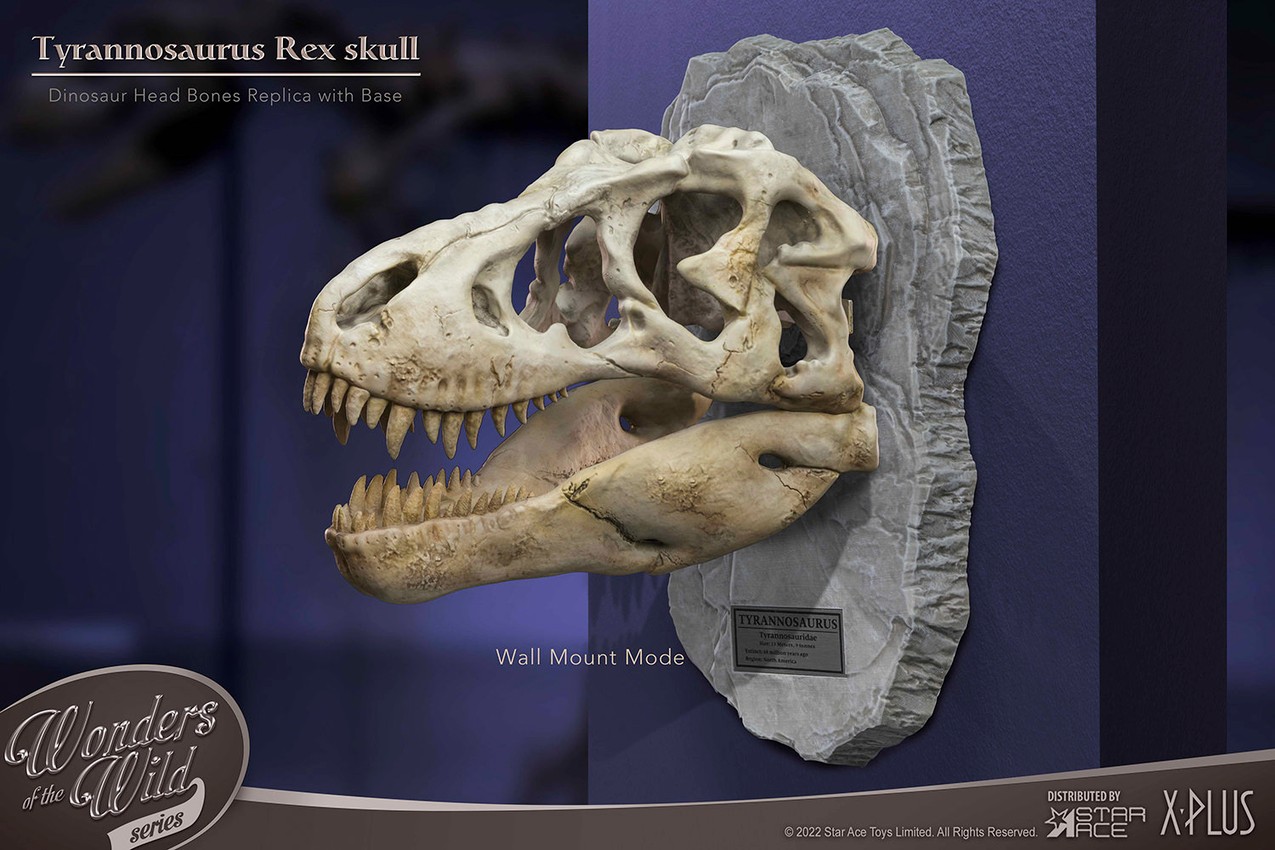
High-fidelity casts poured from molds of famous specimens (such as Sue or Stan) or produced via 3D laser scans offer exact anatomical detail down to microscopic surface texture.
A professional, full-scale resin cast of a 5-foot T. rex skull costs between $10,000 and $45,000, depending on whether it includes a custom steel mounting frame and hand-painted finish. These replicas are durable, lightweight, and legally uncomplicated.
Shed Teeth
T. rex constantly shed and regenerated teeth throughout its life, leaving thousands of teeth buried across Western North America. Collecting "shed teeth"—which lack roots because they broke off naturally while feeding—provides authentic fossil ownership at a fraction of the cost of a complete skull.
FAQs About T. Rex Skull Pricing
Can a private individual legally buy and own a real T. rex skull?
Yes. If the T. rex skull was excavated on privately owned land within the United States with explicit permission from the landowner, it is legal for a private individual to purchase, own, or sell it. However, if the specimen was taken from public federal land or illegally exported from countries like Mongolia, private ownership is illegal.
Why are T. rex skulls so expensive compared to other dinosaurs?
T. rex skulls command high prices due to extreme rarity, iconic cultural status, and sheer size. As an apex predator, T. rex made up a tiny fraction of the total prehistoric ecosystem population compared to herbivores like Triceratops or Edmontosaurus, making their fossilized remains significantly harder to find.
How much is an authentic, single T. rex tooth worth?
An authentic T. rex tooth ranges from $500 for a small, worn fragment to over $30,000 for a large (5+ inch) tooth with an intact root, full serrations, and enamel preservation.
How do experts tell a real T. rex skull from a resin cast replica?
Experts use weight checks, thermal conductivity tests, UV light inspection, CT scans, and microscopic inspection. Real fossilized bone is significantly heavier than resin because minerals have replaced the organic tissue. It also cold-conducts temperature differently and displays micro-porous cellular structures under magnification.
Can public museums outbid private collectors for T. rex skulls?
Rarely. Public museums operate under strict acquisition budgets and rely heavily on private donor contributions. In major open-market auctions, private high-net-worth investors and private collection funds frequently outbid non-profit academic institutions.
Actionable Guidance for Potential Buyers
If you are considering acquiring a real T. rex fossil element or a complete skull, take these steps to ensure legal protection and asset authenticity:
- Demand Provenance Documentation: Obtain certified copies of land deeds, excavation agreements signed by the property owner, and GPS coordinates validating that the specimen was recovered entirely on private US property.
- Require Independent Scientific Appraisal: Never rely solely on an auction house or seller's report. Hire an independent paleontologist or accredited fossil appraiser to perform UV light testing and CT scanning.
- Verify Export Documentation: If purchasing internationally, ensure compliance with UNESCO conventions and obtain export permits certified by the country of origin.
- Consider Insurance and Environmental Controls: Intact fossilized bone requires specialized climate-controlled environments (stable relative humidity between 40% and 55%) to prevent pyritic degradation and cracking. Secure specialized fine-art insurance policies prior to taking delivery.
Image Gallery