The First Credit Card in the World: History, Evolution, and Modern Legacy
The first credit card in the world depends on how credit is defined: the Diners Club card, launched in 1950, was the first multi-merchant general-purpose charge card, while Bank of America's BankAmericard (introduced in 1958) was the f...
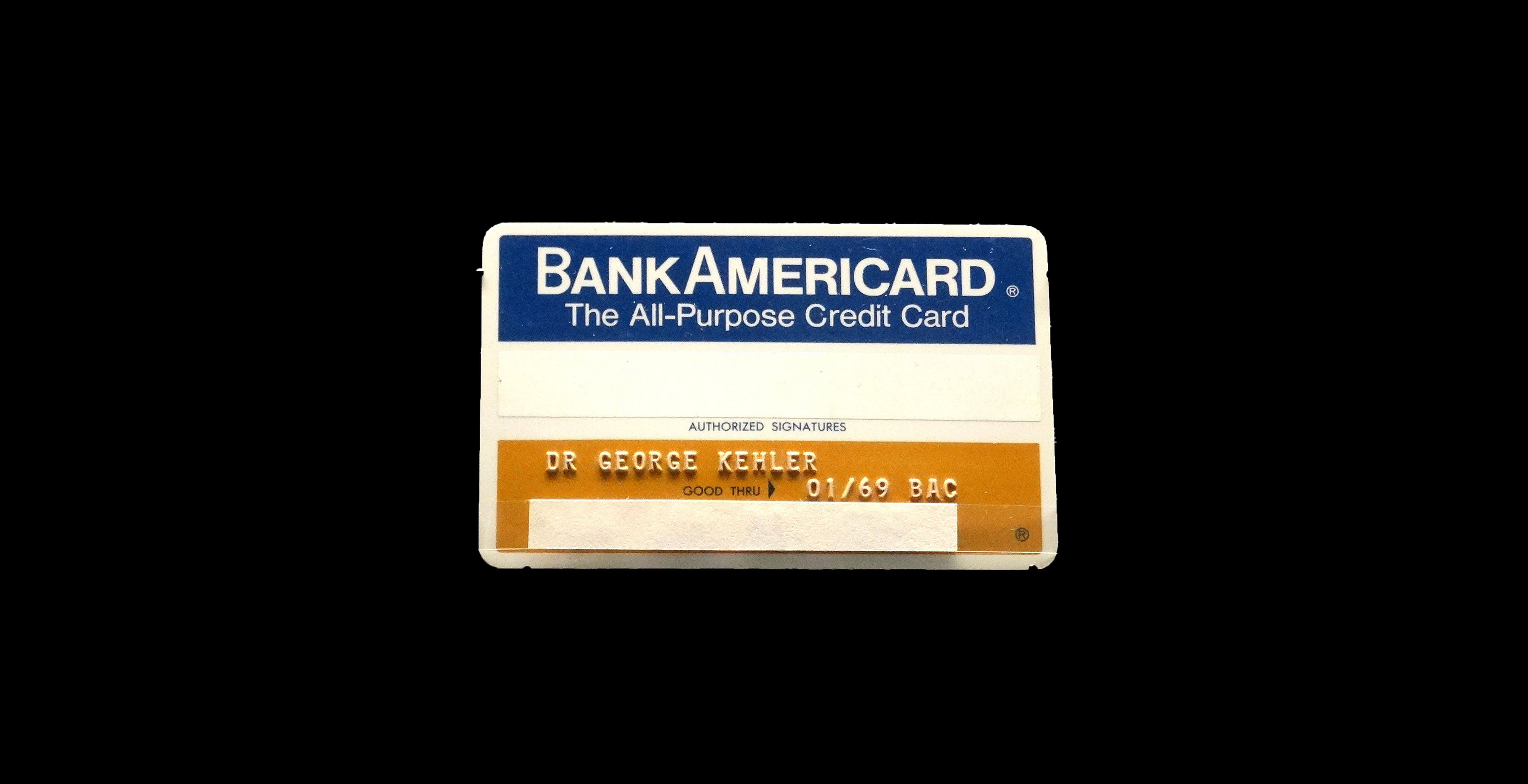
The first credit card in the world depends on how credit is defined: the Diners Club card, launched in 1950, was the first multi-merchant general-purpose charge card, while Bank of America's BankAmericard (introduced in 1958) was the first true modern revolving credit card with a rolling balance, credit limits, and interest charges.
Contents
Defining the Credit Card: Distinguishing Terms
To understand which card holds the title of the world's first credit card, one must distinguish between store-specific credit, general-purpose charge cards, and revolving credit cards.
Throughout the late 19th and early 20th centuries, retailers issued proprietary credit tools. These were not universal credit instruments; rather, they were closed-loop merchant cards bound to a single merchant or localized merchant association.
- Store Credit & Coins (Closed-Loop/Single)
- Diners Club Card (Charge Card / 1950)
- BankAmericard (Revolving / 1958)
1. Closed-Loop Store Accounts (Late 1800s–1930s)
Department stores, oil companies, and hotel chains issued credit coins, metal tokens, and paper courtesy cards. These allowed trusted customers to defer payment until the end of the month at that specific establishment.
2. General-Purpose Charge Cards (1950)
The Diners Club card introduced a third-party intermediary between merchants and consumers. Cardholders could use a single card across multiple independent establishments, but they had to pay the account balance in full upon receiving the monthly statement.
3. Revolving Credit Cards (1958)
BankAmericard (which later evolved into Visa) introduced revolving credit. Cardholders were no longer required to pay the full balance every month; instead, they could carry over (revolve) a portion of their balance to the next billing cycle while accruing interest on the remaining unpaid debt.
Early Precursors: Credit Tokens and the Charga-Plate System
Before the mid-20th century, credit was built on localized personal trust and physical accounting systems.
Credit Coins and Merchant Tokens
During the 1890s and early 1900s, major department stores and hotel chains in the United States and Europe provided valued patrons with custom metal coins or celluloid tokens. Stamped with an individual customer account number, these tokens allowed clerks to quickly look up account ledgers in paper books. However, they lacked universal acceptance and contained no security features, making fraud prevention virtually impossible.
The Charga-Plate (1928–1950s)
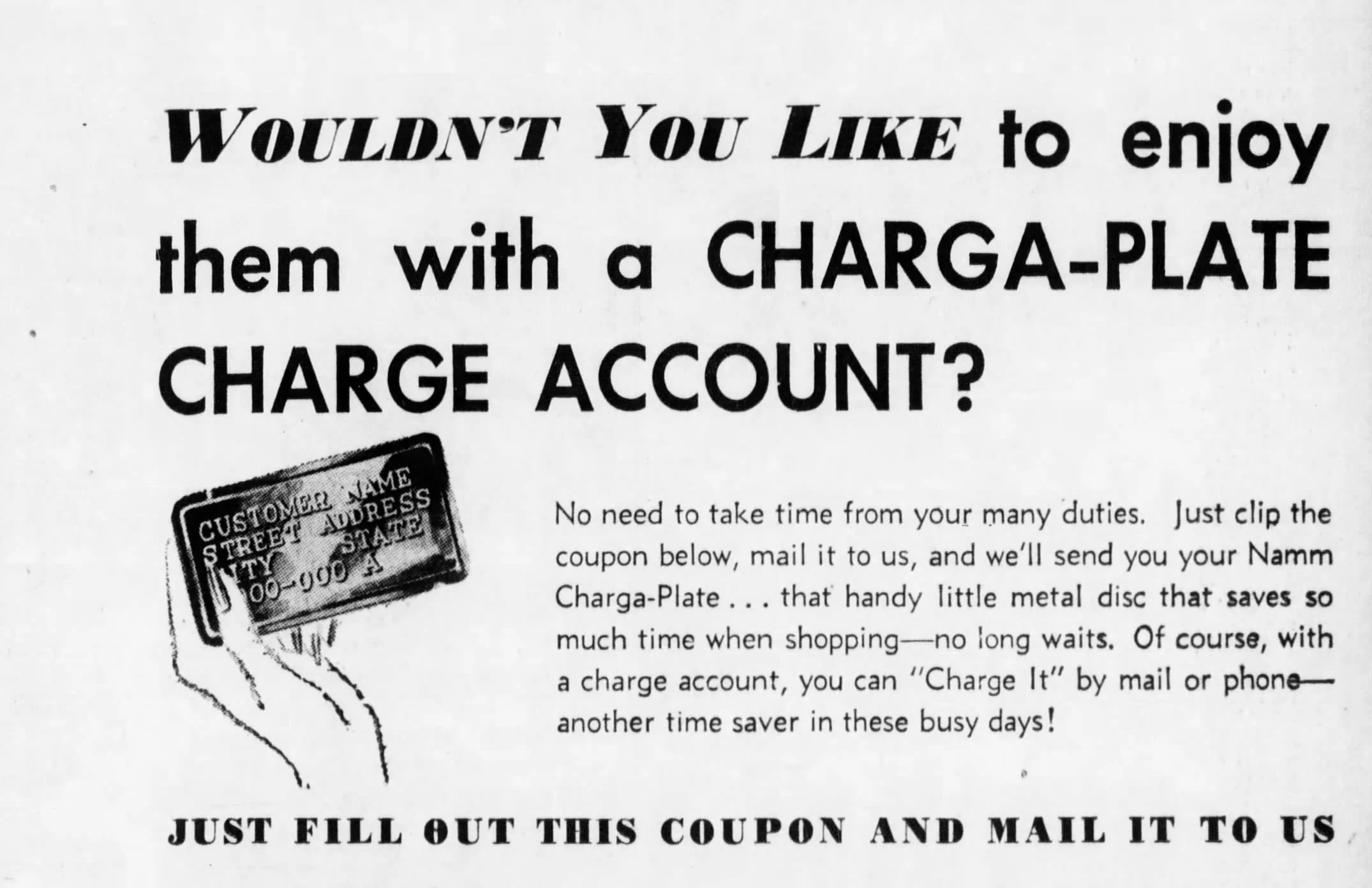
In 1928, the Farrington Manufacturing Company developed the Charga-Plate, an early precursor to the modern credit card. Made of a small metal sheet similar to a military dog tag, the Charga-Plate was embossed with the customer's name, city, and state. It held a small paper card on the back for the customer's signature.
- Charga-Plate
- JOHN DOE
- 123 MAIN STREET
- NEW YORK, NY
- Account No: 876-543-21
- [ Signature Strip on Reverse Side ]
When a purchase was made, the store clerk placed the metal plate into a manual imprinter machine containing a ink ribbon and paper receipt. Pressing the lever imprinted the customer's details directly onto the sales slip. While innovative, the Charga-Plate remained a store-specific or local association tool; a plate issued by Macy's could not be used at a local gas station or an independent restaurant.
The Breakthrough: Diners Club and the First Charge Card (1950)
The birth of the universal third-party payment system occurred in New York City in 1949.
The Legend and Business Reality of Frank McNamara
According to financial history, businessman Frank McNamara was dining at the Major's Cabin Grill in New York City when he realized he had left his wallet in another suit jacket. Although his wife paid the bill, the inconvenience prompted McNamara to create a solution: a single card that could be accepted at dozens of different establishments, backed by a central financing company.
In 1950, McNamara and his business partner, Ralph Schneider, officially launched the Diners Club.
- Diners Club Card (1950)
- Cardholder: Frank McNamara
- Status: Signature Member
- Terms: Balance due in full upon receipt.
- [ Card Type: Paper / Cardstock ]
Operational Framework of the Diners Club
- Material: The original 1950 Diners Club card was made of heavy cardboard or paper cardstock.
- Network Size: At launch, the card was accepted by 27 New York restaurants and held by roughly 200 of McNamara's associates.
- Business Model: Diners Club acted as a payment broker. Merchants were charged a transaction fee (around 7%), while cardholders paid an annual fee ($5 at launch) and were required to settle their statement balance in full every 30 days.
By 1951, Diners Club had expanded to over 42,000 cardholders and accepted locations across major U.S. cities. It established the viable economic model of the travel and entertainment (T&E) card, paving the way for competitors like American Express, which launched its own charge card in 1958.
BankAmericard (1958): The First Modern Revolving Credit Card
While Diners Club solved the problem of multi-merchant acceptance, it operated as a charge card, not a credit card. It offered no option to carry a balance over time. The invention of modern revolving credit belonged to Bank of America.
- BankAmericard (1958)
- Issuer: Bank of America
- Launch Event: "The Fresno Drop" (60,000 unsolicited cards)
- Key Innovation: Revolving credit with pre-approved credit limit
- Evolution: Rebranded to Visa in 1976
The "Fresno Drop"
In September 1958, Bank of America launched BankAmericard in Fresno, California. Led by bank executive Joseph P. Williams, the team chose Fresno because of its isolated consumer demographic and high market share held by Bank of America branches.
To solve the classic chicken-and-egg problem—convincing merchants to accept a card that consumers did not hold, and convincing consumers to carry a card that merchants did not accept—Bank of America took a bold leap: they mailed 60,000 fully functional, unsolicited plastic cards with pre-approved $300 credit limits directly to Fresno residents.
Mechanics of Revolving Credit
BankAmericard fundamentally changed consumer finance by introducing features standard in credit cards today:
- Revolving Credit Balances: Consumers were not forced to clear their balances every 30 days; they could pay a minimum monthly amount.
- Interest Charges: The issuer assessed finance charges (typically 1.5% per month) on the remaining carried balance.
- Pre-Approved Credit Limits: Cardholders were assigned specific spending limits based on underwriting profiles.
- Interbank Networks: BankAmericard eventually licensed its technology to banks outside California, forming the National BankAmericard Inc. network, which was officially renamed Visa in 1976.
Comparative Matrix: The Evolution of Early Payment Cards
The table below contrasts the technical, functional, and organizational differences among early credit and charge card innovations.
| Platform / Card | Launch Year | Primary Creator / Issuer | Card Type | Payment Structure | Acceptability Scope |
|---|---|---|---|---|---|
| Store Credit Coins | 1890s | Individual Retailers | Identification Token | Monthly billing ledger | Single merchant only |
| Charga-Plate | 1928 | Farrington Mfg. / Retailers | Addressograph Plate | Monthly merchant bill | Single store or local group |
| Diners Club | 1950 | Frank McNamara, Ralph Schneider | Multi-Merchant Charge Card | Balance due in full (30 days) | Universal (restaurants/hotels) |
| American Express | 1958 | American Express Company | Charge Card | Balance due in full (30 days) | Travel & Entertainment global network |
| BankAmericard (Visa) | 1958 | Bank of America | Revolving Credit Card | Carried balance with minimum payment | General retail merchant network |
| Master Charge (Mastercard) | 1966 | Interbank Card Association (ICA) | Revolving Credit Card | Carried balance with minimum payment | Multi-bank alliance network |
From Plastic to Pixels: Key Milestones in Credit Card History
Following the adoption of BankAmericard and Master Charge in the mid-20th century, technological standardization turned payment cards into a global financial pillar.
- 1950s: Paper Cards
- 1970s: Magnetic Stripe
- 1990s: EMV Chips
- 2010s-2020s: Tokenized Mobile
IBM and the Magnetic Stripe (Late 1960s)
Originally, card transactions were processed using carbon-paper manual imprinters (known colloquially as "knuckle-busters"). In the late 1960s, IBM engineer Forrest Parry integrated magnetic tape containing encrypted account data onto the back of plastic cards. This paved the way for automated point-of-sale (POS) terminals and electronic verification networks.
The Truth in Lending Act and Regulations (1968)
As credit card usage accelerated, regulatory bodies stepped in to protect consumers. The U.S. Federal Reserve implemented Regulation Z under the Truth in Lending Act of 1968. This regulation banned the practice of sending unsolicited credit cards through the mail (ending tactics like the Fresno Drop) and required card issuers to disclose annual percentage rates (APR), fees, and terms clearly.
EMV Microchips and Contactless Payments (1990s–2010s)
To fight physical magnetic stripe counterfeiting, Europay, Mastercard, and Visa established the EMV standard in 1994. Modern credit cards feature embedded microchips that generate dynamic authorization codes for every transaction, dramatically reducing card-present fraud.
Digital Wallets and Tokenization
Payment cards have largely shifted from physical plastic to digital representations stored on smart devices. Tokenization technology replaces sensitive 16-digit primary account numbers (PAN) with randomized cryptographic tokens, allowing transactions to occur via Near Field Communication (NFC) protocols without exposing underlying bank data.
Frequently Asked Questions
What was the absolute first credit card ever created?
The Diners Club card (1950) was the first general-purpose charge card accepted across multiple merchants. However, BankAmericard (1958) was the first general-purpose credit card to offer revolving credit, allowing consumers to carry a balance over time.
Who invented the credit card?
Frank McNamara and Ralph Schneider invented the universal charge card model via Diners Club in 1950. Joseph P. Williams and his team at Bank of America created the revolving modern credit card framework in 1958.
What is the difference between a charge card and a credit card?
A charge card requires the holder to pay the account balance in full at the end of every billing period without incurring interest. A credit card allows cardholders to carry a revolving balance from month to month, requiring only a minimum payment while assessing interest on the remaining balance.
Why did Bank of America mail unsolicited cards during the "Fresno Drop"?
In 1958, there was no existing consumer base for general-purpose credit cards. To establish immediate cardholder volume and compel merchants to accept the platform, Bank of America dropped 60,000 pre-activated BankAmericards into the mailboxes of Fresno, California residents. This practice was later outlawed by federal legislation in 1970.
What was the first credit card company to use plastic?
While early Diners Club cards were made of paper cardstock, American Express introduced the first mass-produced plastic payment card in 1959, replacing paper and cardstock models industry-wide.
Key Takeaways for Today's Consumer
Understanding the historical evolution from local merchant store credit to Diners Club charge accounts and BankAmericard revolving credit highlights the mechanics of modern credit:
- Distinguish Between Revolving Credit and Charge Terms: Modern credit cards offer payment flexibility, but carrying a balance incurs high interest charges via APR.
- Review Regulatory Protections: Legislation like the Truth in Lending Act ensures clear disclosures, while credit card liability limits protect consumers from unauthorized fraudulent transactions.
- Verify Security Features: Always check that physical cards use EMV chip technology and digital transactions utilize secure tokenization.
Disclaimer: This historical analysis is provided strictly for educational and informational purposes and does not constitute formal financial, legal, or credit advisory services. For personal credit guidance, consult a certified financial planner or credit counselor.
Image Gallery