CFA Level 1 Pass Rate: Historical Trends, MPS, and Passing Strategies
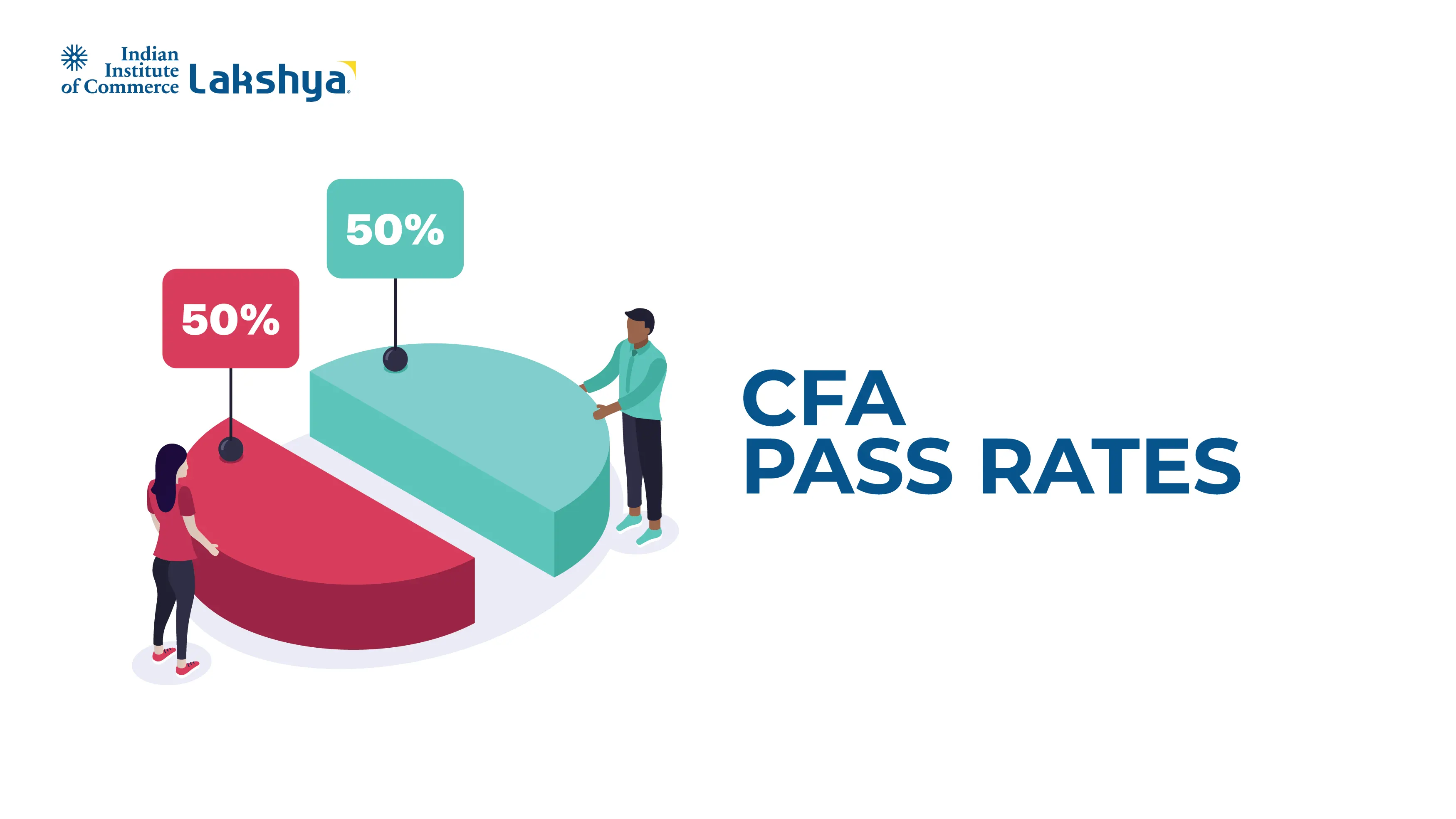
The historical pass rate for the CFA Level 1 exam averages approximately 40% to 45%, though individual exam windows over the past decade have ranged from a historic low of 22% up to 46%. Administered by the CFA Institute, the Level 1 e...
The historical pass rate for the CFA Level 1 exam averages approximately 40% to 45%, though individual exam windows over the past decade have ranged from a historic low of 22% up to 46%. Administered by the CFA Institute, the Level 1 examination tests foundational knowledge across 10 topic areas. Passing requires exceeding a Minimum Passing Score (MPS) set through a rigorous standard-setting process rather than a fixed curve.
Contents
Understanding the CFA Level 1 Pass Rate
The Chartered Financial Analyst (CFA) credential is widely recognized as one of the most rigorous designations in the global investment management industry. Tracked continuously since the program's inception in 1963, the CFA Level 1 pass rate provides candidates with a realistic benchmark of exam difficulty and candidate preparedness.
Historically, Level 1 pass rates were higher—often exceeding 50% in the 1970s and 1980s. However, as candidate volume expanded globally and the curriculum grew in technical complexity, pass rates gradually declined, stabilizing between 38% and 49% throughout the 2010s.
Historical Trend Overview (Approximate Decadal Averages):
- 1970s–1980s: 50% – 60%
- 1990s–2000s: 45% – 50%
- 2010s: 38% – 45%
- 2021 Transition Era: 22% – 38% (Historic lows during CBT transition)
- 2022–2025 Standardized Era: 35% – 46%
The Shift to Computer-Based Testing (CBT)
In 2021, the CFA Institute permanently transitioned Level 1 from a twice-yearly paper-based exam to computer-based testing (CBT) offered across four exam windows per year (February, May, August, and November). This structural shift coincided with unprecedented drops in pass rates, reaching an all-time low of 22% in July 2021.
The CFA Institute attributed this drop primarily to pandemic-related disruptions, deferred study schedules, and candidate preparation gaps rather than a deliberate increase in exam difficulty or a raised passing standard. As scheduling normalized, pass rates recovered, settling back into the 35% to 46% range.
| Exam Window | Pass Rate (%) | Format | Exam Structure Notes |
|---|---|---|---|
| May 2021 | 25% | CBT | Post-lockdown administration, heavy candidate deferrals |
| July 2021 | 22% | CBT | Historic low pass rate record |
| November 2021 | 27% | CBT | Early CBT implementation period |
| February 2022 | 36% | CBT | Normalization phase begins |
| August 2022 | 37% | CBT | Stabilized test candidate pool |
| February 2023 | 38% | CBT | Standard quarterly testing cycle |
| November 2023 | 35% | CBT | Routine administration window |
| February 2024 | 44% | CBT | Higher candidate readiness reported |
| May 2024 | 46% | CBT | Upper bound of post-CBT window averages |
| August 2024 | 44% | CBT | Consistent performance metric |
Detailed official historical figures across all levels are maintained directly on the CFA Institute Exam Results History page.
How CFA Institute Calculates the Minimum Passing Score (MPS)
A common misconception among candidates is that the CFA exam is graded on a curved percentile or that a set percentage of candidates is pre-determined to pass. In reality, the CFA Institute applies an absolute standard of competency for every exam administration.
The Modified Angoff Standard-Setting Method
To determine the Minimum Passing Score (MPS) for Level 1, the CFA Institute convenes a panel of charterholders who evaluate every question in the active exam pool. Using the Modified Angoff Method, panel members assess each item to determine the probability that a "just-barely-qualified candidate" would answer it correctly.
- Item-Level Review: Subject matter experts review each test question individually.
- Difficulty Scoring: Experts estimate how many borderline-qualified candidates would get the question right.
- Aggregate Benchmark: The panel aggregates these estimates to establish a baseline raw score representing minimal professional competence.
- Board Approval: The CFA Institute Board of Governors reviews the panel's recommendation and formally sets the MPS for that specific exam window.
Because question sets vary across testing windows and computer-based testing centers, the raw MPS fluctuates slightly between exam sessions to account for minor variations in difficulty.
Estimated MPS Thresholds
While the CFA Institute does not publish the exact numerical MPS for any session, independent psychometric analyses and candidate data aggregator platforms estimate that the Level 1 MPS typically falls between 65% and 73%. To ensure a comfortable safety margin, candidates are generally advised to target a consistent score of 75% or higher on practice examinations.
Key Factors Influencing the Level 1 Pass Rate
The low pass rate for CFA Level 1 is driven by structural, behavioral, and technical factors. Understanding these obstacles helps candidates structure their preparation effectively.
Core Drivers of Low Level 1 Pass Rates:
- Underestimating Required Study Hours (~300+ hours)
- Broad Technical Breadth Across 10 Finance Topics
- Passive Reading vs. Active Problem Solving
- Computer-Based Exam Endurance & Time Constraints
1. Underestimating Study Volume
The CFA Institute recommends that candidates dedicate at least 300 to 350 hours of structured study to prepare for Level 1. Candidate surveys show that those who fail frequently report studying fewer than 250 hours or spreading their study hours inefficiently without adequate review cycles.
2. Comprehensive Breadth of Curriculum
Unlike university exams that focus deeply on a single domain, Level 1 tests broad competence across 10 distinct subject areas. Candidates must switch rapidly between formulaic quantitative problems, qualitative conceptual frameworks, and strict ethical standards within the same testing session.
3. Shift to Computer-Based Testing Dynamics
The current exam format consists of 180 multiple-choice questions divided into two 135-minute sessions (90 questions per session) with an optional break in between. Candidates have an average of 90 seconds per question. Managing digital tools, formula applications, and scratch paper under tight time limits introduces operational stress that impairs performance for unprepared test-takers.
4. Candidate Deferrals and Study Gaps
Candidates who repeatedly defer their exam date often experience knowledge decay. Data from testing cycles shows that candidates taking the exam on their original schedule pass at higher rates than those who defer multiple times, as prolonged study windows can disrupt retentions and momentum.
Breakdown of CFA Level 1 Topic Weights
The Level 1 curriculum is structured into 10 subject areas. The CFA Institute assigns specific percentage weight ranges to each topic, which dictates the proportion of questions appearing on the exam.
Focus Weight Distribution:
- High-Weight Topics (40–50% of Total Exam):
- Ethical & Professional Standards (15–20%)
- Financial Statement Analysis (11–14%)
- Equity Investments (11–14%)
- Fixed Income (11–14%)
- Medium/Lower-Weight Topics (50–60% of Total Exam):
- Quantitative Methods (6–9%)
- Economics (6–9%)
- Corporate Issuers (6–9%)
- Portfolio Management (8–11%)
- Derivatives (5–8%)
- Alternative Investments (7–10%)
| Topic Area | Exam Weight Range | Primary Knowledge Focus |
|---|---|---|
| Ethical & Professional Standards | 15–20% | Code of Ethics, Standards of Professional Conduct, GIPS |
| Financial Statement Analysis | 11–14% | Income statements, balance sheets, cash flows, financial ratios, IFRS vs. US GAAP |
| Equity Investments | 11–14% | Equity markets, index construction, industry analysis, valuation models |
| Fixed Income | 11–14% | Bond prices, yields, duration, convexity, credit risk, securitization |
| Portfolio Management | 8–11% | Risk/return metrics, Modern Portfolio Theory, asset allocation basics |
| Alternative Investments | 7–10% | Private equity, real estate, commodities, hedge funds, infrastructure |
| Quantitative Methods | 6–9% | Time value of money, statistics, probability distributions, hypothesis testing |
| Economics | 6–9% | Microeconomics, macroeconomics, currency exchange rates, business cycles |
| Corporate Issuers | 6–9% | Corporate governance, working capital, capital structure, leverage metrics |
| Derivatives | 5–8% | Forwards, futures, options, swaps pricing and valuation basics |
Understanding these weights allows candidates to allocate study time efficiently. For instance, Ethical and Professional Standards and Financial Statement Analysis alone represent up to 34% of the total exam weight.
Practical Strategies to Beat the Level 1 Pass Rate
Passing the CFA Level 1 exam requires moving beyond rote memorization to systematic execution and performance tracking.
Phase-Based Study Plan Framework:
| Phase 1: Foundations (Weeks 1 to 12) | Phase 2: Practice (Weeks 13 to 20) | Phase 3: Review (Weeks 21 to 24) |
|---|---|---|
| • Complete Reading Assignments• Construct Formula Sheets• Solve End-of-Chapter Problems | • Complete Question Bank• Target Weak Topic Areas• Ethics Daily Review | • Full-Length Mock Exams• Deep Formula Review• Time Management Mastery |
1. Build a 300+ Hour Structured Study Schedule
Organize preparation over 4 to 6 months, allocating approximately 12 to 15 hours per week.
- Early Months: Focus on mastering core readings, understanding primary concepts, and building organized notes.
- Middle Phase: Work through practice question banks and reinforce formula application.
- Final Month: Dedicate the final 4 to 6 weeks exclusively to mock exams, diagnostic scoring, and targeted revision.
2. Prioritize High-Weight Topic Areas
Allocate study hours in direct proportion to topic weights. Master Financial Statement Analysis (FSA) early, as it contains dense technical concepts that require repetitive practice. Similarly, Fixed Income and Equity Investments contain high question volumes that reward structured problem-solving.
3. Master the Ethics Code Early
Ethics is not only the highest-weighted single topic area (15–20%), but it also serves as a critical performance buffer.
The Ethics Adjustment: The CFA Institute applies an informal "Ethics Adjustment" for candidates whose total exam scores fall extremely close to the MPS boundary. If a candidate's score is right on the line, strong performance in Ethics can push them into a passing result, whereas poor performance in Ethics can result in a fail.
Read the Standards of Practice Handbook directly from official materials at the CFA Institute official website, and practice ethics scenarios weekly throughout your study schedule.
4. Transition Early from Passive Reading to Active Practice
Reading curriculum volumes or watching lecture videos passively creates an illusion of competence. True mastery comes from answering exam-style questions.
- Aim to complete at least 2,000 to 3,000 practice questions from the official CFA Learning Ecosystem and reputable third-party providers.
- Maintain an error log recording every incorrect question, noting whether the mistake stemmed from a conceptual gap, formula error, or misread question stem.
5. Simulate Exam Conditions with Mock Exams
Complete a minimum of 4 to 6 full-length, timed mock exams during the final month before your scheduled test window.
- Replicate the 135-minute session structure and enforce strict break limits.
- Use the official BA II Plus or HP 12C financial calculator exclusively during practice.
- Target a benchmark score of 70% to 75%+ consistently across multiple mock exams to build a safe buffer above the estimated MPS.
Retake Policies and Exam Regulations
If a candidate does not pass Level 1, the CFA Institute maintains specific operational rules governing retakes:
- 6-Month Waiting Period: Candidates cannot sit for adjacent exam windows. There must be at least six months between exam attempts (e.g., failing a February exam means the earliest eligible retake is August of the same year).
- Maximum Attempt Limit: Candidates are subject to a six-attempt limit per exam level. If a candidate fails Level 1 six times, they are permanently ineligible to sit for Level 1 again within the CFA Program.
- No Retakes for Passing Candidates: Candidates who pass Level 1 are not permitted to retake the exam to improve their score.
Frequently Asked Questions
What is a good score on CFA Level 1 practice mock exams?
Scoring 70% or higher across full-length, timed mock examinations indicates a strong probability of passing. Because the estimated Minimum Passing Score (MPS) typically ranges between 65% and 73%, averaging above 70–75% provides a comfortable safety margin against test-day variance.
Does the CFA Institute grade Level 1 on a curve?
No. The CFA Institute does not grade on a curve, nor does it enforce a fixed pass quota. Every candidate who meets or exceeds the established Minimum Passing Score (MPS) for that exam session passes, regardless of how well other candidates perform.
How many hours do successful candidates actually study for Level 1?
According to surveys conducted by the CFA Institute, successful Level 1 candidates report studying an average of 300 to 325 hours. Candidates without a formal background in finance, accounting, or economics often require 350 hours or more to master the broad curriculum.
What is the "Ethics Adjustment" in CFA exam scoring?
The Ethics Adjustment is a mechanism used by the CFA Institute for candidates whose overall exam performance falls directly on the Minimum Passing Score boundary. For these borderline cases, a strong score in the Ethical and Professional Standards section can raise the candidate's final status to a pass, while a low Ethics score can result in a fail.
How long are CFA Level 1 exam results valid?
CFA exam passes do not expire. Once you pass CFA Level 1, your result remains valid indefinitely, allowing you to register for CFA Level 2 whenever you choose without re-taking Level 1.
Next Steps for Candidates
To maximize your chances of clearing the CFA Level 1 exam on your first attempt:
- Confirm Your Exam Timeline: Select a target exam window (February, May, August, or November) that grants at least 4 to 6 full months of preparation time.
- Register Early: Register via the official CFA Institute portal to access the Learning Ecosystem, digital curriculum, and official practice question bank.
- Draft Your Study Calendar: Map out your 300+ study hours, ensuring that the final 4 weeks are reserved entirely for mock exams and targeted revision.
- Benchmark Your Progress: Regularly assess your scoring accuracy in the Learning Ecosystem and adjust your focus areas based on topic weightings and diagnostic feedback.
Disclaimer: This guide is provided for educational and informational purposes only. CFA®, Chartered Financial Analyst®, and GIPS® are registered trademarks owned by the CFA Institute. Exam dates, registration fees, topic weightings, and regulations are subject to change by the CFA Institute. Candidates should verify all current program details directly with official CFA Institute documentation prior to enrolling.
Image Gallery