How Bottega Veneta Founded Its Luxury Legacy: Craftsmanship, Discretion, and Modern Mastery
Bottega Veneta founded its luxury legacy in 1966 in Vicenza, Italy, by pioneering a signature leather-weaving technique known as intrecciato. Faced with regional sewing equipment designed for apparel rather than heavy leather, founders...
Bottega Veneta founded its luxury legacy in 1966 in Vicenza, Italy, by pioneering a signature leather-weaving technique known as intrecciato. Faced with regional sewing equipment designed for apparel rather than heavy leather, founders Michele Taddei and Renzo Zengiaro wove thin, supple hides into a structural lattice, establishing a logo-free philosophy centered on quiet craftsmanship.
Contents
The Vicenza Origins: How Technical Limitations Built an Iconic Technique
In 1966, Michele Taddei and Renzo Zengiaro established Bottega Veneta—which translates directly from Italian as "Venetian Atelier" or "Venetian Workshop"—in Vicenza, a city in Northern Italy’s Veneto region. At the time, Italy’s major leather hubs were divided by specialized industrial capabilities. Cities like Florence were equipped with heavy-duty machinery for saddlery and rigid leather trunks. Vicenza, by contrast, was renowned for fine garment manufacturing and soft textile production.
When Taddei and Zengiaro began designing leather goods, the regional sewing machines in Vicenza’s factories were calibrated for lightweight apparel hides rather than thick, structural handbag leather. Standard leather hides broke the needles or tore under heavy pressure.
- Thin Garment Leather + Diagonal Strips (Fettuce)
- Manual Intrecciato Weave
- Structural Integrity without Heavy Hardware or Logos
To solve this engineering hurdle, the founders devised a novel craft method:
- Material Selection: High-grade, ultra-soft Nappa calfskin and lambskin were selected for maximum flexibility.
- Slitting into Strips: The supple leather was cut into precise, narrow strips called fettuce.
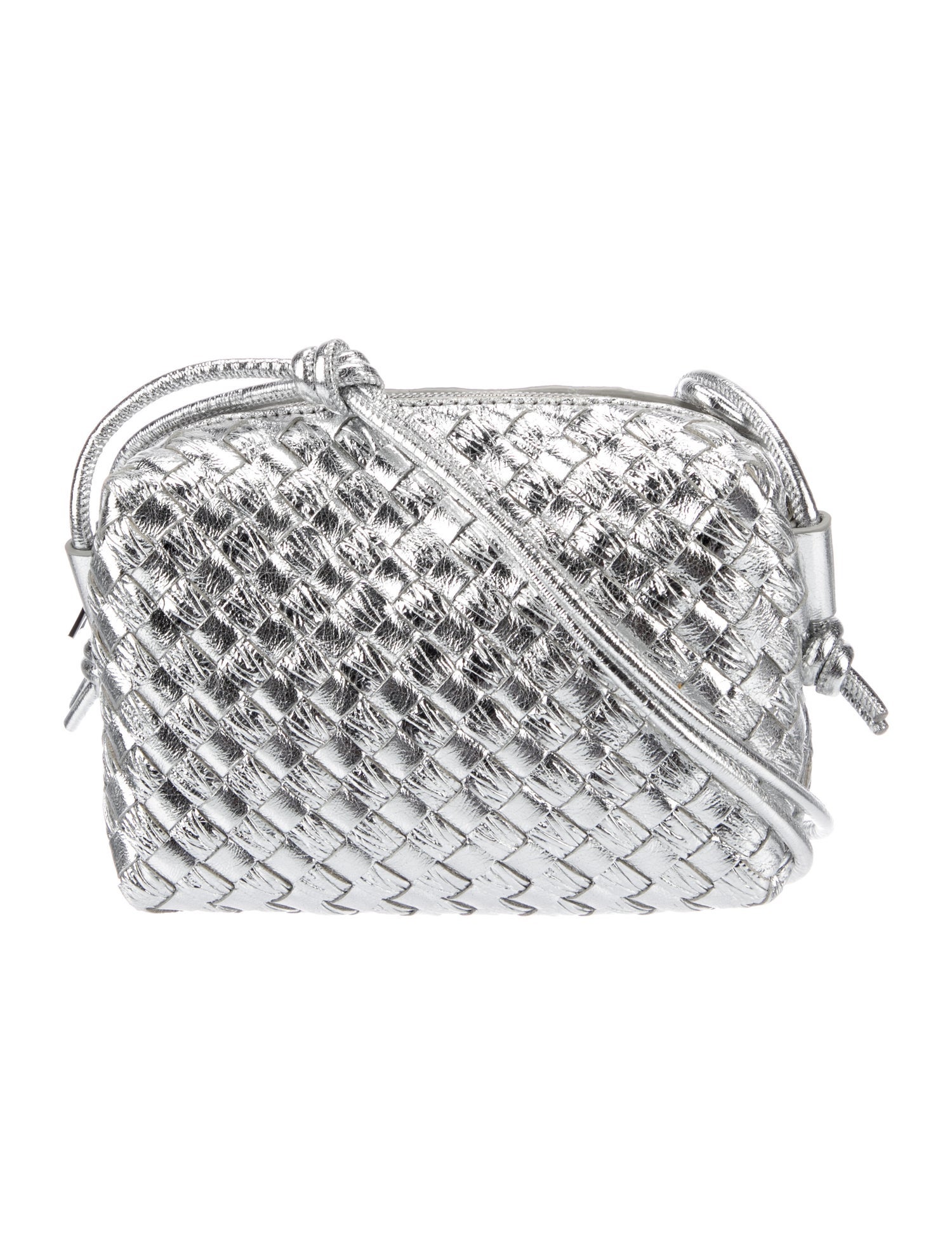
- Diagonal Interlocking: Artisans manually wove these strips diagonally across a structural backing grid, creating a crisscross pattern.
This process, christened intrecciato (the Italian word for "braided" or "woven"), provided exceptional tensile strength and durability while maintaining a lightweight, fluid drape. By converting a mechanical limitation into an aesthetic breakthrough, Bottega Veneta created a functional design code that required no external frame, rigid cardboard fillers, or visible metal hardware.
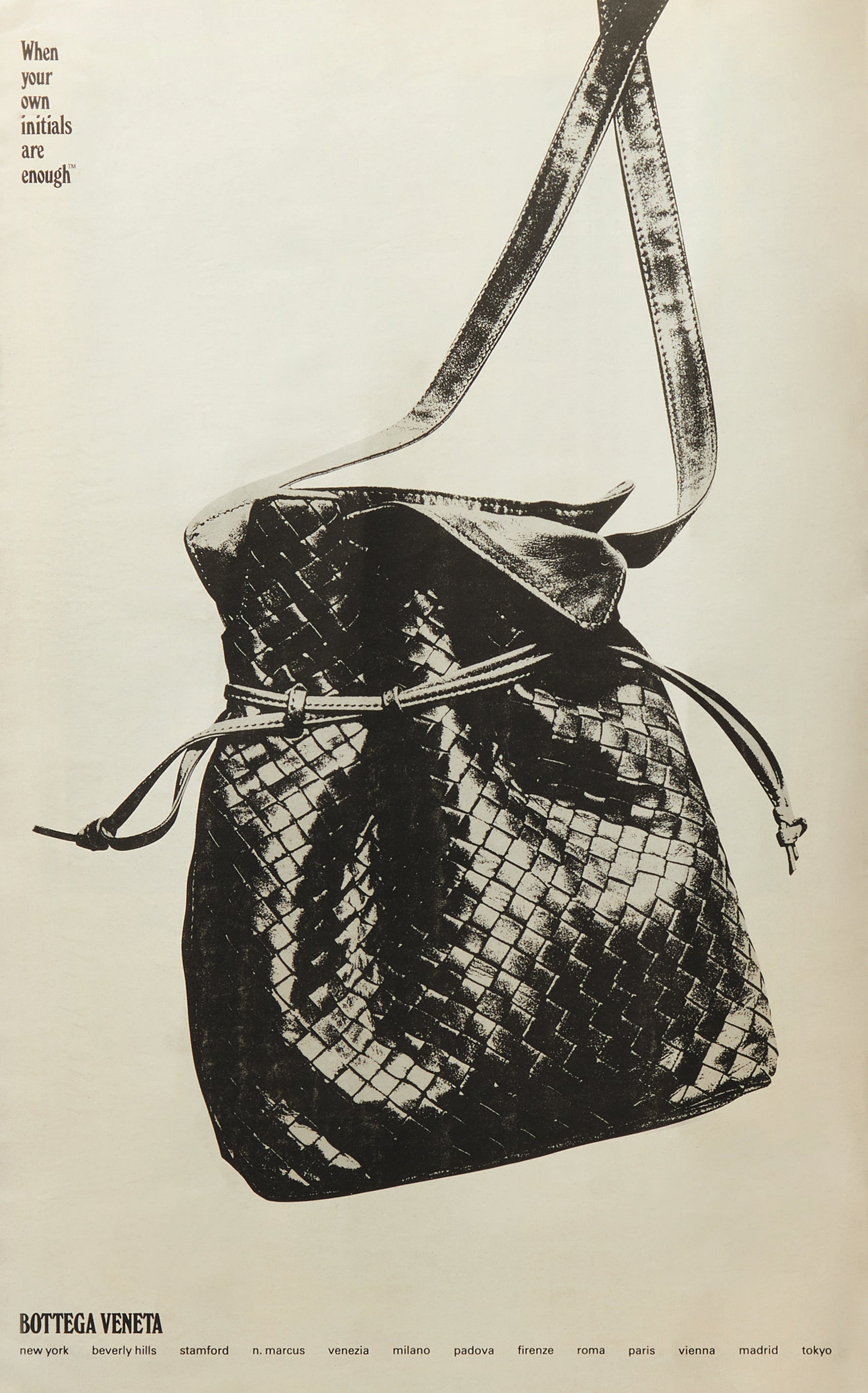
The Anti-Status Philosophy: "When Your Own Initials Are Enough"
During the late 1960s and 1970s, European luxury fashion moved steadily toward prominent logos and brand monograms. Major houses relied on metallic hardware badges, repeated monogram canvas prints, and branded clasps to signal wealth and social standing. Bottega Veneta explicitly rejected this direction.
Contrast of Luxury Philosophies (1970s–Present)
| Traditional Monogram Luxury | Bottega Veneta Anti-Status |
|---|---|
| Overt surface branding | Logo-free visual identity |
| Rigid hardware emphasis | Tactile material texture |
| Exterior status signaling | Interior personal ownership |
The house formulated its defining operational motto in the early 1970s: "Quando le tue iniziali sono sufficienti"—translated as "When your own initials are enough."
This positioning established several core principles that shaped the brand's luxury identity:
- Visual Anonymity as Exclusivity: The absence of exterior logos ensured that the product’s identity resided in its material texture and woven motif. Only those familiar with fine leather craft could identify the maker.
- Personal Monogramming: Instead of wearing the brand’s initials, clients were invited to hot-stamp their own initials on the leather interiors or designated personalization patches.
- Cultural Resonance: The subtle aesthetic attracted artists, intellectuals, and cultural icons who disdained ostentatious display. Pop art pioneer Andy Warhol was an early client of the New York boutique, while actress Lauren Hutton famously carried an intrecciato clutch—later archived as The Lauren 1980—in the 1980 film American Gigolo.
The 2001 Acquisition and the Tomas Maier Era: Restoring the Craft Core
By the late 1990s, Bottega Veneta had lost strategic direction. Attempting to compete with high-contrast logocentric fashion trends, the brand experimented with printed patterns, synthetic materials, and surface logos. This diluted its core market position, leading to severe financial losses.
In February 2001, the Gucci Group (subsequently acquired by French luxury conglomerate Kering) purchased Bottega Veneta for approximately $156 million. Executive leadership, led by Domenico De Sole and Tom Ford, appointed German designer Tomas Maier as Creative Director in June 2001.
Bottega Veneta Strategic Turnaround (2001–2006)
- 2001 Acquisition by Gucci Group/Kering
- Tomas Maier Appointed Creative Director
- Elimination of External Logos & Excess Hardware
- Launch of The Cabat Tote (2002)
- Founding of La Scuola dei Maestri Pelletteriai (2006)
Maier executed a comprehensive restructuring based on four fundamental principles: high-quality materials, functional design, modern craftsmanship, and discrete utility.
Key Milestones of the Maier Restoration
- Logo Purge: Maier removed all printed monograms, prominent exterior badging, and unnecessary metal components from production lines.
- The Cabat Tote (2002): Maier introduced an unlined, completely hand-woven tote bag constructed from a double-faced leather weave. The Cabat required two artisans two full days to weave, epitomizing uncompromised construction.
- Educational Institutionalization (2006): Recognizing an aging artisan workforce, Bottega Veneta founded La Scuola dei Maestri Pelletteriai in Montebello Vicentino. This private academy trains master leather craftspeople in classic Venetian techniques, preserving regional heritage and securing a skilled workforce pipeline.
Under Maier’s 17-year leadership, Bottega Veneta’s annual revenues surged from under $50 million in 2001 to over $1 billion, proving that pure artisan integrity could generate substantial corporate scale.
The Evolution of Design Leadership: Comparative Analysis of Key Eras
Bottega Veneta’s luxury legacy has evolved across distinct creative eras. Each leadership period redefined the house's signature intrecciato while honoring its foundational logo-free ethos.
| Leadership Era | Key Creative Director | Strategic & Aesthetic Approach | Iconic Signature Releases | Business & Cultural Impact |
|---|---|---|---|---|
| Founding Era(1966–2001) | Michele TaddeiRenzo Zengiaro | Invention of intrecciato; anti-status philosophy; focus on supple, lightweight leather goods. | The Knot Clutch, The Lauren 1980 | Established original house identity; encountered brand dilution in late 1990s. |
| The Preservation Era(2001–2018) | Tomas Maier | Structural revival; strict adherence to logo-free craftsmanship; expansion into ready-to-wear and home. | The Cabat Tote, The Veneta Bag | Scaled revenues past $1B; established La Scuola dei Maestri Pelletteriai. |
| The Modernist Era(2018–2021) | Daniel Lee | Architectural exaggeration; bold modern proportions; viral digital hype; departure from social media. | The Pouch, The Cassette, Puddle Boots | Generated rapid growth; introduced "Bottega Green" as a global visual code. |
| The High-Art Era(2021–Present) | Matthieu Blazy | Focus on movement, hyper-craftsmanship, material illusion (trompe-l'œil leather), and longevity. | The Sardine Bag, Leather Denim Trousers, Kalimero | Solidified "Quiet Luxury" dominance; introduced lifetime repair programs. |
Daniel Lee: Modernizing the Code (2018–2021)
Appointed in 2018, British designer Daniel Lee reframed Bottega Veneta’s heritage for a younger, digital-native audience. Lee scaled up the width of the traditional leather strips, creating the Maxi Intrecciato.
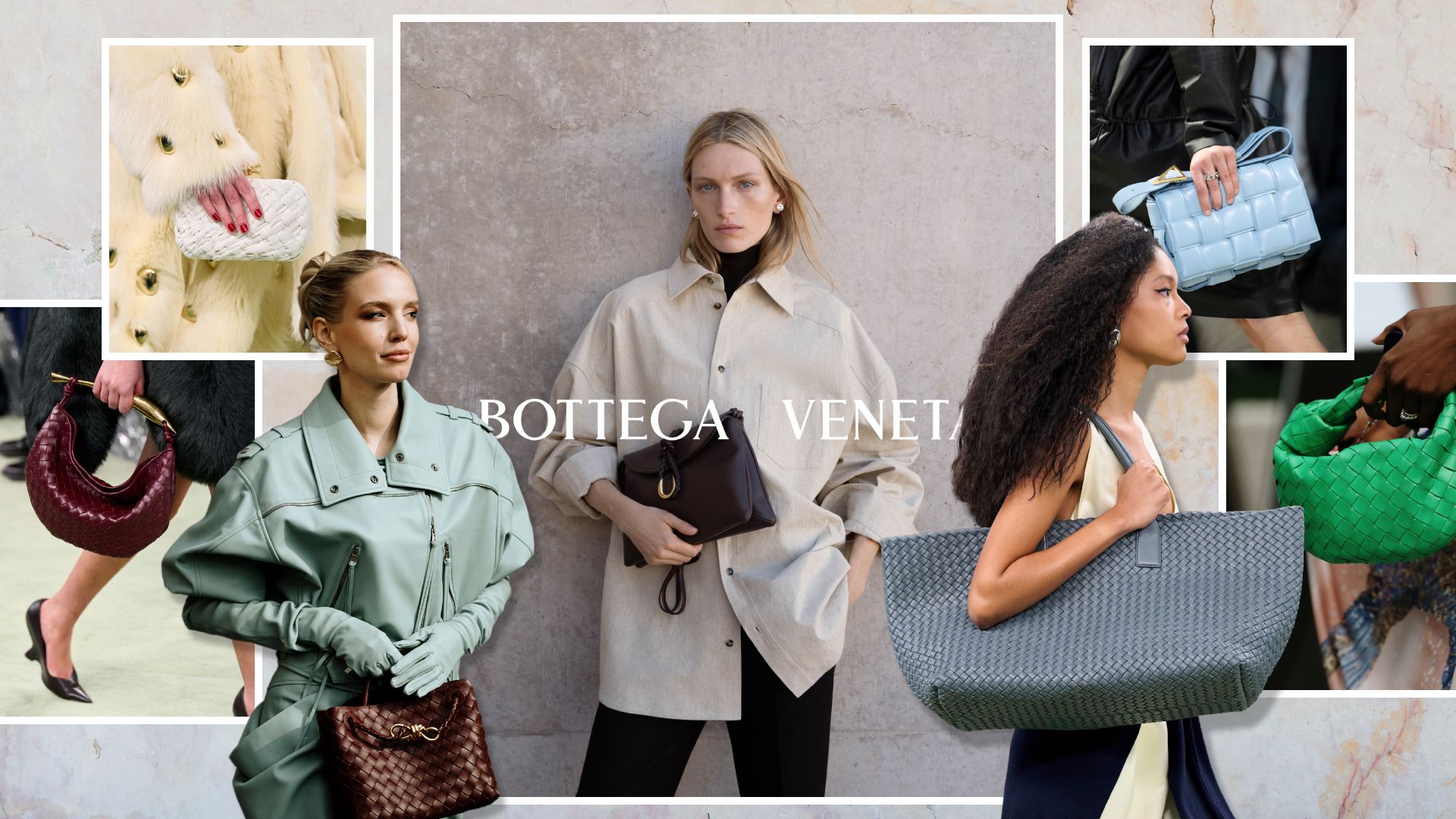
He introduced unbranded viral hits including The Pouch (a soft, voluminous leather clutch) and The Cassette (a padded, oversized woven shoulder bag). Lee also introduced a vivid emerald accent color—dubbed "Bottega Green"—which served as a recognizable brand marker without using a logo. In 2021, Lee took the unconventional step of deleting the brand’s official social media accounts, relying instead on quarterly digital journals and organic client advocacy to drive exclusivity.
Matthieu Blazy: Material Illusion and Lifetime Craft (2021–Present)
In November 2021, French designer Matthieu Blazy assumed creative control. Blazy shifted focus toward dynamic movement, functional elegance, and elevated material engineering.
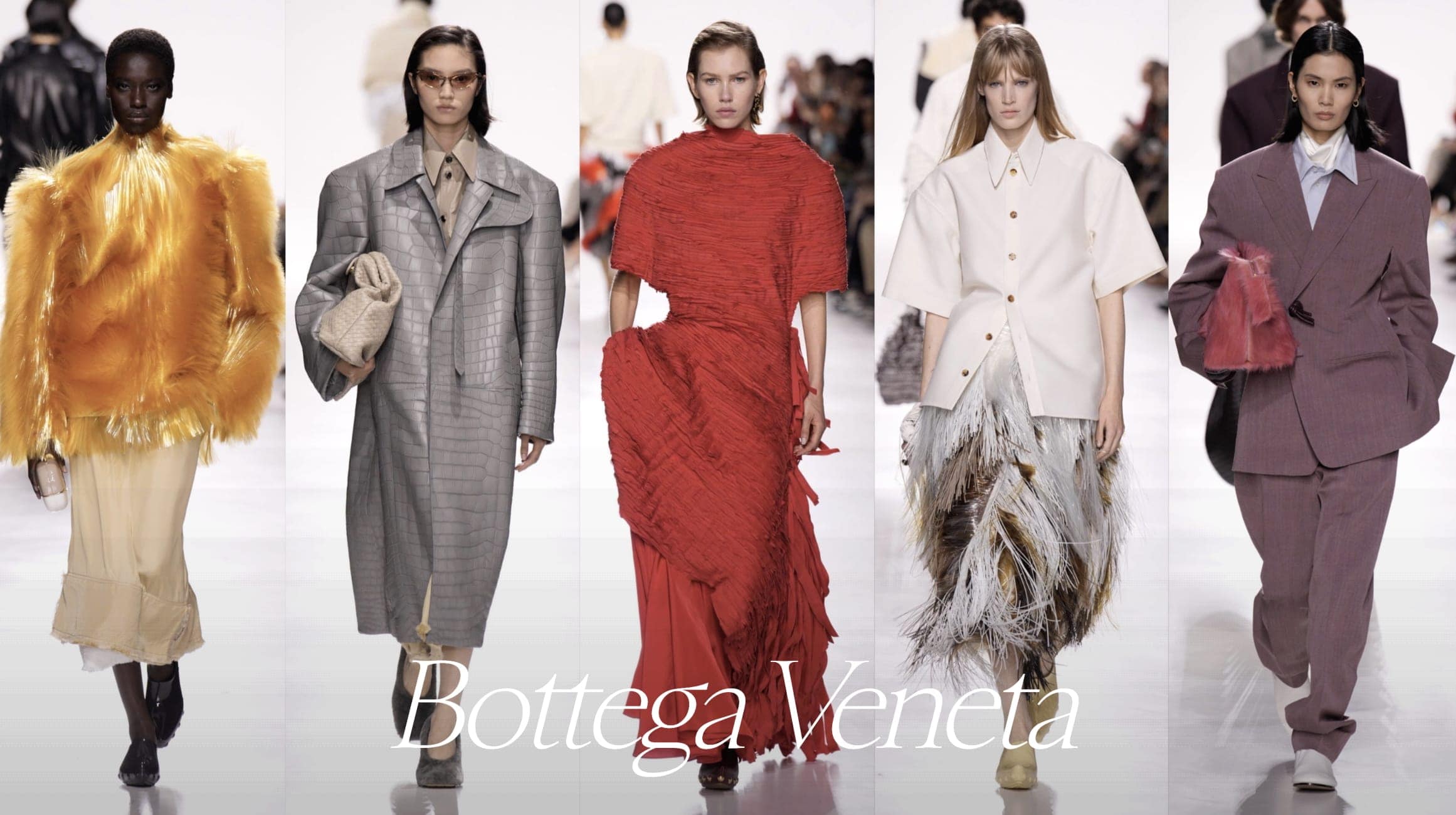
Blazy introduced trompe-l'œil leather craftsmanship—creating everyday garments such as jeans, button-up shirts, and tank tops entirely out of micro-printed, butter-soft leather. He also expanded hardware integration through sculptural elements like the metallic handle of The Sardine Bag.
Core Pillars That Define Bottega Veneta’s Enduring Value
Bottega Veneta’s reputation as a top-tier luxury house relies on five operational and artisanal pillars:
Pillars of Bottega Veneta Luxury
- Intrecciato Engineering (Hand-woven structural grid)
- Total Logo Anonymity ("When your own initials are enough")
- Regional Heritage (Vicenza leatherworking ecosystem)
- Material Supremacy (Full-grain Nappa, calfskin, exotic hides)
- Lifetime Circularity (Certificate of Craft program)
1. Precision Intrecciato Weaving
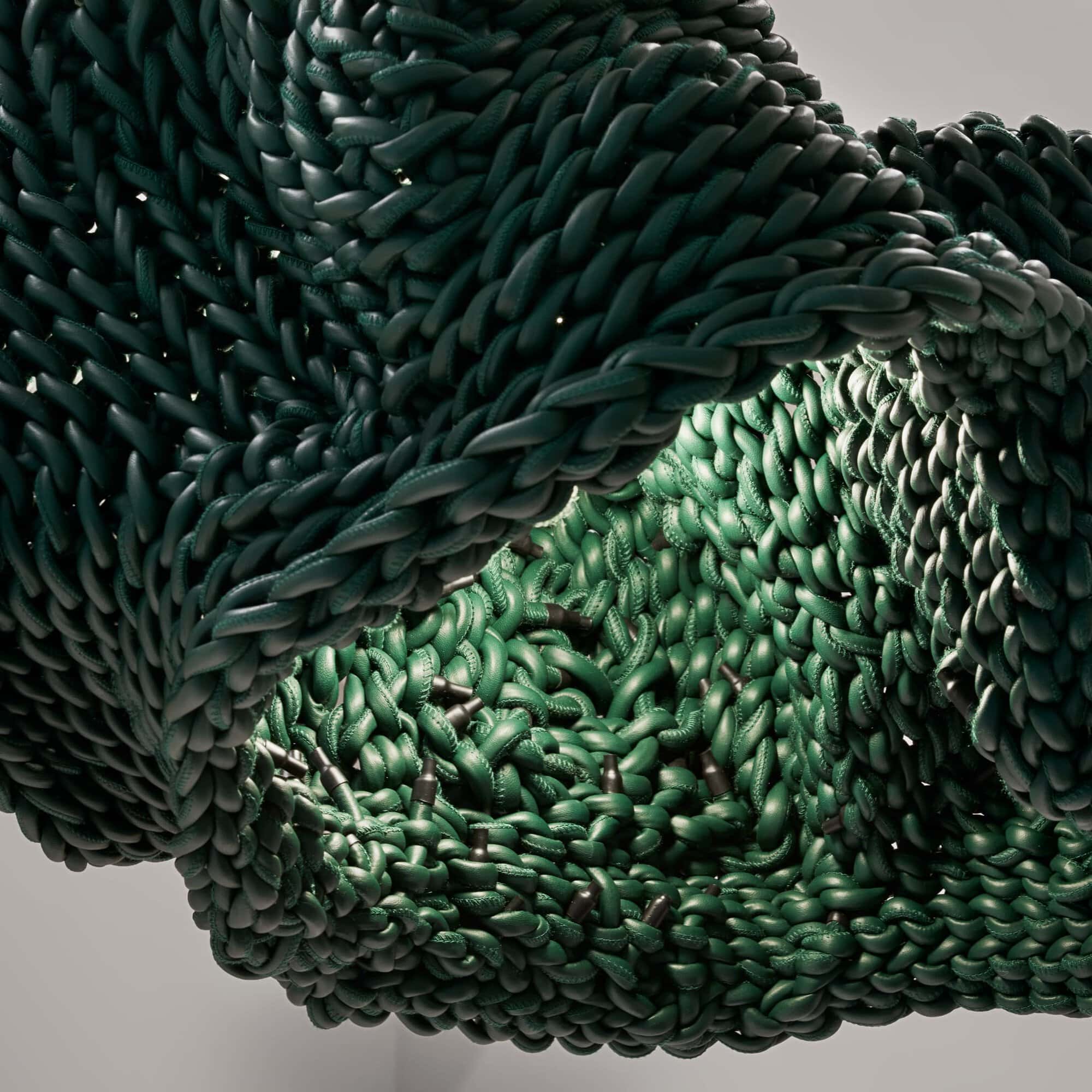
Unlike surface prints or embossed patterns, true intrecciato is structural. Artisans construct panels by weaving individual leather strips over and under a central substrate, or by double-weaving two leather faces back-to-back. This creates a flexible, self-supporting material that ages uniformly without peeling or surface cracking.
2. High-Grade Material Selection
Because Bottega Veneta products lack lining in many classic designs (such as the original Cabat), both the exterior and interior surfaces of the leather are visible. This requires flawless, full-grain Nappa hides free of natural imperfections.
3. The Certificate of Craft Program
To emphasize durability over seasonal disposability, Bottega Veneta introduced the Certificate of Craft program in 2022. This initiative provides lifetime warranty card coverage for designated iconic handbag styles, offering complimentary restoration, hardware repair, and leather conditioning.
Certificate of Craft Workflow
- Iconic Handbag Purchase
- Registration & Digital Certificate
- Lifetime Professional Maintenance
- Artisanal Restoration at Vicenza Atelier
This operational strategy aligns modern luxury consumption with historical heirlooms, protecting resale values and reinforcing long-term client trust.
Strategic Lessons for Modern Luxury Houses
Bottega Veneta’s historical trajectory offers clear strategic takeaways for brand builders, luxury managers, and market analysts:
- Turn Technical Constraints into Signature Assets: The original adoption of soft leather weaving was driven by machinery limitations in Vicenza. Rather than altering their machinery, the founders created an entirely new product category.
- Protect Brand Equity from Short-Term Trends: The brand’s late-1990s decline demonstrated the danger of abandoning core identities to chase prevailing trends (such as visible logos). Reclaiming its original anti-status stance restored profitability and prestige.
- Invest in Talent Preservation: By founding La Scuola dei Maestri Pelletteriai, Bottega Veneta ensured its specific craft techniques were formally taught to new generations, removing reliance on unstandardized manufacturing partners.
- Redefine Branding Through Texture: Visual identity does not require lettering or crests. Distinctive tactile patterns like the intrecciato weave function as recognizable signatures while preserving understated sophistication.
Frequently Asked Questions
What does "Bottega Veneta" mean in English?
"Bottega Veneta" translates to "Venetian Atelier" or "Veneto Workshop" in Italian. The name reflects the company’s origins as an artisanal leather guild established in the Veneto region of Northern Italy in 1966.
Why did Bottega Veneta invent the intrecciato weaving technique?
In 1966, the sewing machinery in Vicenza, Italy, was designed for lightweight garment textiles rather than heavy handbag hides. Founders Michele Taddei and Renzo Zengiaro developed the intrecciato technique by slitting soft Nappa leather into thin strips (fettuce) and manually weaving them diagonally into structural grids to maximize strength without tearing the hides.
What is the meaning behind the slogan "When your own initials are enough"?
Formulated in the 1970s ("Quando le tue iniziali sono sufficienti"), this motto summarized Bottega Veneta’s anti-status branding stance. It highlighted that exceptional craftsmanship, premium leather, and the intrecciato motif were self-evident, allowing clients to personalize items with their own initials rather than wearing a designer’s logo.
Who owns Bottega Veneta today?
Bottega Veneta is owned by the French luxury group Kering (formerly PPR and Gucci Group). Kering acquired a majority stake in the brand in February 2001, funding its global expansion while maintaining its manufacturing base in Northern Italy.
What is Bottega Veneta's Certificate of Craft?
Introduced in 2022, the Certificate of Craft is a lifetime service program offered on select iconic Bottega Veneta handbags. It provides clients with a physical card granting unlimited complimentary repairs, structural restorations, and leather maintenance at the house's master ateliers.
Recommended Next Steps for Brand Analysts and Collectors
To evaluate, collect, or analyze Bottega Veneta leather goods, consider the following actions:
- Verify Weave Structure: When inspecting pre-owned or archival pieces, ensure the intrecciato pattern is constructed from hand-interlocked leather strips rather than machine-embossed surface stamping.
- Review Model Craft Records: For modern investments, prioritize models covered under the Certificate of Craft program (such as classic Cabat, Cassette, or Sardine designs) to guarantee lifetime maintenance support.
- Examine Edges and Lining: Classic Bottega Veneta construction frequently features unlined interiors or suede-backed finishes, allowing direct inspection of the reverse weave quality and edge-lacquering precision.
Image Gallery