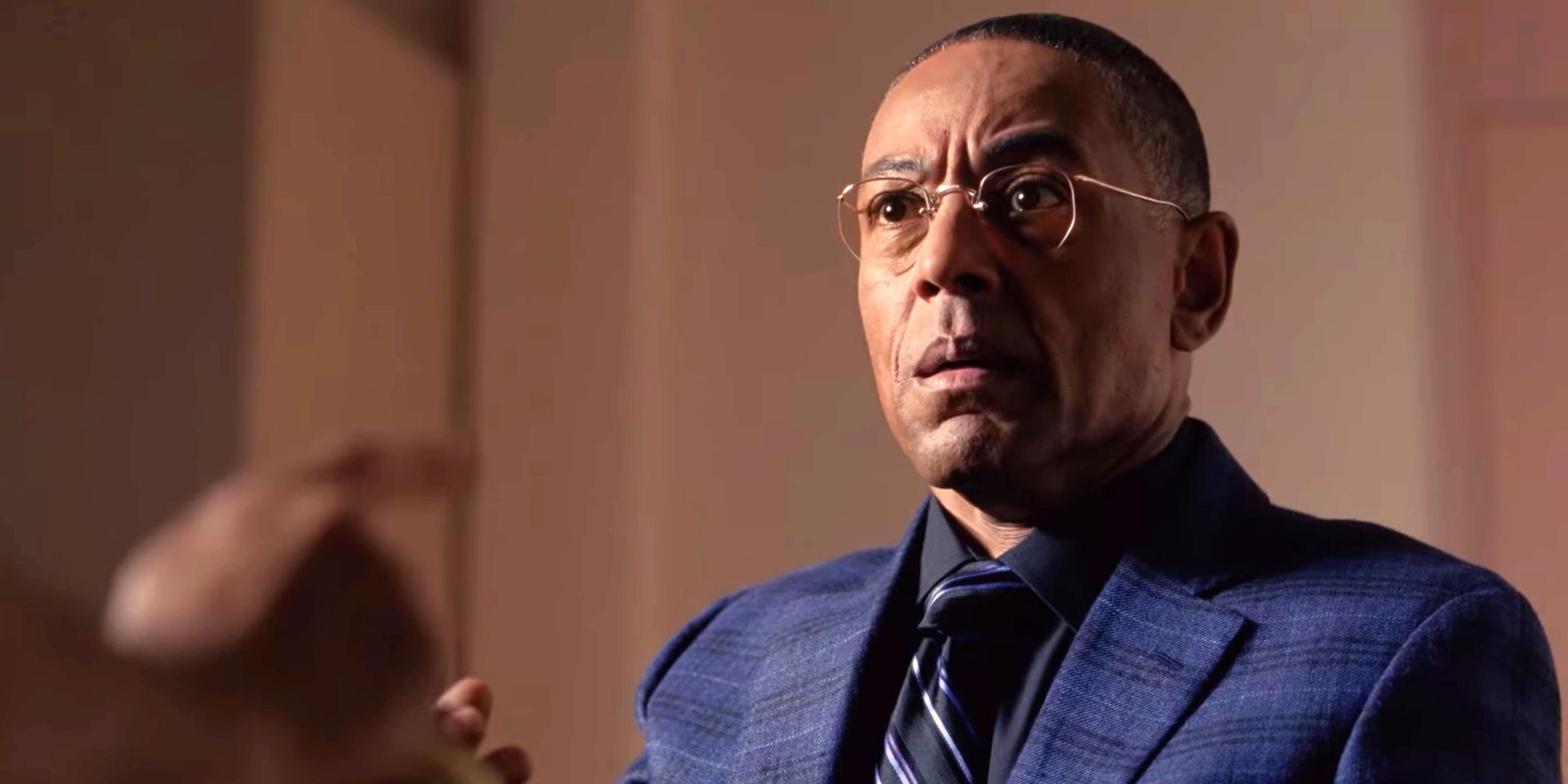
The Death of Gus Fring: Analyzing the Iconic "Face Off" in the Breaking Bad Season 4 Finale
Gus Fring dies in the Season 4 finale of Breaking Bad, titled "Face Off," which originally aired on October 9, 2011. He is killed by a pipe bomb rigged to Hector Salamanca’s wheelchair, a trap masterminded by Walter White. After the ex...
Gus Fring dies in the Season 4 finale of Breaking Bad, titled "Face Off," which originally aired on October 9, 2011. He is killed by a pipe bomb rigged to Hector Salamanca’s wheelchair, a trap masterminded by Walter White. After the explosion, Fring briefly walks out of the room and adjusts his tie before collapsing, revealing that half of his face has been blown off.
Contents
The death of Gustavo "Gus" Fring remains one of the most significant turning points in modern television history. While many viewers occasionally confuse the Season 4 finale with the overall series finale (Season 5’s "Felina"), the conclusion of the fourth season marked the end of the show’s most intricate psychological game. As we look back from 2026, the technical execution and narrative weight of Gus Fring’s demise continue to serve as the gold standard for character exits in prestige drama.
The Narrative Necessity of Gus Fring’s Death
By the end of Season 4, the relationship between Walter White and Gus Fring had devolved from a professional partnership into a zero-sum game. Gus, the meticulous "Chicken Man" and meth kingpin, had successfully marginalized Walt, grooming Jesse Pinkman to take over the lab operations. For Walt, Gus was no longer just an employer or an antagonist; he was an existential threat to Walt's family.
The tension in "Face Off" hinges on the fact that Gus is arguably smarter, more disciplined, and better protected than Walter White. Throughout the season, Walt’s attempts to assassinate Gus—including a failed car bomb attempt at the hospital—were thwarted by Gus’s hyper-awareness and intuition. To kill Gus, Walt had to stop thinking like a chemist and start thinking like a master manipulator, identifying the one blind spot in Gus’s otherwise perfect armor: his deep-seated hatred for the Salamanca family.
The Strategy: Exploiting the Salamanca Vendetta
The brilliance of the "Face Off" plot lies in Walter White’s realization that Gus Fring’s professionalism is only a mask. Beneath the calm exterior lies a man consumed by a decades-old quest for revenge against the Mexican Cartel and Hector Salamanca specifically.
The Role of Hector Salamanca
Hector "Tio" Salamanca, the former cartel enforcer who killed Gus’s partner Max Arciniega decades earlier, was Gus’s last remaining link to his past. Gus visited Hector frequently at the Casa Bonita nursing home, not to kill him, but to torment him with news of the deaths of his remaining family members.
Walt uses this obsession to his advantage. By visiting Hector and convincing him to cooperate in a ruse, Walt lures Gus to the nursing home. Hector pretends to speak with the DEA (specifically Hank Schrader), knowing that Gus’s network of informants will report the "betrayal." Gus, driven by the need to personally execute the man who "snitched," abandons his usual security protocols and enters the nursing home to deliver the final blow himself.
The Pipe Bomb Mechanism
The weapon of choice was a custom-built pipe bomb. Walt attached the device to the underside of Hector’s wheelchair, wired to the bell that Hector used for communication. This transformed Hector’s only tool of expression into a detonator. When Gus enters the room to lethally inject Hector, the old man looks Gus in the eye—a rare moment of eye contact that Gus had long demanded—and frantically taps the bell, triggering the explosion that kills them both.
Technical Execution: The "Two-Face" Reveal
The visual representation of Gus Fring’s death is a masterpiece of practical effects and digital compositing. Director Vince Gilligan and the crew at KNB EFX Group (notably Greg Nicotero) spent months planning the shot. As of 2026, the scene is still cited in film schools for its subversion of audience expectations.
| Technical Element | Description | Purpose |
|---|---|---|
| Practical Prosthetics | A detailed "meat" mask was applied to Giancarlo Esposito. | Provided a physical base for the camera to capture depth and texture. |
| Digital Augmentation | CGI was used to "hollow out" the eye socket and expose the skull. | Created a level of anatomical realism that prosthetics alone couldn't achieve. |
| The "Tie Adjustment" | Esposito’s performance of adjusting his tie after the blast. | Highlighted Gus’s pathological need for order and decorum even in death. |
| Sound Design | Silence followed by the ringing of the bell and a sudden blast. | Built unbearable tension before the final release. |
The "half-face" reveal was a calculated risk. For a few seconds after the blast, the audience sees Gus walk out of the smoke-filled room, appearing unscathed. It is only when the camera pans around to his right side that the devastating injury is revealed. This brief moment of "zombie-like" survival leans into the heightened reality of Breaking Bad while remaining grounded in the character's sheer force of will.
The Impact on the Breaking Bad Universe
Gus Fring’s death was not just a resolution to a season-long arc; it was the catalyst for the moral disintegration of Walter White. The iconic line spoken by Walt to Skyler at the end of the episode—"I won"—signified his transition from a man protecting his family to a man intoxicated by his own power.
The Power Vacuum
The immediate aftermath of Gus's death created a massive vacuum in the meth trade across the American Southwest. This allowed Walter to step into the role of kingpin in Season 5, but it also invited the chaos that Gus’s structured empire had previously suppressed. Without Gus’s "corporate" stability, the interference of the Czech Republic buyers, Lydia Rodarte-Quayle, and eventually Jack Welker’s neo-Nazi gang became inevitable.
Better Call Saul Context
With the completion of the prequel series Better Call Saul, the weight of Gus’s death in Breaking Bad became even more tragic. Viewers saw the years of labor Gus put into building his underground laboratory and his intricate web of distribution. Knowing the effort Gus expended to hide his operation from the DEA and the Cartel makes his ultimate downfall at the hands of a "lowly" chemistry teacher even more jarring. His death was the result of a singular moment of pride overriding a lifetime of caution.
Critical Reception and Legacy
At the time of airing, "Face Off" received near-universal acclaim. Giancarlo Esposito’s portrayal of Gus Fring earned him multiple award nominations and solidified the character as one of the greatest villains in television history. In the years following, critics have often debated whether the show should have ended with Gus’s death, as it represented the peak of the series' tension. However, Season 5 proved that the true "villain" of the story was always the protagonist, and Gus’s death was merely the final obstacle in Walt's path to self-destruction.
In 2026, looking back at the 15th anniversary of this episode, the cultural footprint of Gus Fring remains massive. His death scene has been parodied, analyzed in medical journals (discussing the biological possibility of walking with such an injury), and used as a benchmark for how to conclude a high-stakes antagonist's journey without sacrificing narrative integrity.
Frequently Asked Questions
Does Gus Fring die in the final episode of Breaking Bad?
No. Gus Fring dies in the Season 4 finale, "Face Off." The series finale, "Felina" (Season 5, Episode 16), focuses on the death of Walter White and the rescue of Jesse Pinkman from a different set of antagonists.
Who actually killed Gus Fring?
While Hector Salamanca triggered the bomb, the assassination was planned and orchestrated by Walter White. Walt manufactured the explosives and convinced Hector to act as a suicide bomber to eliminate their mutual enemy.
Why did Gus Fring visit Hector Salamanca at the nursing home?
Gus visited Hector to personally taunt him. After Gus successfully wiped out the Mexican Cartel leadership (Don Eladio and the capos), he wanted Hector to know that the Salamanca bloodline was extinct. His desire to personally witness Hector's suffering was his only significant psychological weakness.
What were Gus Fring's last words?
Gus Fring does not speak in his final moments. His last vocalization is a scream of "Hah!" as he realizes Hector has a bomb. His final physical action is the silent, methodical adjustment of his necktie before falling dead.
How did the show achieve the visual of Gus's blown-off face?
The production team used a combination of sophisticated practical makeup on Giancarlo Esposito and digital effects. They filmed Esposito in a prosthetic mask and then used 3D tracking to overlay a digital model of a damaged skull and exposed tissue, creating the illusion of a hollowed-out face.
Practical Takeaway for Fans and Writers
For those studying the narrative structure of Breaking Bad, Gus Fring's death serves as a masterclass in foreshadowing and character flaws. Gus’s downfall was not a result of a lapse in intelligence, but a result of his inability to let go of his past trauma. When analyzing the series, it is essential to recognize that Gus and Walt are two sides of the same coin: both are brilliant, both are prideful, but Walt was willing to be more chaotic than Gus could ever anticipate.
If you are revisiting the series in 2026, pay close attention to the episodes leading up to "Face Off," specifically "Crawl Space" and "End Times." These episodes establish the "Checkmate" scenario that makes Gus’s death feel earned rather than coincidental.
Image Gallery