The History and Heritage of Blue Bell Ice Cream Founded in Brenham
Blue Bell Ice Cream was founded in Brenham, Texas, in 1907 under the original name Brenham Creamery Company, beginning a legacy that transformed a small-scale local cooperative into one of the most iconic and culturally significant dai...
Blue Bell Ice Cream was founded in Brenham, Texas, in 1907 under the original name Brenham Creamery Company, beginning a legacy that transformed a small-scale local cooperative into one of the most iconic and culturally significant dairy brands in the United States.
Contents
The Origins of Brenham Creamery Company
In the summer of 1907, a group of local businessmen and farmers in Washington County, Texas, pooled their resources to solve a persistent agricultural problem: how to utilize surplus cream from local dairy herds before it spoiled. They established the Brenham Creamery Company, operating out of a modest facility in downtown Brenham. During its earliest days of operation, the enterprise was far removed from a mass-market manufacturer. Workers produced butter by hand and manufactured ice cream in small, labor-intensive batches, delivering the finished goods to local merchants using horse-drawn wagons.
The primary challenge for these early operators was temperature control. Before mechanical refrigeration became widespread, the creamery relied heavily on natural ice harvested during winter months or shipped in from northern regions, packed in sawdust to slow melting. Despite these logistical hurdles, the local community embraced the fresh dairy products. The small cooperative served as an economic anchor for Washington County farmers, providing a guaranteed buyer for their raw milk and cream while supplying residents with a wholesome, locally sourced treat.
The Evolution and Transition to the Blue Bell Name
As the enterprise stabilized through the 1910s and 1920s, the leadership recognized an opportunity to pivot its primary focus from butter production to ice cream. In 1930, the company officially changed its name to Blue Bell Creameries, honoring the native Texas bluebell wildflower that blankets the rolling hills of the region each spring. This branding decision tied the product identity directly to the rural landscape and heritage of Central Texas, a connection that remains central to the company’s marketing philosophy.
| Year / Era | Operational Milestone |
|---|---|
| 1907 | Established as Brenham Creamery Company making butter. |
| 1911 | Began manufacturing small-scale ice cream batches. |
| 1930 | Renamed to Blue Bell Creameries to honor Texas flowers. |
| 1958 | E.F. Kruse introduces legendary "The Best Ice Cream in the Country" slogan and expands distribution. |
| 1989 | Introduction of Homemade Vanilla, achieving massive commercial and cultural success. |
During the mid-20th century, leadership under visionary executives such as E.F. Kruse propelled the brand forward. Kruse emphasized uncompromising ingredient quality, insisting that the ice cream use fresh whole milk, heavy cream, and real fruits and nuts. Under his direction, Blue Bell expanded its distribution footprint slowly outward from Brenham, adhering to a deliberate growth model that ensured product integrity. Rather than rushing into national markets, the company built a devoted following by maintaining strict quality control and ensuring that store shelves were stocked directly by company-owned delivery trucks and route drivers.
Manufacturing Philosophy and Quality Standards
The enduring appeal of Blue Bell is rooted in its traditional production methods and strict adherence to historical recipes. While modern food manufacturing often relies heavily on artificial stabilizers, high-fructose corn syrup, and overrun—the volume of air whipped into ice cream during churning—Blue Bell maintains a distinct formulation approach. High butterfat content and low overrun create a dense, rich texture that differentiates the brand from mass-produced commercial competitors.
The flagship manufacturing facility remains anchored in Brenham, Texas, supplemented by modern production plants in Broken Arrow, Oklahoma, and Sylacauga, Alabama. Despite this multi-state manufacturing footprint, the core operational ethos established in Washington County persists. Raw milk is sourced primarily from regional dairy farms near each plant, pasteurized on-site, and combined with premium ingredients. The production cycle is managed with meticulous attention to detail, ensuring that signature flavors like Cookies 'n Cream and Homemade Vanilla retain the exact flavor profile generations of consumers expect.
Distribution Challenges and Market Presence
Blue Bell’s distribution strategy has historically been characterized by the phrase "We eat all we can, and we sell the rest." For most of its history, the brand was available exclusively in Texas and select neighboring southern states, creating a powerful aura of regional exclusivity and consumer loyalty. Visitors to Texas frequently made eating Blue Bell ice cream a mandatory part of their travel itinerary, while expatriate Texans often arranged specialized cold-shipping methods to receive shipments in distant states.
This localized distribution model underwent a severe test in 2015, when a widespread Listeria contamination forced a mandatory nationwide recall and a temporary shutdown of all production facilities. The crisis threatened the survival of the century-old institution, requiring a comprehensive overhaul of plant sanitation, testing protocols, and supply chain management. Through rigorous facility retrofitting and a transparent rebuilding process, Blue Bell resumed production later that year, gradually reintroducing its products to store shelves across its traditional marketing footprint.
Cultural Impact and Consumer Loyalty
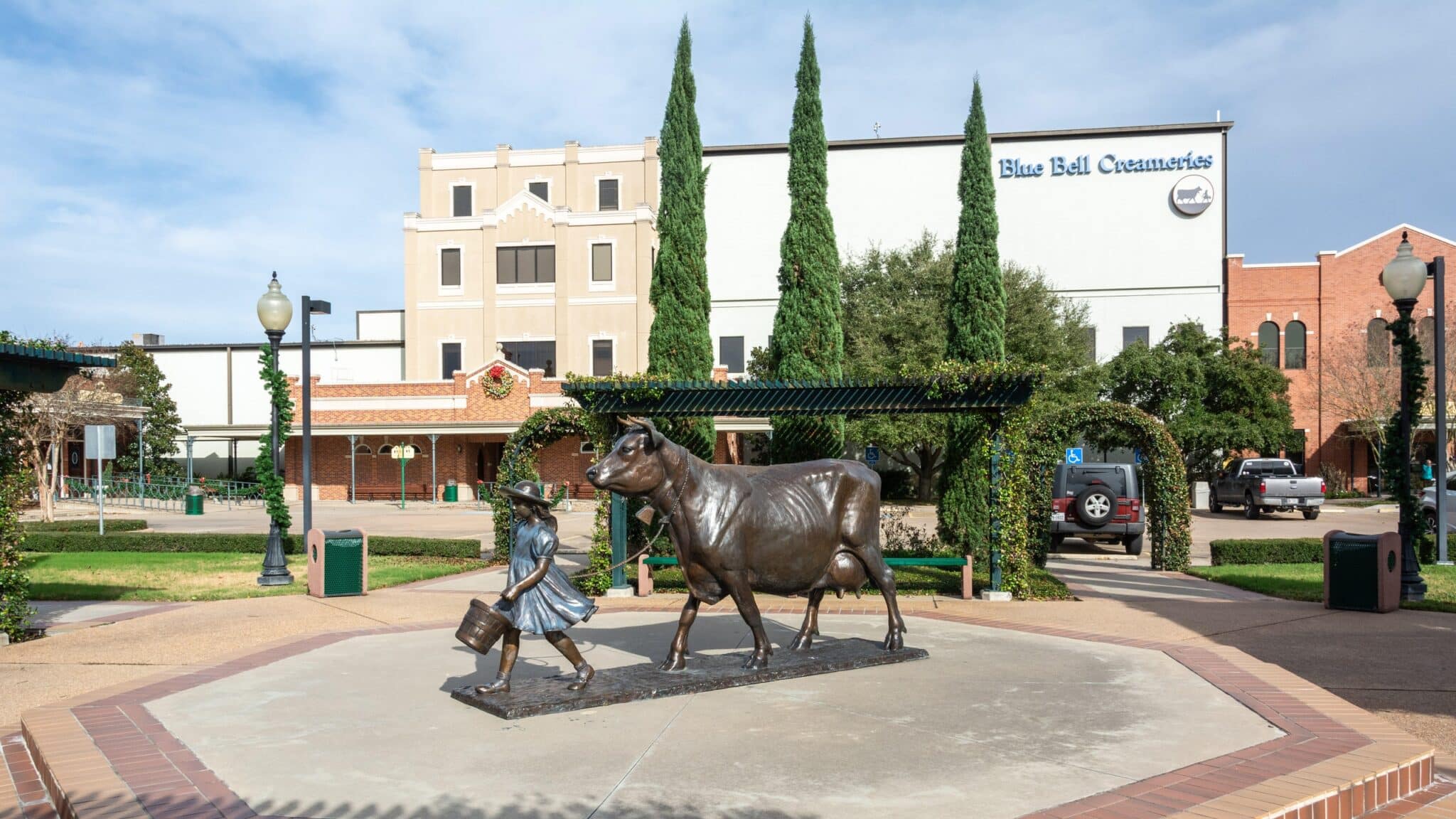
The cultural footprint of Blue Bell extends far beyond standard consumer packaged goods. In Texas and the broader American South, the brand functions as a regional touchstone. Local community events, church socials, and family reunions routinely feature hand-cranked or store-bought Blue Bell tubs. The company’s deep roots in Brenham transformed the headquarters into a major tourism destination, where visitors tour the observation deck of the creamery, examine historical memorabilia, and purchase single-scoop servings at the historic ice cream parlor.
This fierce consumer loyalty stems from the company's ability to maintain continuity across decades. While many corporate food brands frequently alter packaging, reformulate recipes, or discontinue classic offerings for cost efficiency, Blue Bell preserves its core product lines. The introduction of seasonal rotations—such as Peppermint Bark in the winter and Spiced Pumpkin Pecan in the fall—generates high consumer anticipation without diluting the core identity built in Brenham over a century ago.
Frequently Asked Questions
Why is Blue Bell ice cream named after the bluebell?
The company changed its name from Brenham Creamery Company in 1930 to honor the native Texas bluebell flower. The wildflower grows abundantly throughout the hills of Washington County every spring, matching the company's regional pride and agricultural heritage.
Is Blue Bell still made in Brenham, Texas?
Yes. The original and largest manufacturing plant remains operational in Brenham, Texas, serving as the corporate headquarters. Additional production facilities operate in Broken Arrow, Oklahoma, and Sylacauga, Alabama, to supply regional markets.
Why was Blue Bell ice cream recalled in 2015?
In early 2015, routine testing detected Listeria monocytogenes contamination linked to products manufactured by the company. This resulted in a historic nationwide recall, the temporary closure of all processing facilities, and a complete restructuring of the company's sanitation, testing, and safety protocols before production resumed.
What makes Blue Bell different from other commercial ice cream brands?
Blue Bell utilizes a higher percentage of whole milk and heavy cream combined with a low overrun percentage. Overrun refers to the amount of air incorporated during the churning process; lower air content yields a denser, creamier texture and a richer taste profile compared to lighter, high-air commercial alternatives.
Where can I buy Blue Bell ice cream today?
Blue Bell is distributed across approximately 23 states, primarily concentrated in the Southern, Southwestern, and Midwestern regions of the United States. Availability varies by local retailer inventory and regional delivery routes managed directly by the company.
Image Gallery