Maryland Court Case Search: Complete Guide to Records, Dockets, and Judicial Procedures
To look up an MD court case, access the official Maryland Judiciary CaseSearch online database, which provides free public access to civil, criminal, traffic, and family court records across all Maryland District and Circuit Courts. In...
To look up an MD court case, access the official Maryland Judiciary CaseSearch online database, which provides free public access to civil, criminal, traffic, and family court records across all Maryland District and Circuit Courts. In this context, "MD" refers specifically to the State of Maryland judicial system.
Contents
Maryland Judicial System Hierarchy and Jurisdiction
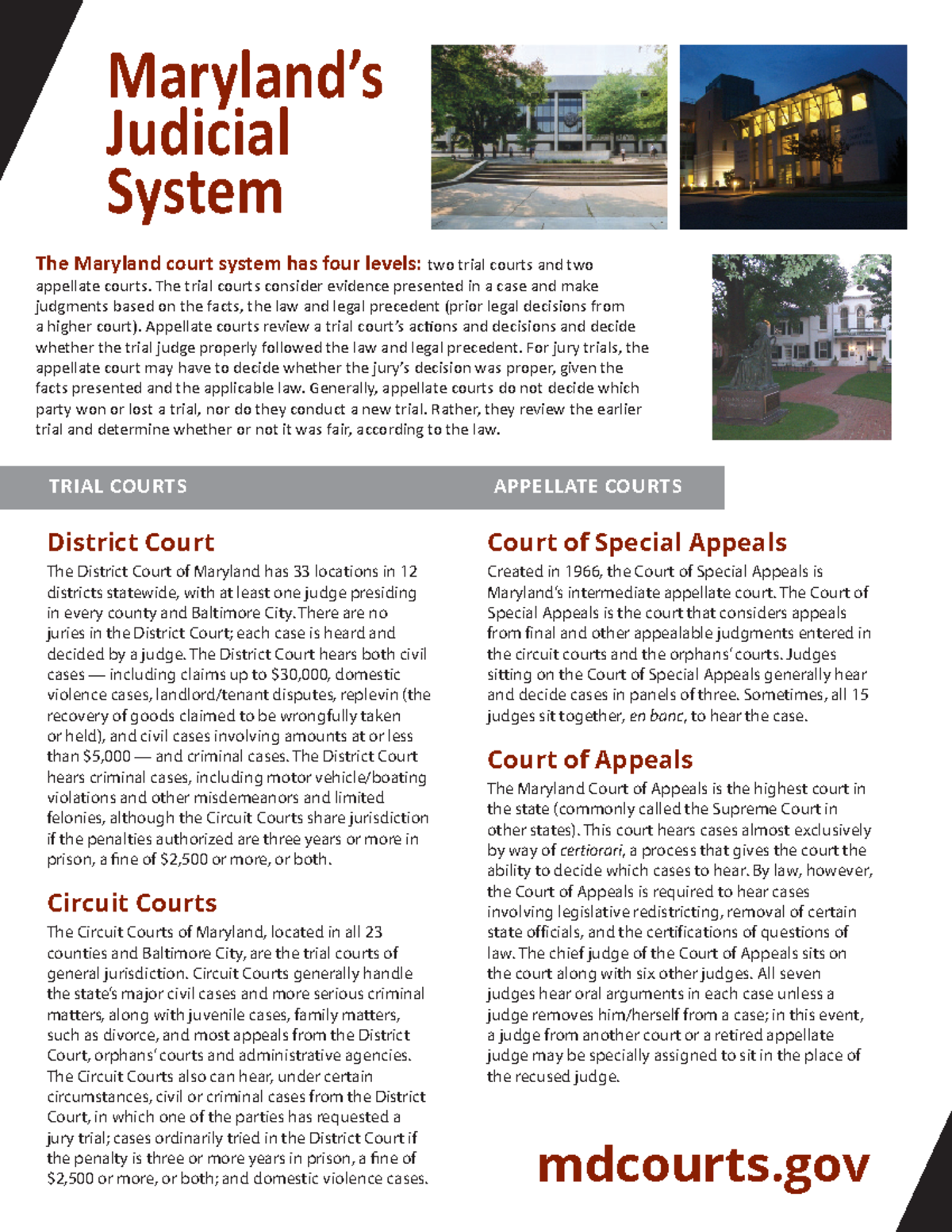
Navigating court records in Maryland requires a clear understanding of the state’s four-tiered judicial structure. Each court level handles specific legal matters, affecting where case files are originated, maintained, and retrieved.
(Note: Conceptual hierarchy from trial to appellate level: District/Orphans Court -> Circuit Court -> Appellate Court of Maryland -> Supreme Court of Maryland)
1. District Court of Maryland
The District Court is a state-wide court with locations in every Maryland county and Baltimore City. It has limited jurisdiction and handles:
- Traffic Violations: Minor motor vehicle offenses, DUI/DWI charges, and non-callable citations.
- Misdemeanors & Preliminary Hearings: Petty theft, simple assault, trespass, and initial bail review proceedings for felony charges.
- Civil Claims: Small claims matters involving $5,000 or less, as well as general civil suits claiming up to $30,000.
- Landlord-Tenant Disputes: Summary ejectment actions, tenant holding over suits, and rent escrow petitions.
2. Circuit Courts
The Circuit Courts are trial courts of general jurisdiction located in all 23 Maryland counties and Baltimore City. Circuit Courts process major legal matters, including:
- Felonies and Serious Misdemeanors: Complex criminal prosecutions, jury trials, and appeals transferred from the District Court.
- Family Law: Divorce, child custody, adoption, child support, and domestic violence protective orders.
- Major Civil Cases: Tort claims, contract disputes, and medical malpractice actions exceeding $30,000.
- Equity and Real Estate Disputes: Foreclosures, land quiet title actions, and injunctions.
3. Appellate Court of Maryland
Formerly known as the Court of Special Appeals (renamed following constitutional amendments), the Appellate Court of Maryland serves as the state’s intermediate appellate court. Judges on this court review appeals originating from Circuit Courts and the Orphans' Courts to evaluate procedural and substantive legal errors.
4. Supreme Court of Maryland
Formerly designated as the Court of Appeals, the Supreme Court of Maryland is the state’s court of final resort. Cases are granted review primarily through a discretionary writ of certiorari process, focusing on significant constitutional issues, public interest matters, or conflicting legal precedents.
Accessing Online Case Records via Maryland CaseSearch
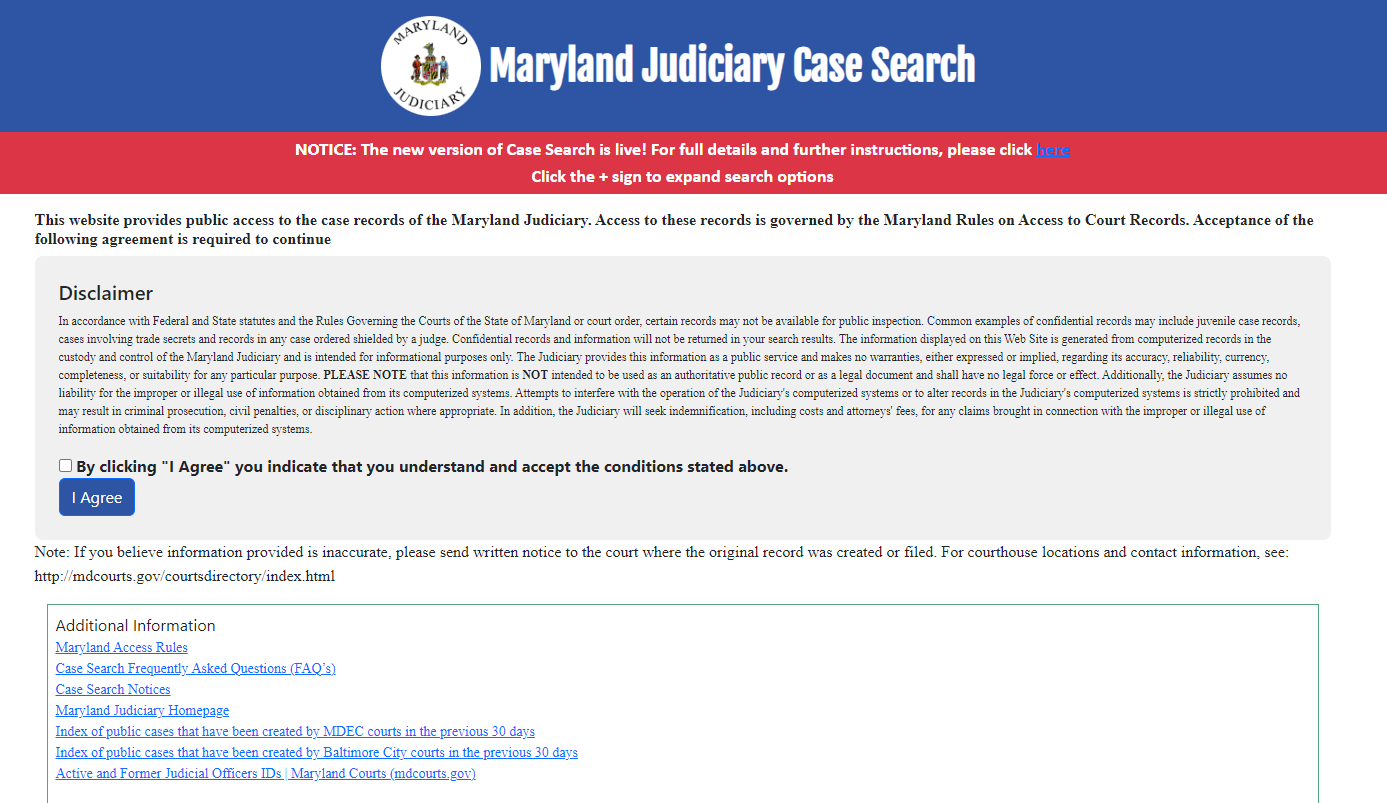
The primary tool for tracking and researching an MD court case is Maryland CaseSearch, managed directly by the Maryland Judiciary. CaseSearch is updated in real time as court clerks docket filings, orders, and hearing outcomes.
| Court Tier | Case Types Available Online | Historical Coverage | Access Limitations |
|---|---|---|---|
| District Court | Criminal, Civil, Traffic, Housing | 1991 – Present | Excludes juvenile, expunged, and sealed cases |
| Circuit Court | Criminal, Civil, Family, Foreclosure | Varies by county (Full coverage post-2000) | Restricts adoption, guardianship, and confidential records |
| Appellate Court of MD | Civil & Criminal Appeals | Post-2015 electronic filings | Public briefs accessible; sealed records excluded |
| Supreme Court of MD | High-level Certiorari & Direct Appeals | Post-2015 electronic filings | Public dockets visible; confidential filings restricted |
Step-by-Step Search Protocol
To search case dockets effectively without retrieving overwhelming search results:
- Navigate to the Official Portal: Access the Maryland Judiciary CaseSearch portal online. Accept the legal disclaimer regarding term usage and public information limits.
- Select Person or Company Search:
- Individual: Enter exact Last Name and First Name. If searching common names, narrow down by adding a middle initial or date of birth.
- Business Entity: Enter the registered corporate name as listed with the Maryland Department of Assessments and Taxation (SDAT).
- Apply County and Court Filters: Restrict your query to a specific jurisdiction (e.g., Montgomery County Circuit Court or Baltimore City District Court) if the origin of the litigation is known.
- Refine by Case Type: Choose specific categories such as Criminal, Civil, Traffic, or Family Law to streamline output.
- Review the Case Detail Summary: Click on the target case number to open the electronic docket sheet.
Decoding an MD Court Case Number and Docket Sheet
Understanding the unique filing identifiers used by Maryland court clerks enables precise record identification. Case numbers follow distinct regional and court-specific formatting conventions.
District Court Case Number Structure
District Court case identifiers typically consist of alphanumeric strings indicating the location, case category, and chronological sequence. For example, a format like
D-03-CR-26-001234denotes a District Court entry (D), Baltimore County location (03), Criminal division (CR), filed in the year 2026, followed by a unique six-digit sequence number.
Circuit Court Case Number Structure
Circuit Courts use specialized numbering schemes. A standard Circuit Court case number like
24-C-26-004321reflects the county code (24 for Baltimore City), case type prefix (C for Civil, K for Criminal, FL for Family Law), filing year (26), and docket index number.
Essential Terms Found on Docket Sheets
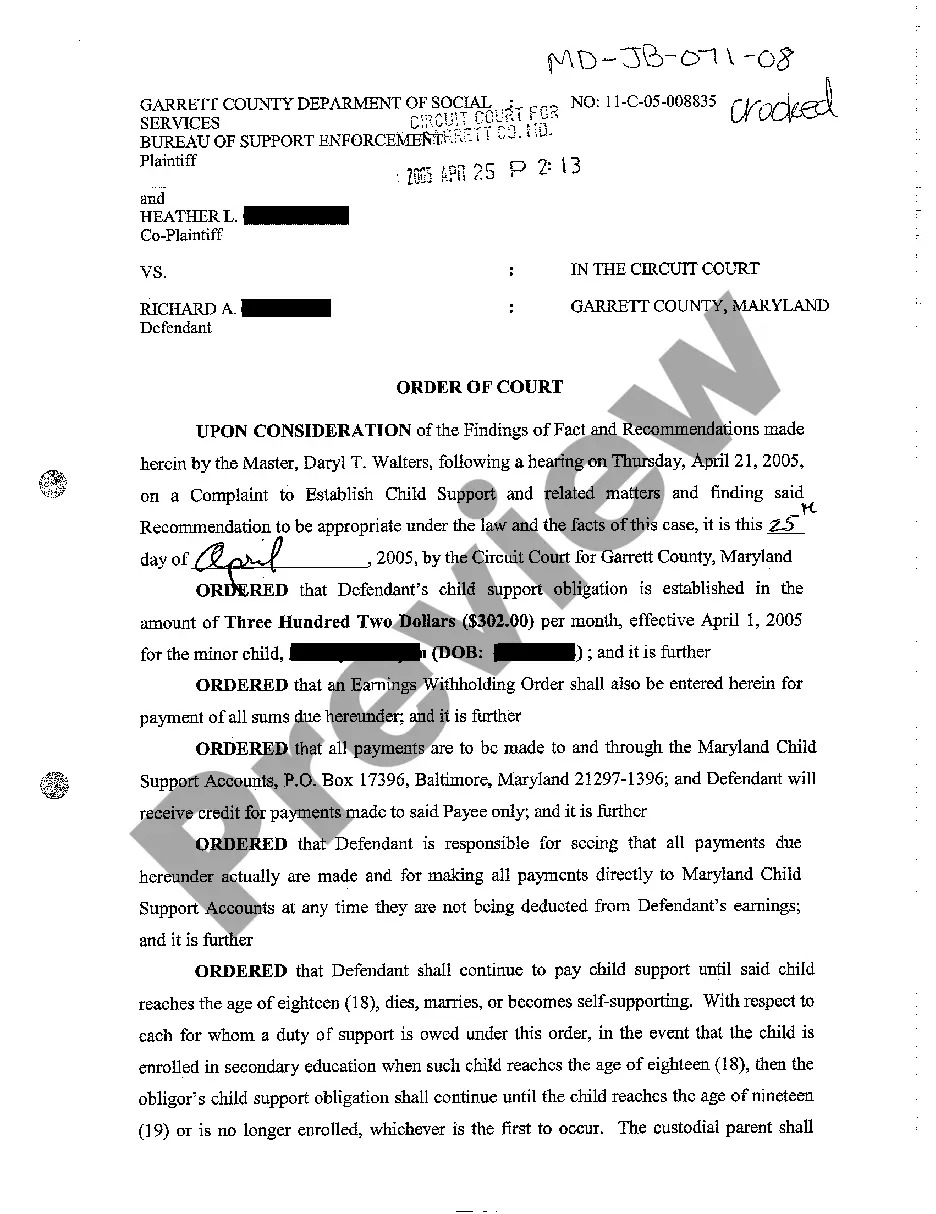
- Caption/Header: Identifies the Plaintiff (or State of Maryland) versus the Defendant or Respondent.
- Filing Date: The official date the initial complaint, indictment, or citation was entered into the record.
- Case Status: Indicates whether the matter is Active, Closed, Inactive (e.g., warrant outstanding), or Post-Judgment.
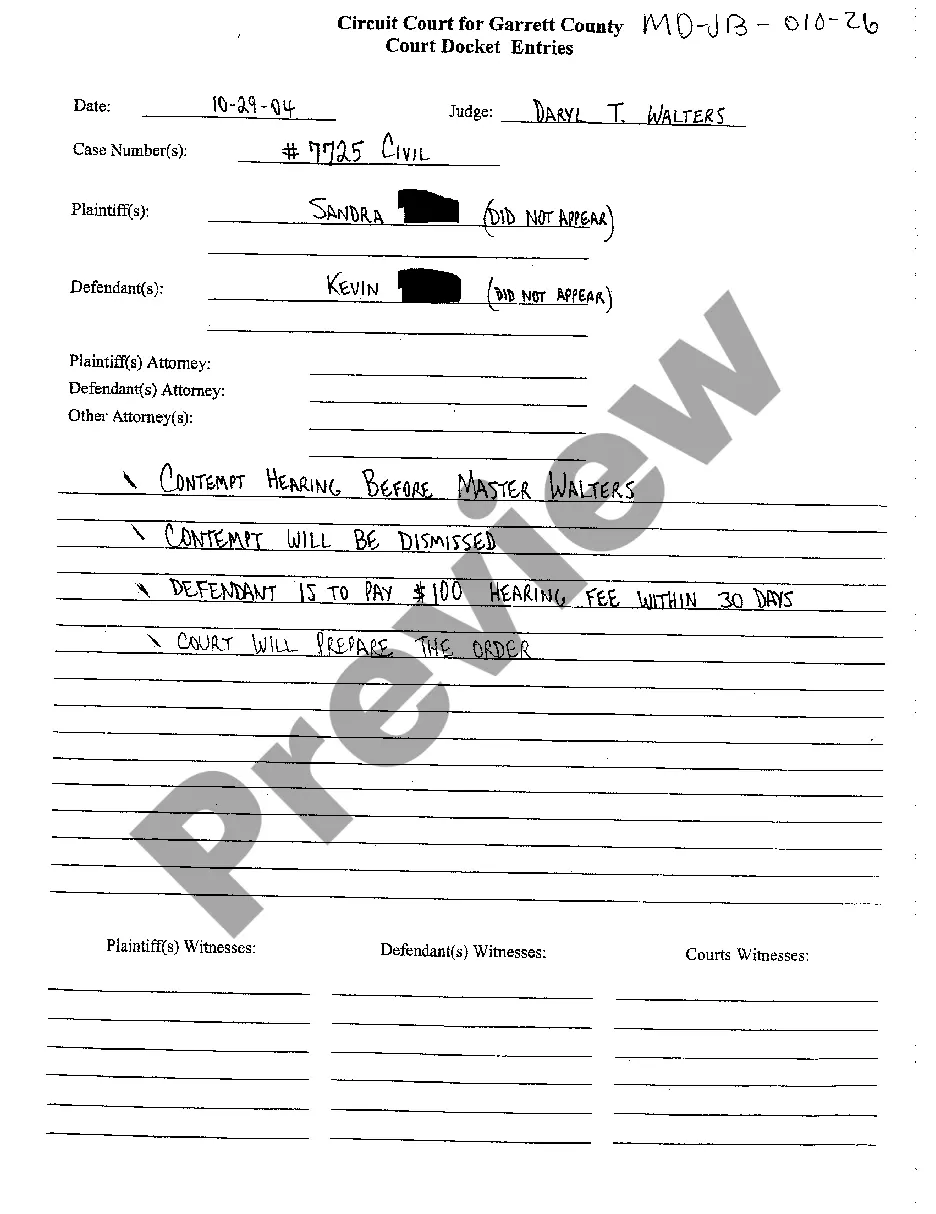
- Docket Entries: A chronological ledger of every document filed, summons issued, motion submitted, hearing held, and judicial order signed.
- Disposition: The final legal resolution of a charge or claim (e.g., Guilty, Nolle Prosequi, Stet, Judgment in Favor of Plaintiff, or Dismissed with Prejudice).
Maryland Electronic Courts (MDEC) and Electronic Filing
Maryland Electronic Courts (MDEC) serves as the unified court management and e-filing system across all Maryland jurisdictions.
E-Filing Mandates for Legal Counsel
Attorneys admitted to the Maryland Bar are required to file all court pleadings, motions, and exhibits electronically through MDEC using certified Electronic Filing Service Providers (EFSPs). Pro se litigants (individuals representing themselves) retain the option to file physically at the court clerk’s office or register to utilize MDEC e-filing portals.
Public Access Terminals
While basic docket information is available over public internet connections via CaseSearch, complete case filings, exhibits, and judicial orders often require physical viewing. Members of the public can visit terminal kiosks situated within Maryland Circuit Court law libraries or clerk offices to view unredacted public documents not restricted by statute or court order.
Obtaining Certified Copies of Maryland Court Records
When involved in financial transactions, real estate closings, immigration background checks, or out-of-state legal proceedings, uncertified online printouts are insufficient. Official certified copies bearing the seal of the court clerk are required.
(Note: Process Flow from Form Submission -> Processing -> Verification -> Official Seal Issuance)
Steps to Request Official Records:
- Identify the Custodian of Record: Requests must be directed to the specific clerk of the court where the case was tried or resolved. District Court records are handled by the District Court Clerk in the relevant district, while Circuit Court records are maintained by the elected Clerk of the Circuit Court.
- Submit a Written Copy Request: Provide the full case caption, formal case number, specific documents requested (e.g., Final Judgment Entry, Divorce Decree, or Disposition Sheet), and your contact details.
- Pay Applicable Fees:
- Standard copying fees typically cost $0.50 per page.
- Official certification fees add a statutory charge per document (generally $5.00 per certified seal).
- Verification and Processing: Clerk staff locate the original paper file or secure digital repository, verify that no protective orders restrict access, affix the raised seal, and deliver the documents via mail or counter pick-up.
Confidentiality, Record Shielding, and Expungement in Maryland
Maryland maintains public access laws regarding judicial records, but provides robust mechanisms to shield or expunge specific files to protect personal privacy and promote post-adjudication rehabilitation.
Shielding vs. Expungement
- Shielding: Removes court records from public visibility (including CaseSearch) while keeping them accessible to law enforcement, judicial officers, and specialized authorized entities.
- Expungement: Entails the physical destruction of court paper files and complete erasure of digital indices. Once expunged, the record ceases to exist in the public domain, and an individual may lawfully state that the arrest or charge never occurred.
Records Excluded from Public Inspection
By operation of law (Maryland Rule 16-907), several categories of court files are automatically withheld from Maryland CaseSearch:
- Juvenile delinquency and child in need of assistance (CINA) proceedings.
- Adoption files and guardianship proceedings.
- Emergency mental health evaluations.
- Sealed search warrants prior to execution and formal indictment.
- Shielded peace orders and temporary protective orders where petitions were denied or dismissed.
Eligibility for Criminal Expungement
Under the Maryland Criminal Procedure Code and updated reform legislation, individuals can petition for expungement under defined conditions:
- Acquittals and Dismissals: Charges resulting in Not Guilty verdicts, Nolle Prosequi, or Dismissal are eligible for immediate expungement, provided no criminal charges are pending against the petitioner.
- Stet and Probation Before Judgment (PBJ): Matters placed on the Stet (inactive) docket or resolved via PBJ can generally be expunged after a mandatory waiting period (typically three years post-disposition), provided all probation terms are completed and no subsequent convictions occur.
- Qualifying Convictions: Certain non-violent misdemeanor convictions (e.g., disorderly conduct, trespassing, minor theft) and specific felony convictions become eligible for expungement after waiting periods ranging from 3 to 15 years, depending on the statutory classification of the offense.
Strategic Legal Troubleshooting for Litigants
Common Issue: Case Number Not Found Solution: Verify court tier, drop spaces/dashes, search by last name + broad date range. Common Issue: "Stet" Status Listed Solution: Case is inactive. Confirm if condition conditions were met or file to reopen/expunge. Common Issue: Failure to Appear (FTA) Warrant Solution: Do not ignore. File a Motion to Recall Warrant or consult an attorney immediately.
Addressing Warrants and Failure to Appear (FTA)
If a search reveals an active bench warrant or a Failure to Appear entry, immediate action is necessary. Failing to appear for a scheduled court date in Maryland can trigger an automatic driver's license suspension by the Motor Vehicle Administration (MVA) or lead to pre-trial detention. Litigants should immediately retain counsel to file a Motion to Quash Warrant or Motion to Reschedule Hearing before interacting with law enforcement agencies.
Updating Incorrect Information on CaseSearch
Clerical errors on electronic dockets occur occasionally. If a docket incorrectly reflects an active balance, wrong disposition, or misspelled name:
- Obtain a certified copy of the physical court file from the clerk's office.
- Submit a formal Written Request for Correction of Judicial Record to the Chief Clerk of the jurisdiction.
- Attach original documentation supporting the corrected data point.
Frequently Asked Questions
How quickly are court cases updated on Maryland CaseSearch?
Most court entries, hearing results, and docket filings are updated within 24 to 48 hours of occurrence. Real-time updates occur in courtrooms equipped with direct MDEC electronic clerk entry terminals.
Why is a specific Maryland court case not showing up on CaseSearch?
A case may not appear if it is juvenile, sealed by judicial order, expunged by statutory petition, or filed under a restricted category such as adoption. Additionally, recently filed paper complaints may experience a processing delay before manual clerk entry into MDEC.
What does "Nolle Prosequi" mean on a Maryland criminal record?
Nolle Prosequi (often abbreviated as Nol Pros) is a formal notice from the State's Attorney indicating that the prosecution has elected to drop the criminal charges. Charges resolved with a Nol Pros are eligible for immediate record expungement.
Can I look up someone's criminal history across all of Maryland at once?
Yes, Maryland CaseSearch allows state-wide searches by party name. Leaving the county filter set to "All Jurisdictions" will search District and Circuit court indexes across all 23 Maryland counties plus Baltimore City simultaneously.
What is the difference between a District Court case and a Circuit Court case in Maryland?
District Court handles smaller civil claims under $30,000, landlord-tenant matters, traffic citations, and misdemeanor offenses. Circuit Court handles major civil suits, divorce and family law, equity matters, and felony criminal charges, alongside handling jury trials.
Image Gallery