Understanding Medical Debt Consolidation Loans: How to Combine and Pay Off Healthcare Bills
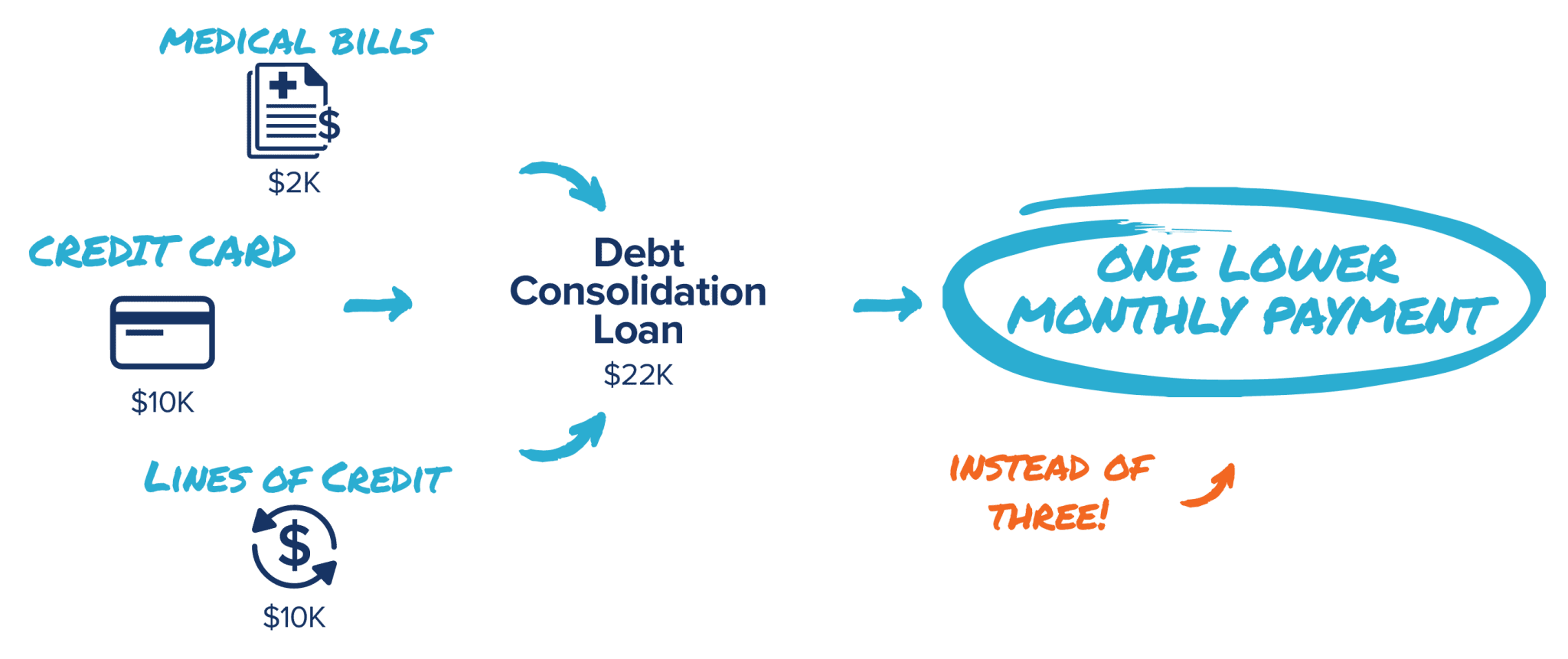
A medical debt consolidation loan combines multiple outstanding healthcare bills, doctor fees, or high-interest medical credit card balances into a single unsecured personal loan with a fixed monthly payment. This strategy simplifies y...
A medical debt consolidation loan combines multiple outstanding healthcare bills, doctor fees, or high-interest medical credit card balances into a single unsecured personal loan with a fixed monthly payment. This strategy simplifies your budget, protects your credit score from collection accounts, and can reduce overall interest costs if secured at a lower rate than existing debt.
Contents
How Medical Debt Consolidation Loans Work
Medical debt consolidation operates by taking out a new loan to pay off various healthcare-related creditors, leaving you with just one lender and one predictable monthly payment. Unlike specialized healthcare financing products, a medical debt consolidation loan is typically an unsecured personal loan issued by a bank, credit union, or online lender. Because unsecured personal loans do not require collateral like a house or car, eligibility and interest rates depend heavily on your credit profile, income, and overall debt-to-income (DTI) ratio.
When you apply for a personal consolidation loan, the lender evaluates your creditworthiness. If approved, you receive a lump sum of money, which you or the lender use to pay off individual hospitals, physician groups, laboratories, or credit cards used for healthcare expenses. From that point forward, you make a single monthly payment over a fixed term—typically ranging from two to seven years.
Fixed-rate personal loans provide predictability. Unlike variable-rate credit cards, your interest rate and monthly principal-and-interest payment remain unchanged throughout the life of the loan. This structure makes it easier to build a long-term debt payoff plan, assuming the interest rate secured is lower than the weighted average rate of the debt being consolidated.
Critical Steps Before Applying: Negotiate First
Before taking on new debt to pay off medical bills, it is essential to exhaust all healthcare-specific relief options. Converting medical bills into a traditional personal loan changes the legal and financial nature of the debt. Specialized consumer protections that apply to medical bills do not apply to general unsecured consumer loans.
1. Verify Itemized Bills for Errors
Healthcare billing errors are common. Before consolidating, request an itemized bill from every provider and cross-reference it with your Explanation of Benefits (EOB) statement from your health insurance provider. Look for duplicate charges, unrendered services, or incorrect billing codes (upcoding). Correcting billing mistakes can significantly reduce your total balance before you borrow any money.
2. Apply for Hospital Financial Assistance (Charity Care)
Under Section 501(r) of the Internal Revenue Code, non-profit hospital facilities are required to establish a written Financial Assistance Policy (FAP). These policies offer free or discounted care to eligible individuals based on household income relative to the Federal Poverty Guidelines. Even standard for-profit hospitals and health systems often have unadvertised financial hardship programs. You should formally apply for hospital charity care or financial assistance before seeking private loan financing; you may qualify to have a portion or all of your balance forgiven.
3. Negotiate the Total Balance Directly
Hospitals and large medical networks frequently accept lump-sum settlements or offer interest-free payment plans directly to patients. If you do not qualify for income-based financial assistance, offer to pay a lower lump-sum amount (e.g., 50% to 70% of the bill) if you can pay it immediately, or ask for a multi-year, zero-interest payment plan directly through the provider's billing department.
When a Medical Debt Consolidation Loan Makes Sense
Taking out a consolidation loan is generally appropriate under specific financial circumstances:
- You Have High-Interest Credit Card Debt from Medical Expenses: If you charged medical care to standard credit cards or promotional medical cards whose deferred-interest periods expired, interest rates can exceed 20% to 30%. Replacing those balances with a lower-interest personal loan saves money.
- You Have Strong Credit: Borrowers with good to excellent credit scores (typically 670 or higher) qualify for the lowest personal loan interest rates, making consolidation cost-effective.
- Providers Refuse Zero-Interest Payment Plans: If medical providers demand high interest or threaten to send accounts to third-party debt collectors despite your attempts to negotiate, a personal loan can clear the balances and preserve your credit history.
- You Need a Structured Payoff Timeline: Fixed-term personal loans enforce a strict end date for your debt, preventing the revolving debt trap common with credit cards.
Comparing Medical Debt Management Options
Choosing the right approach depends on your credit score, income, total debt load, and the flexibility of your medical providers.
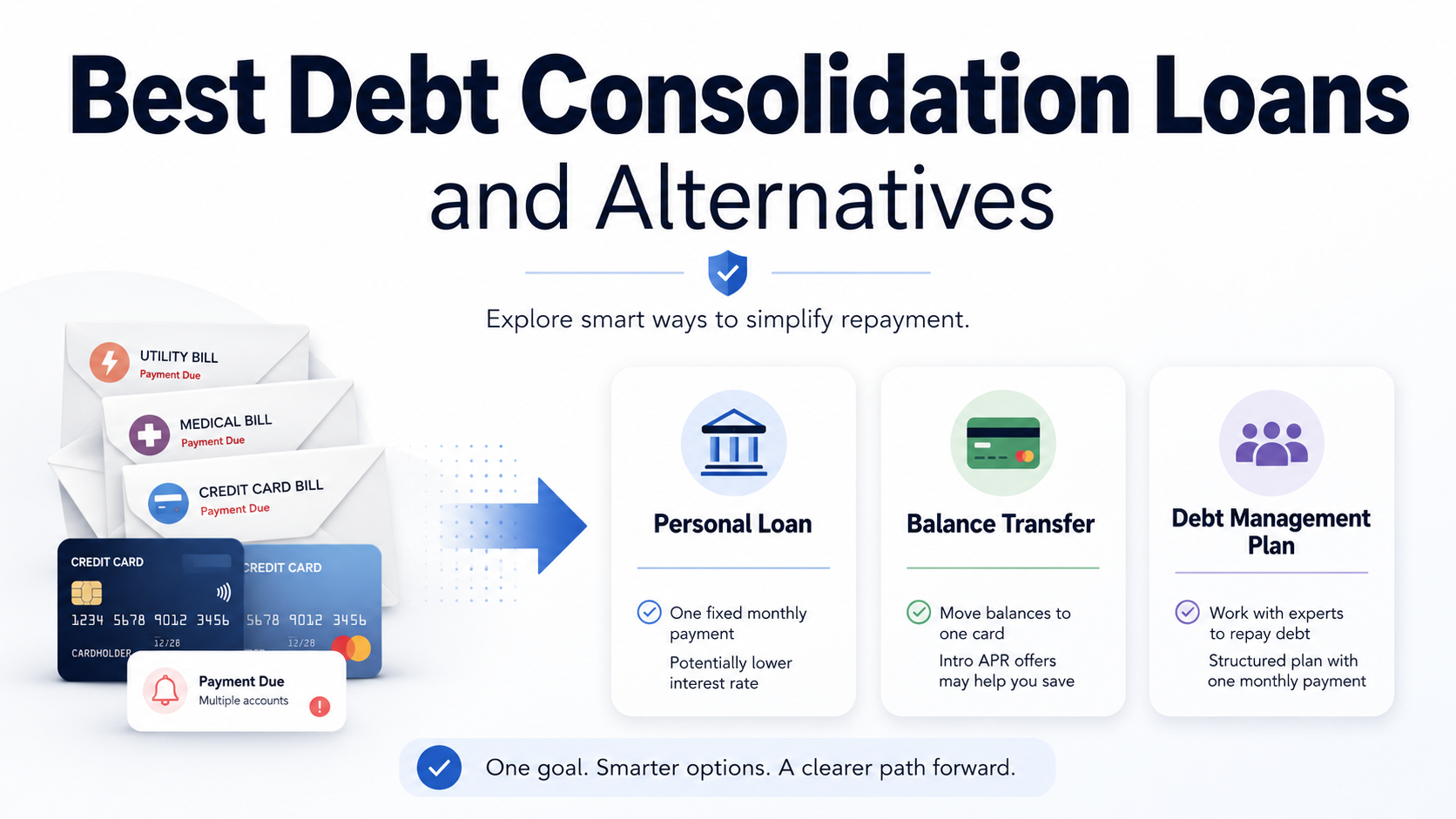
| Option | Ideal For | Interest Rate Range | Impact on Medical Debt Protections | Primary Risk / Consideration |
|---|---|---|---|---|
| Unsecured Personal Loan | Borrowers with good credit needing fixed monthly payments | ~6% to 36% APR (based on credit) | Loses medical protections; becomes standard personal debt | High APRs if credit score is low; origination fees |
| Hospital Financial Assistance / Charity Care | Low- to moderate-income patients | 0% (Debt reduction or forgiveness) | Retains all patient rights | Requires application and income verification paperwork |
| Direct Provider Payment Plan | Patients who can pay over time directly to the clinic/hospital | Typically 0% interest | Retains all medical protections | Providers may demand shorter payment windows |
| 0% APR Balance Transfer Credit Card | Borrowers with excellent credit who can pay off debt in 12–21 months | 0% intro APR (then 18%–30%+ APR) | Loses medical protections; becomes credit card debt | High interest applies if balance is not cleared before intro period ends |
| Debt Management Plan (DMP) | Borrowers struggling with overall debt and willing to close accounts | Negotiated lower rates (usually 6%–10%) | Depends on creditor, but generally restructures debt | Requires working with a non-profit credit counseling agency |
Evaluating the Financial Costs: APRs, Fees, and Terms
When evaluating personal loans for debt consolidation, you must calculate the total cost of borrowing rather than focusing solely on the monthly payment.
Annual Percentage Rate (APR) vs. Interest Rate
The APR reflects the true annual cost of the loan, incorporating both the nominal interest rate and any mandatory fees, such as loan origination fees. Origination fees typically range from 1% to 10% of the total loan amount and are deducted directly from the loan proceeds before disbursement. For instance, if you borrow $10,000 with a 5% origination fee, you will only receive $9,500, even though you must repay the full $10,000 principal plus interest.
Term Length and Total Interest Paid
Extending your loan term lowers your monthly payment, but it increases the total interest paid over the life of the loan.
- Scenario A: A $15,000 loan at 10% APR over 36 months requires a monthly payment of approximately $484, with total interest costs of roughly $2,424.
- Scenario B: The same $15,000 loan at 10% APR over 72 months reduces the monthly payment to approximately $278, but total interest costs rise to roughly $5,040.
Always compare the total payback amount of the new loan against your existing repayment trajectory to ensure the consolidation loan offers genuine financial savings.
Risks of Converting Medical Debt into Personal Loan Debt
Consolidating medical debt via a commercial loan carries distinct risks due to the loss of statutory and regulatory protections unique to healthcare debt.
Loss of Regulatory Protections for Medical Bills
Federal regulations enforced by agencies like the Consumer Financial Protection Bureau (CFPB) provide specific protections for medical debt. For example, paid medical debt and unpaid medical debt under $500 are excluded from consumer credit reports issued by Nationwide Credit Reporting Agencies (Equifax, Experian, TransUnion). Additionally, medical providers often wait extended periods before taking legal action or reporting delinquencies.
Once you pay off medical providers using a personal loan, that obligation becomes standard consumer loan debt. If you default on a personal loan:
- The lender can report delinquencies to credit bureaus immediately once payments are 30 days late, regardless of the dollar amount.
- The debt is reported as an unpaid personal loan, which impacts your credit score more severely than certain medical collections.
- Lenders can pursue legal remedies, such as wage garnishment or bank levies, subject to state law limits, without the waiting periods common in medical billing.
Potential for High Interest Rates with Fair or Poor Credit
If your credit score has suffered due to prior medical bills entering collections, you may only qualify for personal loans with interest rates at the higher end of the spectrum (20% to 36%). Borrowing at these rates can compound your financial difficulty rather than relieve it.
Step-by-Step Guide to Securing a Consolidation Loan
If you determine that a personal loan is the best strategy for your situation, follow these steps to secure the best terms:
- Calculate Your Total Debt: List every medical bill, provider, interest rate, and due date. Sum the total balance to determine the exact loan amount required.
- Check Your Credit Score and Report: Obtain your credit reports to identify your baseline credit tier. Check for errors that might be artificially dragging down your score.
- Get Prequalified with Multiple Lenders: Most online lenders, banks, and credit unions allow you to prequalify using a soft credit pull, which does not impact your credit score. Compare estimated APRs, term options, and origination fees across at least three to five lenders.
- Review the Fine Print: Verify whether the lender charges prepayment penalties if you choose to pay off the loan early. Ensure there are no hidden administrative fees.
- Submit a Formal Application: Once you select the best lender, submit a formal application. This step triggers a hard credit inquiry. You will need to supply proof of identity, address, and income (such as recent pay stubs or W-2 forms).
- Disburse Funds Directly to Creditors: Some lenders offer direct creditor payoff services, paying your medical providers or credit cards on your behalf. If the lender disburses the funds directly to your bank account, pay off your target medical debts immediately to avoid spending the funds elsewhere.
Frequently Asked Questions
Will applying for a medical debt consolidation loan hurt my credit score?
Prequalifying for a loan uses a soft credit inquiry, which does not affect your score. When you formally apply, the lender performs a hard credit inquiry, which may temporarily dip your score by a few points. However, consolidating multiple revolving balances into a single installment loan can improve your credit utilization ratio and credit mix over time.
Can I consolidate medical debt if I have bad credit?
Yes, but options may be limited and more expensive. Lenders that accept lower credit scores often charge higher APRs and origination fees. In such cases, negotiating a zero-interest payment plan directly with your healthcare provider or seeking assistance from a non-profit credit counseling agency is generally more cost-effective than taking out a high-interest loan.
What is the difference between a medical credit card and a personal consolidation loan?
Medical credit cards (such as CareCredit) are line-of-credit products designed for healthcare expenses. They frequently feature "deferred interest" promotional periods (e.g., 0% APR for 12 months). If the entire balance is not paid off before the promotional window closes, interest is retroactively applied to the original purchase balance at standard high rates (often 26% to 32%+). Personal consolidation loans provide a fixed interest rate and fixed term from day one without retroactive interest triggers.
Does consolidating medical debt remove it from my credit report?
If medical collections were previously appearing on your credit report, paying them off in full causes them to be removed from Equifax, Experian, and TransUnion reports under current credit bureau rules. The new consolidation loan will then appear on your credit report as an active installment loan in good standing, provided you make timely payments.
Should I use a home equity loan (HELOC) to consolidate medical debt?
Using a Home Equity Line of Credit (HELOC) or home equity loan may offer lower interest rates because the loan is secured by your property. However, this converts an unsecured medical debt into a secured debt on your primary residence. If you experience financial hardship and default on a home equity loan, you risk losing your home through foreclosure. For most consumers, unsecured personal loans are a safer debt management vehicle than pledging home equity.
Recommended Next Steps
- Gather all current medical statements and request itemized bills to check for billing errors.
- Contact your hospital's billing department to apply for financial assistance or negotiate an interest-free internal payment plan before seeking external financing.
- If external financing is necessary, prequalify with multiple lenders to compare APRs, loan terms, and origination fees without impacting your credit score.
- Consult a certified non-profit credit counselor through the National Foundation for Credit Counseling (NFCC) if you are overwhelmed by total debt or do not qualify for affordable personal loan rates.
Disclaimer: This article is for informational purposes only and does not constitute formal financial, legal, or medical advice. Debt management options depend on individual financial circumstances and state-specific regulations. Consult a certified financial professional or legal expert for personalized guidance.
Image Gallery