Are Article Titles in Quotes? Formatting Rules for APA, MLA, Chicago, and AP Style
Yes, article titles are typically enclosed in double quotation marks when mentioned within the body text of a document. Style guides classify articles as short works contained inside larger publication containers, such as journals, mag...
Yes, article titles are typically enclosed in double quotation marks when mentioned within the body text of a document. Style guides classify articles as short works contained inside larger publication containers, such as journals, magazines, newspapers, or websites. While quotation marks are the standard for running text, specific reference lists and journalistic style conventions follow distinct formatting rules.
Contents
The Core Formatting Principle: Short Works vs. Standalone Containers
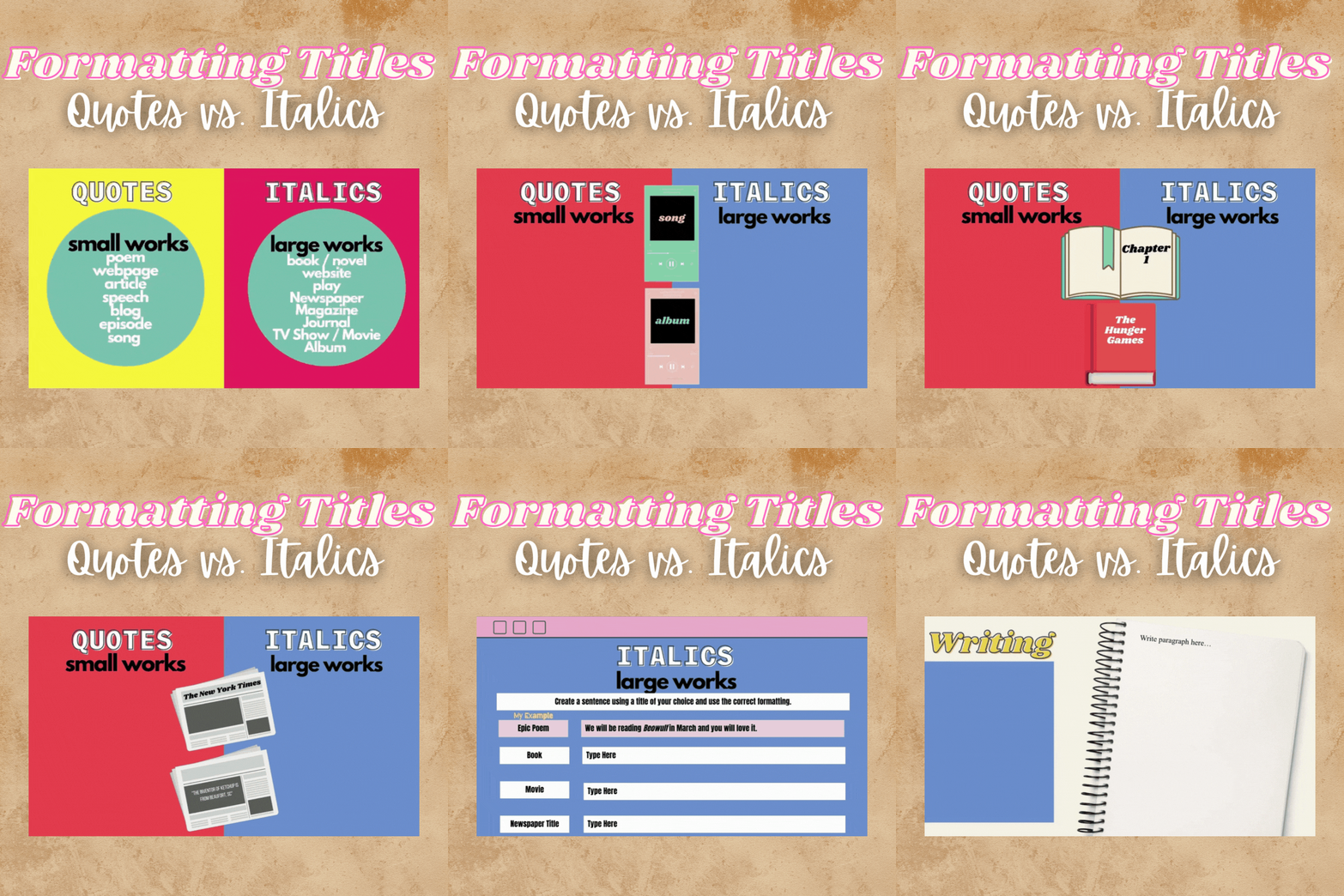
To determine whether a title requires quotation marks or italics, style guides rely on the structural relationship between a smaller work and its publication vehicle. This concept, known in editorial standards as the container principle, establishes two distinct formatting categories for titles: short works (contained) and standalone works (containers).
Articles—including academic journal papers, news reports, magazine features, encyclopedia entries, and blog posts—are considered short, dependent works. Because they exist as parts of a larger publication, major style manuals dictate that their titles belong in double quotation marks.
Conversely, standalone containers hold those shorter works. Books, academic journals, newspapers, magazines, websites, film titles, and music albums fall into this category. Standalone works are almost universally formatted in italics across academic and professional publishing systems.
- Container (Italics): The New York Times
- Contained Work (Quotes): "Understanding Climate Patterns in 2026"
- Container (Italics): Journal of Higher Education
- Contained Work (Quotes): "Academic Integrity in the Digital Age"
Applying this distinction correctly ensures visual clarity for readers. It allows an audience to instantly differentiate between the specific article being discussed and the broader publication in which it appeared.
Article Title Formatting Across Major Style Guides
While the general rule places article titles in quotation marks inside running body text, each primary style guide enforces specific variations based on context, bibliography formatting, and capitalization rules.
APA Style (7th Edition)
The American Psychological Association (APA) maintains a strict distinction between how titles appear inside the body text of a paper and how they are listed on the References page.
- In Running Body Text: When referring to an article title within the main text of an APA paper, enclose the title in double quotation marks and use Title Case (capitalizing all principal words). For example:
- According to the study "Evaluating Neurological Responses to Stress" (Davis, 2024), stress levels fluctuate significantly throughout the day.
- In the Reference List: On the APA References page, do not use quotation marks or italics for article titles. Furthermore, APA requires sentence case for article titles in the reference list, capitalizing only the first word of the title, the first word of a subtitle (after a colon), and proper nouns. The journal or website title containing the article remains italicized in title case. For example:
- Davis, M. R. (2024). Evaluating neurological responses to stress: A longitudinal study. Journal of Cognitive Neuroscience, 36(2), 145–162.
MLA Style (9th Edition)
The Modern Language Association (MLA) uses a highly consistent formatting system across both running text and the Works Cited list.
- In Running Body Text and Works Cited: MLA requires article titles to be enclosed in double quotation marks in both body prose and bibliographic entries. Article titles must always be capitalized using Title Case.
- Container Formatting: The container publication (such as a scholarly journal, newspaper, or digital magazine) is italicized.
- Example (Works Cited):
- Miller, Sarah. "The Future of Urban Architecture." Architectural Digest, vol. 88, no. 4, 2025, pp. 42–51.
- Example (In-Text Citation):
- In "The Future of Urban Architecture," Miller highlights vertical garden integration (45).
Chicago Manual of Style (17th and 18th Editions)
The Chicago Manual of Style (CMOS) governs formatting across two main documentation formats: Notes-Bibliography style (common in humanities) and Author-Date style (common in sciences and social sciences). Both approaches treat article titles identically in text and notes.
- In-Text, Footnotes, and Bibliography: Chicago places article titles in double quotation marks using Title Case in body text, footnotes, endnotes, and bibliographies. The journal, magazine, or newspaper title is set in italics.
- Notes Style Example:
- James Evans, "Historical Shifts in Global Trade Patterns," The Economic History Review 77, no. 3 (2024): 310–325.
- Bibliography Entry Example:
- Evans, James. "Historical Shifts in Global Trade Patterns." The Economic History Review 77, no. 3 (2024): 310–325.
Associated Press (AP) Style
AP Style is the standard formatting guide for newsrooms, public relations professionals, corporate communication channels, and digital media outlets. AP Style departs significantly from academic citation guidelines regarding italics.
- No Italics Rule: AP Style does not use italics for any titles due to historic wire service transmission standards and digital readability rules.
- Article Titles in AP: Use double quotation marks around article titles, book titles, song titles, computer game titles, movie titles, and speech headlines.
- Publication Containers in AP: Names of newspapers, magazines, journals, and websites do not take quotation marks, nor are they italicized. Capitalize their names directly in text.
- Example (AP Style):
- In an article published in The Wall Street Journal titled "Market Volatility in Emerging Tech," analysts predicted steady revenue growth.
Comparison Table: Formatting Rules by Style Guide
The following comparative summary details how article titles and their container publications must be formatted depending on the editorial standard in use.
| Style Guide | Article Title in Body Text | Article Title in Reference / Works Cited List | Container (Journal / Publication) Format | Capitalization Style for Article Titles |
|---|---|---|---|---|
| APA (7th Ed.) | Enclosed in "Quotation Marks" | No quotes, No italics | Italicized | Title Case in body text; Sentence case in References |
| MLA (9th Ed.) | Enclosed in "Quotation Marks" | Enclosed in "Quotation Marks" | Italicized | Title Case in all locations |
| Chicago (CMOS) | Enclosed in "Quotation Marks" | Enclosed in "Quotation Marks" | Italicized | Title Case in all locations |
| AP Style | Enclosed in "Quotation Marks" | N/A (Journalistic format) | Plain text (No quotes, No italics) | Title Case in all locations |
Specific Scenarios and Edge Cases
Applying quotation marks to article titles often involves complex grammatical situations. Below are detailed resolutions for common technical edge cases encountered by academic and editorial writers.
Online Articles, Blog Posts, and Web Pages
Digital publications follow the same container principle as printed media:
- Web Articles and Blog Posts: Enclose specific web article titles or individual blog post headlines in double quotation marks (e.g., "How to Optimize Code Performance").
- Website Names: The overall website or digital publication platform is treated as the container and is italicized in academic style systems (e.g., TechCrunch, Wired, Ars Technica). In AP Style, the website name is written in plain capitalized text (e.g., TechCrunch).
- Entity Names vs. Publication Names: Do not italicize or put quotation marks around standard organization names that host web content, such as the World Health Organization or U.S. Department of Education, unless referring to a specific publication title produced by that body.
Punctuation Placement with Quotation Marks
The placement of periods, commas, question marks, and colons relative to quotation marks depends on regional English rules:
American English Standard
In the United States, periods and commas are placed inside the closing quotation mark, regardless of whether the punctuation is part of the original title.
- Correct (US): I read "The Science of Sleep," which was published last month.
- Correct (US): She cited the paper "Modern Cryptographic Systems."
British and International English Standard
In British English (and international adaptations), punctuation is placed outside the closing quotation mark unless the punctuation mark is an integral part of the quoted title itself.
- Correct (UK): I read 'The Science of Sleep', which was published last month.
- Correct (UK): Have you read the paper 'Where Do We Go From Here?'
Titles Containing Questions or Exclamation Marks
If an article title naturally ends with a question mark or an exclamation point, that specific punctuation mark stays inside the quotation marks, even in American English. No additional period or comma is added adjacent to the internal mark.
- Example: Have you reviewed "Who Pays for Clean Energy?" in the recent journal edition?
- Example: The commentary "Stop the Waste!" generated significant reader reaction.
Nested Titles (Titles Within Titles)
When an article title includes the name of another work within its own text, apply alternating formatting based on the inner work's classification:
- If the inner title is a short work (requires quotes): Convert the inner quotes to single quotation marks (' ') while keeping the outer article title in standard double quotation marks (" ").
- Example: "An Analysis of Frost's 'The Road Not Taken' in Modern Curricula"
- If the inner title is a standalone work (requires italics): Italicize the inner title while retaining double quotation marks for the overall article title.
- Example: "Critical Responses to Moby-Dick in Nineteenth-Century Periodicals"
Common Formatting Mistakes to Avoid
- Italicizing Article Titles: Placing an article title in italics (e.g., Understanding Economic Shifts) is one of the most frequent editorial errors. Reserve italics exclusively for the container publication (e.g., The Economist).
- Applying Quotes to Document Headlines (H1 Tags): Do not place quotation marks around your own document title or headline at the top of a page. Quotation marks are used only when referencing a published work within body text or citations.
- Over-Using Quotation Marks in Reference Lists: Remembering to remove quotation marks from article titles when compiling an APA Reference List is essential for academic accuracy.
- Misplacing Commas and Periods: Placing commas or periods outside the closing quotation marks when writing for an American publication violates standard US typography conventions.
Frequently Asked Questions
Do you put article titles in quotes in a baseline essay or essay body?
Yes. In the body text of an essay or academic paper, article titles are placed in double quotation marks under all major style systems, including APA, MLA, and Chicago.
Are newspaper article titles italicized or put in quotes?
Newspaper article titles are placed in double quotation marks (e.g., "Local Election Results Finalized"). The name of the newspaper itself is italicized in academic styles (e.g., The Washington Post) or capitalized without italics in AP Style (e.g., The Washington Post).
How do you format article titles in APA style in the reference list?
In an APA 7th Edition reference list, article titles do not use quotation marks or italics. They are written in sentence case (only the first word of the title, first word after a colon, and proper nouns are capitalized).
Should article titles in emails or blog posts have quotation marks?
Yes. When referencing an external article within an email, newsletter, or blog post, place the article title in quotation marks to distinguish it clearly from the rest of your sentences and from the overall publication name.
Do online blog post titles use quotes?
When referring to a blog post title within written prose, treat it like an article by placing its title in double quotation marks (e.g., "10 Tips for Remote Teams"), while italicizing the name of the overall blog or website (e.g., HubSpot Blog).
Next Steps for Writers and Editors
To maintain absolute formatting consistency across your writing projects:
- Identify Your Target Style Guide: Determine whether your publication or institution requires APA, MLA, Chicago, or AP Style before drafting citations.
- Apply the Container Rule: Verify whether the title you are referencing is a short, contained piece (use quotation marks) or a standalone container (use italics).
- Audit Reference Lists Separately: If writing under APA rules, double-check that quotation marks are removed from article titles in the final reference entries while remaining intact within the essay body text.
- Check Regional Punctuation Rules: Confirm whether your target publication uses American English (periods and commas inside quotes) or British English conventions (punctuation outside quotes).
Image Gallery