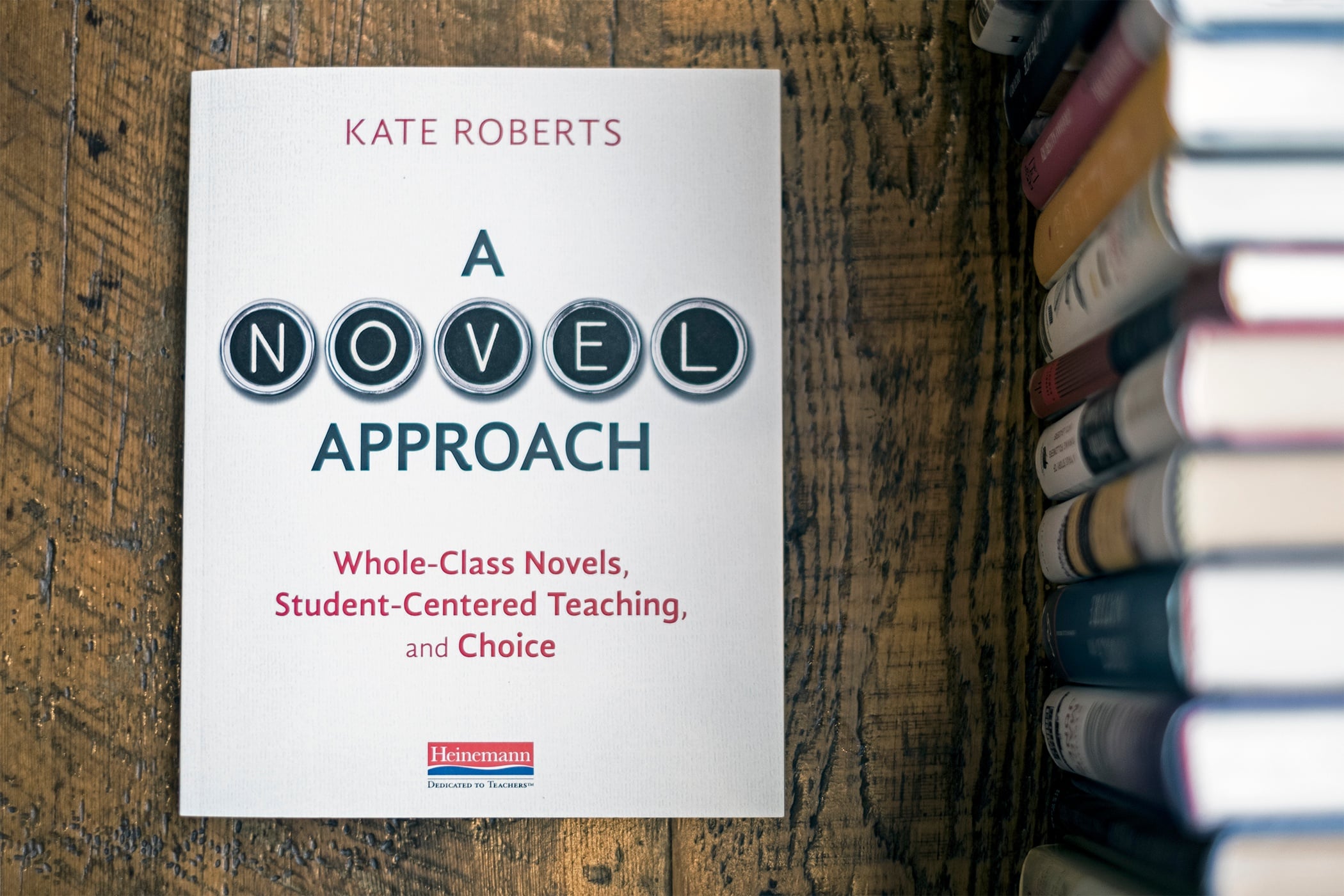
Understanding the "Novel Way" Meaning: Definition, Nuance, and Usage
A novel way refers to an original, unconventional, or unprecedented method of approaching a problem, performing a task, or conceptualizing an idea. Rooted in the Latin adjective novus (meaning "new"), the phrase denotes more than just...
A novel way refers to an original, unconventional, or unprecedented method of approaching a problem, performing a task, or conceptualizing an idea. Rooted in the Latin adjective novus (meaning "new"), the phrase denotes more than just a recent change; it highlights inventive thinking, creativity, and a distinct departure from established traditions or standard procedures.
Contents
What Does "Novel Way" Mean? Core Definition and Etymology
To understand the phrase "novel way," it is helpful to examine its two constituent words: the adjective novel and the noun way.
In everyday speech, people frequently associate the word novel with a book-length work of fiction. However, when used as an adjective before a noun, novel carries a distinct linguistic meaning: strike-it-fresh, strikingly new, or never seen or known before.
The word traces its origins to the Latin novus ("new"), which evolved into the Old French novel (modern French nouveau). By the 14th century, Middle English adopted the term to describe things that were unfamiliar, fresh, or different from existing norms.
When paired with way—which signifies a manner, method, technique, or course of action—the full phrase novel way describes an action or technique that breaks away from routine methods.
- Latin: novus (new)
- Old French: novel
- Middle English: novel
- Adjective: "Novel" (Original/Unprecedented)
- Noun: "Way" (Method/Approach)
- "Novel Way" (An Original Method)
A novel way is not merely a method that someone personally tried for the first time; it implies that the technique itself possesses inherent originality or freshness within a given context.
Semantic Nuances: "Novel Way" vs. Related Phrases
Precision in vocabulary is essential in academic writing, technical documentation, business strategy, and legal framing. While "novel way" shares similarities with terms like "new way," "innovative way," and "unconventional way," key semantic distinctions differentiate these expressions.
| Phrase | Core Meaning | Primary Context | Connotation & Nuance |
|---|---|---|---|
| Novel Way | Unprecedented or original method | Research, academia, legal patents, problem-solving | Emphasizes uniqueness, fresh perspective, and lack of prior precedence. |
| New Way | Recently introduced or modified method | General conversation, basic procedural updates | Focuses on recency; may simply be new to the individual, not globally unique. |
| Innovative Way | Improved or modernized technique | Technology, product development, enterprise strategy | Emphasizes value creation, efficiency gains, and practical application. |
| Unconventional Way | Method breaking traditional norms | Creative arts, unorthodox strategy | Focuses on defying expectations, regardless of whether the method is beneficial or new. |
"Novel Way" vs. "New Way"
The word "new" is broad. A company might adopt a "new way" of tracking employee attendance by switching software providers. However, if the software relies on standard, commercially available technology, the approach is new to the company, but not a novel way of tracking attendance. A novel way would involve introducing a fundamental design or algorithm never utilized for that purpose before.
"Novel Way" vs. "Innovative Way"
While often used interchangeably, "novel" and "innovative" carry distinct structural emphases. Novelty focuses on originality—the fact that an idea has not been documented or executed previously. Innovation focuses on application and utility—taking an idea (whether strictly novel or adapted) and successfully implementing it to create measurable value or efficiency. An idea can be novel without being innovative if it serves no practical purpose.
Legal and Academic Implications of Novelty
The phrase "novel way" carries specific, formalized weight in legal and academic domains, where proving that a method is novel determines whether it can be patented, published, or funded.
1. Patent Law and Intellectual Property
In intellectual property jurisprudence, such as guidelines enforced by the United States Patent and Trademark Office (USPTO) and the European Patent Office (EPO), novelty is an explicit legal requirement for patentability.
Under statutes such as 35 U.S.C. § 102, a process or method cannot be patented if it was previously disclosed in "prior art"—meaning public documents, patents, or commercial uses anywhere in the world.
When a patent application describes a "novel way" to synthesize a chemical compound or process digital signals, it claims a specific sequence of steps that has never existed in public knowledge. In this legal context:
- Novelty means absolute technological originality.
- The method must not be obvious to a person having ordinary skill in the art (the "non-obviousness" standard).
2. Scientific Literature and Research Grants
In academic publishing and grant applications (such as those submitted to the National Science Foundation or National Institutes of Health), researchers must demonstrate that their proposed methodology represents a novel approach to a known question.
Reviewers evaluate whether a paper presents a novel way of analyzing data, a novel theoretical framework, or a novel experimental setup. In peer-reviewed journals, asserting a "novel way" requires literature reviews demonstrating that existing studies have not previously used that methodology.
How to Use "Novel Way" Correctly in Sentences
Using "novel way" correctly requires attention to grammatical structure, prepositions, and appropriate context.
Grammatical Structure and Prepositions
The phrase "novel way" typically connects to a verb phrase using either an infinitive verb construct (to + verb) or a prepositional phrase (of + gerund).
- Infinitive Construction: "The research team discovered a novel way to process agricultural waste into biofuel."
- Gerund Construction: "The startup introduced a novel way of delivering cold-chain pharmaceuticals."
Both forms are grammatically correct, though the infinitive structure ("novel way to...") is more common in modern American and British English writing.
Contextual Examples
Business and Corporate Strategy
"By leveraging decentralized data storage, the firm established a novel way to secure cross-border financial transactions without relying on intermediary banks."
Scientific Research
"The authors demonstrate a novel way of observing cellular mitosis using low-intensity fluorescent imaging, reducing cell damage during analysis."
Everyday Problem Solving
"Faced with severe space constraints in urban apartments, architects developed a novel way to fold structural furniture directly into wall panels."
Common Mistakes to Avoid
- Redundant Modifiers: Avoid expressions like "brand new novel way" or "completely original novel way." Because novel inherently means new and original, combining it with similar adjectives creates tautology.
- Confusing Noun and Adjective Forms: Do not confuse the adjective novel with the noun referring to written fiction. Phrases such as "a novel's way" refer to the style of a book, not an innovative method.
- Overusing the Term: Calling routine updates or standard procedures "novel" dilutes the term's meaning. Use it when an approach truly breaks existing patterns.
Practical Applications Across Disciplines
Understanding how "novel ways" manifest across fields illustrates the term's real-world impact.
| Field | Practical Application Example |
|---|---|
| Software & AI | Training neural networks using synthetic data to bypass privacy constraints |
| Medicine & Healthcare | Utilizing mRNA delivery platforms to train the immune system against cancer cells |
| Environmental Engineering | Employing specialized fungi to digest microplastics in municipal wastewater |
| Corporate Operations | Implementing asynchronous work models to eliminate fixed time-zone dependencies |
Software Engineering and Artificial Intelligence
In computer science, developing a novel algorithm means solving a computational problem with greater efficiency, lower space complexity, or superior accuracy compared to existing methods. For example, applying transformer architectures to genetic sequencing represented a novel way to predict protein structures.
Biomedical Engineering
In medicine, novel ways of drug delivery allow therapies to target diseased tissue directly while sparing healthy cells. Target-specific lipid nanoparticles represent a novel way to transport genomic therapies directly into target cells, overcoming historical biological barriers.
Frequently Asked Questions
What does "novel way" mean in plain English?
A "novel way" means a new, original, or creative method of doing something that has not been done or thought of in that specific manner before.
Is a "novel way" always better than a traditional way?
Not necessarily. A method can be novel (original), but less efficient, more expensive, or less reliable than established traditional methods. Novelty measures originality, not effectiveness.
What is the difference between a novel way and an unconventional way?
An unconventional way breaks traditional rules or norms, but it might use old or existing techniques in an odd combination. A novel way introduces an approach that is genuinely new or unprecedented in that context.
Can a process be novel if it combines existing tools?
Yes. In both patent law and general practice, combining known tools or methods in an unexpected, highly original sequence to produce a new result can constitute a novel way of solving a problem.
How do I know if my method is truly a novel way?
To verify novelty, conduct a search of existing literature, patents, or industry standards (often called a prior art search). If no existing documentation describes your precise approach or combination of steps, your method can be accurately described as novel.
Strategic Guidance for Writers and Communicators
When incorporating the term "novel way" into professional, scientific, or commercial documentation, follow these practical steps to ensure clarity and credibility:
- Verify Originality: Conduct background research to ensure the method is genuinely novel within your field before using the phrase in publications or proposals.
- Specify the Difference: Clearly state why the approach is novel. Contrast your method directly with traditional alternatives to highlight its unique aspects.
- Align with Tone and Audience: Use "novel way" in formal settings such as research papers, grant applications, patent filings, and executive briefings. For informal updates, simpler terms like "new approach" or "fresh method" may be more appropriate.
By accurately matching the term to genuine technical or conceptual originality, communicators maintain professional precision and effectively highlight meaningful innovation.
Image Gallery