Understanding the Two-Faced Cat Phenomenon: Genetics, Health, and Characteristics
The "two-faced cat issue" refers to two distinct biological conditions: Diprosopus (Janus cats), where a single head has duplicated facial features due to protein signaling anomalies, and Chimerism, where a cat displays two distinct co...
The "two-faced cat issue" refers to two distinct biological conditions: Diprosopus (Janus cats), where a single head has duplicated facial features due to protein signaling anomalies, and Chimerism, where a cat displays two distinct coat patterns split down the midline. Understanding these involves distinguishing between life-threatening developmental defects and harmless genetic traits.
Contents
The Biological Reality of Janus Cats (Diprosopus)
When people search for "two-faced cats," they are often referring to a rare congenital disorder known as diprosopus. This condition is named after the Roman god Janus, who was typically depicted with two faces—one looking toward the past and the other toward the future. In the feline world, a "Janus cat" is an animal born with a single body and a single head, but with parts of the face duplicated.
This is not the same as polycephaly (having two separate heads). In diprosopus, the duplication occurs on a single skull. This can range from a minor duplication, such as having an extra nose or a third eye, to a complete duplication of the facial structure, including two mouths, two noses, and four eyes. While the appearance is striking, the internal anatomy is often much more complex and compromised. Most Janus cats do not survive more than a few days after birth because the duplication often extends to the brain or the respiratory system, leading to immediate physiological failure.
The "issue" in these cases is primarily medical and developmental. The duplication of structures often results in difficulty breathing, inability to nurse properly, and neurological complications. Because the condition is so rare, there is no standard "cure," and veterinary intervention is focused almost entirely on palliative care or surgical correction of minor obstructions if the kitten is stable enough to survive the neonatal period.
The Science Behind Craniofacial Duplication: The SHH Protein
The root cause of diprosopus lies in the complex signaling pathways that govern embryonic development. Specifically, a protein known as Sonic Hedgehog (SHH) plays a critical role in determining the width of facial features and the patterning of the midline.
During early gestation, the SHH protein signals to cells where the eyes, nose, and mouth should be placed. If there is an overabundance of this protein or an error in how the cells receive the signal, the facial midline begins to widen. If the widening is extreme, the facial features are essentially "mirrored," leading to duplication.
In 2026, researchers continue to study the SHH pathway not only to understand rare feline anomalies but also to gain insights into human craniofacial development. While environmental factors and toxins can sometimes interfere with these pathways, diprosopus is generally considered a spontaneous genetic mutation rather than a hereditary trait. This means that two healthy cats are not "carriers" for Janus syndrome; rather, it is a localized error during the intricate process of cell division and signaling in the womb.
Chimerism: The Genetic Mosaic Often Called "Two-Faced"
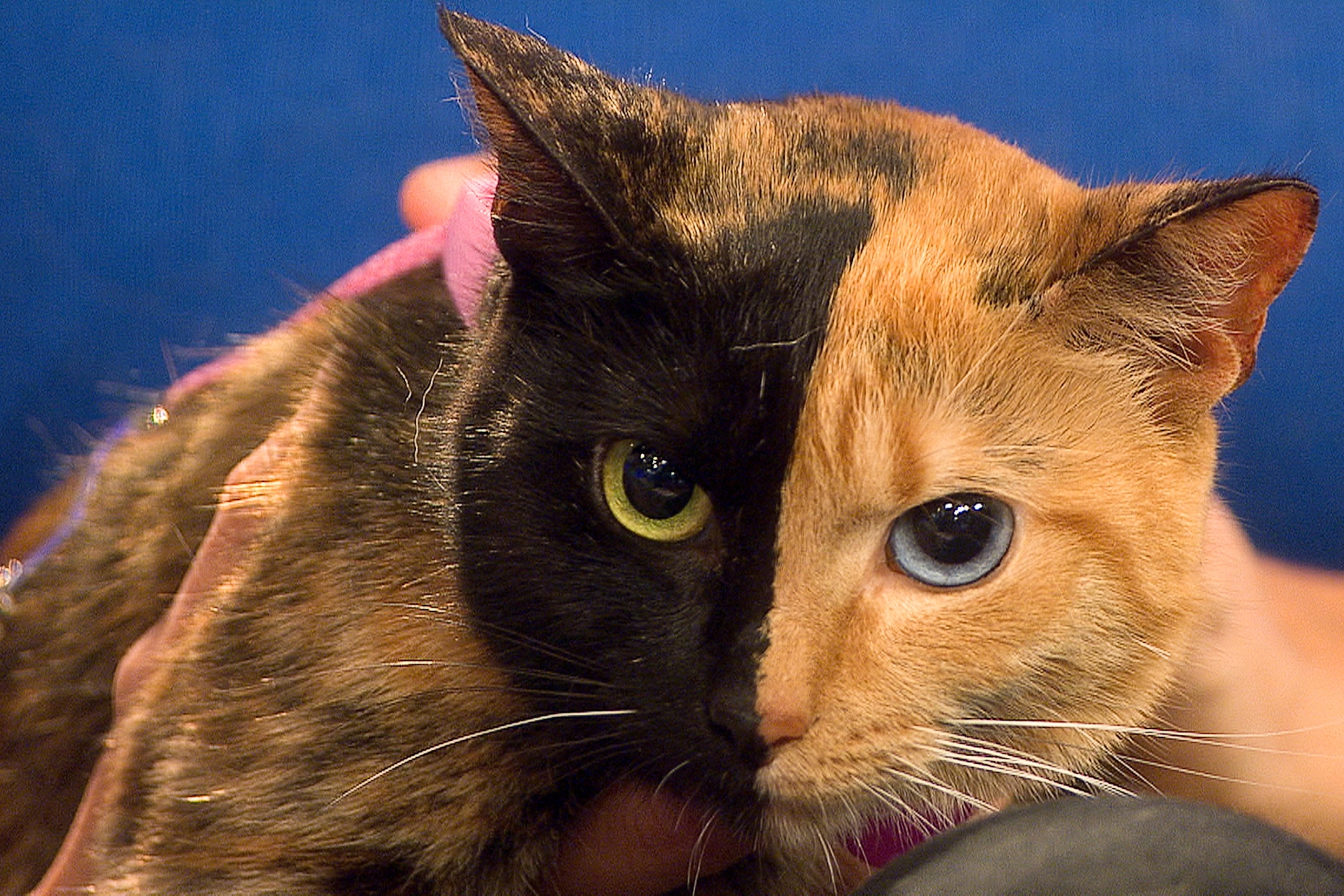
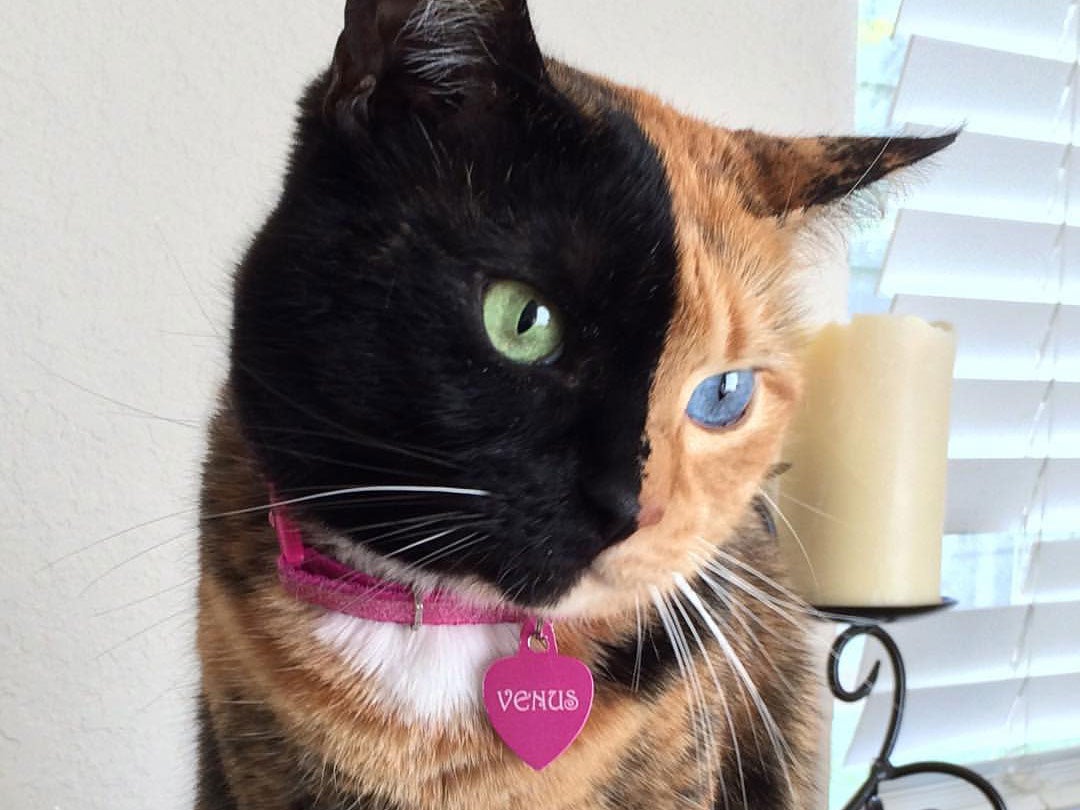
A secondary, and far more common, interpretation of the "two-faced cat issue" involves genetic chimerism. This is what most people see on social media—cats like the famous "Venus the Two-Face Cat," whose face is perfectly split down the middle with black fur on one side and ginger on the other, often accompanied by different colored eyes (heterochromia).
A chimera is an organism composed of cells from more than one distinct zygote. This occurs when two embryos fuse together very early in the mother's uterus. Instead of developing into two separate fraternal twin kittens, the embryos merge into one. The resulting cat has two different sets of DNA. If one embryo was genetically programmed to be a black cat and the other was programmed to be a ginger tabby, the resulting chimera may have a striking, split-color appearance.
Unlike Janus cats, chimeras are typically perfectly healthy. The "issue" here is not a medical one, but a biological curiosity. In fact, many cats are chimeras without their owners ever knowing it, as the two sets of DNA may result in similar coat colors or internal differences that aren't visible to the naked eye. The "two-face" look only occurs when the cell populations migrate in a way that creates a sharp boundary along the embryonic midline.
Comparing Janus Cats and Genetic Chimeras
Understanding the differences between these two conditions is vital for owners and breeders. The following table highlights the core distinctions between the medical condition of diprosopus and the genetic trait of chimerism.
| Feature | Janus Cat (Diprosopus) | Genetic Chimera |
|---|---|---|
| Primary Cause | Protein signaling error (SHH pathway) | Fusion of two distinct embryos |
| Physical Appearance | Duplicated facial features (2 noses, 2 mouths) | Split coat color or eye color |
| Genetic Makeup | Single set of DNA with a mutation | Two distinct sets of DNA in one body |
| Health Impact | Severe; often life-threatening | Generally none; normal health |
| Brain Structure | Often duplicated or malformed | Normal |
| Occurrence | Extremely rare | More common than recognized |
| Survival Rate | Very low (exceptions exist) | Normal lifespan |
Health Implications and Specialized Veterinary Care
For a Janus cat, the health challenges are immediate. The most pressing issue is often the ability to breathe and eat. If a kitten has two mouths but only one esophagus, or if the nasal passages are malformed, they may succumb to aspiration pneumonia or starvation within hours.
Specialized veterinary care for these animals involves:
- Radiographic Imaging: To determine if there are two separate tracheas or esophagi.
- Tube Feeding: Since many Janus kittens cannot latch onto a mother or bottle properly.
- Neurological Assessment: To see if the brain is functionally split, which can lead to seizures or lack of motor coordination.
In contrast, a chimera cat requires no special medical treatment related to its genetic status. However, they are frequently the subject of scientific interest. In 2026, DNA testing has become more accessible, allowing owners to verify chimerism by testing skin or hair samples from different parts of the cat's body to see if the genetic profiles match.
Famous Case Studies: From Frank and Louie to Venus
The most famous Janus cat in history was Frank and Louie (also known as Frankenlouie). Born in 1999, he defied all medical odds by living for 15 years. He had two mouths, two noses, and three eyes (the middle one was non-functional). His survival was attributed to the fact that he had one functional esophagus and one brain, which minimized the internal conflicts that usually kill Janus kittens. Frank and Louie's life provided invaluable data to the veterinary community regarding the long-term management of craniofacial duplication.
On the other side of the spectrum is Venus the Two-Face Cat, a social media icon who represents the chimera phenomenon. Venus is not a Janus cat; she has a single, normal feline face, but it is split precisely down the middle by color. While some experts debate whether Venus is a true chimera or a result of specific X-inactivation (a process in calico cats), she remains the poster child for the aesthetic version of the "two-face" issue.
The Role of X-Inactivation in Calico and Tortoiseshell Patterns
It is important to note that not every cat with a split face is a chimera. Most "two-faced" looking cats are actually tortoiseshells or calicos. In these cats, the gene for orange fur and the gene for black fur are both located on the X chromosome.
Female cats have two X chromosomes. During development, one X chromosome in every cell is "turned off" or inactivated. If one X carries the orange trait and the other carries the black trait, the cat's coat will be a patchwork of both. Occasionally, this inactivation happens in a way that creates a straight line down the face. This is a standard genetic process and does not involve the fusion of embryos or the duplication of features. This is often the most common "issue" people encounter when trying to identify their pet's unique markings.
Ethical Considerations and the Future of Feline Genetics
As we move through 2026, the ethical implications of these conditions remain a topic of discussion among animal welfare advocates. There is a firm consensus in the veterinary community that Janus cats should never be intentionally bred. The condition is a birth defect associated with significant suffering, and any attempt to "produce" such animals would be a severe violation of animal rights.
Regarding chimeras, while they are healthy, there is an increasing trend of people seeking out "split-face" cats for their aesthetic appeal. It is crucial for potential owners to remember that these are living creatures, not accessories. A cat’s health and temperament should always take precedence over its coat pattern.
FAQs
Can a Janus cat lead a normal life?
In the vast majority of cases, no. Most Janus cats have internal deformities that are incompatible with life. Frank and Louie is the only well-documented case of a Janus cat living a full, 15-year life. Success depends entirely on whether the internal organs—specifically the brain, throat, and lungs—are shared and functional rather than duplicated and obstructed.
Is chimerism hereditary?
No, chimerism is not a trait that can be passed down from parent to offspring. It is an accidental fusion of two embryos in the womb. While some lineages might have a higher predisposition for multiple ovulations, the fusion itself is a random developmental event.
How can I tell if my cat is a chimera or just a tortoiseshell?
Without a DNA test, it is very difficult to tell. A true chimera will have different DNA in different parts of its body. If your cat has different colored eyes and a split face, it is a strong candidate for chimerism, but it could also be the result of mosaicism or specific X-inactivation patterns common in calico cats.
Does the "two-face" issue affect the cat's personality?
There is no evidence that either diprosopus or chimerism affects a cat's personality. A Janus cat's behavior would be dictated by its neurological health, while a chimera cat behaves exactly like any other cat. The "issue" is purely physical and genetic.
Are Janus cats the same as "Conjoined Twins"?
Not exactly. Conjoined twins result from a single embryo that fails to split completely (fission). Janus cats (diprosopus) result from a single embryo that experiences duplicated signaling (excess protein) during facial formation. While both result in duplicated body parts, the embryological mechanisms are different.
Practical Recommendation
If you encounter a kitten born with duplicated facial features (a Janus cat), the immediate priority is veterinary intervention. These kittens require professional assessment to determine if they can breathe and swallow. Do not attempt to force-feed a Janus kitten without medical guidance, as the risk of aspiration is extremely high. For those interested in the aesthetic "two-faced" cats (chimeras), focus on reputable rescues and shelters; these unique coat patterns occur naturally and should be celebrated as biological wonders rather than products of specialized breeding.
Image Gallery