Why Red Auto Insurance Is Not More Expensive: Debunking the Color Myth
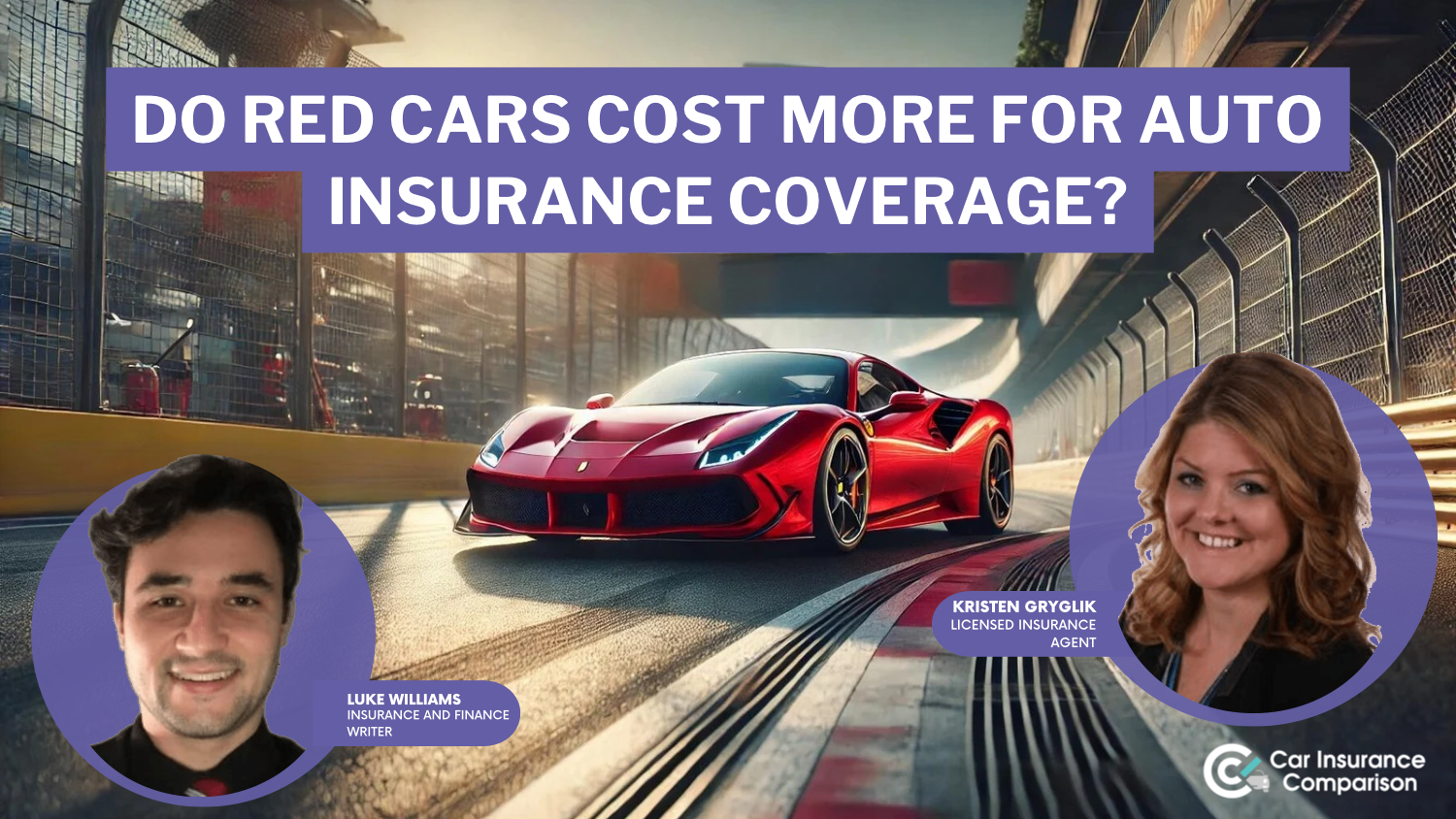
Auto insurance companies do not charge higher premiums for red cars. While a popular urban legend suggests red vehicles attract more tickets or are inherently riskier, insurers base rates on the vehicle's year, make, model, and the dri...
Auto insurance companies do not charge higher premiums for red cars. While a popular urban legend suggests red vehicles attract more tickets or are inherently riskier, insurers base rates on the vehicle's year, make, model, and the driver's history. Your car's color is typically not even listed on a standard insurance application.
Contents
The Persistent Myth of the "Red Car Tax"
For decades, car buyers have hesitated in showrooms, eyeing a vibrant crimson sedan but ultimately choosing silver or white out of fear that their insurance agent would penalize the choice. This concept, often called the "red car tax," suggests that driving a red vehicle signals an aggressive personality or a propensity for speeding, leading insurers to hike rates.
However, in 2026, as has been the case for the history of modern underwriting, this remains a total fabrication. Insurance companies are driven by actuarial science—the rigorous statistical analysis of risk. Actuaries look for data points that correlate directly with the likelihood of a claim. While they track age, gender, geographic location, and driving record with extreme precision, the color of the paint on the metal has never shown a statistically significant correlation with loss ratios.
The myth likely persists because red is the traditional color for high-performance sports cars. If an insurer sees a high volume of claims for red vehicles, it is almost certainly because those vehicles are high-horsepower coupes or convertibles, not because they are red. A red minivan and a silver minivan of the same model will cost exactly the same to insure, provided all other driver variables remain constant.
How Insurance Companies Actually Identify Your Vehicle
When you apply for an insurance policy, the most critical piece of information regarding the car itself is the Vehicle Identification Number (VIN). This 17-digit code is a fingerprint for your car, providing the insurance company with a wealth of technical data used to calculate your premium.
The VIN communicates the following to the insurer:
- The Manufacturer and Assembly Plant: Where the car was built.
- The Engine Type: Whether it is a fuel-efficient four-cylinder, a high-performance V8, or a dual-motor electric powertrain.
- Safety Features: The presence of Advanced Driver Assistance Systems (ADAS), airbags, and anti-lock brakes.
- Body Style: Whether it is a two-door, four-door, or hatchback.
- Model Year: The age of the vehicle and its current market value.
Notably absent from the VIN data string is the exterior paint color. Because the color is not encoded in the VIN and is not a required field on most standard insurance applications, the insurance company typically does not even know the color of the vehicle they are covering. Their primary concern is the cost to replace the vehicle and the statistical likelihood of that specific model being involved in an accident or theft.
The Factors That Truly Drive Insurance Premiums in 2026
If color doesn't matter, what does? In the current 2026 insurance landscape, premiums are determined by a complex interplay of personal behavior and vehicle technology. Understanding these factors is essential for any driver looking to manage their annual costs.
1. Driver Behavior and Telematics
In 2026, telematics—the use of "black box" devices or smartphone apps to track driving habits—has become the primary driver of insurance pricing. Insurers look at "how" you drive rather than "what color" you drive. They track hard braking, rapid acceleration, cornering speeds, and the time of day you are on the road. A driver in a red car with perfect telematics scores will always pay less than a driver in a white car with a history of aggressive acceleration.
2. The Cost of Parts and Labor
Insurers are deeply concerned with the "repairability" of a vehicle. Modern cars are packed with sensors, cameras, and lidar units, often located in the bumpers or windshields. If a vehicle is expensive to fix after a minor fender-bender, the premium will reflect that. This is a technical consideration based on the vehicle's engineering, not its aesthetic finish.
3. Personal Risk Factors
Your individual profile remains the most significant component of your premium:
- Driving Record: Speeding tickets, at-fault accidents, and DUIs are the fastest way to see a rate increase.
- Credit-Based Insurance Score: In most jurisdictions, insurers use credit history as a predictor of risk, assuming that individuals who manage their finances responsibly are also more careful on the road.
- Location: Living in an area with high rates of vehicle theft or frequent hail storms will increase your comprehensive coverage costs.
When Color Might Tangentially Affect Costs
While the color "red" itself does not trigger a premium hike, there are very specific scenarios where vehicle finish can impact your financial outlook. These are technical exceptions rather than rules.
Custom Paint and Aftermarket Modifications
If you choose a standard factory red, there is no impact. However, if you opt for a custom aftermarket paint job—such as a specialized matte finish, a "chameleon" color-shift paint, or an intricate multi-stage metallic red—you may need to add a "Custom Parts and Equipment" (CPE) endorsement to your policy. Because these finishes are significantly more expensive to repair than standard factory paint, the insurer will charge a small additional fee to cover the extra value of the custom work.
Resale Value and Total Loss Payouts
In the event of a total loss, your insurer pays out the Actual Cash Value (ACV) of the car. Some colors are more popular on the used market than others. If red happens to be a highly sought-after color for a specific model (like a vintage sports car), it might slightly bolster the resale value. Conversely, if a color is unpopular, it could lower the ACV. This doesn't change your monthly premium, but it does change the check you receive if the car is totaled.
Comparing Insurance Rating Factors
The following table compares common car attributes and their actual impact on your 2026 auto insurance premium.
| Factor | Impact Level | Why It Matters |
|---|---|---|
| Paint Color | None | Not tracked by VIN; no statistical correlation to risk. |
| Vehicle Make/Model | High | Determines repair costs, safety ratings, and theft frequency. |
| Driver Age/Experience | High | Statistically, younger drivers have a higher frequency of claims. |
| Annual Mileage | Medium | More time on the road increases the mathematical probability of an accident. |
| Safety Tech (ADAS) | Medium/High | Features like automatic emergency braking reduce accident frequency. |
| Engine Performance | High | High-horsepower engines are correlated with higher-speed collisions. |
| Deductible Amount | Variable | Choosing a higher deductible lowers your monthly premium. |
The Role of Psychology in the Red Car Myth
If there is no factual basis for red insurance being more expensive, why does the belief persist? The answer is largely psychological. Humans associate the color red with energy, passion, and danger. In the automotive world, red is the "hero color" for marketing performance vehicles.
A 2024 study on traffic enforcement found that while people perceive red cars as moving faster, police radar does not share this bias. Most speeding tickets are issued based on laser or radar technology that is indifferent to color. However, if a driver chooses a red car because they have a high-energy, aggressive driving style, they will eventually get more tickets—but the cause is the driver's behavior, not the paint.
Summary of 2026 Insurance Guidelines
As we navigate the 2026 insurance market, drivers should focus on what truly moves the needle. If you want a red car, buy a red car. Your insurer will be far more interested in whether you have a 5-star crash rating and whether you use a telematics app to prove your safety behind the wheel.
To keep your rates low regardless of your car's color, consider the following:
- Maintain a clean record: Avoid moving violations.
- Bundle policies: Combine your auto and homeowners insurance for multi-policy discounts.
- Review your coverage annually: As vehicles age, you may want to adjust your collision and comprehensive limits.
- Inquire about "Green" discounts: In 2026, many insurers offer incentives for electric and hybrid vehicles, regardless of their color.
Frequently Asked Questions
Do red cars get pulled over more often?
Data from various law enforcement studies indicates that red cars do not get pulled over more frequently than neutral-colored cars. In fact, white and silver cars are often cited more frequently, simply because there are more of them on the road. Police officers generally target vehicles based on speed and erratic behavior, not aesthetics.
Does painting my car red increase my insurance mid-policy?
No. If you decide to repaint your existing car red, your insurance premium will not change. However, you should notify your insurer if the new paint job is significantly more expensive than the original (such as a custom show-quality finish) to ensure the vehicle is fully covered for its new value.
Are certain shades of red more expensive to insure?
No. Whether your car is "Radiant Red," "Burgundy," or "Fire Engine Red," the insurer treats it the same. The only time a specific shade matters is if it is a specialty tri-coat or matte finish that requires a specialized body shop to repair, which falls under the category of higher repair costs rather than a "color penalty."
Is there any car color that is cheaper to insure?
Technically, no color is "cheaper." However, cars with colors that are easier to see in low-light conditions (like white or neon yellow) are statistically involved in fewer nighttime side-impact collisions. While insurers haven't yet created a specific discount for "high-visibility colors," the lack of accidents will naturally result in a lower premium over time for the owner.
Does the red car myth apply to commercial insurance?
The same rules apply to commercial policies. Whether it is a fleet of delivery vans or a single contractor's truck, insurers look at the driver's commercial license (CDL) history, the weight of the vehicle, and the cargo being hauled. The color of the branding or the vehicle remains a non-factor in risk assessment.
Practical Recommendation
When shopping for your next vehicle in 2026, ignore the color when calculating your budget. Instead, focus on the vehicle’s safety suite and its history of reliability. Before finalizing a purchase, get a quote using the specific VIN of the car you are considering. This will give you an accurate picture of your costs based on the car's actual equipment and your personal driving profile, proving once and for all that the "red car tax" is nothing more than an urban legend.
Image Gallery