Comprehensive Guide to Lexus NX Hybrid Gas Mileage: Efficiency, Performance, and Real-World Results
The Lexus NX Hybrid series, comprising the NX 350h and the NX 450h+ plug-in hybrid, offers exceptional fuel efficiency for the luxury compact SUV segment. The NX 350h achieves an EPA-estimated 39 combined MPG, while the NX 450h+ provid...
The Lexus NX Hybrid series, comprising the NX 350h and the NX 450h+ plug-in hybrid, offers exceptional fuel efficiency for the luxury compact SUV segment. The NX 350h achieves an EPA-estimated 39 combined MPG, while the NX 450h+ provides approximately 37 combined MPG on gasoline and an 84 MPGe rating when utilizing its 37-mile all-electric range.
Contents
As we look at the 2026 automotive landscape, the Lexus NX continues to stand as a benchmark for drivers who refuse to compromise between premium comfort and environmental consciousness. Achieving high gas mileage in a luxury crossover requires a sophisticated marriage of aerodynamics, weight management, and advanced powertrain engineering. Whether you are considering the traditional hybrid or the more versatile plug-in variant, understanding the nuances of how these vehicles consume energy is vital for maximizing your investment.
Understanding the Lexus NX Hybrid Lineup
To accurately discuss the gas mileage of the Lexus NX, one must distinguish between the two primary electrified offerings: the NX 350h (Hybrid Electric Vehicle or HEV) and the NX 450h+ (Plug-in Hybrid Electric Vehicle or PHEV). Both vehicles utilize the Lexus Hybrid Drive system, but they serve different driving profiles and offer distinct efficiency metrics.
The NX 350h: The High-Efficiency Standard
The NX 350h is the core hybrid model, designed for drivers who want improved fuel economy without the need to plug in. It utilizes a 2.5-liter four-cylinder Atkinson-cycle engine paired with two electric motor-generators. This system is "self-charging," meaning it recaptures energy through regenerative braking and the internal combustion engine to charge a small lithium-ion battery pack.
The primary advantage of the NX 350h is its consistency. Because it does not rely on external charging, its fuel economy remains relatively stable across various driving conditions, provided the driver utilizes efficient habits. It is rated at 41 MPG in the city and 37 MPG on the highway, reflecting the inherent efficiency of hybrid systems in stop-and-go traffic where electric motors can shoulder most of the burden.
The NX 450h+: The Versatility of PHEV Technology
The NX 450h+ represents the pinnacle of the NX performance and efficiency hierarchy. As a plug-in hybrid, it features a much larger 18.1 kWh lithium-ion battery. This allows the vehicle to travel an EPA-estimated 37 miles on pure electricity before the gasoline engine needs to engage.
When the battery is depleted, the NX 450h+ operates much like a standard NX 350h, though it is slightly less efficient due to the added weight of the larger battery pack. For commuters with a daily round trip of under 35 miles, the "gas mileage" can effectively be infinite if they charge nightly, as the internal combustion engine may not turn on for weeks at a time.
Detailed Gas Mileage Specifications
When evaluating the Lexus NX hybrid gas mileage, it is helpful to look at the breakdown across different driving environments. The following table illustrates the EPA-estimated performance for the 2026 model year, which maintains the hardware specifications introduced in the second-generation NX.
| Model Variant | City MPG | Highway MPG | Combined MPG | EV Range / MPGe |
|---|---|---|---|---|
| Lexus NX 350h | 41 | 37 | 39 | N/A |
| Lexus NX 450h+ | 38* | 33* | 37 (Gas Only) | 37 Miles / 84 MPGe |
| Lexus NX 250 (Gas) | 26 | 33 | 28 | N/A |
| Lexus NX 350 (Turbo) | 21 | 28 | 24 | N/A |
*Estimated figures for when the PHEV battery is in hybrid-mode depletion.
The contrast between the hybrid models and the pure gasoline versions (NX 250 and NX 350) is stark. Choosing the NX 350h over the base gas-only NX 250 yields an 11 MPG improvement in combined driving, which translates to significant fuel cost savings over the life of the vehicle and a much longer total driving range between fill-ups.
The Engineering Behind the Efficiency
Lexus achieves these figures through several key technological implementations. Understanding these helps drivers appreciate why the vehicle behaves the way it does under different loads.
The Atkinson Cycle Engine
Both hybrid models use a 2.5-liter engine operating on the Atkinson cycle. Unlike a traditional Otto cycle engine, the Atkinson cycle leaves the intake valve open longer during the compression stroke. This allows for a higher expansion ratio than compression ratio, significantly improving thermal efficiency. While this typically results in lower low-end torque, the electric motors in the NX hybrid system compensate for that loss, providing the "punch" needed for acceleration while the gas engine stays in its most efficient operating window.
Electronic Continuously Variable Transmission (eCVT)
Unlike a mechanical CVT that uses belts and pulleys, the Lexus eCVT uses a planetary gear set to blend power from the engine and the electric motors. There are no "shifts" in the traditional sense. This allows the engine to run at its most efficient RPM regardless of the vehicle's speed, which is a major factor in achieving high highway gas mileage.
Predictive Efficient Drive
In the 2026 Lexus NX, the navigation system works in tandem with the hybrid powertrain. If a destination is set, Predictive Eco Drive Control analyzes traffic patterns and road topography. It can proactively charge the battery before a long uphill climb or prioritize electric usage in heavy traffic zones, optimizing the state of charge to ensure the highest possible MPG for that specific trip.
Real-World Factors Influencing Gas Mileage
While EPA ratings provide a standardized baseline, real-world Lexus NX hybrid gas mileage can vary based on several external and behavioral factors.
1. Wheel Size and Aerodynamics
The Lexus NX is available with 18-inch or 20-inch wheels. Generally, the larger 20-inch wheels found on higher trims and F SPORT packages increase rolling resistance and aerodynamic drag. Real-world testing often shows a 1–2 MPG decrease when opting for the larger, heavier wheel sets compared to the base 18-inch aerodynamic wheels.
2. Ambient Temperature and Climate Control
Hybrid batteries are sensitive to temperature. In extreme cold, the chemical reactions within the lithium-ion cells are less efficient. Furthermore, because the NX hybrid engine is so efficient, it produces less waste heat. In winter, the gas engine may run more frequently simply to generate heat for the cabin, which can drop city mileage from 41 MPG down into the low 30s.
3. Driving Modes: Eco, Normal, and Sport
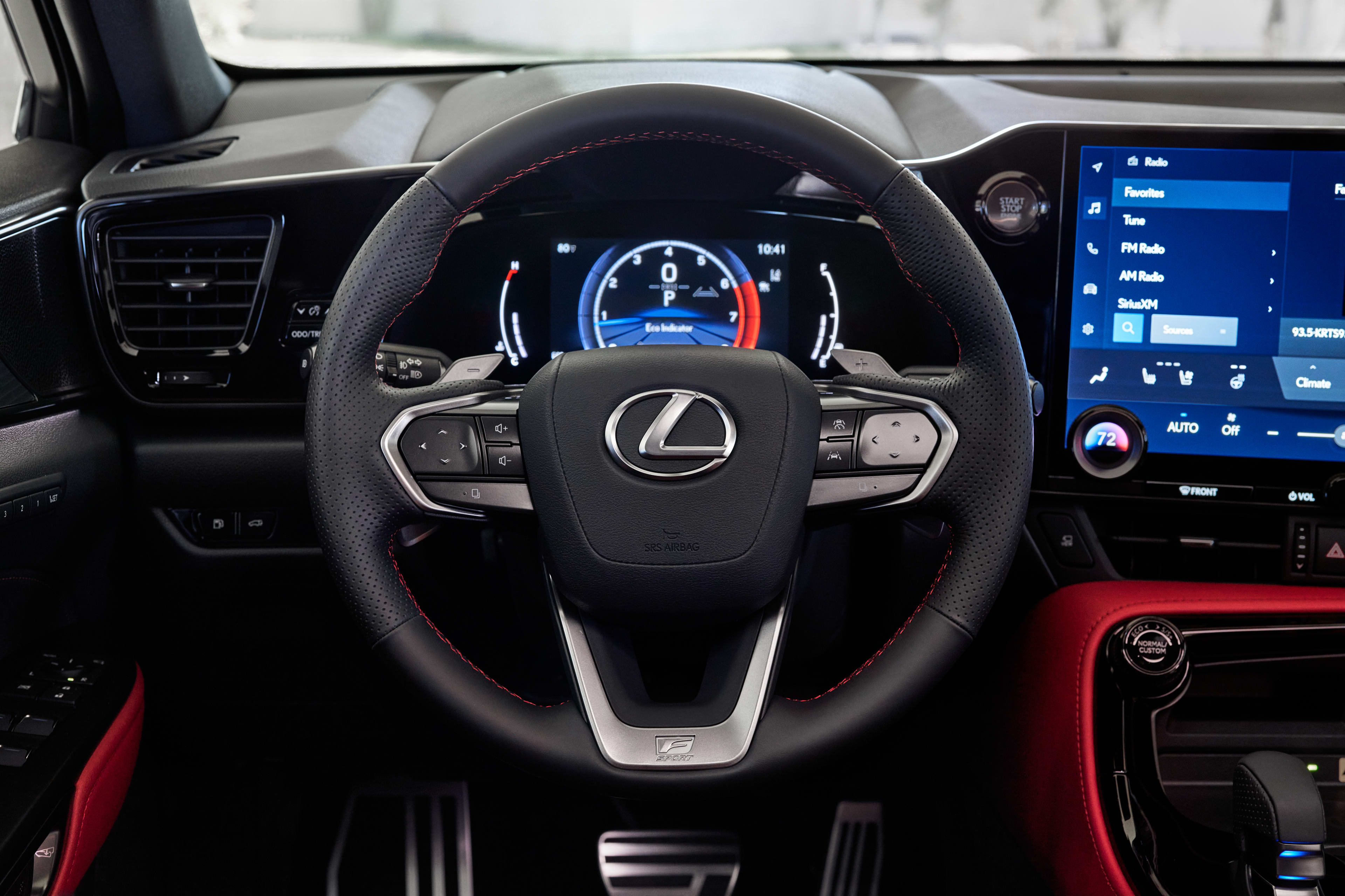
The NX features a Drive Mode Select dial.
- Eco Mode: Smooths out throttle responses and reduces the output of the air conditioning system. This is the primary mode for achieving or exceeding EPA ratings.
- Sport Mode: Prioritizes the gas engine for immediate power and firms up the steering. Using Sport mode consistently will noticeably degrade fuel economy as it discourages the system from switching into EV mode.
4. Regenerative Braking Technique
To get the best gas mileage, drivers should practice "predictive braking." Instead of slamming on the brakes at the last second, a long, steady deceleration allows the electric motor to act as a generator for a longer period, capturing more energy that would otherwise be lost as heat. This stored energy is then used for the next acceleration, reducing the workload on the gasoline engine.
Maintenance for Maximum Efficiency
To maintain peak gas mileage as the vehicle ages, specific maintenance items are critical for the Lexus NX Hybrid:
- Tire Pressure: Hybrid tires often have low rolling resistance compounds. Keeping them inflated to the manufacturer’s recommended PSI is vital. Under-inflated tires increase the contact patch and friction, which can penalize fuel economy by 3–5%.
- Hybrid Cooling System: The hybrid battery and inverter have their own cooling systems. Ensuring the air intake filters for the battery (usually located under the rear seats) are clean prevents the battery from overheating. An overheated battery will limit its electric assistance, forcing the gas engine to work harder.
- Engine Oil Viscosity: Lexus specifies ultra-low viscosity oil (often 0W-16 or 0W-8) for these engines. Using a thicker oil can increase internal engine friction and reduce MPG.
Comparing the NX Hybrid to the Competition
When looking at the luxury compact SUV segment, the Lexus NX Hybrid remains a leader, though competition from European and domestic brands has intensified by 2026.
- BMW X3 xDrive30e: While the BMW offers a more engaging driving experience, its all-electric range and hybrid-mode efficiency typically lag behind the NX 450h+.
- Audi Q5 TFSI e: The Audi provides a high-quality interior but usually achieves lower combined MPG (around 26-28 MPG) once the battery is depleted compared to the NX's 37-39 MPG.
- Toyota Venza / Crown Signia: While not "luxury" brands, these share the TNGA-K platform with the NX. They offer similar or slightly better MPG due to being lighter and having fewer luxury amenities, making them the "rational" alternative to the NX's "emotional" appeal.
The Lexus NX Hybrid’s greatest strength is its "Hybrid Synergy Drive" heritage. Toyota and Lexus have been refining this specific power-split architecture for over two decades, resulting in a level of smoothness and efficiency that many competitors struggle to match without moving to a fully electric platform.
Frequently Asked Questions
Does the Lexus NX Hybrid require premium gas?
For the NX 350h, Lexus recommends 87-octane regular unleaded gasoline. However, for the plug-in hybrid NX 450h+, premium fuel (91 octane or higher) is recommended to achieve the stated horsepower and maximize the efficiency of its higher-output tuning. Using regular gas in the 450h+ may slightly decrease fuel economy and performance.
How long does the battery last before efficiency drops?
Lexus provides a 10-year/150,000-mile hybrid battery warranty. Under normal driving conditions, the lithium-ion packs are designed to last the life of the vehicle. You likely won't see a significant drop in gas mileage due to battery degradation for at least 10–12 years, provided the cooling vents are kept clear.
Is the NX Hybrid's gas mileage better on the highway or in the city?
Like most hybrids, the Lexus NX is more efficient in the city. The NX 350h is rated at 41 MPG city versus 37 MPG highway. This is because city driving provides more opportunities for regenerative braking and allows the vehicle to operate in EV mode at low speeds or while idling.
How does towing affect the Lexus NX hybrid gas mileage?
The NX 350h and 450h+ have a towing capacity of up to 2,000 lbs. When towing, expect your gas mileage to drop significantly—often by 30% to 50%—depending on the aerodynamic profile of the trailer. The electric motors provide good initial torque for towing, but the 2.5L engine will remain under high load throughout the journey.
Practical Recommendation
For the majority of buyers, the Lexus NX 350h is the most cost-effective choice for improving gas mileage. It offers a seamless transition into electrification without the need for home charging infrastructure and provides a massive 39 MPG combined. However, if you have the ability to charge at home and your daily commute is under 40 miles, the NX 450h+ is the superior choice. By utilizing its 37-mile EV range, you can virtually eliminate gasoline consumption for daily errands, reserving the high-efficiency hybrid engine only for long-distance road trips. Regardless of the model chosen, the NX Hybrid remains one of the most fuel-efficient ways to experience the luxury crossover segment in 2026.
Image Gallery