What Are the Types of Life Insurance Policies?
Life insurance policies fall into two primary categories: term life insurance, which provides coverage for a specific period, and permanent life insurance, which offers lifelong protection alongside a tax-deferred cash value component....
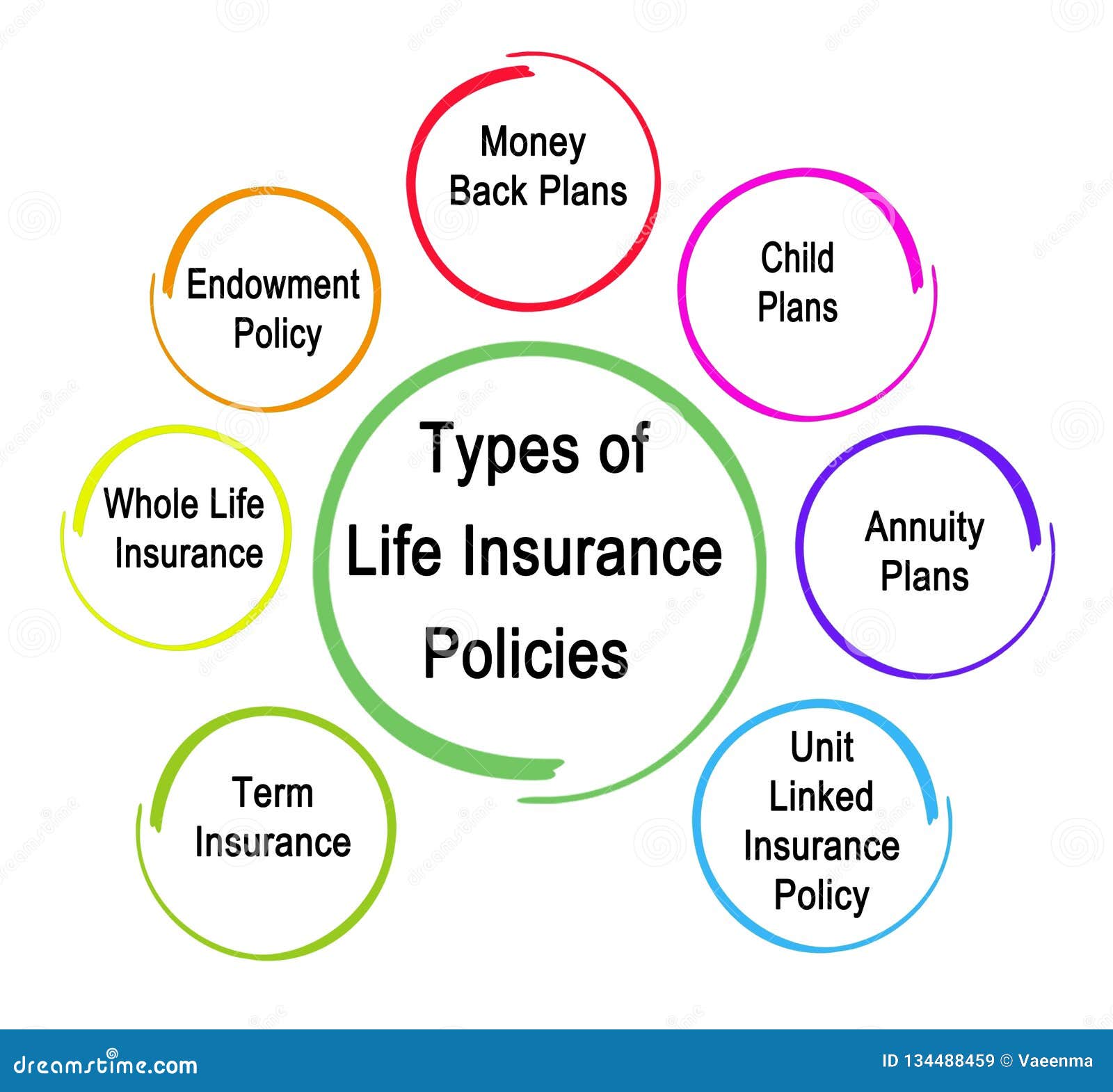
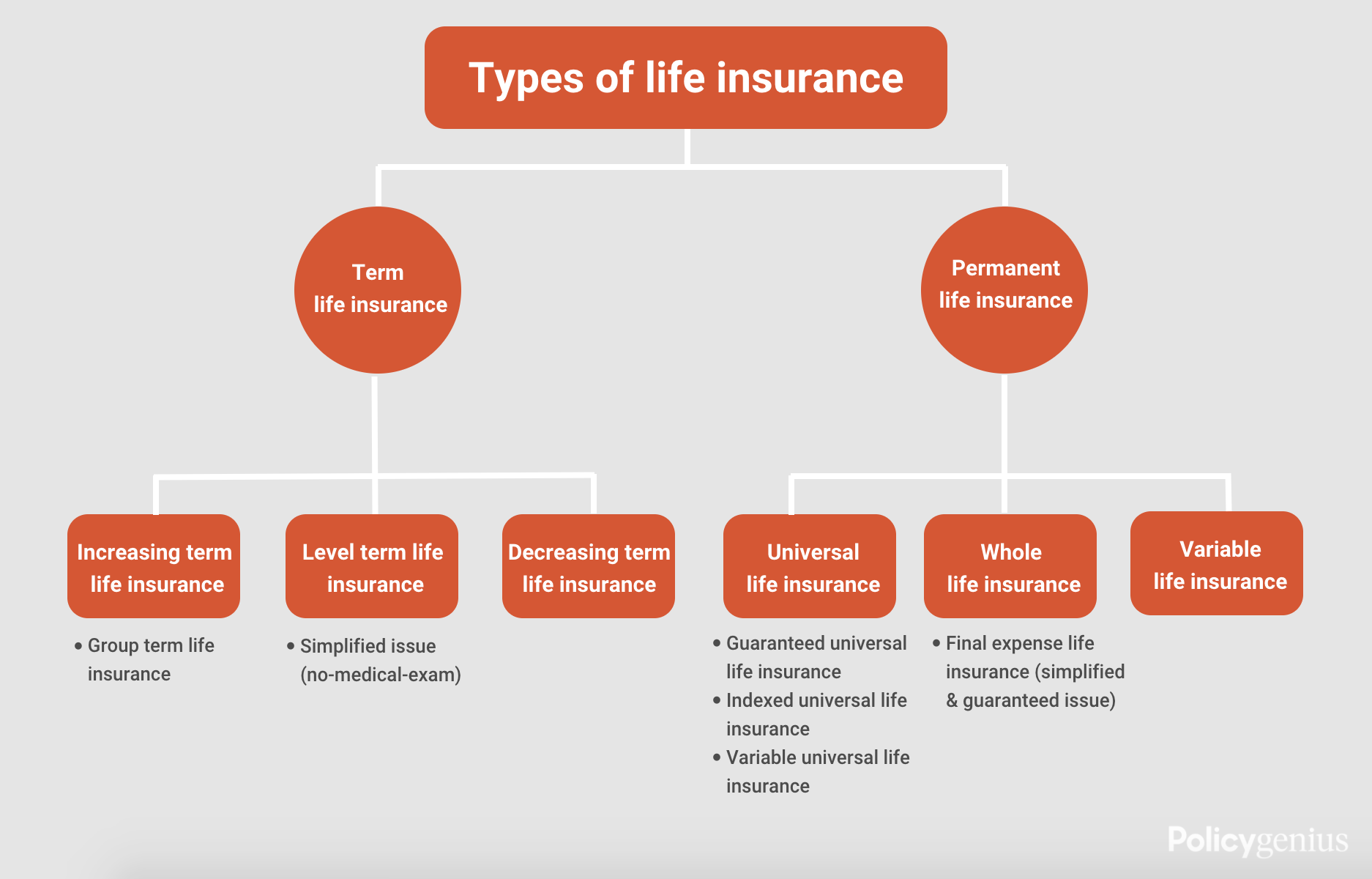
Life insurance policies fall into two primary categories: term life insurance, which provides coverage for a specific period, and permanent life insurance, which offers lifelong protection alongside a tax-deferred cash value component. Permanent options further divide into distinct structures, including whole life, universal life, indexed universal life, and variable life insurance.
Contents
Understanding these policy types is essential for selecting coverage that aligns with your financial obligations, income replacement needs, and long-term wealth transfer strategies. Each contract structure manages premiums, investment risk, and death benefits differently.
The Core Framework: Term vs. Permanent Life Insurance
All life insurance contracts are designed to pay out a tax-free lump sum—known as the death benefit—to designated beneficiaries upon the insured individual's death (under Internal Revenue Code Section 101(a)). However, policies accomplish this goal through two fundamentally different mechanisms: temporary protection or permanent coverage.
- Life Insurance Policies
- Term Life (Temporary/Pure)
- Level Term
- Decreasing Term
- Permanent Life (Lifelong/Cash Value)
- Whole Life
- Universal (UL)
- Indexed (IUL)
- Variable (VUL)
- Term Life (Temporary/Pure)
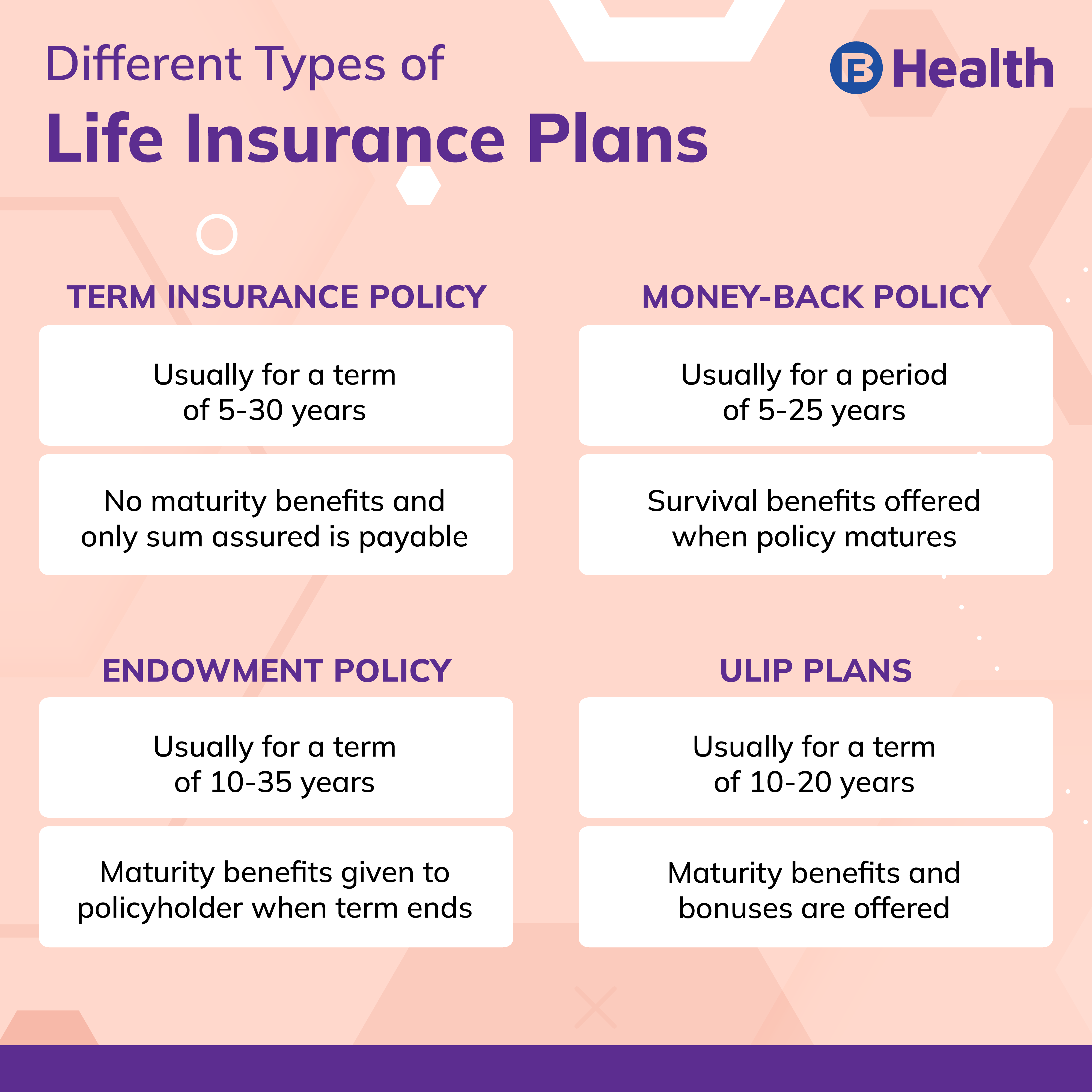
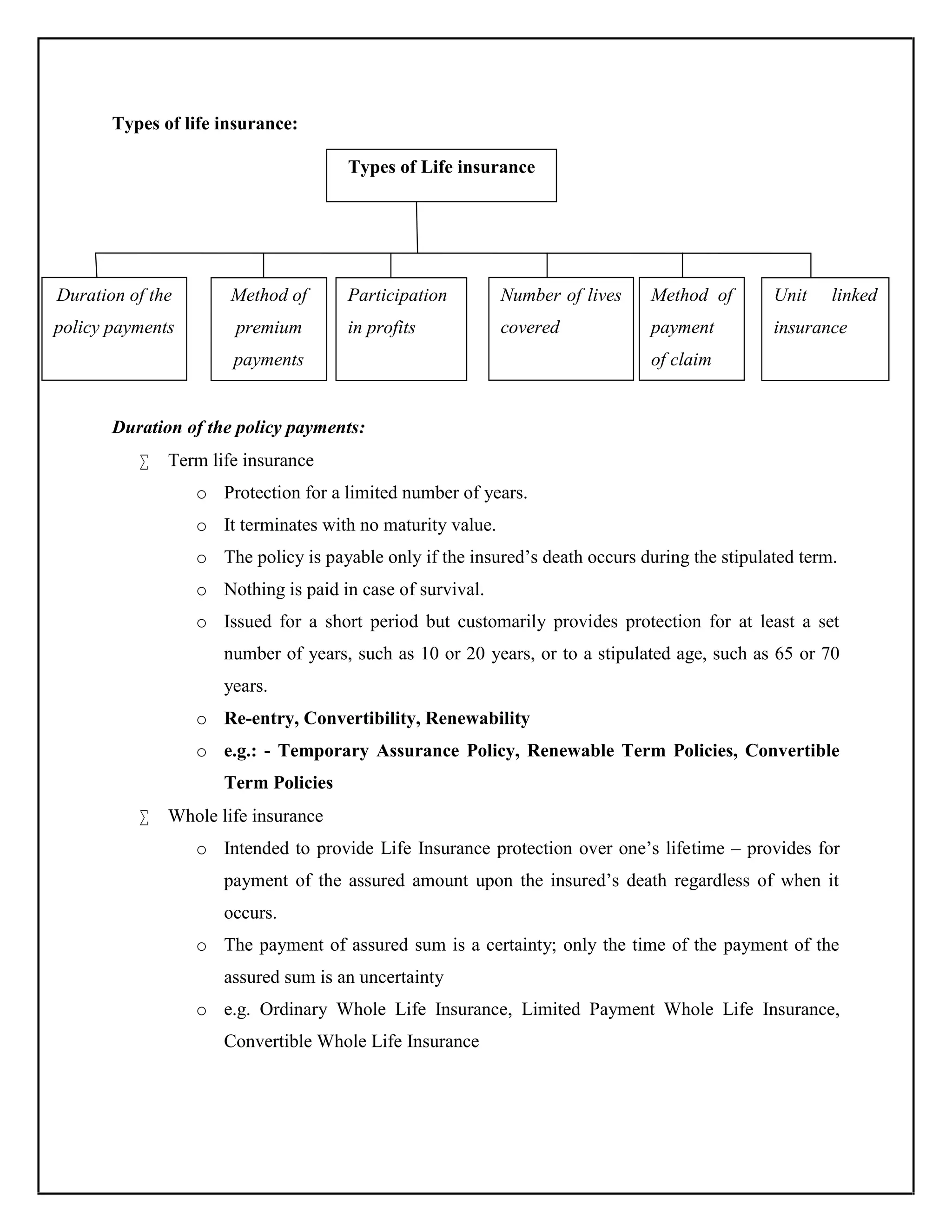
Term life insurance functions as pure risk protection. You pay a premium for a set timeframe—typically between 10 and 30 years. If you pass away during the term, the policy pays the death benefit to your beneficiaries. If the term expires while you are still living, the coverage terminates unless renewed, and no residual value remains.
Permanent life insurance remains active for the insured's entire lifetime, provided premiums are paid according to the contract terms. Beyond providing a death benefit, permanent policies include a internal savings component called cash value. As you pay premiums, a portion covers the actual cost of insurance (mortality expenses and administrative fees), while the remainder builds cash value on a tax-deferred basis. You can access this accumulated value through policy loans or withdrawals during your lifetime.
Temporary Coverage: Types of Term Life Insurance
Term life insurance is the simplest and most cost-effective form of coverage. Because it lacks an investment component, initial premiums are significantly lower than those for permanent policies with equivalent coverage amounts.
Level Term Life Insurance
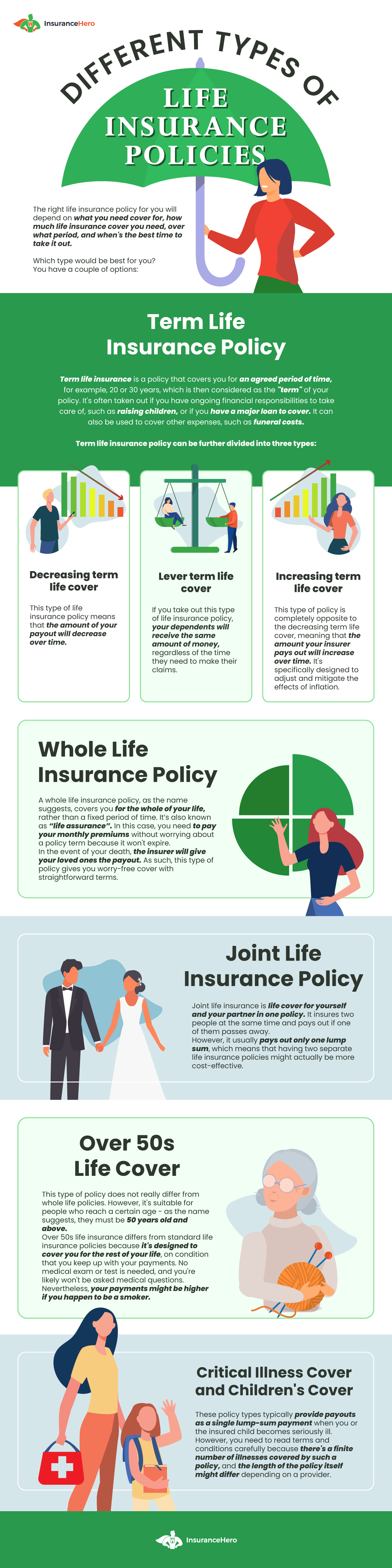
Level term is the most common form of temporary life insurance. Under this arrangement, both the death benefit and the annual premium remain fixed throughout the contract period—usually 10, 15, 20, 25, or 30 years.
- How it works: If you purchase a 20-year, $500,000 level term policy, your premium remains identical in year 1 and year 20, and the payout remains $500,000 throughout.
- Best used for: Replacing lost income during peak earning years, covering a home mortgage, or ensuring dependents are funded until adulthood.
Decreasing Term Life Insurance
Decreasing term insurance maintains a constant premium, but the death benefit declines over the policy period according to a predetermined schedule.
- How it works: The benefit step-downs are designed to match a amortizing financial obligation, such as a mortgage balance or business loan. As your outstanding liability decreases, the insurance coverage scales down accordingly.
- Best used for: Debt protection where the objective is strictly to ensure a specific financial liability is settled if you die before paying it off.
Renewable and Convertible Term Insurance
Many modern term policies include specific contractual options that add flexibility before the period ends:
- Guaranteed Renewable Term: Allows you to extend coverage year-by-year (annual renewable term) after the initial term expires without taking a medical exam. However, premiums increase significantly each year based on your attained age.
- Convertible Term: Grants the right to exchange your term policy for a permanent life insurance policy issued by the same carrier, without undergoing underwriting or proving insurability. This feature protects individuals who develop health conditions during their term period and require ongoing, lifelong coverage.
Lifelong Protection: Types of Permanent Life Insurance
Permanent life insurance offers lifelong financial protection combined with an asset-building mechanism. The primary distinctions among permanent policy types stem from how their cash value accumulates and how flexible the premium payments are.
PERMANENT POLICY CASH VALUE MECHANICS:
- Gross Premium Paid
- Policy Admin (Insurance Costs & Carrier Fees)
- Cash Value (Grows via Interest, Index Returns, or Direct Market Exposure)
Whole Life Insurance
Whole life is the most straightforward and stable type of permanent insurance. It offers explicit mathematical guarantees backed by the financial strength of the issuing insurance company.
- Guaranteed Premiums: Your premium rate is locked at issue and never increases, regardless of health changes or age.
- Guaranteed Death Benefit: The policy's payout amount will not decrease as long as required premiums are met.
- Guaranteed Cash Value: The insurer guarantees that the cash value will grow at a fixed, minimum rate each year until the policy reaches maturity (traditionally age 100 or 121).
Additionally, policies issued by mutual insurance companies may pay dividends. While dividends are not legally guaranteed, when declared, they can be taken as cash, used to reduce premiums, or reinvested to buy paid-up additional insurance, which increases both the death benefit and overall cash value growth.
Universal Life (UL) Insurance
Universal life insurance introduces flexibility by separating (or "unbundling") the policy's core components: the cost of insurance, administrative fees, and the cash value accumulation engine.
Unlike whole life policies with fixed schedules, universal life allows you to alter your premium payments and adjust the death benefit within contract limits:
- Flexible Premiums: When your policy builds sufficient cash value, you can reduce or temporarily skip out-of-pocket premium payments, letting the internal cash value cover monthly insurance costs.
- Adjustable Death Benefit: You can increase (subject to underwriting) or decrease the face amount as your protection needs evolve over time.
- Interest Accumulation: Cash value earns interest based on prevailing money market or declared carrier rates, subject to a contractually guaranteed minimum interest rate floor (often between 1% and 3%).
Caution: If interest rates remain low or you underfund the policy early on, the cash value may not cover the rising cost of insurance as you age. This can force you to pay significantly higher out-of-pocket premiums later to prevent the policy from lapsing.
Indexed Universal Life (IUL) Insurance
Indexed universal life is a variant of universal life where cash value returns are linked to the performance of a major stock market index, such as the S&P 500 or Nasdaq-100, rather than a flat interest rate set by the insurer.
Crucially, your money is not invested directly in the stock market. Instead, the insurance company uses equity options strategies to mirror an index's performance while establishing financial boundaries:
- The Cap Rate: The maximum return your policy can earn in a given crediting period (e.g., an 8% cap means if the index gains 15%, your policy is credited 8%).
- The Floor Rate: The minimum guaranteed return credited to your policy, typically set at 0%. If the market index drops by 20%, your cash value balance does not decline from market losses.
- Participation Rates: The percentage of the index's return that the insurer credits to your account (e.g., an 80% participation rate on a 10% market gain yields an 8% credit).
IUL offers higher growth potential than traditional universal life while maintaining protection against market downturns, though return caps can limit upside gains during strong bull markets.
Variable Life and Variable Universal Life (VUL) Insurance
Variable life insurance policies allow policyholders to invest their cash value directly in market-based investment options called sub-accounts. Sub-accounts operate similarly to mutual funds, spanning equity indexes, corporate bonds, money market instruments, and sector funds.
- Variable Life Insurance: Combines fixed, mandatory premiums with cash value tied directly to sub-account performance. While the death benefit typically cannot fall below a guaranteed baseline, the cash value fluctuates daily with market movements.
- Variable Universal Life (VUL): Combines the flexible premiums and adjustable death benefits of universal life with the direct investment exposure of variable life.
Because you bear full investment risk in sub-accounts, VUL policies offer the highest long-term growth potential among permanent policies. Conversely, poor market performance can erode accumulated cash value, requiring additional cash injections to maintain the policy's death benefit. Due to their underlying investment structure, variable policies are regulated as securities overseen by FINRA and the U.S. Securities and Exchange Commission (SEC), alongside state insurance departments.
Final Expense (Burial) Insurance
Final expense insurance is a specialized, small-face-value whole life policy designed specifically to cover end-of-life expenses, such as funeral services, medical balances, and legal administrative costs.
- Coverage Amounts: Typically ranges between $2,000 and $50,000.
- Simplified Underwriting: These policies generally require no medical examination and rely on a brief health questionnaire (Simplified Issue) or offer guaranteed acceptance without health questions (Guaranteed Issue).
- Cost Structure: Per dollar of coverage, guaranteed issue final expense insurance carries high unit costs because the insurer accepts higher risk pool profiles.
Comparing Life Insurance Policy Types
The table below breaks down the structural differences, risk profiles, and typical applications across primary policy types:
| Policy Type | Coverage Duration | Premium Flexibility | Cash Value Engine | Primary Investment Risk | Best Suited For |
|---|---|---|---|---|---|
| Level Term | Fixed period (10–30 yrs) | None (Fixed) | None | None | Income replacement, mortgage protection, temporary debts. |
| Decreasing Term | Fixed period (10–30 yrs) | None (Fixed) | None | None | Amortizing debts, matching loan balances. |
| Whole Life | Lifetime | None (Fixed) | Declared minimum rate + potential dividends | Low (Insurer bears risk) | Estate planning, guaranteed wealth transfer, conservative savings. |
| Universal Life (UL) | Lifetime | Flexible | Declared crediting rate | Low-Moderate | Flexible coverage needs, lifelong protection with adjustable payments. |
| Indexed Universal Life (IUL) | Lifetime | Flexible | Equity index performance (with caps/floors) | Moderate | Growth potential paired with downside market protection. |
| Variable Universal (VUL) | Lifetime | Flexible | Market sub-accounts (stocks/bonds) | High (Policyholder bears risk) | Experienced investors seeking tax-deferred market accumulation. |
| Final Expense | Lifetime | Fixed | Slow fixed growth | Low | Seniors seeking basic coverage for burial costs without medical exams. |
Essential Riders and Optional Coverage Features
Policy riders are specialized add-ons that allow you to customize your base policy to match specific personal, medical, or financial scenarios.
- Common Life Insurance Riders
- Waiver of Premium
- Living Benefits
- Guaranteed Insurability
- Child Term
- Waiver of Premium Rider: Suspends your obligation to pay policy premiums if you become totally and permanently disabled, keeping the policy fully active.
- Accelerated Death Benefit Rider (Living Benefits): Allows you to access a portion of your tax-free death benefit while still living if diagnosed with a qualifying terminal, chronic, or critical illness.
- Guaranteed Insurability Rider: Enables you to purchase specified amounts of additional life insurance at set age intervals or major life events (such as marriage or the birth of a child) without undergoing medical underwriting.
- Child Term Rider: Provides modest term life coverage for your children under a single rider attached to your primary policy, often convertible to permanent individual policies when the child reaches adulthood.
How to Choose the Right Policy Type for Your Needs
Selecting the optimal policy requires matching its structural trade-offs against your financial goals, timeline, and risk tolerance:
Decision Flowchart:
Is your primary need temporary (e.g., income replacement, debt payoff) or lifelong (e.g., estate planning)?
- Temporary: Choose Term Life (Level or Decreasing).
- Lifelong: Proceed to Step 2.
Do you want fixed, guaranteed performance or growth potential linked to markets?
- Fully Guaranteed: Choose Whole Life.
- Variable/Flexible: Proceed to Step 3.
What level of market risk are you comfortable managing within your cash value?
- Fixed Base Rate: Universal Life (UL).
- Market Index with Floor: Indexed Universal Life (IUL).
- Direct Stock/Bond Exposure: Variable Universal Life (VUL).
Calculate Your Pure Protection Needs: Determine the financial gap your family would face if your income vanished tomorrow. Multiply your annual income by the years your dependents rely on you, then add outstanding liabilities (mortgage, education costs, personal debts).
Evaluate Your Budget: Term insurance delivers the highest death benefit per dollar spent. If purchasing permanent insurance compromises your ability to secure an adequate coverage amount, prioritize term insurance to ensure your family is fully protected.
Assess Your Horizon and Purpose:
- Choose Term Life if your goals are time-bound (e.g., until your children graduate college or your mortgage is paid off).
- Choose Whole or Universal Life if you have permanent obligations, such as funding a special needs trust, balancing an estate inheritance among heirs, or managing business succession buy-sell agreements.
Determine Risk Tolerance for Cash Growth: If you want zero market volatility, whole life provides concrete guarantees. If you want downside protection with upside tied to index performance, evaluate IUL. If you are comfortable taking on investment risk for higher long-term potential, VUL may fit your profile.
Frequently Asked Questions
What is the primary difference between term life and whole life insurance?
Term life insurance provides temporary coverage for a specific period (such as 10 to 30 years) and pays out only if the insured dies during that window. It has no cash value component. Whole life insurance is permanent, covering you for your entire life while accumulating tax-deferred cash value with guaranteed minimum growth rates.
Can you convert a term life policy into a permanent policy?
Yes, most standard term life policies include a conversion option. This contractual clause allows you to convert all or a portion of your term coverage into a permanent policy (such as whole life or universal life) issued by the same insurer within a specified conversion period, without taking a new medical exam or proving insurability.
Is the cash value growth in a life insurance policy taxable?
Cash value grows on a tax-deferred basis, meaning you do not pay income taxes on annual gains, interest, or dividends as long as they remain inside the policy. Additionally, policy loans taken against the cash value are generally tax-free, provided the policy remains active and does not lapse or trigger Modified Endowment Contract (MEC) status under tax laws.
What happens if you outlive your term life policy?
If you outlive a standard term life policy, the contract simply expires, coverage ends, and no payout is issued. You may have options to renew the policy annually at higher rates, convert it to permanent coverage before it expires, or apply for a new policy based on your current age and health status.
Which type of life insurance is best for estate planning?
Permanent life insurance—particularly whole life or universal life—is typically best suited for estate planning. Because these policies guarantee a payout regardless of when you pass away (as long as premiums are maintained), they provide liquidity to pay estate taxes, settle remaining debts, equalize inheritances among heirs, or fund irrevocable life insurance trusts (ILITs).
Next Steps for Selecting Coverage
To determine the best policy type for your situation, begin by auditing your current financial commitments. Calculate your short-term debt, long-term obligations, and income replacement requirements to establish the minimum death benefit your family needs.
Once your coverage amount is clear, compare quotes from top-rated carriers across both term and permanent structures. Working with an independent financial advisor or licensed insurance broker can help you evaluate competing products, verify underwriting requirements, and ensure your policy aligns with your overall financial plan.
Image Gallery