Understanding What the Fastest Car Ever Made Is and How It Achieves Record Speeds
When evaluating the fastest car ever made, the title currently belongs to the Bugatti Chiron Super Sport 300+, which achieved a verified top speed of 304.773 mph (490.484 km/h) in 2019. However, defining the "fastest car" requires exam...
When evaluating the fastest car ever made, the title currently belongs to the Bugatti Chiron Super Sport 300+, which achieved a verified top speed of 304.773 mph (490.484 km/h) in 2019. However, defining the "fastest car" requires examining distinct categories, including production road cars, modified vehicles, and absolute wheel-driven land speed record holders.
Contents
Automotive enthusiasts, engineers, and researchers frequently debate speed records because manufacturers measure top speeds under wildly different conditions. Understanding these benchmarks requires a close look at production definitions, technical specifications, and the rigorous verification standards required to validate maximum velocity claims.
Defining the "Fastest Car": Production vs. Prototype
The automotive world separates vehicles into production cars—vehicles built with a specific minimum run, street-legal configurations, and customer availability—and specialized prototypes or modified specials. When laypersons ask what the fastest car ever made is, they usually mean a road-legal vehicle that a private buyer can purchase and drive on public asphalt, provided they have a closed track and immense financial resources.
However, manufacturer claims often muddy the waters. A prototype modified with a roll cage, specialized aerodynamics, and removed passenger seats might exceed the speed of a factory-delivered vehicle rolling off the assembly line. To maintain credibility, organizations like Guinness World Records and independent testing bodies enforce strict criteria regarding what constitutes a true production vehicle.
The Criteria for Production Car Records
For a car to hold a legitimate production record, it typically must meet several strict operational guidelines:
- Street Legality: The vehicle must feature all equipment necessary for road use in its primary market, including headlights, taillights, emissions equipment, and DOT-approved or equivalent tires.
- Production Volume: Historically, sanctioning bodies required a minimum run of 30 vehicles, though definitions have fluctuated over the decades. Modern hypercar manufacturers often build limited runs of 30 to 500 units.
- Identical Configuration: The car tested must match the exact mechanical specifications of the customer cars. Manufacturers cannot use a drastically different engine tune or fuel mixture unavailable to buyers.
- Bi-Directional Runs: To neutralize the effects of wind and track gradient, official speed records require a vehicle to run in opposite directions within a specified timeframe. The final speed is calculated as the average of both runs.
The Current Champions: Verified Speed Records
Over the past two decades, the battle for top speed supremacy has intensified, shifting from a milestone once thought impossible—300 mph—to a routine benchmark for elite hypercar builders.
Bugatti Chiron Super Sport 300+
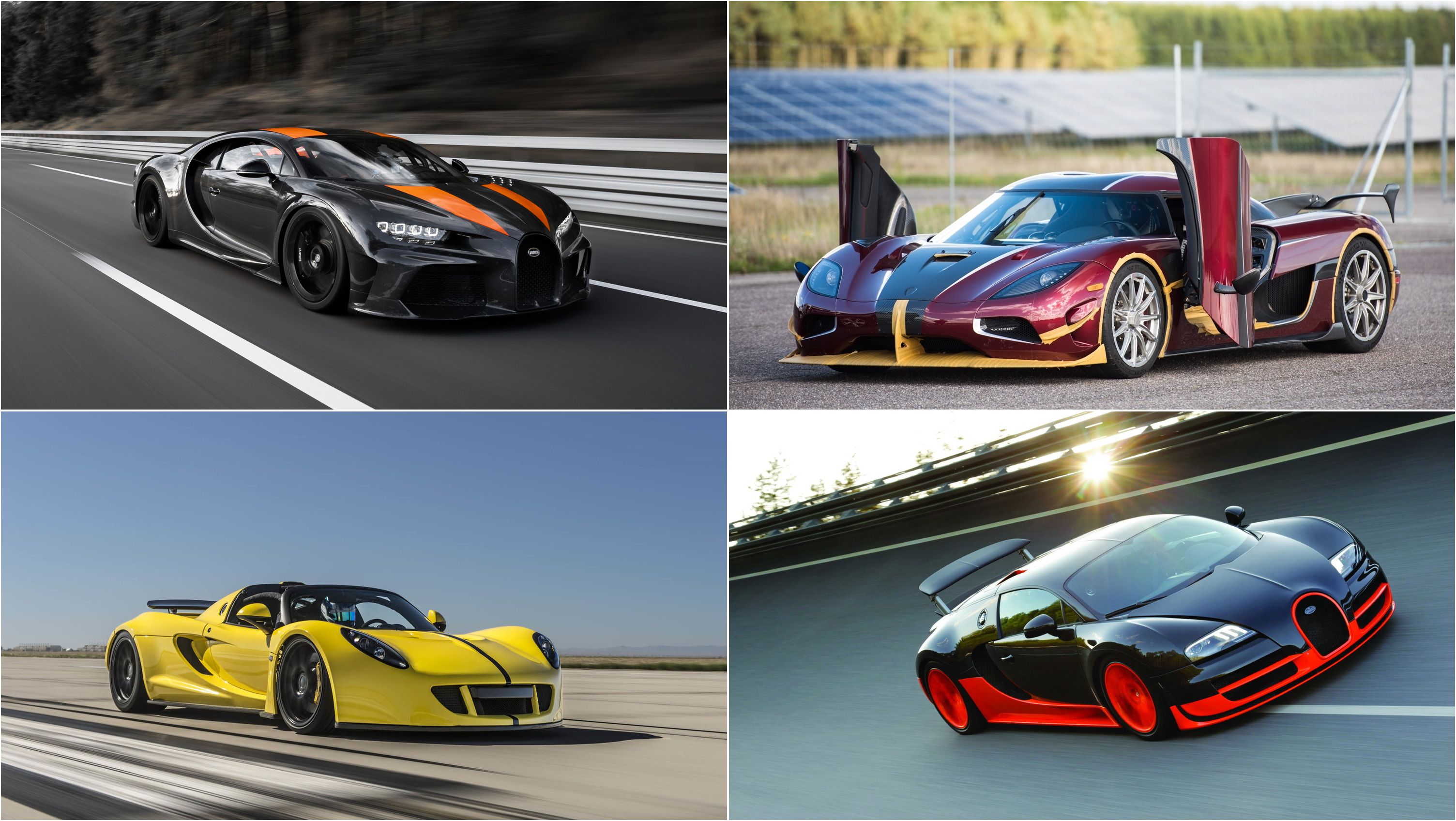
In August 2019, Bugatti became the first manufacturer to break the 300 mph barrier. Test driver Andy Wallace piloted a near-production prototype of the Bugatti Chiron Super Sport 300+ at the Volkswagen Group’s Ehra-Lessien test track in Germany, reaching an astonishing 304.773 mph (490.484 km/h).
While this specific vehicle was a pre-production prototype modified with an extended tail to improve aerodynamic drag, Bugatti subsequently built a limited run of 30 customer-deliverable Super Sport 300+ models electronically limited to 273 mph for safety reasons, though owners could arrange to unlock the full potential of the car at the Ehra-Lessien track.
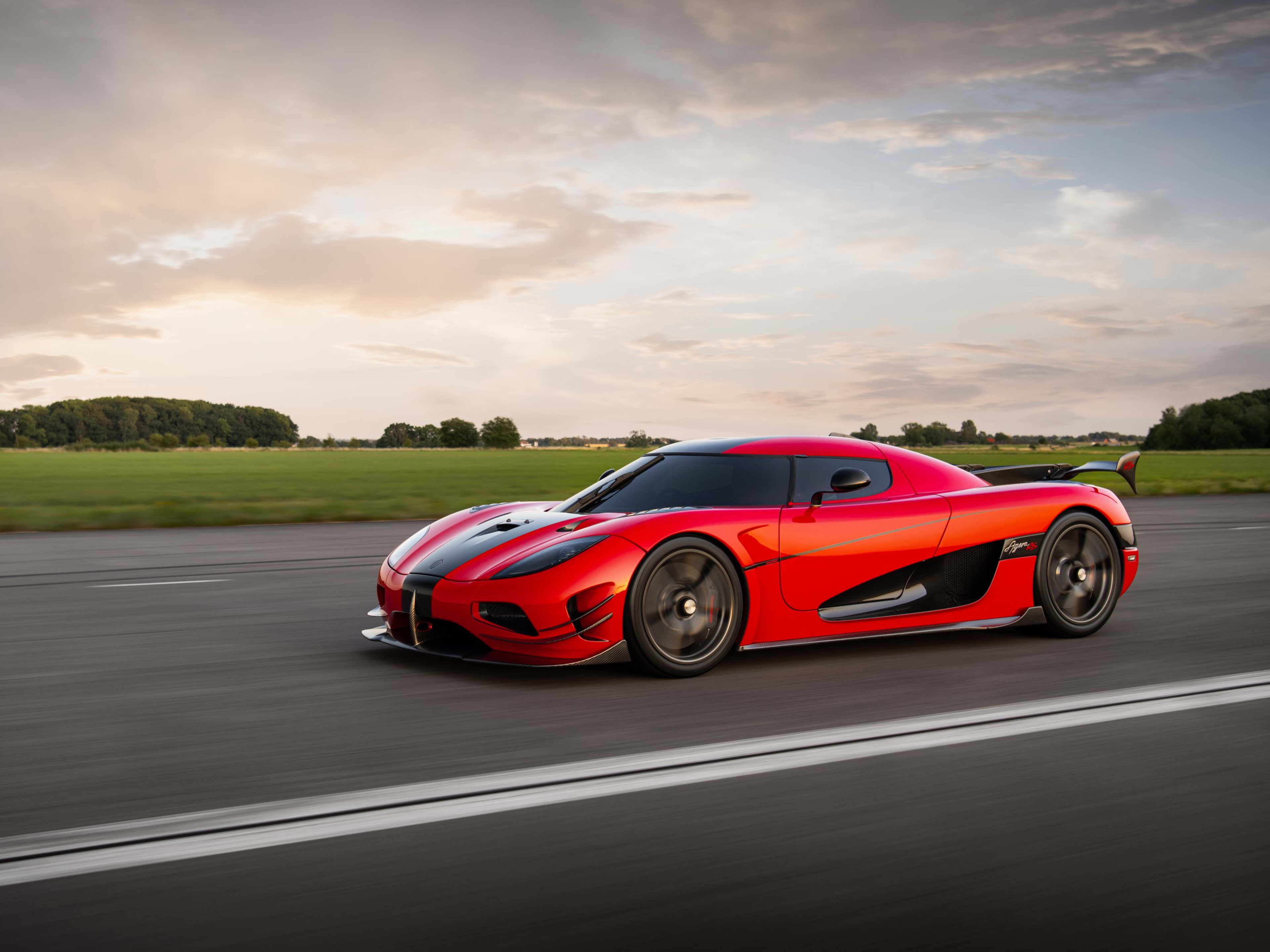
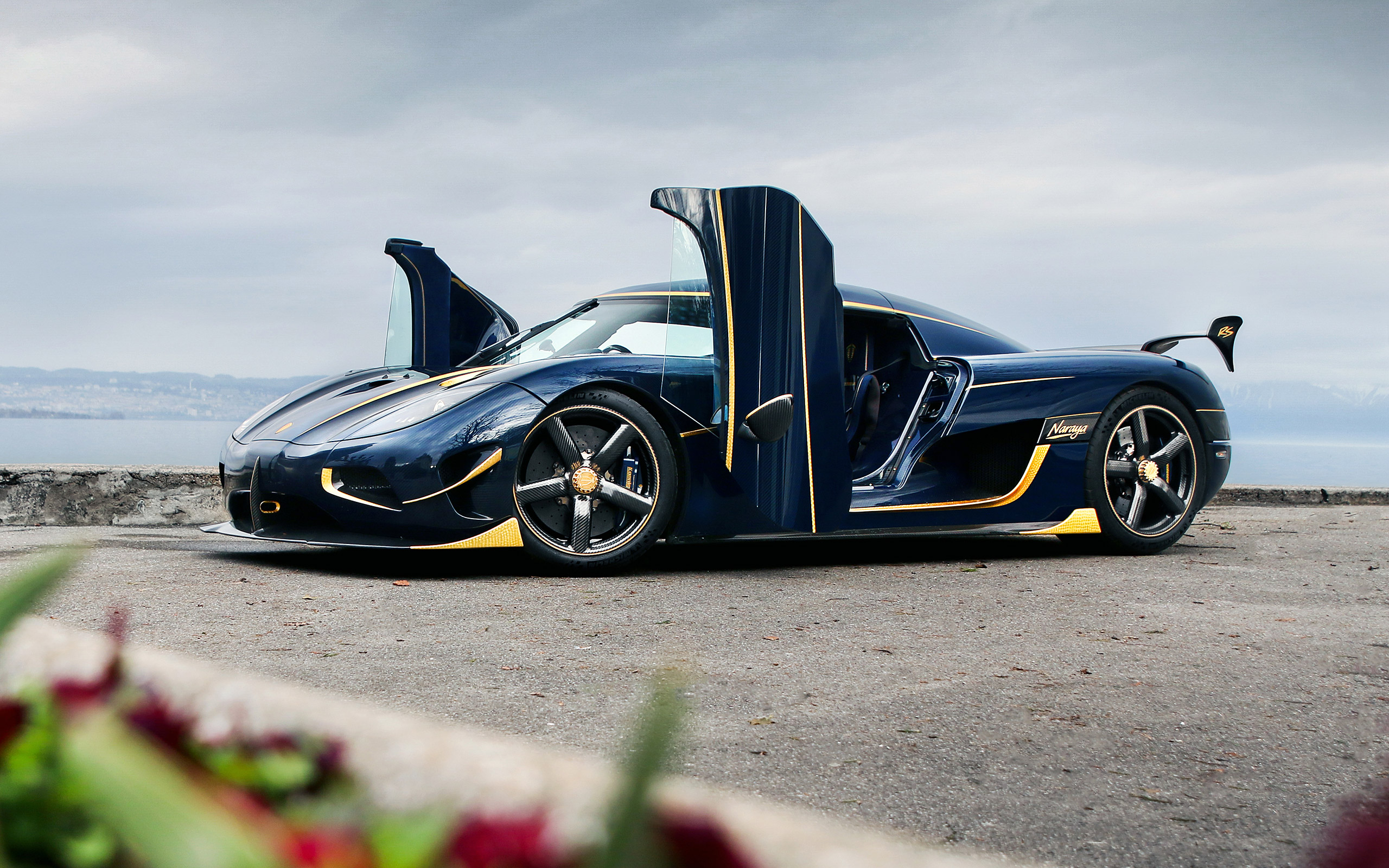
Koenigsegg Jesko Absolut
Swedish hypercar manufacturer Koenigsegg has targeted supreme velocity with the Jesko Absolut. Unlike the high-downforce track-focused Jesko Attack, the Absolut variant features a drag coefficient of just 0.278. Koenigsegg’s digital simulations indicate that the Jesko Absolut is theoretically capable of exceeding 330 mph (531 km/h), given a long enough stretch of straight pavement and suitable tire technology. While computer modeling and wind tunnel data strongly support these projections, a fully verified, two-way top speed run validating this exact figure remains a primary objective for the company.
SSC Tuatara
The SSC Tuatara, manufactured by Shelby SuperCars, entered the record conversation with a controversial claim in October 2020 of reaching 331.15 mph in Nevada. Following public scrutiny over GPS data tracking, SSC conducted a transparent re-test in January 2022. Driven by Dr. Larry Caplin at the Johnny Bohmer Proving Grounds at Kennedy Space Center, Florida, the Tuatara officially achieved a verified two-way average speed of 295.0 mph (474.8 km/h), briefly touching a peak speed of 29.5 mph during the run, cementing its place among the fastest accelerating and highest-velocity production-intent cars in history.
Comparison of Top Contenders for Ultimate Speed
| Vehicle Manufacturer & Model | Claimed or Verified Top Speed | Engine Type & Power Output | Production Status |
|---|---|---|---|
| Bugatti Chiron Super Sport 300+ | 304.773 mph (490.484 km/h) | 8.0L Quad-Turbo W16 / 1,578 hp | Limited Production (30 units) |
| Koenigsegg Jesko Absolut | 330+ mph (Theoretical / Simulated) | 5.0L Twin-Turbo V8 / 1,600 hp | In Production |
| SSC Tuatara | 295.0 mph (Verified Two-Way Average) | 5.9L Twin-Turbo V8 / 1,750 hp | Limited Production |
| Hennessey Venom F5 | 271.6 mph (Tested Peak to Date) | 6.6L Twin-Turbo V8 "Fury" / 1,817 hp | Limited Production |
| Rimac Nevera | 258 mph (256.06 mph Verified) | Quad Electric Motors / 1,914 hp | Limited Production (150 units) |
Engineering Challenges of Exceeding 300 MPH
Achieving speeds in excess of 300 mph requires overcoming massive physical and mechanical barriers. The obstacles scale exponentially rather than linearly due to fundamental laws of physics.
Aerodynamic Drag and Power Requirements
Aerodynamic drag increases with the square of velocity, while the power required to overcome that drag increases with the cube of velocity. To push a car from 250 mph to 300 mph requires a staggering increase in horsepower. At 300 mph, a vehicle pushes against a wall of air with immense force, requiring hypercars to feature specialized low-drag aerodynamic profiles, smooth underbodies, and active aero surfaces that retract wings to minimize resistance during high-speed runs.
Tire Limitations and Extreme Heat
At 300 mph, the outer tread of a tire experiences severe centrifugal forces, stretching the rubber outward and generating extreme thermal energy. Michelin and other tire manufacturers develop bespoke compounds reinforced with carbon fiber and subjected to rigorous laboratory testing that simulates jet-fighter landing speeds. Standard road tires would disintegrate in seconds under the centrifugal loads generated at these velocities.
Powertrain and Thermal Management
Internal combustion engines and electric powertrains generate immense heat at maximum load. Cooling systems must dissipate heat rapidly without creating additional aerodynamic drag through oversized air intakes. Furthermore, transmissions must feature ultra-tall final drive ratios to prevent the engine from over-revving while still delivering enough torque to push through the heavy air barrier at terminal velocity.
Absolute Land Speed Record Holders (Non-Production)
While production hypercars command public attention, the absolute fastest wheeled vehicles ever made are jet-powered or rocket-powered land speed record cars that bear little resemblance to traditional automobiles.
- ThrustSSC: Driven by Andy Green in 1997, this twin-turbofan jet car officially broke the sound barrier, setting the current world land speed record of 763.035 mph (1,227.9 km/h) in the Black Rock Desert, Nevada. It remains the only officially verified vehicle to break the sound barrier on land.
- Bloodhound LSR: Designed to push the record past 1,000 mph, the Bloodhound project combines a EJ200 jet engine with a hybrid rocket motor. While initial high-speed testing phases successfully demonstrated performance up to 628 mph in South Africa, full record attempts have faced ongoing funding and logistical developments.
Frequently Asked Questions
What is the fastest electric car in the world?
The Rimac Nevera holds the verified production record for electric vehicles, achieving a top speed of 258 mph (412 km/h) confirmed by independent testing. It utilizes four independent electric motors producing a combined 1,914 horsepower, combined with advanced torque vectoring to maintain stability at extreme speeds.
Can you drive a 300 mph car on a normal highway?
No. While cars like the Bugatti Chiron Super Sport and Koenigsegg Jesko Absolut are street-legal in terms of emissions and safety equipment, public highways lack the surface smoothness, line-of-sight distance, and traffic control required to safely operate a vehicle at velocities exceeding 250 mph. Specialized closed tracks or dry lake beds are mandatory.
Why don't production cars come unlocked from the factory?
Manufacturers electronically limit top speeds for safety and liability reasons. At extreme speeds, tire degradation, unexpected road imperfections, or minor driver inputs can result in catastrophic loss of control. Unlocking maximum top speed usually requires factory inspection, specialized technician sign-off, and ideal environmental conditions.
How do independent bodies verify top speed claims?
Independent testing organizations rely on high-precision GPS telemetry equipment, such as VBOX systems, which measure speed using multiple satellite constellations simultaneously. Observers verify that runs are conducted in opposite directions to cancel out tailwinds and headlamps, ensuring the recorded speed is scientifically valid.
Summary and Next Actions
When assessing the fastest car ever made, the Bugatti Chiron Super Sport 300+ stands as the benchmark for a verified production milestone at 304.773 mph, while competitors like the Koenigsegg Jesko Absolut push theoretical boundaries toward 330 mph and beyond. For enthusiasts looking to explore further, researching technical whitepapers from manufacturers like Koenigsegg and Bugatti provides deep insight into modern computational fluid dynamics, tire engineering, and powertrain development.
Image Gallery