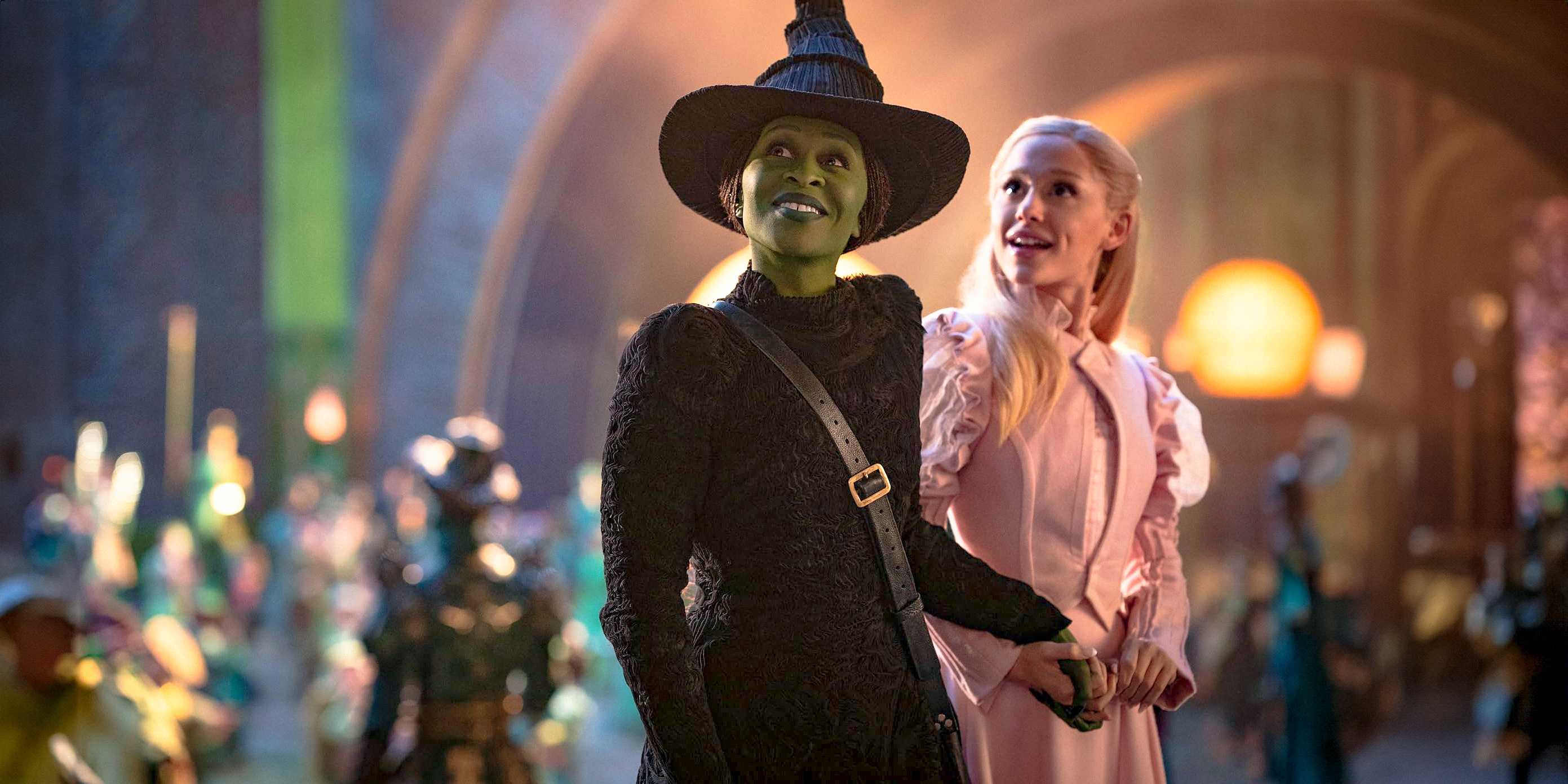
The Craft and Symbolism Behind Elphaba’s Hair in the Wicked Film
Cynthia Erivo’s portrayal of Elphaba in the feature film adaptation of Wicked features a ground-breaking hair design centered on intricate micro-braids and micro-locs. Designed by Oscar-winning hair and makeup designer Frances Hannon i...
Cynthia Erivo’s portrayal of Elphaba in the feature film adaptation of Wicked features a ground-breaking hair design centered on intricate micro-braids and micro-locs. Designed by Oscar-winning hair and makeup designer Frances Hannon in close collaboration with Erivo, the custom-ventilated human hair wigs fuse traditional witch iconography with Black hair heritage, engineered specifically to endure stunt work, flying harnesses, and high-definition cinematic lighting.
Contents
Reimagining an Icon: The Vision Behind Elphaba's Film Hair
For two decades on the Broadway stage, the character of Elphaba was defined visually by a sharp, raven-black, straight wig designed to peek out from beneath her pointed hat. When director Jon M. Chu brought Wicked to the cinematic screen, the production sought to ground the magical world of Oz in tangible texture and deep character identity. Central to this transformation was lead actress Cynthia Erivo’s vision for Elphaba’s hair.
Erivo, a Black British performer, advocated for incorporating micro-braids and micro-locs into Elphaba’s physical design. This choice was not merely decorative; it was a deliberate artistic decision that honored Erivo’s personal heritage while adding a rich layer of physical storytelling to the character. In the film, Elphaba is an outsider in Oz—misunderstood, distinct, and fiercely individual. Giving her hair a tactile, braided structure visually reinforces her uniqueness while celebrating textured hair on a colossal cinematic scale.
Working alongside legendary hair and makeup designer Frances Hannon, the production team established a look that felt both mythic and intimate. Rather than relying on standard synthetic wigs or flat textures, the film's hair department created custom pieces that responded to movement, light, and the emotional arch of the character from her arrival at Shiz University to her eventual transformation into the Wicked Witch of the West.
Wig Construction and Technical Specifications
Translating micro-braids to a feature film screen requires extraordinary technical precision. Standard film wigs often utilize fine lace foundations to simulate a natural scalp, but high-density braided hair adds substantial weight, which can pull at the lace and warp the fit during long filming days.
| Feature / Property | Specification |
|---|---|
| Lace Material | High-definition Swiss/HD film lace |
| Hair Sourcing | 100% Virgin Human Hair (Ethically sourced) |
| Texture Base | Custom hand-plaited micro-braids / micro-locs |
| Color Profile | Deep obsidian black with cool indigo/emerald undertones for dynamic camera pickup |
| Foundation | Reinforced silk-lined interior cap with anchored harness-retention clips |
Material Selection and Hand-Ventilation
To achieve a natural hairline capable of holding up under 4K and 8K camera close-ups, the hair department utilized ultra-fine HD film lace. Each individual hair was hand-knotted (ventilated) into the lace base. Because micro-braids require hundreds of individual plaits, the weight distribution had to be meticulously calculated.
- Human Hair Sourcing: Premium, unprocessed human hair was chosen over synthetic fibers. Human hair offers realistic movement, natural light reflection, and the ability to withstand thermal styling tools when setting the braided shapes.
- Dimensional Color Formulations: Pure jet-black hair can look flat and lifeless under bright studio lights or green-screen environments. Hair colorists dyed the strands with subtle indigo, deep purple, and forest-green undertones. Under directional lighting, these subtle tones catch the camera, giving the hair depth without breaking the illusion of pitch-black hair.
The Micro-Braiding Process
Creating a single hero wig for Elphaba required hundreds of technician hours. Each micro-braid had to be uniform in width—often just a few millimeters thick—to maintain consistency across multiple filming units and stunt duplicates.
The braids were woven tight at the root to create clean grid patterns along the simulated scalp, allowing the green skin makeup to contrast cleanly with the dark hair without smudging into the braid tracks.
Character Evolution Through Hair Styling
Elphaba’s hair is not static throughout the film; it evolves alongside her confidence, magic, and societal standing within Oz. The hair department crafted distinct variations of the braided wig to reflect these key stages.
- Shiz University Era
- Tight, restrained plaits
- Structured half-up styles
- Emerald City Journey
- Flowing micro-braids
- Dynamic motion & length
- The Wicked Witch Transformation
- Cascading, expansive locs
- Pointed hat integration
1. Shiz University: Order and Constraint
During her early days at Shiz University, Elphaba’s hair reflects her desire to fit in and control her volatile magical abilities.
- Style Structure: The braids are gathered tightly in neat, symmetrical arrangements, often styled in half-up braids, structural buns, or pinned securely behind her shoulders.
- Visual Subtext: The neatness of the hair contrasts with her internal turmoil and the overt prejudice she faces from fellow students. The styling is functional and subdued, keeping the focus on her vulnerability.
2. The Emerald City: Expansion and Identity
As Elphaba travels to the Emerald City and discovers the truth behind the Wizard’s regime, her hairstyle softens and expands.
- Style Structure: The braids are worn down more frequently, displaying their full length and fluid motion.
- Visual Subtext: The free-flowing micro-braids signal her growing sense of self-worth and independence. As she moves through the grand architectural spaces of Oz, the movement of the braids emphasizes her grace and physical presence.
3. Defying Gravity: The Iconic Silhouette
The climax of Elphaba’s transformation requires a hair design that works seamlessly with her famous pointed witch hat and broomstick flight.
- Style Structure: Long, cascading micro-braids spill dramatically from beneath the brim of the custom leather-and-felt hat. The front strands frame Erivo’s face, highlighting the contrast between the green prosthetic makeup and the dark framing of the hair.
- Visual Subtext: The hair becomes an extension of her magic—wilder, majestic, and completely unconstrained by societal expectations.
On-Set Engineering: Flying Rigs, Harnesses, and Stunts
Filming Wicked involved extensive aerial stunt sequences, high-speed wind effects, and complex wirework. Designing wigs that could survive high-velocity flying without shifting or tearing the delicate lace was a major technical hurdle.
| Challenge | Technical Solution |
|---|---|
| High-Velocity Wind (Broomstick Scenes) | Internal silicone gripping strips along the perimeter cap; double-stitched lace seams. |
| Wire Harness Friction | Custom wig-cap cutouts allowing hidden safety straps to pass directly to scalp anchors. |
| Green Makeup Transfer | Barrier sealants applied to hairline lace; daily alcohol-based lace cleansing routines. |
| Stunt Double Continuity | 6+ identical duplicate wigs produced, each calibrated to double-specific scalp measurements. |
Securing the Wig During Aerial Work
When Cynthia Erivo or her stunt doubles were suspended decades in the air on gimbal rigs, traditional hairpins were insufficient. Hair technicians used a multi-step anchor system:
- Scalp Preparation: Erivo’s natural hair was braided flat against her scalp in a precise cornrow pattern to serve as an anchor grid.
- Surgical-Grade Adhesives: High-tack, sweat-resistant acrylic lace adhesives were applied along the hairline and nape.
- Internal Anchor Straps: The interior of the wig featured hidden elastic bands that hooked directly into the underlying cornrow structure, ensuring the wig remained immobile even when subjected to G-force movements or inverted flying angles.
Managing Wind and Movement
In musical numbers like "Defying Gravity," industrial wind machines blew intense gusts directly at the actors. Standard straight wigs often tangle into unmanageable knots or flatten awkwardly against the face under high wind.
Micro-braids, however, possess individual weight and aerodynamics. They separate cleanly in the wind, creating dramatic, individual lines of movement before falling back into place naturally without tangling.
Stage vs. Film: Comparing Elphaba's Hair Design
| Feature / Dimension | Broadway Stage Version | Film Adaptation Version |
|---|---|---|
| Primary Texture | Straight / Slight wave | Micro-braids and micro-locs |
| Material Sourcing | High-durability Synthetic or Blend | 100% Ethically Sourced Human Hair |
| Hairline Construction | Thick lace / Hard front for distance viewing | Ultra-fine Swiss HD Lace for 8K close-ups |
| Color Depth | Uniform jet black | Layered black with indigo/green undertones |
| Cultural Context | Traditional European theatrical witch aesthetic | Heritage-inspired Black braided aesthetic |
| Hat Integration | Fixed cutouts for quick stage changes | Custom molded internal cap channels |
| Maintenance Cycle | Restyled weekly; heavy hairspray application | Daily lace cleaning, re-braiding, and edge reset |
On-Set Maintenance and Hair-Care Protocols
Maintaining a collection of high-end braided wigs across a multi-month film shoot requires rigorous daily protocols from the hair department.
- Morning Application
- Scalp barrier application
- Alcohol lace prep
- Precision adhesive bond
- Edge styling
- Mid-Day Set Support
- Green makeup edge touch-up
- Braid sheen misting
- Tension check
- Wrap Time Removal
- Adhesive solvent soak
- Gentle lace release
- Cap wash & block drying
Edge Control and Green Makeup Protection
One of the unique challenges on the set of Wicked was managing the intersection of green body paint and dark hair lace.
- Makeup Bleed: Alcohol-based green makeup can easily stain wig lace or saturate braided roots, turning the black hair a murky greenish-gray near the forehead.
- Preventative Sealing: The makeup and hair teams developed a dual-barrier system. A clear liquid barrier coat was applied over the skin line before the wig was glued down.
- Edge Setting: Once the wig was secured, edge control gels formulated without water were used to lay down the fine baby hairs along the lace edge, creating a seamless transition from green skin to black braided hair.
Sanitization and Braid Care
Because human hair absorbs moisture and sweat during intense dance numbers, the wigs underwent nightly sanitization. Hair technicians used specialized dry-cleaning sprays designed for lace-front pieces, carefully hand-wiping each braid with microfiber cloths to remove dust, stage fog residue, and theatrical makeup without unraveling the micro-plaits.
Replicating the Look: Advice for Cosplayers and Stylists
For craftspeople, theatrical stylists, and cosplayers seeking to recreate the film’s version of Elphaba’s hair, achieving this look requires careful planning around wig weight, braid scale, and skin-tone integration.
Selecting the Right Base Unit
- Lace Width: Choose a full lace or deep 13x6 lace-front wig to ensure you have enough parting space for realistic braid grid lines.
- Density Requirements: Standard wigs usually feature 150% density. For a micro-braided wig, aim for 180% to 200% density to compensate for the space lost when hair is compressed into individual braids.
Braid Technique and Scale
- Keep Plaits Micro-Sized: Avoid medium or box-braid sizing. The film look relies on tiny, fluid micro-braids (no larger than 2-3 mm wide) so the hair moves like liquid when walking or performing.
- Synthetic vs. Human Hair: If using synthetic heat-resistant fibers, dip the finished braids in near-boiling water to set the texture and remove stiffness. If using human hair, use a light shine spray to keep braids looking hydrated under bright lighting.
Integrating the Hat
- Measure with the Wig On: Never fit a pointy witch hat to your bare head if you plan to wear a high-density braided wig underneath. Measure the circumference while wearing the fully braided piece.
- Internal Anchors: Sew comb clips into the interior rim of the hat so it slides directly into the braid tracks, preventing the hat from shifting backward during movement.
Frequently Asked Questions
Why did Cynthia Erivo choose micro-braids for Elphaba’s hair in the film?
Cynthia Erivo wanted to incorporate her identity as a Black woman into the character of Elphaba. By choosing micro-braids and locs, Erivo and designer Frances Hannon created a look that honors Black hair heritage while providing a rich, tactile texture that fits Elphaba's role as a unique outsider in Oz.
Who designed the wigs for the Wicked movie?
The hair and makeup design for the Wicked film was led by Academy Award-winning designer Frances Hannon, known for her detailed work on major feature films. Hannon collaborated closely with Cynthia Erivo to conceptualize, build, and maintain Elphaba's wig collection.
Are the wigs in the film made of real human hair?
Yes. The production utilized 100% high-grade human hair for Elphaba’s hero wigs. Human hair was necessary to provide natural drape, authentic movement during flying sequences, and the ability to absorb custom dye formulations with indigo and green undertones.
How did the hair department keep the green makeup from ruining the wigs?
The team used medical-grade clear skin barriers before applying adhesives and wigs. After securing the wig, water-free edge styling products were applied along the hairline. Nightly cleaning routines with specialized lace solvents ensured green makeup did not build up on the lace base.
How many wigs were created for Elphaba for the production?
While an exact final tally varies across multi-part filming, major productions of this scale typically build between 6 to 12 duplicate hero and stunt wigs. This ensures continuity across multiple units, wet scenes, flying sequences, and stunt double work.
Key Takeaways for Film Crafts and Hair Design
The hair design for Elphaba in the Wicked film represents a landmark fusion of heritage, character psychology, and high-level film engineering. By replacing traditional theatrical wigs with micro-braids, the production elevated the visual story of Oz while setting a high standard for textured hair representation in fantasy cinema.
For stylists and creators analyzing this design, the key lessons lie in the details: multi-tonal color blending for high-definition cameras, robust weight distribution within lace foundations, and close collaboration between actor and designer to bring authentic personal storytelling to screen iconography.
Image Gallery