Personal Air Purifiers are Allowed on Flights: Current Regulations and User Guide
Most personal air purifiers are permitted on flights as carry-on items, provided they comply with lithium battery safety standards and do not produce harmful ozone levels. While the TSA allows them through security, individual airline...
Most personal air purifiers are permitted on flights as carry-on items, provided they comply with lithium battery safety standards and do not produce harmful ozone levels. While the TSA allows them through security, individual airline policies vary regarding their operation during the flight to ensure no interference with aircraft navigation or cabin safety systems.
Contents
Traveling in 2026 involves navigating a complex landscape of health-conscious technology and stringent aviation safety protocols. As personal air purifiers—ranging from wearable ionic necklaces to portable HEPA (High-Efficiency Particulate Air) units—become standard travel accessories, understanding the intersection of TSA, FAA, and airline-specific rules is essential. While the short answer is that these devices are generally allowed, their transport and use are governed by specific safety mandates regarding battery chemistry, air filtration methods, and electromagnetic interference.
The Regulatory Framework: TSA and FAA Guidelines
To understand why personal air purifiers are allowed on flights, one must distinguish between the rules for transport (security screening) and operation (safety during flight).
TSA Screening Protocols
The Transportation Security Administration (TSA) is primarily concerned with whether a device poses a threat to the security of the aircraft. As of 2026, the TSA classifies personal air purifiers under "Portable Electronic Devices." You are permitted to bring them through security checkpoints in both carry-on and checked luggage.
However, if the device is a larger, portable HEPA unit roughly the size of a laptop or a large tablet, you may be required to remove it from your bag for separate X-ray screening. Smaller, wearable devices typically remain inside your personal item unless a TSA officer requests further inspection. It is important to ensure the device is charged or has a clear label indicating its purpose to avoid delays during manual inspections.
FAA Safety Mandates
The Federal Aviation Administration (FAA) focuses on the safety of the aircraft once it is in motion. Their primary concern with air purifiers involves Lithium-Ion batteries. Because lithium batteries are a fire hazard (thermal runaway), any air purifier containing a rechargeable lithium battery must be kept in carry-on luggage. You should never place a battery-powered air purifier in checked baggage, as cargo hold fire suppression systems are not designed to handle lithium-ion fires effectively.
Furthermore, the FAA grants the Pilot-in-Command and the flight crew final authority over the use of any electronic device. If a device is perceived to interfere with the plane’s avionics or causes a disturbance, the crew can legally require you to power it down.
Device Types and Their Suitability for Air Travel
Not all air purifiers work the same way, and their underlying technology determines how likely they are to be scrutinized by airline staff.
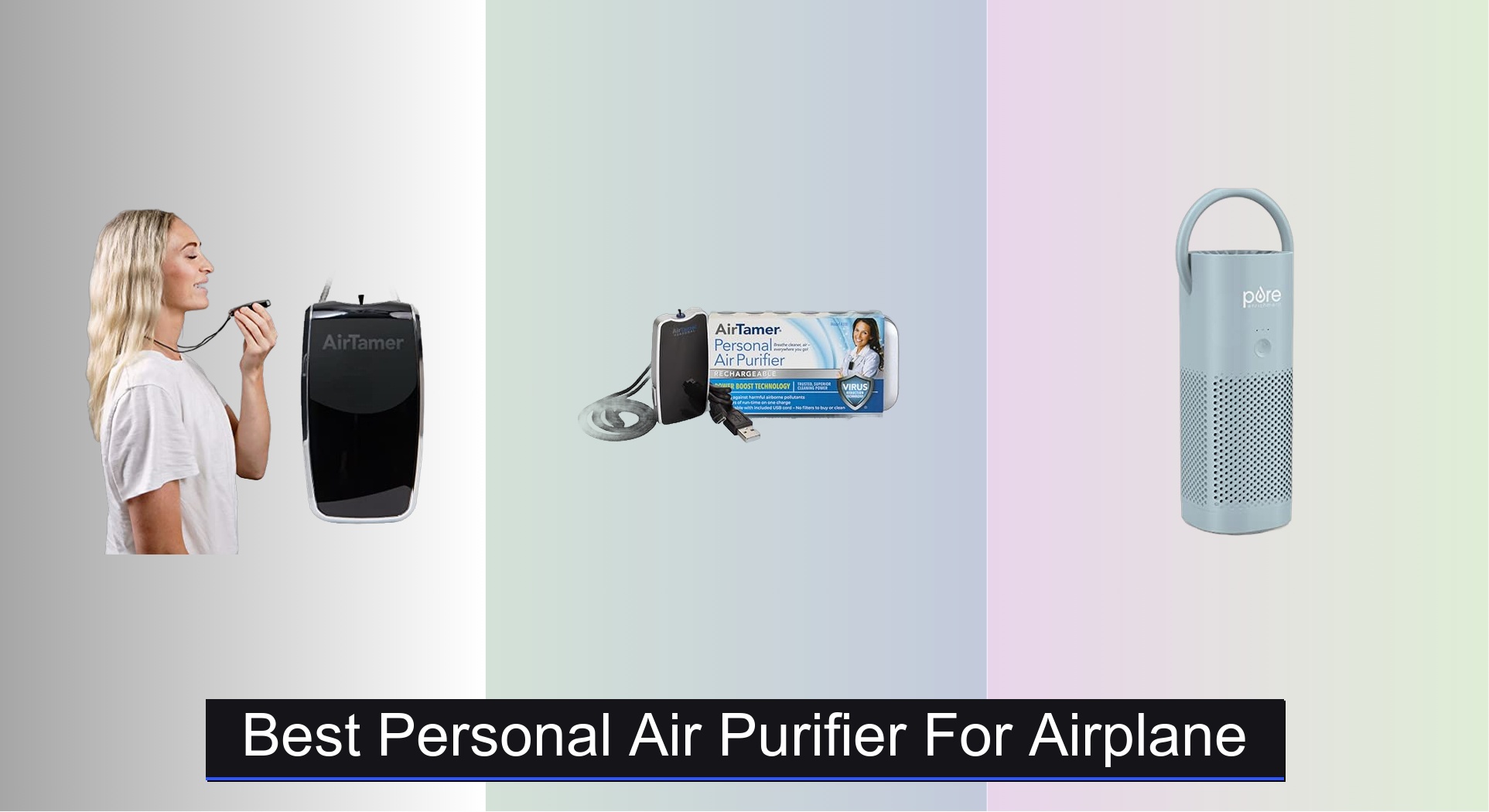
Wearable Ionic Purifiers
These are the most common devices seen on flights. They work by emitting negative ions that attach to airborne particles (viruses, bacteria, pollen), making them too heavy to remain suspended in the air.
- Pros: Lightweight, silent, and usually have long battery lives.
- Cons: Some models produce trace amounts of ozone (O3), which is a respiratory irritant.
- Regulation: Most airlines allow these to be worn throughout the flight. However, you must ensure your specific model is "Ozone-Free" or meets the UL 867 or UL 2998 certification standards for low ozone emissions.
Portable HEPA Purifiers
These units use a fan to pull air through a physical filter. They are more effective at cleaning a localized "bubble" of air but are larger and noisier.
- Pros: Genuine medical-grade filtration; no ozone production.
- Cons: Fan noise can bother neighbors; larger size may take up tray table space.
- Regulation: These are treated like tablets or small fans. They are generally prohibited during takeoff and landing but allowed during the cruising phase of the flight.
Understanding the Lithium Battery "100-Watt Hour" Rule
The most critical technical specification for any traveler is the capacity of the device's battery. Aviation authorities use Watt-hours (Wh) to determine if a battery is safe for flight.
Most personal air purifiers use small batteries (typically 10Wh to 30Wh), which are well within the legal limit. However, if you are using a heavy-duty portable unit powered by a large external power bank, you must ensure the battery is under 100Wh. If your device’s battery exceeds this limit, you may need special airline permission, and it will be strictly prohibited from checked luggage.
| Feature | Wearable Ionic Purifier | Portable HEPA Unit | Plug-in Travel Purifier |
|---|---|---|---|
| TSA Carry-on Allowed | Yes | Yes | Yes |
| Checked Bag Allowed | No (if Lithium) | No (if Lithium) | Yes (no battery) |
| In-Flight Use | Generally Permitted | Cruising Phase Only | Prohibited (no outlets) |
| Primary Safety Risk | Ozone Production | Fan Interference/Battery | Electrical Short |
| Best For | "Last-mile" Boarding | Seat-side Air Quality | Hotel Rooms Only |
The "Gate-to-Seat" Gap: Why Passengers Use Them
A common question is why passengers feel the need for personal purifiers when modern aircraft use HEPA filters that refresh cabin air every 2-3 minutes. The vulnerability lies in the "Gate-to-Seat" gap.
While the plane is in the air, the ventilation system is highly efficient. However, during boarding, deplaning, and long periods on the tarmac without the engines running, the air circulation is often significantly reduced. This is when personal air purifiers provide the most value—offering a layer of protection during the moments when the aircraft's industrial-grade systems are not yet at full capacity.
Practical Steps for Traveling with an Air Purifier
To ensure a smooth experience from the security line to your destination, follow these technical and behavioral steps:
- Check the UL Certification: Look for a sticker or manual entry indicating the device meets UL 867 (Electrostatic Air Cleaners) standards. This proves to a concerned flight attendant that the device does not produce dangerous levels of ozone.
- Verify the Battery Label: Ensure the battery capacity (mAh or Wh) is clearly printed on the device. If the label is rubbed off, security may confiscate the device if they cannot verify its safety.
- Power Down During Critical Phases: Always turn off your device during taxi, takeoff, and landing. These are the "Critical Phases of Flight" where any electronic interference, however minor, is strictly regulated.
- Respect Your Neighbors: If you are using a HEPA unit with a fan, keep it on the lowest setting. The sound of a fan can be amplified in a quiet cabin, and air blowing directly onto another passenger can lead to complaints and a crew-ordered shutdown.
- Documentation: Keep a digital copy of the manufacturer's "Safe for Travel" certificate or technical spec sheet on your phone. If questioned by a gate agent, being able to show the device's power draw and safety ratings can prevent it from being barred from the cabin.
International Travel Considerations
If your flight involves international connections, be aware that European (EASA) and Asian aviation regulators sometimes have stricter interpretations of "Personal Electronic Devices" that emit signals or ions.
In some jurisdictions, "Active" air purifiers (those that emit ions) are scrutinized more than "Passive" ones (those that simply filter air). Always check the "Prohibited Items" list of the specific carrier if you are flying with international airlines like Emirates, Lufthansa, or Singapore Airlines, as they may have more granular restrictions than US-based carriers.
Frequently Asked Questions
Can I use my air purifier while the plane is on the tarmac?
Usually, yes, but it depends on the airline. Most airlines allow small PEDs to be used once the cabin door is closed, provided they are in "Airplane Mode" (if they have Bluetooth/Wi-Fi). Since most air purifiers do not transmit data, they are generally treated like a digital watch or a small handheld fan. However, always follow the specific instructions of the flight crew.
Will the air purifier interfere with the plane’s smoke detectors?
Modern ionic purifiers do not emit enough particulate matter to trigger a lavatory or cabin smoke detector. However, you should never use a "fogging" device or a humidifier-style purifier on a plane, as the mist can interfere with sensitive optical smoke sensors in the cabin.
What should I do if a flight attendant asks me to turn it off?
You must comply immediately. Under FAA regulations, it is a federal offense to interfere with or refuse the instructions of a crew member. Even if you believe your device is safe and allowed, the crew has the final word on cabin safety. You can ask for clarification or check the airline’s policy after you land.
Does the TSA allow replacement filters in carry-on bags?
Yes. HEPA filters, carbon filters, and pre-filters are made of inert materials like fiberglass, paper, or plastic. They are not considered hazardous and can be packed in any quantity in either carry-on or checked luggage.
Are plug-in air purifiers allowed?
You can carry them on, but you likely cannot use them. Most aircraft power outlets are designed for low-amperage devices like laptops and phone chargers. Plugging in a high-draw air purifier could trip the seat's circuit breaker. Additionally, many airlines prohibit the use of plug-in appliances that are not essential for health (like CPAP machines).
Final Recommendation for Travelers
If you plan to use a personal air purifier on a flight in 2026, the safest and most compliant choice is a wearable, ozone-free ionic purifier or a small, battery-operated HEPA unit that fits within your personal space. Prioritize devices with clear safety certifications (UL or CE) and ensure they are always packed in your carry-on luggage. By being proactive with documentation and respecting the flight crew’s authority, you can maintain your personal air quality without compromising aviation safety.
Image Gallery