Mark Wahlberg on the Oil Rig: The True Story Behind Deepwater Horizon
Mark Wahlberg portrayed real-life Chief Electronics Technician Mike Williams in the 2016 disaster film Deepwater Horizon. Directed by Peter Berg, the film chronicles the catastrophic April 20, 2010, blowout, fire, and eventual sinking...
Mark Wahlberg portrayed real-life Chief Electronics Technician Mike Williams in the 2016 disaster film Deepwater Horizon. Directed by Peter Berg, the film chronicles the catastrophic April 20, 2010, blowout, fire, and eventual sinking of the Deepwater Horizon oil rig in the Gulf of Mexico, highlighting the harrowing escape of the surviving crew members and the loss of 11 workers.
Contents
The movie stands out for its high level of technical accuracy regarding offshore oil drilling operations, industrial safety protocols, and the physical realities of surviving a massive high-pressure well failure. Understanding Mark Wahlberg’s role on the oil rig requires examining the real-life figure of Mike Williams, how the film reconstructed the offshore rig for production, and how cinematic choices reflected the actual events of the disaster.
Who Did Mark Wahlberg Play in Deepwater Horizon?
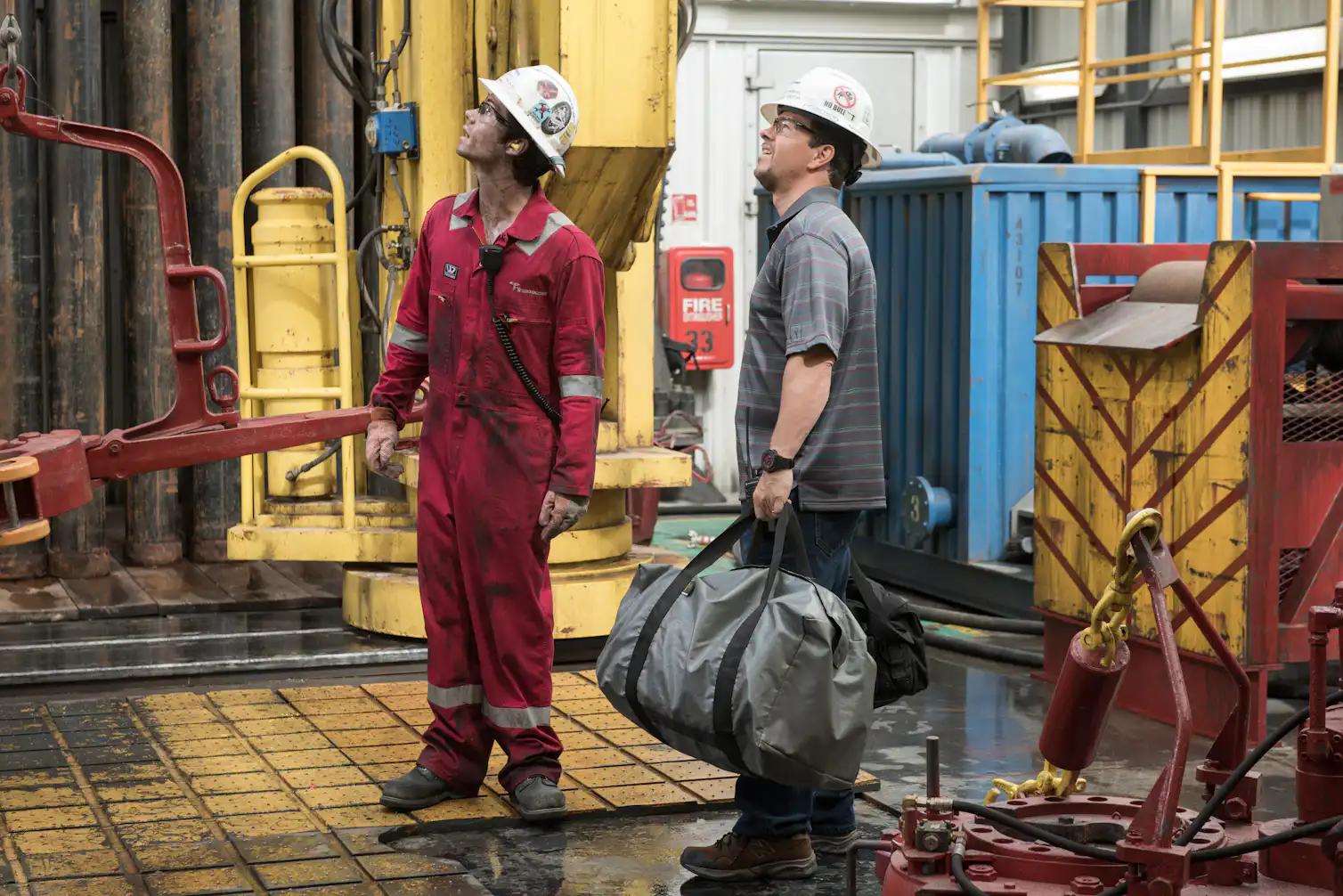
In Deepwater Horizon, Mark Wahlberg plays Mike Williams, a senior employee for Transocean—the offshore drilling contractor that owned and operated the ultra-deepwater semi-submersible rig leased by energy company BP. As the Chief Electronics Technician, Williams was responsible for maintaining the rig’s complex computer networks, dynamic positioning systems, internal communications, and automated safety systems.
Williams was not a driller or petroleum geologist. Instead, his job focused on the electro-mechanical heart of the vessel. This distinct role positioned him as a critical observer of the rig's operational health in the days and hours leading up to the disaster.
The Real-Life Mike Williams
The real Mike Williams was a seasoned technician who had spent years working in extreme industrial environments. On the Deepwater Horizon, Williams managed thousands of sensor systems, computing nodes, and control panels required to keep the football-field-sized rig steady over the wellhead in deep water.
During the actual disaster on April 20, 2010, Williams was in his workshop on the rig when the high-pressure methane gas burst up the drill pipe, hit the surface, and ignited. His technical knowledge proved essential during the evacuation as he navigated pitch-black corridors, manually tripped emergency power systems, and helped fellow crew members reach the lifeboats before jumping over 90 feet into the ocean to save his own life.
The Portrayal in the Film
Wahlberg’s performance focuses on Williams as a practical, family-oriented worker caught in an extraordinary industrial disaster. Rather than presenting the character as an idealized action hero, the film highlights his technical problem-solving under pressure. Wahlberg worked directly with the real Mike Williams throughout pre-production and filming to accurately capture the specific jargon, physical mannerisms, and emotional weight carried by the rig's survivors.
Technical Background: What Happened on the Rig?
To understand Wahlberg's character and the tension depicted in the film, it is essential to understand the technical mechanics of the Macondo Well blowout. The Deepwater Horizon was located in the Mississippi Canyon Block 252, roughly 41 miles off the Louisiana coast, drilling in waters over 4,900 feet deep.
- Deepwater Horizon Rig
- Surface
- 4,900+ Feet of Water Column
- Sea Floor
- Blowout Preventer (BOP)
- 13,000+ Feet of Drilled Rock
- Macondo Reservoir (Oil/Gas)
- 13,000+ Feet of Drilled Rock
- Blowout Preventer (BOP)
- Sea Floor
- 4,900+ Feet of Water Column
- Surface
The Role of Drilling Mud and Cement
In subsea drilling, heavy synthetic fluid known as drilling mud is pumped down the drill pipe and up the surrounding space (the annulus) to maintain downward hydrostatic pressure against the natural oil and gas trapped deep within the earth. Once a well reaches its target depth, concrete is pumped to seal the bottom of the well casing so the rig can temporarily disconnect and move away, allowing a dedicated production platform to collect the oil later.
The Negative Pressure Test Failure
The central conflict in the movie—and in the official investigation by the U.S. Chemical Safety Board—revolves around a misread safety check called a negative pressure test. This test verifies whether the cement plug at the bottom of the well can hold back the immense reservoir pressure without the weight of the heavy drilling mud above it.
On April 20, 2010, despite abnormal pressure readings on the drill pipe, the decision was made to displace heavy mud with lighter seawater. This reduction in hydrostatic head allowed high-pressure methane gas to breach the compromised cement barrier. The gas expanded exponentially as it traveled up the riser pipe toward the surface platform, bypassing the blowout preventer (BOP) stack on the ocean floor.
Recreating the Oil Rig: The Engineering Behind the Film Set
One of the most notable achievements of the production was the physical reconstruction of the Deepwater Horizon. Rather than relying entirely on computer-generated imagery (CGI), the film's production team built one of the largest physical sets in cinema history.
Constructing the Replica in Chalmette, Louisiana
Production designer Chris Seagers oversaw the construction of an 85%-scale replica of the Deepwater Horizon main deck, derrick, and helipad. The structure was built at an abandoned steel plant in Chalmette, Louisiana.
- Steel Volume: The set utilized over 3.1 million pounds of structural steel.
- Water Tank Depth: The rig model sat inside a custom-built concrete tank holding over 2 million gallons of water, simulating the open ocean surrounding the lower pontoon structures.
- Operational Helipad: The production constructed a fully functional helipad capable of landing real Sikorsky S-76 helicopters, which transported workers to and from the rig in real life.
Physical Realism vs. CGI
While visual effects were used to render the full depth of the subsea drilling pipe, ocean horizon, and towering fire plumes, the immediate surroundings—including the drill floor, control rooms, and catwalks—were physical structures. Wahlberg and the cast performed amid real fire, pressurized mud sprays, and debris. This environment provided a tangible sense of urgency, allowing the actors to react to real physical heat, water currents, and darkness.
Real-Life Events vs. Cinematic Portrayal
While Deepwater Horizon earned praise from marine engineers and oil rig workers for its visual fidelity, certain dramatic modifications were made to streamline the narrative into a two-hour film.
| Aspect / Event | Real-Life Disaster (April 20, 2010) | Film Portrayal (2016 Release) |
|---|---|---|
| Primary Focus | Complex system failures, multiple corporate decisions over months, 126 crew members on board. | Character-driven conflict primarily between Mike Williams, Jimmy Harrell, and BP representatives. |
| Negative Pressure Test | Heated technical debates across multiple shifts regarding pressure readings on the kill line vs. drill pipe. | Dramatized as a single direct confrontation between BP manager Donald Vidrine and Rig Captain Jimmy Harrell. |
| The Initial Explosion | Two distinct explosion events caused by gas ignition in the engine rooms, leading to total blackout within seconds. | Depicted with dramatic visual escalation, structural collapses, and immediate continuous fire blasts across the main deck. |
| Mike Williams' Escape | Williams helped stabilize injured workers, attempted to start emergency generators, and leapt off the rig's 10-story high deck into oil-slicked water. | Closely mirrors the physical reality of his escape, including the harrowing jump from the high platform into the dark sea. |
| The Blowout Preventer (BOP) | Blind shear rams failed to cut the off-center pipe; emergency control pods had dead batteries and faulty hydraulic valves. | Shown subsea with underwater camera angles, focusing on the mechanical failure of the hydraulic rams. |
The Portrayal of Corporate Dynamics
The film highlights tension between Transocean’s crew—represented by installation manager Jimmy Harrell (played by Kurt Russell) and Mike Williams—and BP’s onshore managers, primarily Donald Vidrine (played by John Malkovich). In reality, the legal responsibility and systemic causes were explored over years of federal litigation. The Presidential Oil Spill Commission concluded that the disaster resulted from a series of cost-cutting decisions, poor communication, and flawed risk management shared by multiple contractors and the operator.
Mark Wahlberg’s Preparation and Stunt Work
Playing a real person involved in a high-profile national tragedy required significant physical preparation and personal consultation. Mark Wahlberg approached the role with an emphasis on authentic technical execution.
- Preparation Phase
- Technical consultation with real Mike Williams
- Study of offshore drilling & electrical systems
- Equipment operation & safety terminology training
- Production Phase
- Live-fire stunt environments in Chalmette, LA
- High-pressure mud and water spray shooting
- High-angle jump sequences & water tanks
Working with the Real Mike Williams
Mike Williams served as an official consultant on the film set. During pre-production, Wahlberg spent extensive time with Williams to understand:
- Terminology: Learning the language of offshore operations, such as "annular preventers," "mud weight," "pit levels," and "top drive units."
- System Control: Understanding how the rig's Integrated Monitoring and Control System (IAMCS) operated.
- Trauma and Survival: Gaining insight into the psychological impact of surviving an explosion that claimed the lives of eleven coworkers.
Physical Demands of the Role
Filming required grueling physical work. To capture the destruction of the rig deck, Wahlberg performed scenes surrounded by controlled fire and high-pressure water cannons. The final escape sequence—where Williams must leap from the upper structure into the burning water below—involved extensive rig work, high-fall harness training, and immersion in the 2-million-gallon water tank.
Technical Terminology Disambiguation
To understand the operational environment portrayed in the film, key offshore drilling concepts include:
- Blowout Preventer (BOP): A massive 400-ton valve stack situated on the sea floor designed to seal the well in the event of an uncontrolled pressure kick.
- Drilling Mud: High-density fluid pumped down the well to lubricate the drill bit and counteract subterranean formation pressure.
- Negative Pressure Test: A safety procedure that verifies whether well casing plugs can isolate reservoir pressure when internal fluid weight is reduced.
- Semi-Submersible Rig: A floating drilling vessel supported by subsea pontoons, anchored or held in position by computer-controlled thrusters (dynamic positioning).
- Kill Line and Choke Line: High-pressure pipes extending from the BOP stack to the surface to control fluids during well-control operations.
Frequently Asked Questions
Was the real Mike Williams involved in the making of the movie?
Yes. The real Mike Williams served as a technical consultant on the film. He worked closely with director Peter Berg and actor Mark Wahlberg to ensure the technical accuracy of the rig operations, control panels, and sequence of events during the blowout.
Did Mark Wahlberg perform his own stunts in Deepwater Horizon?
Mark Wahlberg performed many of his own physical stunts, including navigating fire-filled corridors, moving through water tanks, and enduring real physical pyrotechnics. However, extreme safety falls—such as the final jump from the 90-foot deck—utilized professional stunt doubles alongside green-screen elements.
How accurate was the movie's depiction of the oil rig failure?
The film is widely regarded as technically accurate regarding the mechanical chain of events leading up to the blowout, including the misinterpretation of the negative pressure test. While minor interpersonal conflicts were dramatized for narrative flow, the structural sequence of the blowout, gas expansion, and failed safety systems aligns with official investigative reports.
What happened to the real Mike Williams after the disaster?
Following his rescue from the Gulf of Mexico, Mike Williams testified before federal investigators and the U.S. Coast Guard regarding the safety lapses and equipment failures on the rig. He later appeared on news programs like 60 Minutes to share his experience. He retired from offshore oil operations and focused on his family and safety advocacy.
How many people died on the Deepwater Horizon rig?
Eleven crew members lost their lives during the initial explosions on April 20, 2010. Their names are commemorated at the end of the film. Another 115 crew members survived, many with significant injuries.
Summary and Key Takeaways
Mark Wahlberg's portrayal of Mike Williams in Deepwater Horizon offers a realistic look at one of the most significant industrial disasters in modern history. The project stands out for its commitment to technical accuracy and physical set construction over pure digital effects.
For viewers interested in researching the real history behind the movie:
- Review the U.S. Chemical Safety Board (CSB) investigation reports on the Deepwater Horizon blowout for detailed engineering analyses.
- Consult the National Commission on the BP Deepwater Horizon Oil Spill and Offshore Drilling final report for authoritative details on policy and regulatory outcomes.
- Compare cinematic portrayals with official testimonies given during federal joint investigation hearings following the 2010 disaster.
Image Gallery