Navigating Private Nursing Programs in California: A 2026 Comprehensive Guide
Private nursing programs in California provide a critical alternative to the state's highly competitive public university systems, offering accelerated pathways and more frequent enrollment windows. These institutions range from presti...
Private nursing programs in California provide a critical alternative to the state's highly competitive public university systems, offering accelerated pathways and more frequent enrollment windows. These institutions range from prestigious non-profit universities to specialized for-profit colleges, all of which must be approved by the California Board of Registered Nursing (BRN) to ensure graduates are eligible for RN licensure.
Contents
Understanding the landscape of private nursing education in California is essential for any prospective student in 2026. While the California State University (CSU) and University of California (UC) systems are renowned for their quality and affordability, their nursing programs remain some of the most impacted in the nation. For many students, "impacted" translates to multi-year waitlists or admission rates that hover in the single digits. Private institutions fill this gap, providing high-capacity programs that often prioritize speed and clinical readiness over the traditional four-year academic timeline.
The Landscape of California Private Nursing in 2026
As of 2026, the demand for registered nurses in California remains at a historic high. Despite increased state funding for public programs over the last decade, the supply of new graduates still struggles to keep pace with the retiring workforce and the healthcare needs of an aging population. Private schools have expanded their footprints across the state, from the Silicon Valley hubs to the Inland Empire, to meet this demand.
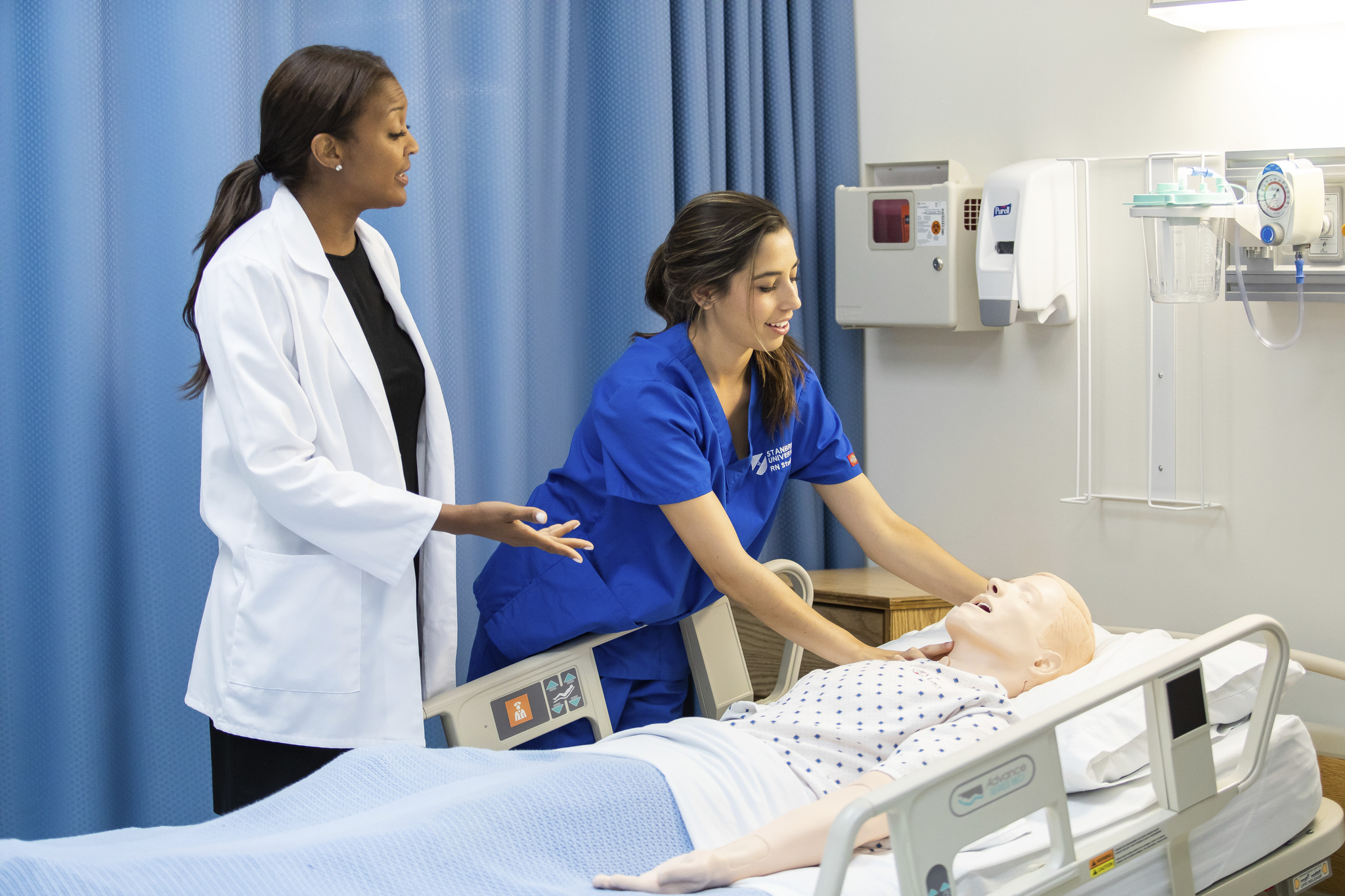
Private schools in California generally fall into two categories: non-profit universities and for-profit (proprietary) colleges. Non-profit institutions, such as the University of San Francisco, Samuel Merritt University, and Mount Saint Mary’s University, often have long-standing reputations and integrated networks with major medical centers. For-profit institutions, like West Coast University or Stanbridge University, often focus heavily on high-tech simulation labs and flexible scheduling to attract working professionals.
Choosing between these types requires a balance of three factors: speed to degree, total cost of attendance, and the reputation of the clinical placements. In 2026, the "California model" of private nursing education emphasizes hybrid learning, where theoretical coursework is completed online while high-fidelity simulation and in-person clinical rotations remain the bedrock of the practical curriculum.
Accreditation: The "Gold Standard" of Verification
Before committing to a private program, a student must verify two distinct types of approval. Without these, the degree may not lead to a license, or it may prevent a nurse from pursuing an advanced degree later.
California Board of Registered Nursing (BRN) Approval
The California BRN is the state agency that governs nursing practice. For a private school to operate a nursing program in California, it must be "BRN Approved." This approval ensures the curriculum meets the state's legal requirements for licensure. If a school loses this approval, its students cannot sit for the NCLEX-RN exam.
National Accreditation (CCNE or ACEN)
While BRN approval is mandatory for state licensure, national accreditation is voluntary but professionally essential. The two primary bodies are the Commission on Collegiate Nursing Education (CCNE) and the Accreditation Commission for Education in Nursing (ACEN).
Most major employers, including the Veterans Affairs (VA) healthcare system and premier magnet hospitals, require nurses to have graduated from a nationally accredited program. Furthermore, if you plan to eventually earn a Master of Science in Nursing (MSN) or a Doctor of Nursing Practice (DNP), almost all reputable graduate schools will only accept credits from CCNE or ACEN accredited undergraduate programs.
Available Degree Pathways in Private Schools
Private institutions in California are particularly adept at offering "alternative" pathways that cater to students who already have some college experience.
1. Traditional Bachelor of Science in Nursing (BSN)
This is the standard four-year degree. Many private colleges allow students to transfer in after completing two years of prerequisites at a community college, effectively making the private portion a two-year "completion" program.
2. Accelerated BSN (ABSN)
Designed for individuals who already hold a bachelor's degree in a non-nursing field, the ABSN is the hallmark of private nursing education in California. These programs are intense, often lasting 12 to 18 months, and require a full-time commitment that usually precludes outside employment.
3. Entry-Level Master of Science in Nursing (ELMSN)
The ELMSN is designed for non-nursing degree holders who want to enter the profession at a higher level. These programs prepare students for the NCLEX-RN while simultaneously providing graduate-level training in leadership, informatics, or clinical nurse leadership. In 2026, ELMSN programs are increasingly popular as they allow students to access graduate-level federal student loans, which have higher borrowing limits than undergraduate loans.
4. LVN-to-BSN
Private schools frequently offer specific bridges for Licensed Vocational Nurses (LVNs) to transition to Registered Nurse (RN) status through a BSN degree. This pathway acknowledges the clinical experience of the LVN and often provides "credit by exam" for certain introductory nursing courses.
The Cost of Education and ROI in 2026
The most significant barrier to private nursing programs is the cost. While a CSU program might cost between $25,000 and $40,000 for the entire nursing portion, a private BSN in California for the 2026 academic year can range from $80,000 to over $160,000.
Students must perform a strict Return on Investment (ROI) calculation. If a private program allows a student to start immediately and graduate two years sooner than a public program (where they might be stuck on a waitlist), the student gains two years of an RN salary—which in California currently averages over $120,000 annually. In many cases, the "opportunity cost" of waiting for a cheaper public seat exceeds the higher tuition of the private school.
Comparing Costs and Features: Public vs. Private (2026 Estimates)
| Feature | Public (CSU/UC) | Private (Non-Profit) | Private (For-Profit) |
|---|---|---|---|
| Annual Tuition | $7,000 – $15,000 | $45,000 – $65,000 | $35,000 – $55,000 |
| Admission Competitive Level | Extreme (GPA 3.8+) | High (GPA 3.2+) | Moderate (GPA 2.75+) |
| Waitlists | Common (1–3 years) | Rare | Virtually None |
| Typical BSN Duration | 2–3 years (Post-Preqs) | 2 years | 1.5 – 2 years |
| Clinical Placements | Established Hospitals | Established Hospitals | Diverse/Varies |
| Financial Aid | State/Federal Grants | Institutional/Federal | Federal/Private Loans |
Clinical Placement Challenges
One of the most complex aspects of California nursing education is the "clinical logjam." There are more nursing students than there are available spots in hospitals for hands-on training.
Private schools handle this in different ways. High-end non-profit universities often have "exclusive" or legacy contracts with specific hospital systems (e.g., Samuel Merritt’s relationship with Sutter Health). For-profit schools may require students to travel further distances—sometimes over 60 miles—to reach a hospital that has an available clinical rotation. When researching a private school in 2026, it is imperative to ask specifically about their clinical placement site locations and whether the school guarantees a spot or if students must find their own (though the latter is rare in BRN-approved programs).
Admission Requirements and Prerequisites
While private schools are generally more accessible than public ones, they are not "open enrollment." They require a rigorous set of science prerequisites, typically including:
- Anatomy & Physiology I & II (with labs)
- Microbiology (with lab)
- General Chemistry (with lab)
- Statistics
- Psychology/Lifespan Development
- Nutrition
Most private programs in 2026 also require an entrance exam, most commonly the TEAS (Test of Essential Academic Skills) or the HESI A2. Scoring in the "Proficient" or "Advanced" range is typically necessary to be considered. Additionally, many schools have adopted holistic admissions, looking at volunteer work, healthcare experience (like working as a CNA or EMT), and personal statements to differentiate candidates.
Identifying Red Flags in Private Programs
Not all private programs are equal. Prospective students should be wary of institutions that exhibit the following:
- Low NCLEX Pass Rates: The BRN publishes annual pass rates. If a school’s first-time pass rate is consistently below 80%, it is a major red flag regarding the quality of instruction.
- Lack of Programmatic Accreditation: As mentioned, if the school is not CCNE or ACEN accredited, proceed with extreme caution.
- High Attrition Rates: Ask what percentage of students who start the program actually graduate. A high "washout" rate may indicate a lack of student support or predatory enrollment practices.
- Hidden Fees: Beyond tuition, nursing school involves expensive "bundles" for uniforms, medical equipment, background checks, simulation lab fees, and NCLEX prep software.
Frequently Asked Questions
Are private nursing schools in California easier to get into?
Generally, yes, in terms of the raw GPA and test score requirements. Public schools in California are overwhelmed by applicants, often rejecting students with 4.0 GPAs. Private schools have more "seats" available relative to their applicant pool, though they still maintain high standards for science prerequisites to ensure students can handle the rigor of the NCLEX.
Can I get financial aid for private nursing programs?
Yes. Students at accredited private nursing schools are eligible for Federal Student Aid (FAFSA), including Pell Grants and Stafford Loans. Many non-profit private universities also offer significant institutional scholarships. However, because the tuition is high, many students must also rely on private student loans or HRSA (Health Resources and Services Administration) nurse corps scholarships, which may offer loan repayment in exchange for working in underserved areas.
How do I check if a private school is legitimate?
The first step is to visit the California BRN website and check the list of "Pre-Licensure Nursing Programs." If the school is not on that list, it is not authorized to prepare you for the RN license in California.
Will hospitals hire me if I go to a for-profit private school?
In California, the "RN" after your name and your license status are the most important factors. However, some prestigious "Magnet" status hospitals or academic medical centers (like Stanford or UCLA Health) may favor graduates from highly-ranked non-profit universities or those with BSNs over ADNs. Most community hospitals and outpatient facilities care primarily about your clinical skills and licensure.
Do private schools offer evening or weekend nursing programs?
Some do. For-profit institutions and some specialized private colleges like National University or West Coast University are more likely to offer "non-traditional" schedules to accommodate working adults. However, even in these programs, clinical rotations may still occur during standard weekday shifts depending on hospital availability.
Final Recommendation for 2026 Applicants
If you are a prospective nursing student in 2026, your first step should be to complete all science prerequisites at a local community college with a grade of "B" or higher. Once completed, apply to a mix of public and private schools simultaneously. If you are accepted into a public program, the cost savings are undeniable. However, if you face waitlists or rejections, a BRN-approved and CCNE-accredited private program is a viable and often strategic investment that allows you to enter the high-paying California nursing workforce years sooner than you otherwise might. Always verify the most recent NCLEX pass rates for any institution before signing a tuition contract.
Image Gallery