How to Read Bourbon Abbreviations on Labels: A Guide to Decoding Whiskey Shorthand
Bourbon label abbreviations represent a mix of federal legal designations mandated by the Alcohol and Tobacco Tax and Trade Bureau (TTB), production metrics, and enthusiast shorthand. Decoding terms like BiB, KSBW, NCF, CS, and DSP all...
Bourbon label abbreviations represent a mix of federal legal designations mandated by the Alcohol and Tobacco Tax and Trade Bureau (TTB), production metrics, and enthusiast shorthand. Decoding terms like BiB, KSBW, NCF, CS, and DSP allows buyers to instantly verify a whiskey's origin, true age, distillation proof, and filtering process directly from the front or back label.
Contents
The Anatomy of a Bourbon Label: Legal vs. Industry Acronyms
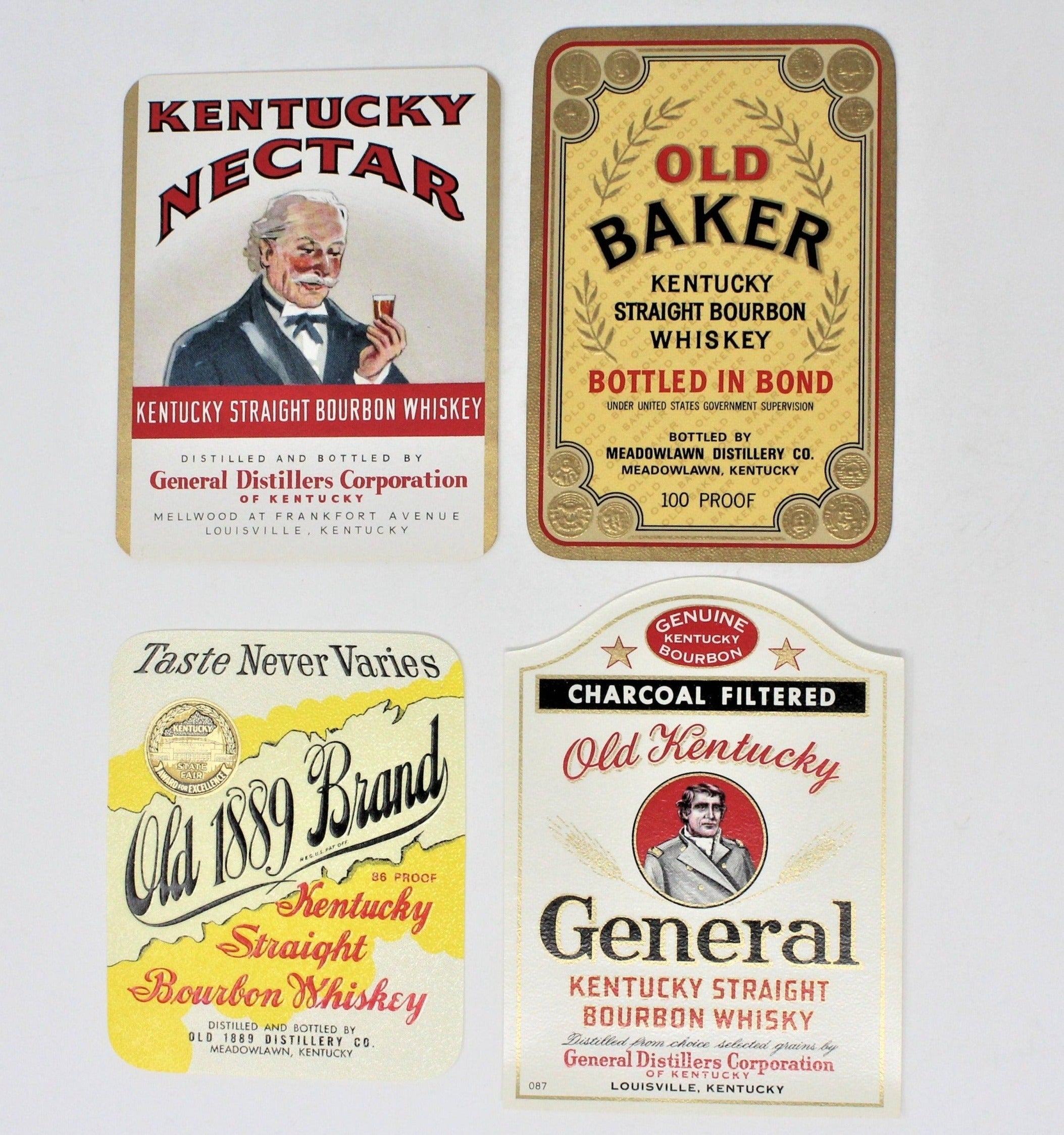
Reading a bourbon label requires distinguishing between legally regulated designations and unofficial distillery shorthand. In the United States, American whiskey labeling is governed under Title 27 of the Code of Federal Regulations (27 CFR Part 5). Terms governed by these regulations carry strict legal definitions. Distillers cannot print designations like "Bottled-in-Bond" or "Straight Bourbon" unless the spirit meets exact standards regarding mash bill, aging duration, proof, and barrel type.
Concurrently, the whiskey market relies heavily on industry acronyms and consumer shorthand that do not always appear in federal code. Abbreviations such as NCF (Non-Chill Filtered) or CS (Cask Strength) describe production techniques that inform flavor and texture, yet their definitions stem from traditional trade practices rather than statutory code.
Understanding both categories protects buyers from misleading marketing language. Fancy lettering and descriptive text on a bottle front can obscure the fact that a brand is non-distiller produced (NDP) or aged for a minimal duration. By learning to decode standardized legal abbreviations along with production shorthand, consumers can evaluate the actual contents of any bottle on the shelf.
Official TTB and Federal Standard Abbreviations
Federal regulations mandate precise disclosures regarding a spirit’s class, type, and origin. These designations are monitored by the Alcohol and Tobacco Tax and Trade Bureau (TTB), which approves every commercial label through a Certificate of Label Approval (COLA).
Front/Back Label:
- KSBW: Kentucky Straight Bourbon Whiskey
- BiB: Bottled-in-Bond (100 Proof, 4 Yrs Min)
- DSP: Distilled Spirits Plant Registry ID
KSBW (Kentucky Straight Bourbon Whiskey)
The abbreviation KSBW combines three legal criteria defined under federal standards of identity:
- Kentucky: The whiskey must be distilled and aged for at least one year within the state of Kentucky to bear the state name.
- Straight: The whiskey has been aged in new charred oak containers for two years or more, produced without added colors, flavorings, or neutral spirits.
- Bourbon Whiskey: The mash bill contains at least 51% corn, distilled to no more than 160 proof (80% ABV), and entered into the barrel at no higher than 125 proof (62.5% ABV).
If a bourbon is aged for less than four years, federal law requires an explicit age statement on the label (e.g., "Aged 3 Years"). If a label reads KSBW without an age statement, the youngest whiskey in the bottle is legally guaranteed to be at least four years old.
BiB (Bottled-in-Bond) / Bonded
Originating from the Bottled-in-Bond Act of 1897, BiB (or "Bonded") is one of the most stringent quality designations in the spirits industry. To bear the BiB moniker, the bourbon must satisfy five statutory conditions under 27 CFR § 5.145:
- Be the product of a single distillation season by a single distiller at a single distillery (either Spring: Jan–June, or Fall: July–Dec).
- Aged for a minimum of four years in a federally bonded warehouse.
- Bottled at exactly 100 proof (50% ABV).
- Disclose the plant number (DSP) where it was distilled and, if different, where it was bottled.
- Contain no added substances other than pure water to adjust proof.
DSP (Distilled Spirits Plant)
Every legal distillery and bottling plant in the United States is assigned a DSP registration number by the federal government. Printed on the back label or neck strip, this code consists of a state abbreviation and a unique numeric identifier (e.g., DSP-KY-1 or DSP-IN-15016).
The prefix reveals the plant's operational role:
- DSP-KY-XX (Distillery): Denotes a registered distilling facility.
- DSP-KY-XXXX (Bottling Plant): Indicates a facility registered primarily for warehousing or packaging.
Searching a bottle’s DSP code reveals exactly where the liquid was cooked and distilled, exposing whether a brand distills its own whiskey or sources it from a contract producer.
Proof, Filtration, and Processing Acronyms
Beyond class and type specifications, producers use technical shorthand to indicate how the whiskey was treated after leaving the wooden barrel.
| Abbreviation | Description |
|---|---|
| CS / BP | Cask Strength / Barrel Proof (Uncut with water) |
| NCF | Non-Chill Filtered (Preserves natural fatty acids) |
| NAS | No Age Statement (Default legal minimums apply) |
| ABV | Alcohol By Volume (50% ABV = 100 Proof) |
CS / BP (Cask Strength / Barrel Proof)
CS (Cask Strength) and BP (Barrel Proof) indicate that the spirit was not diluted with water prior to bottling. When whiskey ages in wooden barrels, water and alcohol evaporate at varying rates depending on ambient humidity and temperature, causing the barrel's proof to drift from its original entry level.
Bottling at cask strength delivers the whiskey at its natural barrel exit proof—often ranging between 110 and 135 proof (55% to 67.5% ABV). TTB rules permit a minor tolerance (up to 1 proof point lower than the actual cask exit proof) to account for natural variations during bottling.
NCF (Non-Chill Filtered)
Chill filtration is a cosmetic process where whiskey is cooled to near-freezing temperatures (around 28°F to 32°F / -2°C to 0°C) and passed through fine paper or metallic membranes. This removes long-chain fatty acids, esters, and proteins that can precipitate out of solution and cause "chill haze" when ice or cold water is added to the glass.
However, many enthusiasts prefer NCF (Non-Chill Filtered) bourbon because those lipids and organic compounds contribute rich mouthfeel, oily viscosity, and complex flavor components. A bottle labeled NCF retains these natural compounds, though it may cloud slightly when exposed to cold temperatures or ice.
NAS (No Age Statement)
NAS is an industry term used by evaluators and consumers rather than a statement printed directly on the front label. When a straight bourbon lacks an age statement, federal law guarantees that the spirit is at least four years old. If a non-straight bourbon or a blended whiskey lacks an age statement, the legal minimums vary, but straight whiskies under four years must display their exact age (e.g., "Aged 2 Years and 6 Months").
When distilleries remove an age statement from a established brand line—moving it to NAS status—it typically signals that younger whiskies are being blended into the vatting to meet supply demands.
Cask Selection and Bottling Shorthand
The methods used to vat, finish, or isolate individual barrels lead to several distinct abbreviations across store picks, limited releases, and craft offerings.
SiB vs. SB: Avoiding a Common Confusion
One of the most frequent points of confusion on retail shelves is the acronym SB, which can refer to two entirely different concepts depending on context:
| Acronym | Term | Legal Standard | Meaning |
|---|---|---|---|
| SB | Straight Bourbon | Yes (27 CFR § 5.143) | Aged $\ge 2$ years in new charred oak; zero additives; distilled $\le 160$ proof. |
| SiB (or SB) | Single Barrel | Industry Standard | The bottle originates from one individual cask, without blending across barrels. |
To prevent misinterpretation, the industry increasingly uses SiB to designate Single Barrel releases, reserving SB for Straight Bourbon. A Single Barrel release reflects the unique microclimate, warehouse location, and wood composition of one specific cask, meaning bottle-to-bottle variation is expected.
FB (Finished Bourbon) and Secondary Cask Codes
Finished bourbons spend their primary maturation time in new charred oak barrels before being transferred into a secondary vessel for additional months or years. Labels frequently abbreviate secondary cask treatments:
- PX: Pedro Ximénez Sherry Cask Finish
- Olo: Oloroso Sherry Cask Finish
- Port / TF: Port Wine Finish / Tawny Port Finish
- RUM / C&R: Caribbean Rum Cask Finish
- CF / Cognac: Cognac Cask Finish
Federal rules dictate that finished bourbons can no longer be labeled simply as "Bourbon Whiskey" without qualification. Instead, the TTB requires a statement of class and type such as "Straight Bourbon Whiskey Finished in Port Wine Casks" or "Bourbon Whiskey with Natural Flavors Added."
Master Decoder Table: Bourbon Acronyms Quick Reference
Use this reference table to look up acronyms found on bottle labels, neck tags, retailer spec sheets, and barrel selection placards.
| Abbreviation | Full Name | Category | Primary Significance / Legal Requirement |
|---|---|---|---|
| ABV | Alcohol By Volume | Measurement | Standard measure of ethanol concentration; half of the US Proof number. |
| BiB | Bottled-in-Bond | Regulatory | 100 Proof, aged $\ge 4$ years, 1 distillery, 1 season, federal warehouse. |
| BP | Barrel Proof | Processing | Uncut with water before bottling; reflects natural cask exit strength. |
| CS | Cask Strength | Processing | Equivalent to Barrel Proof; bottled at true barrel strength. |
| DSP | Distilled Spirits Plant | Regulatory | Assigned federal license number showing exact production/bottling site. |
| FB | Finished Bourbon | Processing | Aged in new charred oak, then secondary-matured in wine/spirit casks. |
| KSBW | Kentucky Straight Bourbon Whiskey | Regulatory | Aged $\ge 2$ years in KY; no additives; meets straight bourbon standards. |
| MGP | Midwest Grain Products | Producer/Source | Major Indiana contract distillery (formerly LGP/Seagrams plant in Lawrenceburg). |
| NAS | No Age Statement | Industry Term | Implies the whiskey is $\ge 4$ years old if labeled as "Straight" without age. |
| NCF | Non-Chill Filtered | Processing | Retains natural lipids/esters for fuller mouthfeel; may cloud when cold. |
| NDP | Non-Distiller Producer | Business Structure | Brand owner who sources whiskey from another producer rather than distilling. |
| OB | Official Bottling | Industry Term | Bottled by the distillery that produced the liquid (versus an independent bottler). |
| Proof | Spirit Strength | Measurement | Numerical value equal to twice the ABV percentage (e.g., 90 Proof = 45% ABV). |
| SB | Straight Bourbon | Regulatory | Aged $\ge 2$ years in new charred oak; zero colorings or additives. |
| SiB | Single Barrel | Production Method | Bottled from a single isolated cask without blending from other barrels. |
Sourced Whiskey and Producer Abbreviations
When shopping for independent bottlings or merchant brands, consumer-facing descriptions often utilize producer acronyms to identify the original source of the spirit.
Sourced & Brand Producers:
- MGP / Ross & Squibb: Lawrenceburg, Indiana
- BT: Buffalo Trace Distillery
- HH: Heaven Hill Distillery
- 4R: Four Roses Distillery
MGP (Midwest Grain Products)
Located in Lawrenceburg, Indiana, MGP (formerly known as LGP and historic Seagram's Lawrenceburg facility, currently operating its distilling arm under Ross & Squibb) is one of the largest merchant distillers in North America. Brands that source their whiskey from MGP may state "Distilled in Indiana" on the back label. MGP is renowned for its high-rye bourbon mash bills (such as 60% corn, 36% rye, 4% malted barley) and signature 95% rye mash bill.
Common Distillery Acronyms on Spec Sheets
While rarely printed on official front labels due to trademark rules, secondary market listings, retailer selection tags, and review sites use standardized acronyms for heritage distillers:
- BT: Buffalo Trace Distillery (Frankfort, KY — DSP-KY-113)
- HH: Heaven Hill Distillery (Bardstown/Louisville, KY — DSP-KY-31 / DSP-KY-1)
- 4R: Four Roses Distillery (Lawrenceburg, KY — DSP-KY-377)
- WT / WTR: Wild Turkey Distillery (Lawrenceburg, KY — DSP-KY-14)
- OF: Old Forester / Brown-Forman (Louisville, KY — DSP-KY-354)
- JB: Jim Beam / Beam Suntory (Clermont, KY — DSP-KY-230)
How to Trace a Bottle Using the DSP Number
The most accurate way to verify who distilled a bourbon is to read the mandatory federal registry details. 27 CFR § 5.66 requires every domestic spirit label to state the name and address of the producer or bottler, often accompanied by their assigned DSP.
To trace a mystery bottle or verify whether a brand is an NDP (Non-Distiller Producer):
- Locate the Fine Print: Inspect the back label, bottom perimeter, or tax strip for text reading "Distilled by," "Produced by," or "Bottled by."
- Analyze the Verbiage:
- "Distilled by [Company]": The brand named on the front actually cooked, fermented, and distilled the liquid at that location.
- "Produced and Bottled by": Indicates the company performed some processing (which can legally mean simply dumping barrels or filtering), but did not necessarily distill the base spirit.
- "Bottled by": Clear indicator of a Non-Distiller Producer (NDP). The liquid was sourced elsewhere and packaged at the listed facility.
- Cross-Reference the DSP: Take the state and number code (e.g.,
DSP-IN-15016) and check it against the published active registry database provided by the federal TTB. A plant code originating in Indiana, for example, points back to major merchant facilities like MGP, while codes from Kentucky or Tennessee link directly to heritage regional distillers.
Common Label Pitfalls and Marketing Misconceptions
Understanding whiskey shorthand helps buyers avoid common marketing traps that mimic legal designations without meeting their strict standards.
"Small Batch" Has No Legal Definition
Unlike Bottled-in-Bond or Straight Bourbon, the term Small Batch carries no regulatory definition under TTB guidelines. A distillery can label a release as "Small Batch" whether it combines two barrels or two thousand barrels. Without supporting details printed on the label (such as precise barrel counts or dump dates), the phrase functions purely as marketing narrative.
Misinterpreting Age Statements on Blended Bourbons
When a label lists multiple age components or represents a blend of straight bourbons (e.g., a mix of 4-year, 6-year, and 10-year barrels), federal law mandates that any age statement on the bottle must reflect the age of the youngest spirit in the blend.
For instance, if a master blender combines 95% ten-year-old bourbon with 5% three-year-old bourbon, the label cannot legally say "Aged 10 Years." It must state "Aged 3 Years" or explicitly list the ages of all constituent components.
"Handcrafted" and "Artisanal"
Descriptive words like Handcrafted, Artisanal, Small-Scale, or Old-Style have zero legal standing under 27 CFR Part 5. They do not guarantee manual processing, copper pot distillation, or traditional aging practices. Always bypass descriptive claims on the front label and evaluate the factual shorthand on the back label: proof, age, mash bill, and DSP facility number.
Frequently Asked Questions
What does BiB mean on a bourbon label?
BiB stands for Bottled-in-Bond. It guarantees the bourbon was made by one distiller at one distillery in a single distilling season, aged for at least four years in a federally bonded warehouse, and bottled at exactly 100 proof (50% ABV) under federal supervision.
What is the difference between SB and SiB?
SB legally stands for Straight Bourbon, meaning the whiskey was aged for at least two years in new charred oak barrels with no additives. SiB is industry shorthand for Single Barrel, meaning all liquid in that bottle came from one individual barrel rather than a blend of multiple casks.
Does NAS mean a bourbon is low quality?
No. NAS simply means No Age Statement. If the label states "Straight Bourbon Whiskey" without an age, federal law guarantees the youngest component is at least four years old. Many world-class barrel-strength and small-batch bourbons omit explicit age numbers to give blenders flexibility in maintaining a consistent flavor profile.
Why does a bottle say "Distilled in Indiana" if it’s a Kentucky brand?
When a brand's label states "Distilled in Indiana" (or another state outside its home office), the brand owner is a Non-Distiller Producer (NDP). They source their base whiskey from a contract distillery (such as MGP in Lawrenceburg, Indiana) and bottle or age it under their own private label.
What does NCF stand for, and how does it affect taste?
NCF stands for Non-Chill Filtered. Skipping the chill-filtration process leaves natural fatty acids, esters, and proteins inside the whiskey. This preserves a heavier, oilier mouthfeel and fuller flavor profile, though the whiskey may turn slightly cloudy if served over ice or exposed to cold temperatures.
How can I find out where my bourbon was actually distilled?
Check the back label for the phrase "Distilled by" followed by the city and state, or look for the assigned DSP (Distilled Spirits Plant) registry number. If the label only says "Bottled by" or "Vatted by," the brand sourced the whiskey from an outside producer rather than distilling it in-house.
Practical Action: Decoding Your Next Bottle
To evaluate any bottle of bourbon on a retail shelf or in a collection:
- Check the front label class: Verify whether it says Straight Bourbon (SB) or Kentucky Straight Bourbon Whiskey (KSBW).
- Inspect the proof metrics: Look for CS or BP (Cask Strength / Barrel Proof) for uncut releases, or BiB for standardized 100-proof quality.
- Review post-barrel processing: Look for NCF (Non-Chill Filtered) if rich mouthfeel and natural body are priorities.
- Turn to the back label fine print: Read the exact "Distilled by" wording and note the DSP number to confirm whether the liquid was distilled in-house or sourced from a contract producer.
Image Gallery