What Changed for Airport Security at London Heathrow: New Rules, CT Scanners, and Passenger Guidance
Airport security at London Heathrow has undergone its most significant technological transformation in decades, centered on replacing legacy 2D X-ray systems with advanced 3D Computerised Tomography (CT) security scanners. These upgrad...
Airport security at London Heathrow has undergone its most significant technological transformation in decades, centered on replacing legacy 2D X-ray systems with advanced 3D Computerised Tomography (CT) security scanners. These upgrades allow passengers in equipped security lanes to leave electronics and liquids inside cabin bags while raising the potential liquid container limit to 2 litres.
Contents
- Cabin Luggage
- Legacy 2D X-Ray Lane
- Laptops removed
- Liquids in 100ml containers
- 1L clear plastic bag required
- New 3D CT Scanner Lane
- Laptops stay inside
- Liquids stay inside
- Up to 2L container capacity*
- Legacy 2D X-Ray Lane
- Passenger Body Scanner / MWD
- Secure Airside Zone
* Note: Operational limits may still require 100ml compliance depending on terminal deployment and regulatory directives.
The Core Transformation: Next-Generation 3D CT Scanners
The fundamental driver of change at London Heathrow security checkpoints is the transition from conventional 2D X-ray equipment to high-definition 3D Computerised Tomography (CT) scanners. For nearly two decades, aviation security protocols relied on flat-panel 2D imaging, which required security officers to view overlapping items from a single top-down perspective. This limitation mandated the separation of dense electronic devices and liquids into individual trays to prevent items from obscuring potential threats.
CT security scanners adapt medical-grade imaging technology for aviation security. As a carry-on bag enters the scanner, a rotating gantry spins an X-ray source around the bag, taking thousands of individual images per second. Sophisticated algorithms compile these scans into a high-resolution, three-dimensional volumetric image.
Security screeners can rotate the digital image 360 degrees on all axes, zoom in on suspicious components, slice through layers of contents, and automatically evaluate material densities using explosive detection algorithms.
How CT Scanners Work:
- X-Ray Source
- Rotates 360° around bag
- Detector
- Result: Thousands of 2D slices combined into a high-res 3D volumetric image with auto-threat detection.
Elimination of Electronics and Liquid Removal
The primary operational benefit of CT technology is the elimination of manual unpacking at the security belt. Under the legacy system, passengers spent a significant portion of their processing time opening bags, removing laptops, tablets, and cameras, and placing liquid items into clear, resealable plastic bags.
With C3-standard CT scanners (the security baseline mandated by European and UK aviation authorities), the software's advanced threat detection capabilities evaluate dense electrical components and complex chemical compounds inside the bag. Consequently, passengers no longer need to separate electronics or remove compliant liquid containers from their main carry-on luggage, streamlining the physical preparation phase at the security lane.
Liquid Limits and Electronics Rules: Current Status at Heathrow
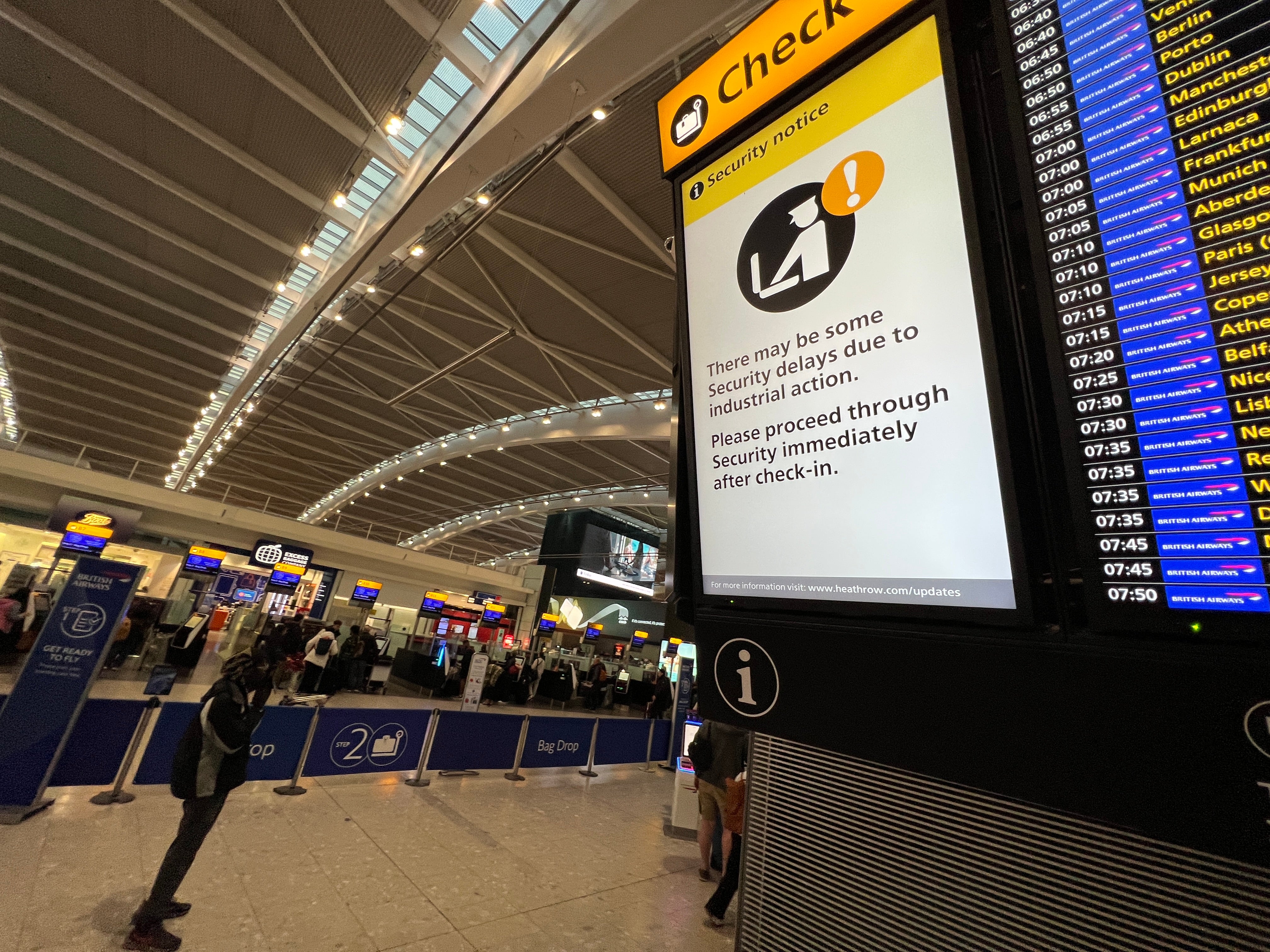
While the technological capability of C3 scanners permits liquid containers of up to 2 litres (2,000ml) in carry-on baggage, the operational reality for passengers traveling through London Heathrow requires careful navigation of transitioning rules.
| Security Standard | Container Limit | Packing Condition |
|---|---|---|
| Legacy Rules | Max 100ml per item | Must fit in 1L bag |
| Full CT Capability | Max 2,000ml per item | Can stay inside luggage |
The Up-to-2-Litre Rule vs. Operational Realities
Under updated UK Department for Transport (DfT) regulatory frameworks, airports that have fully deployed C3 CT technology across 100% of their passenger screening lanes are authorized to lift the legacy 100ml limit, allowing individual liquid containers up to 2 litres.
However, because London Heathrow is one of the world's busiest international hubs—operating 140 screening lanes across four active passenger terminals (Terminal 2, Terminal 3, Terminal 4, and Terminal 5)—the physical installation of these heavy, large-scale systems has been rolled out in phases.
Why the 100ml Liquid Limit Persisted During Rollout
During the multi-year installation program, airports operating a mix of older 2D scanners and newer 3D CT scanners faced operational friction. If passengers prepared bags according to the new 2L rule but were directed to a legacy screening lane during peak queue management, their oversized liquids had to be confiscated under existing regulations.
To maintain security consistency and prevent passenger confusion, the UK Department for Transport issued interim directives requiring airports to maintain or temporarily re-impose the 100ml container limit until full fleet conversion was completed across all lanes. As a result, even where 3D scanners are operational, Heathrow passengers are frequently advised to keep liquid containers within 100ml limits unless explicitly instructed otherwise by airport staff in designated lanes.
What You Can Keep Inside Your Hand Luggage
Where C3 CT scanner lanes are fully active at Heathrow, the physical preparation routine changes markedly:
- Laptops and Tablets: Must remain inside your main carry-on bag or backpack.
- Large Electronics: Devices such as games consoles, cameras, hair straighteners, and power banks remain inside your luggage.
- Liquids, Aerosols, and Gels (LAGs): Can remain packed within your luggage rather than extracted into a separate plastic bag (subject to the container size rules enforced at the specific terminal checkpoint).
- CPAP Machines and Medical Equipment: Medical devices stay inside their protective cases unless secondary screening is triggered.
Terminal-by-Terminal Rollout and Technical Challenges
Upgrading London Heathrow’s security infrastructure is one of the largest engineering projects undertaken in modern airport operations. Installing new CT scanners involves far more than swapping old machines for new ones.
| Terminal | Airline / Flight Types |
|---|---|
| Terminal 2 | Star Alliance |
| Terminal 3 | Oneworld / Long-Haul |
| Terminal 4 | SkyTeam / Independent |
| Terminal 5 | British Airways / Iberia |
Terminal 2 (The Queen's Terminal) and Terminal 3
Terminal 2 and Terminal 3 serve dozens of international airlines, including Star Alliance and Oneworld carriers. The security footprints in these terminals comprise high-volume central search areas designed in the late 2000s and mid-2000s. Retrofitting these spaces required extensive civil engineering, including structural floor reinforcement.
A single C3 CT scanner can weigh up to five times more than a standard 2D X-ray unit. As a result, sub-floor steel supports had to be installed beneath the security halls to distribute the structural load safely.
Terminal 4 and Terminal 5 Deployment
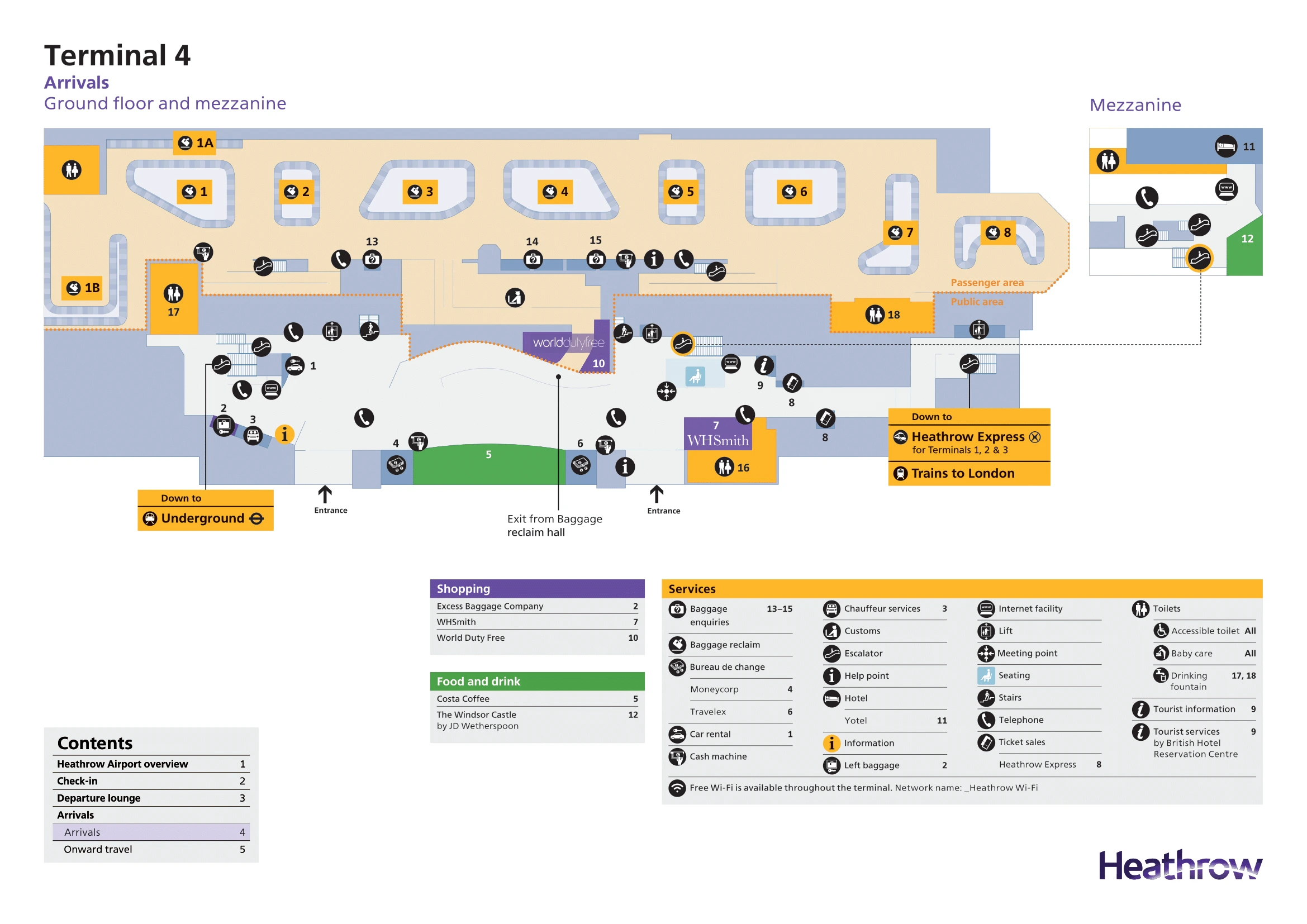
Terminal 5, Heathrow’s largest single terminal complex serving British Airways and Iberia, handles tens of millions of passengers annually across its Main Building (T5A) and satellite buildings (T5B and T5C). Installing CT scanners across T5 required a staggered, lane-by-lane replacement strategy to prevent massive bottlenecks during peak departure waves.
Terminal 4 faced similar spatial constraints, requiring custom conveyor lane configurations to fit the larger physical footprint of the CT scanners and their integrated automatic tray return systems (ATRS).
Engineering Hurdles: Structural Loads and Operational Footprints
Beyond structural floor capacity, integrating CT technology presented two major technical challenges:
- Power and HVAC Upgrades: CT scanners consume substantially more electrical power and generate higher operational heat than legacy static X-ray tubes. Heathrow’s engineering teams had to run new high-voltage sub-station feeds and expand air-conditioning systems within enclosed security halls.
- Conveyor and ATRS Integration: Modern C3 lanes utilize longer, automated tray return lines to handle higher passenger throughput. Redesigning lane layouts required reallocating terminal floor space, taking adjacent administrative offices or queue lines out of service to accommodate the wider footprints.
Timeline of UK Security Mandates: From 2022 to the Present
The transition to CT scanning at London Heathrow forms part of a broader UK government initiative to modernize national border and transport security.
Timeline of Mandates & Rollout:
- Dec 2022: UK DfT announces mandate for C3 CT technology across major airports.
- Mid 2024: Initial deadline extended due to supply chain and floor load challenges.
- Jun 2024: DfT temporarily re-instates 100ml limit across UK airports for consistency.
- Ongoing: Full fleet deployment completed across Heathrow terminals.
The Department for Transport (DfT) C3 Security Mandate
In December 2022, the UK Department for Transport formally mandated that all major UK airports operating high passenger volumes replace their conventional security screening equipment with C3-standard CT technology. The original statutory deadline was set for June 2024.
The policy objective was twofold: dramatically reduce security queue times by speeding up lane processing, and enhance aviation security using advanced automated threat recognition software capable of identifying liquid-based explosives and weapons.
The June 2024 Interim Policy Adjustments
By early 2024, several major UK hubs—including Heathrow, London Gatwick, Manchester, and London Stansted—reported that global supply chain shortages, structural engineering complexities, and equipment manufacturing lead times made meeting the June 2024 deadline across 100% of lanes unfeasible. The government granted regulatory extensions on a case-by-case basis.
In June 2024, to prevent passenger confusion resulting from mixed rules across different UK airports and terminals, the DfT temporarily re-instated the requirement for all passengers to restrict liquid containers to 100ml or less. This rule remained in effect as airport operators finalized their full equipment installations, safety approvals, and screener training protocols.
Global Harmonization Standards
The UK’s security equipment transition aligns with broader international standards set by the European Civil Aviation Conference (ECAC) and the U.S. Transportation Security Administration (TSA). However, because implementation timelines vary worldwide, regulatory bodies like the UK DfT and international air transport associations must continuously adjust guidance to prevent disruptions for multi-leg global journeys.
Comparing Heathrow Security: Old Guidelines vs. New CT Protocols
The operational differences between legacy screening procedures and the new CT scanner environment at London Heathrow are highlighted in the comparison table below:
| Security Factor | Legacy 2D X-Ray Lanes | New 3D CT Scanner Lanes |
|---|---|---|
| Laptops & Large Electronics | Must be removed from bags and placed in separate trays | Stay inside carry-on luggage |
| Liquid Container Maximum | Strictly 100ml per individual container | Up to 2,000ml (2 Litres) where fully operational* |
| Liquid Storage Requirement | Must fit in a single 1-litre transparent, resealable bag | Stays packed inside main carry-on luggage |
| Imaging Technology | Dual-view static 2D X-ray projection | 360-degree high-definition volumetric 3D scan |
| Threat Detection | Manual screener interpretation + basic software alerts | Automated Explosives Detection Systems (AEDS) algorithm |
| Passenger Processing Time | Slower (high manual unpacking/re-packing time) | Faster (reduced tray loading times per passenger) |
| Secondary Inspection Rate | Higher false-positive rates due to item overlap | Lower reject rate; clearer spatial separation of items |
*Note: Always verify current terminal-specific liquid container limits prior to travel, as temporary regulatory caps or ongoing software testing may require compliance with 100ml container rules.
The Outbound Destination Risk: Return Flight Considerations
Even as London Heathrow completes its transition to C3 CT security lanes, outbound travelers face a significant trap when packing for round-trip international flights: asymmetric global adoption of CT technology.
- Heathrow Outbound
- 3D CT Scanner Active
- 2L Container Permitted (if local rule)
- Liquids Stay in Bag
- Destination Return
- Legacy 2D X-Ray Scanner Still in Use
- Strictly 100ml Limit Enforced
- Must Pack in 1L Clear Bag
RESULT: Oversized liquids passed at Heathrow will be CONFISCATED on the return flight!
Asymmetric Global Upgrades
While major aviation hubs across the UK, the European Union, the United States, and parts of the Middle East are installing CT scanners, hundreds of international airports continue to rely strictly on legacy 2D X-ray machines.
If a traveler departs from Heathrow carrying a 250ml bottle of perfume or a 500ml water container in their hand luggage, that item will pass screening at Heathrow's CT checkpoint. However, upon arriving at a destination airport for their return flight, local security officers using legacy 2D scanners will confiscate any liquid container exceeding 100ml.
Managing Transfer and Transit Security Points
A similar risk applies to connecting passengers. If you book an itinerary that involves changing planes at an intermediate hub (for example, transferring at a European or Asian airport to a secondary destination), you may have to clear flight-connections security.
If the transit airport has not fully upgraded its screening lanes to C3 CT standards, any liquids over 100ml purchased outside the secure duty-free network—or carried through Heathrow security—will be seized at the transfer checkpoint.
Step-by-Step Travel Guide: Passing Security at Heathrow Efficiently
To ensure a smooth journey through London Heathrow’s security search areas, follow these step-by-step preparation guidelines:
- Step 1: Check Guidelines
- Step 2: Smart Packing
- Step 3: Pocket Clearance
- Step 4: Scanner Conveyor
- Step 5: Boarding Gate
Step 1: Verify Terminal Guidelines Pre-Departure
Before leaving for Heathrow, check your flight's departing terminal (T2, T3, T4, or T5). Review the current liquid rules published on the official Heathrow Airport portal, as operational directives can change based on regulatory updates.
Step 2: Pack Smartly
Even if departing from a CT-equipped terminal, pack your liquids in an easily accessible compartment. Keep individual containers under 100ml whenever possible, especially if you are taking a return flight or connecting at an overseas airport.
Step 3: Prepare at the Lane Outer Queue
As you approach the security lanes:
- Remove your coat, jacket, hat, and heavy outerwear.
- Empty all contents from your pockets, including keys, coins, phones, and paper tissues.
- Take off wide metal belts or heavy jewelry.
- Keep your passport and boarding pass in your hand or stow them inside your bag (do not place loose paper documents in security trays where they can blow away).
Step 4: Loading the Security Trays
Place your main cabin bag flat in the tray. If instructed by security officers in a CT lane:
- Leave electronics inside your bag. Laptops, tablets, and e-readers remain packed.
- Leave compliant liquids inside your bag.
- Place your coat, shoes (if requested), and pocket contents in a second tray or alongside your bag as directed.
- Push your tray fully onto the automated conveyor belt.
Step 5: Passing Through Body Screening
Walk through the Archway Metal Detector (AMD) or step into the Security Scanner (Body Scanner) when instructed by the security officer. If selected for secondary screening:
- Stand on the footprints marked on the scanner floor and raise your arms above your head.
- Follow officer instructions if a swab test for explosive trace detection (ETD) or a manual pat-down is required.
Frequently Asked Questions
Do I still need to take my laptop out of my bag at London Heathrow?
In terminals and lanes where new 3D CT scanners are operational, you do not need to remove laptops, tablets, or other large electronics from your cabin bag. The scanner creates a 3D volumetric image that allows security personnel to inspect electronic components clearly from all angles while still inside your luggage. Always follow lane-specific instructions provided by Heathrow security staff.
Can I bring liquid containers larger than 100ml through security at Heathrow?
Although C3-standard CT scanners are designed to process liquid containers up to 2 litres, operational rules can vary. The UK Department for Transport has periodically issued interim directives requiring airports to enforce the 100ml limit during phased technology rollouts. Furthermore, containers larger than 100ml may be confiscated on your return flight if your origin airport does not have matching CT technology. Checking official airport guidance prior to travel is strongly recommended.
What happens if I transfer between terminals at London Heathrow?
If you arrive on a flight and transfer to another terminal at Heathrow, you must pass through Flight Connections security at your departing terminal. Flight Connections security lanes are being upgraded to CT scanner standards on the same schedule as main terminal entry checkpoints. If carrying liquids purchased at your origin airport, ensure they are sealed inside an official Security Tamper-Evident Bag (STEB) with the receipt visible.
Do clear plastic liquid bags still need to be presented separately?
In lanes equipped with operational C3 CT scanners, liquids no longer need to be removed from your main bag or placed in a separate 1-litre transparent plastic bag. However, if you are routed through a legacy screening lane during peak periods or operational maintenance, you must still present liquids in individual containers of 100ml or less within a single clear plastic bag.
What are the rules for return flights back to Heathrow from international airports?
Security rules at your destination airport depend entirely on local regulations and technology. Many overseas airports still use 2D X-ray systems that strictly enforce the 100ml liquid container maximum and require electronics to be removed from bags. If you carry containers over 100ml through Heathrow on your outbound journey, you will not be permitted to carry them through security on your return trip.
Practical Recommendations for Passengers
To navigate Heathrow Airport security efficiently under the updated guidelines, follow these three core actions:
- Adopt a Conservative Liquid Packing Strategy: Pack liquids in containers of 100ml or less inside your carry-on luggage unless absolutely necessary. This guarantees compliance at Heathrow, safeguards you against sudden regulatory updates, and ensures your items pass screening at your return destination.
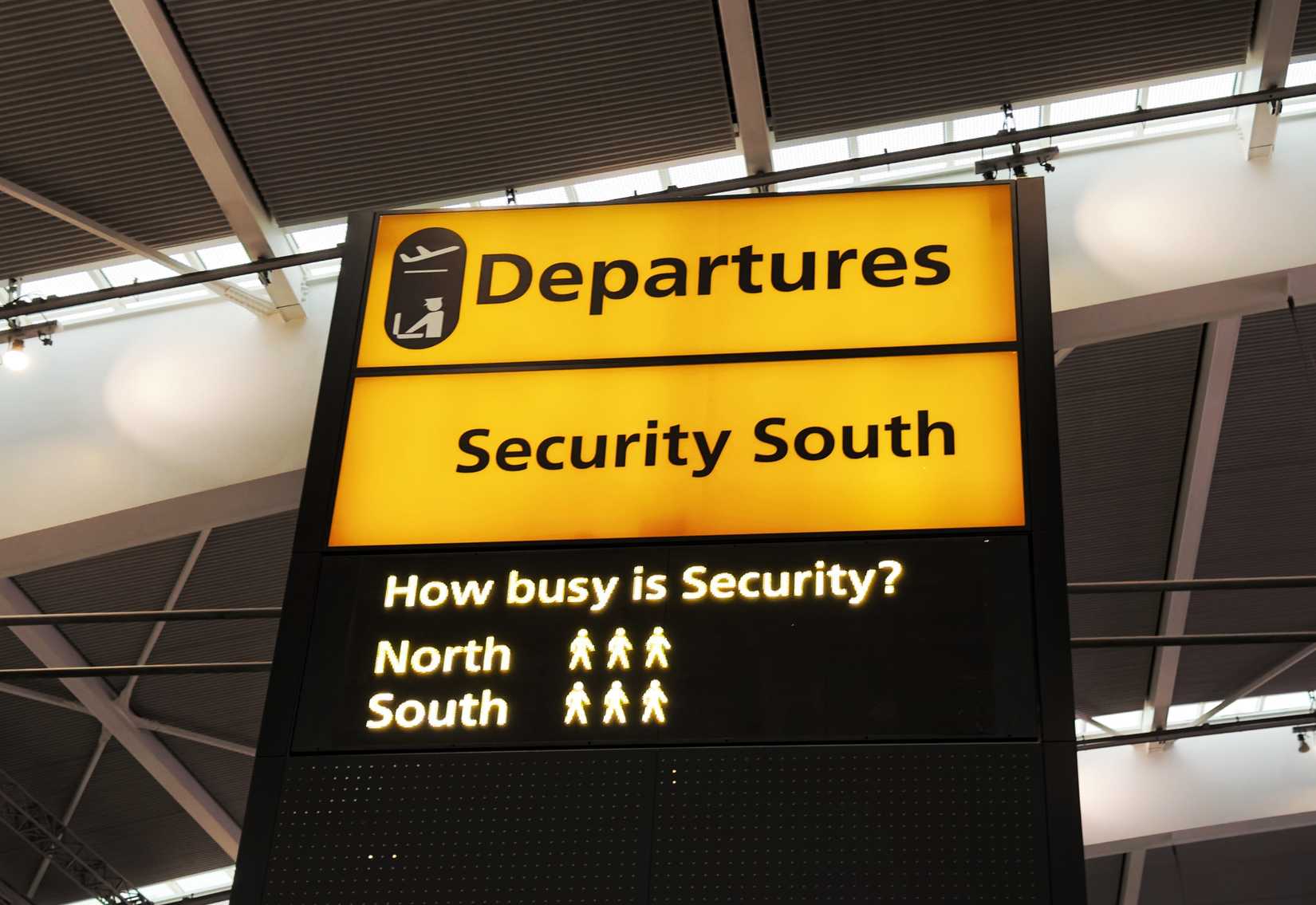
- Follow Lane-Specific Floor Signage and Staff Directives: Because Heathrow operates a massive security infrastructure, rules can differ between individual lanes within the same terminal hall during ongoing maintenance or software updates. Listen to security ambassadors at the front of the queue and follow their specific instructions regarding electronics and liquids.
- Check Destination Security Capabilities: Before packing large liquid items or specialized gear for your return journey, check the official website of your return airport to verify whether they require liquids to be in 100ml containers and packed in clear plastic bags.
Image Gallery