Kim Raisner in the World of Sports: Legacy, Controversy, and the Evolution of Modern Pentathlon
Kim Raisner is a former Olympic modern pentathlete and coach whose career became a defining point of transition for her sport following the Tokyo 2020 Olympic Games. While she was once celebrated as a premier athlete and national coach...
Kim Raisner is a former Olympic modern pentathlete and coach whose career became a defining point of transition for her sport following the Tokyo 2020 Olympic Games. While she was once celebrated as a premier athlete and national coach for Germany, her involvement in a 2021 animal welfare incident led to her disqualification and acted as a primary catalyst for the removal of equestrianism from the Modern Pentathlon.
Contents
The Dual Identity of Kim Raisner: Athlete and Coach
Before her coaching career became synonymous with one of the most significant controversies in modern Olympic history, Kim Raisner was an elite competitor. Her journey in the Modern Pentathlon—a multi-discipline sport comprising fencing, swimming, equestrian show jumping, pistol shooting, and cross-country running—spanned decades.
As an athlete, Raisner represented Germany at the highest levels. Her crowning achievement as a competitor was her participation in the 2004 Athens Olympics, where she finished in 5th place. This performance cemented her status as a technical expert in the "Pierre de Coubertin" sport, which was designed to simulate the skills of a 19th-century cavalry officer.
Following her retirement from active competition, Raisner transitioned into coaching. By the 2010s, she had risen to become the head coach of the German women’s modern pentathlon team. In this role, she was responsible for the tactical and psychological preparation of athletes facing the unique "draw of the lot" system, where pentathletes are given only 20 minutes to bond with an unfamiliar horse before a show-jumping round.
The Tokyo 2020 Incident: A Turning Point for Global Sport
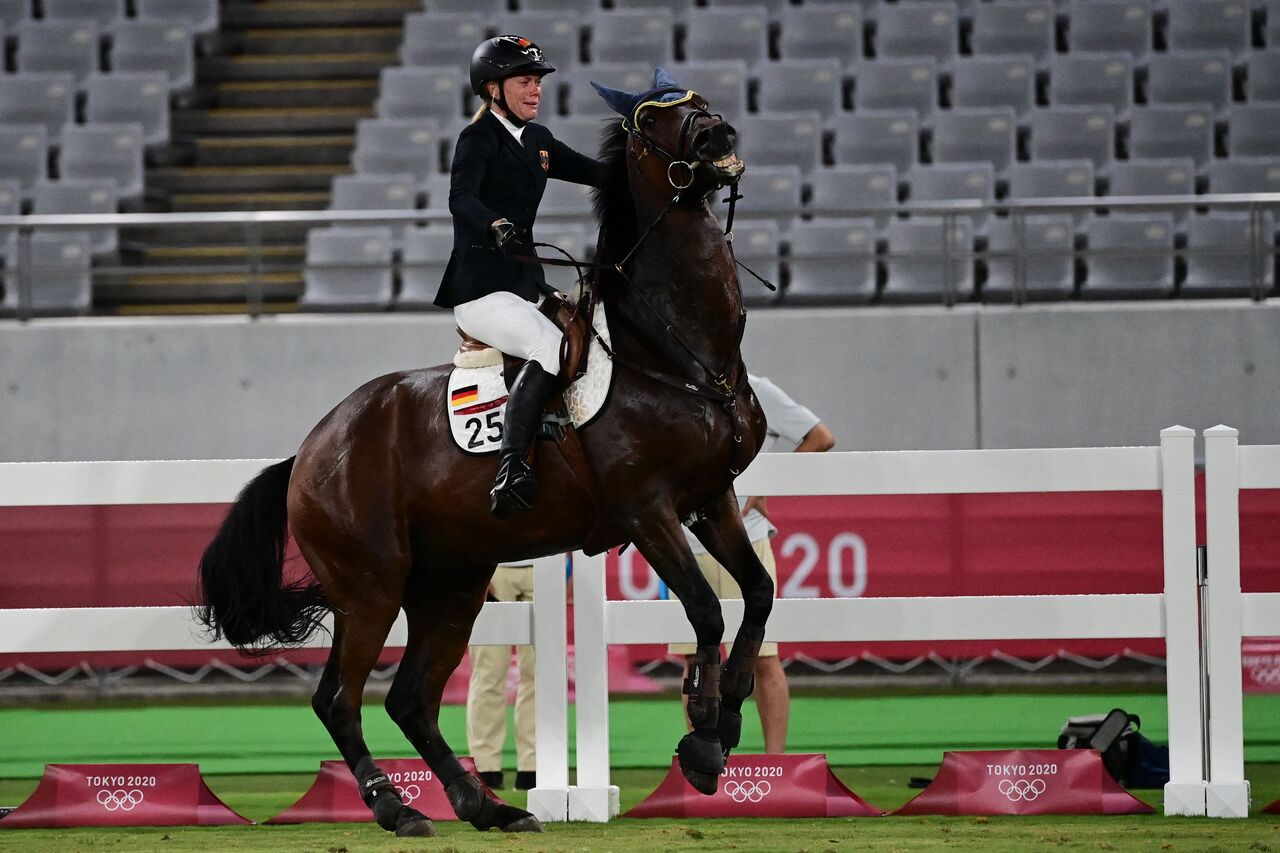
The trajectory of Kim Raisner’s career and the future of Modern Pentathlon changed irrevocably on August 6, 2021, during the women's competition at the Tokyo Olympics (held in 2021 due to the pandemic).
The incident centered on German athlete Annika Schleu, who was leading the competition heading into the equestrian segment. Schleu was assigned a horse named Saint Boy. The horse, visibly distressed and refusing to clear obstacles, created a high-stress environment. As Schleu struggled to control the animal, Raisner was filmed on the sidelines.
The controversy stemmed from two specific actions:
- Physical Contact: Raisner was seen striking the horse on the flank with her fist.
- Verbal Instructions: She was recorded urging Schleu to "really hit" the horse ("Hau mal richtig drauf") to force it to jump.
The Union Internationale de Pentathlon Moderne (UIPM) took immediate action. Raisner was issued a "black card," resulting in her disqualification from the remainder of the Tokyo Games. The footage went viral, sparking an international outcry from animal rights organizations, including PETA, and leading to a broader discussion about the ethics of animal use in multi-sport events.
Institutional Fallout and Disciplinary Actions
The aftermath of the Tokyo incident was complex, involving legal, ethical, and organizational layers. In the immediate wake of the Games, the UIPM Executive Board conducted a thorough review of the footage and witness statements.
- UIPM Sanctions: Raisner was initially suspended from all UIPM-sanctioned competitions. The Disciplinary Panel eventually required her to attend a "coach education course" that included modules specifically focused on animal welfare.
- National Response: The German Olympic Sports Confederation (DOSB) and the German Modern Pentathlon Federation (DVMF) faced immense pressure. While some within the German federation defended Raisner, citing the intense pressure of the Olympic final, the DOSB emphasized that the values of the Olympic movement were compromised by the optics of the incident.
- Legal Challenges: Animal protection groups in Germany filed criminal complaints against both Raisner and Schleu. However, German prosecutors eventually dropped the investigation in 2022, provided that Raisner made a donation to a non-profit organization, concluding that while the behavior was inappropriate, it did not meet the threshold of criminal animal cruelty under German law.
The Removal of Equestrianism: The "Raisner Effect"
Perhaps the most significant impact of Kim Raisner’s actions was the structural change it forced upon the Olympic movement. For decades, the equestrian component of Modern Pentathlon had been criticized for its perceived unfairness (due to the random draw of horses) and the potential for welfare issues.
The global backlash following Tokyo 2021 served as the final straw for the International Olympic Committee (IOC). Fearing that the sport would lose its Olympic status entirely due to declining social license, the UIPM made the radical decision to remove the riding discipline.
By 2026, we can look back at this as the "Raisner Effect." The incident accelerated a timeline that might have otherwise taken decades. The sport underwent a massive transition period between 2022 and 2024. The Paris 2024 Olympics served as the final appearance of horses in Modern Pentathlon.
Comparison of Modern Pentathlon: Pre- and Post-Tokyo 2021
| Feature | Pre-Tokyo 2021 Standard | 2026 Professional Standard (Post-Transition) |
|---|---|---|
| Fifth Discipline | Equestrian Show Jumping | Obstacle Course Racing (OCR) |
| Skill Set Required | Horse Handling & Equitation | Upper-body strength, agility, speed |
| Animal Welfare Risk | High (random horse assignment) | Zero (human-only competition) |
| Youth Accessibility | Low (cost of horse maintenance) | High (standardized obstacle courses) |
| Olympic Status | Under constant review/threat | Secured for LA 2028 with new format |
| Coaching Focus | Mounted tactics and psychology | High-intensity interval and obstacle technique |
Coaching Ethics and the "Social License to Operate"
The case of Kim Raisner is frequently cited in sports management and coaching seminars as a case study in "Social License to Operate." This concept refers to the ongoing acceptance and approval of an activity by the public and stakeholders.
Raisner’s actions highlighted a disconnect between the traditional "win-at-all-costs" coaching mentality and modern expectations of athlete and animal welfare. In the technical world of sports, a coach’s role is to provide solutions under pressure. However, Raisner’s intervention was viewed not as a solution, but as a breakdown of professional standards.
In 2026, coaching certifications across many Olympic disciplines have been updated to include specific training on "behavioral outbursts under pressure." The Raisner incident is used to illustrate how a single moment of lost composure can dismantle a century-old sporting tradition.
Modern Pentathlon in 2026: The New Era
As of 2026, the world of Modern Pentathlon looks vastly different than it did during Raisner’s competitive prime. The integration of Obstacle Course Racing (OCR)—inspired by "Ninja Warrior" style challenges—has attracted a younger, more diverse demographic of athletes.
The transition has not been without friction. Traditionalists lamented the loss of the "cavalry officer" spirit, but the UIPM has successfully argued that the sport’s essence lies in its versatility, not specifically in horseback riding. The new format is more television-friendly, cheaper to produce, and eliminates the unpredictable variable of animal behavior that led to Raisner's downfall.
Kim Raisner’s current status in 2026 remains that of a figure who is largely distanced from the international spotlight. While she remained involved in the German sporting community in various capacities after her sanctions were served, her name remains inextricably linked to the "Saint Boy" controversy. She serves as a reminder of the fragility of sporting reputations and the immense power of the Olympic stage to both create and dismantle legacies.
Frequently Asked Questions
Did Kim Raisner return to coaching after Tokyo 2020?
Yes, after serving her initial suspension and completing the required animal welfare and coaching education courses mandated by the UIPM, Raisner was permitted to return to coaching roles within the German federation. However, she did not return to the same level of global prominence, and her involvement in international championships was significantly curtailed by the fallout of the incident.
What happened to the horse, Saint Boy, after the incident?
Saint Boy was returned to his owners in Japan following the Tokyo Games. Reports from the Japanese organizing committee and the owners confirmed that the horse was in good health and did not suffer long-term physical injuries from the competition. The horse was retired from the "pool" of competition animals used for pentathlon events.
Is horseback riding still part of any Olympic sports?
Yes. Horseback riding remains a central component of Equestrianism at the Olympics, which includes Dressage, Eventing, and Show Jumping. These events are separate from Modern Pentathlon and are governed by the Fédération Équestre Internationale (FEI). In these events, athletes compete on their own horses, with whom they have long-term training relationships, which avoids the "random draw" issues seen in Modern Pentathlon.
How did the athletes react to the changes triggered by Raisner’s actions?
The athlete community was deeply divided. Many veteran pentathletes, including Annika Schleu, felt that the removal of riding was a knee-jerk reaction that punished the history of the sport. Conversely, a younger generation of athletes and those from countries with limited access to equestrian facilities welcomed the shift to Obstacle Course Racing, viewing it as a more equitable and modern way to compete.
Conclusion and Next Actions
The story of Kim Raisner in the world of sports is a cautionary tale regarding the intersection of high-stakes competition and ethical responsibility. Her actions in Tokyo acted as the "tipping point" for a sport that was already under intense scrutiny. For sports enthusiasts and professionals, the Raisner case underscores the importance of maintaining composure and adhering to welfare standards, even in the most pressurized environments.
If you are a student of sports management or an athlete, the best next action is to review the UIPM Code of Ethics and the IOC’s guidelines on Social License to Operate. Understanding these frameworks is essential for navigating the modern landscape of international sports, where public perception and ethical conduct are now as critical as physical performance.
Image Gallery