Ben Cohen: Co-Founder of Ben & Jerry’s and Pioneer of Social Entrepreneurship
Ben Cohen is an American entrepreneur, activist, and philanthropist best known as the co-founder of Ben & Jerry’s Ice Cream. Alongside his childhood friend Jerry Greenfield, Cohen transformed a single Vermont scoop shop into a global b...
Ben Cohen is an American entrepreneur, activist, and philanthropist best known as the co-founder of Ben & Jerry’s Ice Cream. Alongside his childhood friend Jerry Greenfield, Cohen transformed a single Vermont scoop shop into a global brand while pioneering "values-led business"—a model integrating social activism, environmental sustainability, and community philanthropy directly into corporate operations.
Contents
Early Life and the Role of Anosmia in Product Innovation
Bennett R. Cohen was born on March 18, 1951, in Brooklyn, New York, and raised in Merrick, Long Island. In 1963, during his seventh-grade physical education class at Sanford H. Calhoun High School, Cohen met Jerry Greenfield, beginning a lifelong personal and business partnership. While Greenfield pursued pre-medical studies, Cohen explored varied interests, attending Colgate University and Skidmore College’s University Without Walls program, working as a craft teacher, driver, and superintendent.
A key factor in Ben & Jerry's distinctive ice cream texture is Cohen's physical condition: severe anosmia, the complete loss or absence of the sense of smell. Because smell accounts for a significant portion of flavor perception, Cohen relied almost entirely on "mouthfeel" and visual texture to enjoy food.
When developing ice cream recipes, Cohen insisted on adding oversized chunks of cookies, candies, nuts, and fruit to provide sensory tactile feedback. This functional adaptation turned into the company's trademark operational differentiator. The signature thick chunks and intense density distinguished Ben & Jerry’s from traditional smooth ice creams, creating a loyal consumer following driven by sensory texture.
The Founding of Ben & Jerry's (1978–1984)
In 1977, Cohen and Greenfield decided to go into business together. Initially considering bagel manufacturing, they found the necessary equipment too expensive and turned to ice cream making. They completed a $5 correspondence course on ice cream making offered by Pennsylvania State University’s Department of Food Science.
With a combined investment of $12,000—which included $4,000 in borrowed capital—they converted an abandoned gas station on College Street in Burlington, Vermont, into an ice cream scoop shop, opening on May 5, 1978.
Initial Capital Structure (1978):
- Personal Funds: $8,000
- Borrowed Capital: $4,000
- Total Initial Investment: $12,000
The business expanded rapidly across Vermont through wholesale delivery of pint containers to local grocery stores. By 1980, the founders rented a space in South Burlington to pack ice cream into pints for regional distribution.
When major competitor Häagen-Dazs (then owned by Pillsbury) attempted to restrict independent distributors from delivering Ben & Jerry’s products in 1984, Cohen and Greenfield launched a national public relations campaign titled "What’s the Doughboy Afraid Of?" The campaign successfully mobilized public sentiment, established legal precedent around distribution access, and cemented Ben & Jerry’s reputation as an independent grassroots brand fighting corporate monopolies.
The Values-Led Business Model and Social Mission
Ben Cohen pioneered a "linked prosperity" corporate model long before corporate social responsibility (CSR) became standard corporate practice. Cohen posited that a corporation owes equal responsibility to its shareholders, employees, and community.
Key Operational Policies Established under Ben Cohen
- The Ben & Jerry's Foundation: Established in 1985 with an initial gift of stock, the foundation receives 7.5% of the company’s annual pre-tax profits to fund community-based social justice, environmental, and grassroots activist organizations.
- Executive-to-Worker Pay Ratio: To prevent extreme internal income inequality, Cohen instituted a policy capping executive salaries at a ratio of 5:1 relative to the lowest-paid full-time worker. This ratio was later expanded to 7:1 before being removed in 1994 to recruit executive leadership capable of managing a rapidly growing international corporation.
- Sustainable Sourcing and Dairy Policy: Under Cohen’s leadership, the company rejected recombinant bovine growth hormone (rBGH) in milk supply chains, advocated for non-GMO ingredients, and established Fair Trade Certified sourcing for sugar, cocoa, vanilla, and coffee.
Three-Part Mission Statement Framework:
- Product Mission: Premium natural ingredients and innovative flavors.
- Economic Mission: Sustainable financial growth and shared value creation.
- Social Mission: Using business operations to improve local and global communities.
The Unilever Acquisition (2000)
By the late 1990s, Ben & Jerry’s faced intense competitive pressures, supply chain complexities, and shareholder demands as a publicly traded company on the NASDAQ. In April 2000, consumer goods conglomerate Unilever acquired Ben & Jerry’s for approximately $326 million in cash.
Cohen and Greenfield initially opposed selling the business to a multinational corporation. However, as officers of a publicly traded firm, legal fiduciary duties obligated the board to evaluate bids that maximized shareholder value.
To preserve the company’s core purpose, Cohen and the board negotiated an unprecedented corporate governance structure during the sale:
- Independent Board of Directors: Ben & Jerry’s retained an independent board tasked specifically with safeguarding the company's social mission, brand integrity, and product quality.
- Capital Commitments: Unilever agreed to continue funding the Ben & Jerry's Foundation (allocating millions annually) and maintaining social activism initiatives.
- Employee Protection: Guarantees were established regarding worker pay structures, Vermont manufacturing locations, and community giving programs.
While Cohen stepped down from daily management, he remained a prominent public voice, monitoring corporate adherence to social goals.
Post-Sale Activism and Political Advocacy
Following his departure from active executive leadership at Ben & Jerry's, Cohen devoted his time, capital, and public profile to social causes, campaign finance reform, and peace advocacy.
Major Post-Corporate Initiatives
- Business Leaders for Sensible Priorities (BLSP): Founded by Cohen, this non-profit organization mobilized business executives to advocate for transferring federal discretionary spending from nuclear military assets toward public education, healthcare, and renewable energy infrastructure.
- Stamp Stamp Stamp (StampITOut): A campaign launched to raise awareness about money in politics following the U.S. Supreme Court's 2010 Citizens United ruling. The organization encouraged citizens to legally stamp political messages—such as "Not To Be Used For Bribing Politicians"—onto U.S. paper currency.
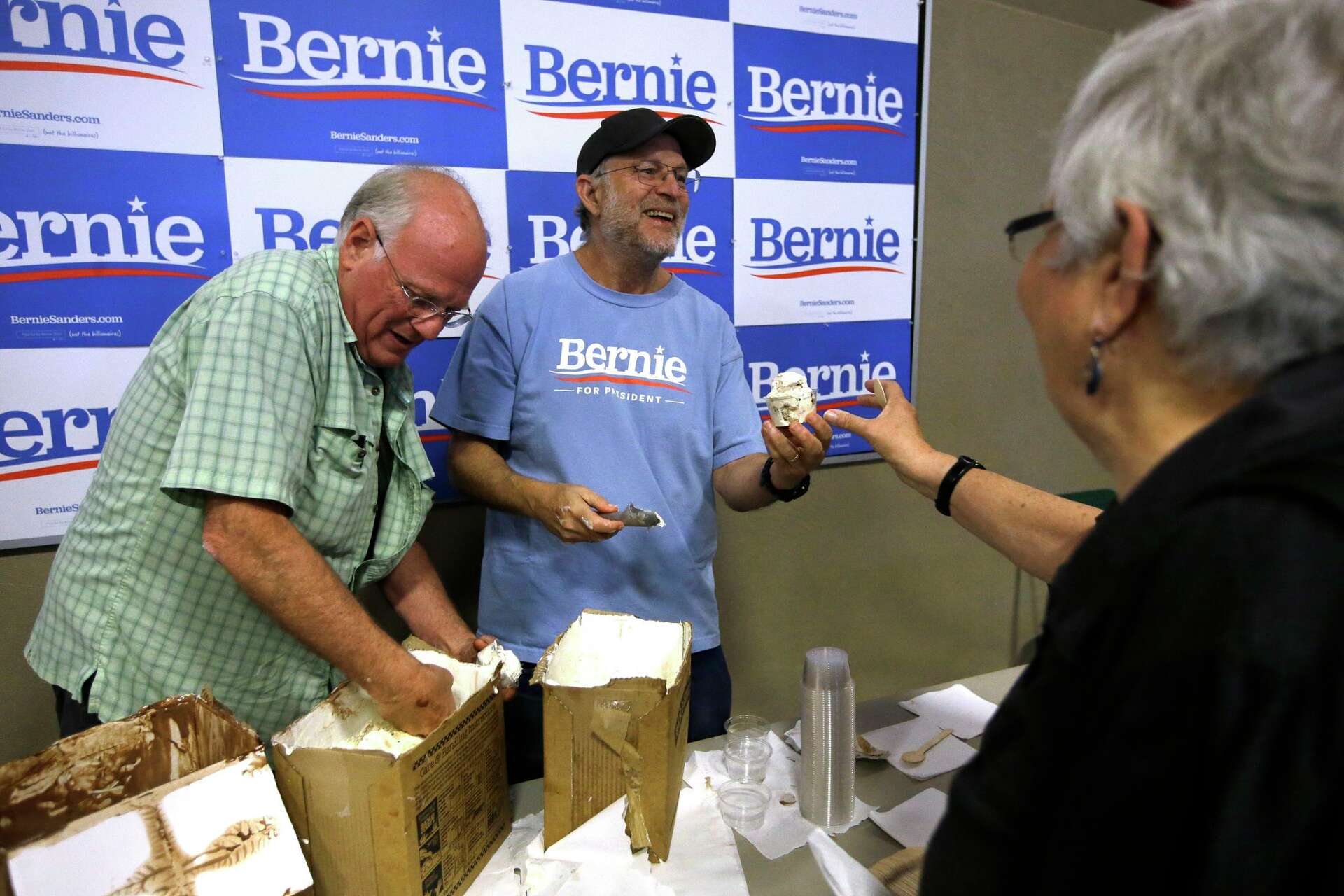
- Political Flavor Initiatives: Operating independently of Unilever and Ben & Jerry’s official operations, Cohen personally produced limited-run activist ice creams to draw attention to specific campaigns and candidates. Notable examples include Bernie’s Yearning (2016) and Bernie’s Back (2019), developed to support Senator Bernie Sanders' presidential primary campaigns.
Timeline of Ben Cohen's Key Organizations & Initiatives:
- 1978: Co-founds Ben & Jerry's Ice Cream (Burlington, VT)
- 1985: Establishes The Ben & Jerry's Foundation
- 1996: Launches Business Leaders for Sensible Priorities (BLSP)
- 2000: Oversees sale to Unilever with Independent Board protections
- 2012: Formally launches Stamp Stamp Stamp campaign finance campaign
Key Milestones and Historical Summary
The following table summarizes the key milestones, operational policies, and achievements associated with Ben Cohen's career:
| Era / Year | Milestone / Event | Operational or Social Impact |
|---|---|---|
| 1951 | Born in Brooklyn, NY | Developed early sensory focus due to severe anosmia (lack of smell). |
| 1978 | First Scoop Shop Opened | Launched in Burlington, VT, after taking a $5 Penn State correspondence course. |
| 1984 | "What's the Doughboy Afraid Of?" Campaign | Successfully fought Pillsbury/Häagen-Dazs over market distribution access. |
| 1985 | Ben & Jerry's Foundation Established | Dedicated 7.5% of pre-tax profits to social, economic, and environmental causes. |
| 1988 | Named US Small Business Persons of the Year | Awarded by President Ronald Reagan to Cohen and Jerry Greenfield. |
| 1994 | Executive Pay Ratio Expansion | Shifted from 5:1 to 7:1 pay ratio cap before lifting it to hire global executive talent. |
| 1997 | Co-authored Double Dip Book | Detailed methods for running a values-led business in mainstream commerce. |
| 2000 | Sale to Unilever ($326 Million) | Negotiated a unique independent board to protect the brand's social mission. |
| 2012–Present | Campaign Finance & Grassroots Activism | Formed StampITOut and led campaigns addressing military spending and political reform. |
Legacy and Impact on Modern Capitalism
Ben Cohen’s operational philosophy altered modern business strategy by demonstrating that social responsibility and commercial profitability are not mutually exclusive. The business practices pioneered by Cohen and Greenfield directly influenced the modern B Corporation (Benefit Corporation) movement, social impact investing, and corporate ESG (Environmental, Social, and Governance) evaluation metrics.
By anchoring product design around sensory accessibility (driven by his own anosmia) and integrating grassroots activism directly into supply chain management, Cohen established a template for authentic brand identity that endures across global markets.
Frequently Asked Questions
What health condition influenced Ben Cohen's ice cream recipe design?
Ben Cohen has anosmia, a condition characterized by a loss or lack of the sense of smell. Because flavor perception depends heavily on smell, Cohen relied on physical texture and mouthfeel. This prompted him to include large chunks of cookies, nuts, candies, and fruits in Ben & Jerry's ice cream, creating the company's signature style.
How much did it cost Ben Cohen and Jerry Greenfield to start Ben & Jerry's?
The pair started the original shop in 1978 with an initial investment of $12,000, which included $8,000 of their own savings and $4,000 in borrowed capital. They also spent $5 on a correspondence course in ice cream making from Pennsylvania State University.
Why did Ben & Jerry's set a 5:1 executive pay cap?
Cohen established a 5:1 ratio cap between executive salaries and the lowest-paid full-time employee to limit internal income inequality and foster equity. As the company grew into a multi-million-dollar global business, the ratio was expanded to 7:1 and eventually eliminated in 1994 to attract executive management candidates.
Does Ben Cohen still own Ben & Jerry's?
No. Ben & Jerry’s was sold to multinational corporate enterprise Unilever in April 2000 for $326 million. Cohen sold his shares during the acquisition and no longer maintains operational management responsibilities, though an independent board continues to oversee the brand's social mission.
What causes does Ben Cohen advocate for today?
Cohen focuses on campaign finance reform, reducing federal military expenditures in favor of social programs, environmental sustainability, and criminal justice reform. He actively supports political campaigns through non-profit organizations such as Business Leaders for Sensible Priorities and Stamp Stamp Stamp.
Practical Next Steps for Entrepreneurs and Researchers
For business leaders, students, and social entrepreneurs seeking to implement Ben Cohen’s values-led framework within modern organizations:
- Review B Corporation Certification Guidelines: Examine the official standards established by B Lab to structure legal governance models that protect corporate social missions alongside shareholder returns.
- Study Corporate Governance Provisions: Analyze the 2000 Unilever acquisition structure to understand how independent board oversight can safeguard corporate values during mergers or acquisitions.
- Explore Foundation Model Integration: Evaluate how reserving a fixed percentage of pre-tax earnings (similar to the 7.5% allocation model used by Ben & Jerry's) can establish sustainable funding for local community initiatives.
Image Gallery