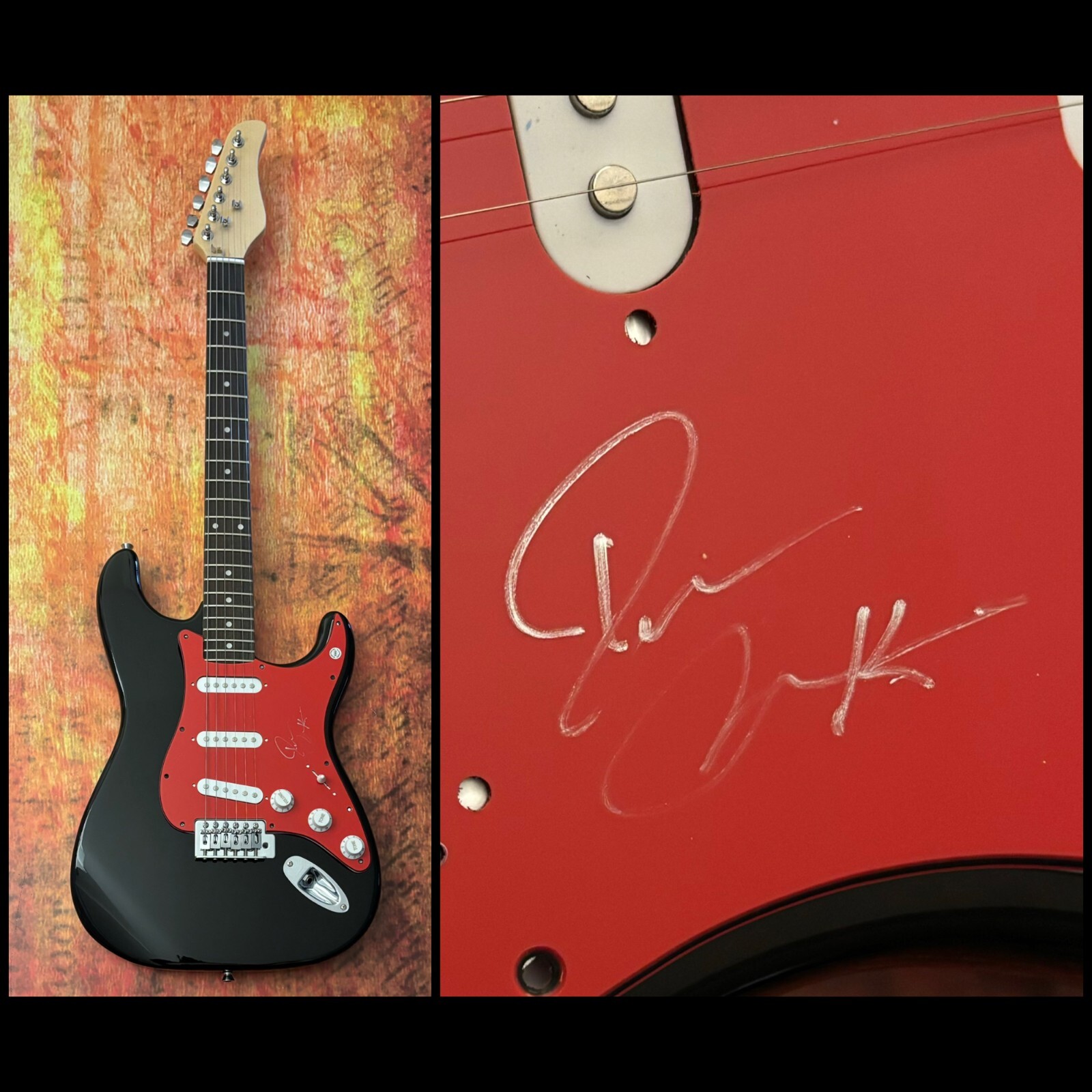
Exploring Darius Rucker’s Guitars: A Guide to His Iconic Gear and Tone
Darius Rucker primarily relies on Taylor acoustic guitars, specifically high-end Grand Auditorium models like the Taylor 814ce and various Custom Shop builds, to anchor his rhythmic country-rock sound. His collection also features clas...
Darius Rucker primarily relies on Taylor acoustic guitars, specifically high-end Grand Auditorium models like the Taylor 814ce and various Custom Shop builds, to anchor his rhythmic country-rock sound. His collection also features classic Gibson acoustics, such as the Hummingbird, and Fender electrics like the Telecaster, providing the versatile tonal foundation needed for his transition from 90s rock to modern country.
Contents
Since his rise to fame with Hootie & the Blowfish and his subsequent record-breaking career as a country soloist, Darius Rucker’s choice of instruments has remained remarkably consistent. Unlike lead guitarists who might swap instruments for every song to achieve specific effects, Rucker treats his guitar as an extension of his vocal performance. In 2026, his rig remains a masterclass in reliability, centered on instruments that provide a rich, balanced midrange that doesn't compete with his deep, resonant baritone voice.
The Taylor Guitars Partnership: Rucker’s Primary Workhorses
For the better part of two decades, Darius Rucker has been synonymous with Taylor Guitars. The relationship is built on the brand’s reputation for "playability"—specifically the slim, comfortable neck profiles that allow Rucker to focus on his vocal delivery while maintaining steady rhythm.
The Taylor 814ce and Custom Shop Variations
The Taylor 814ce is widely considered the flagship of the Taylor line, and it is the model most frequently seen in Rucker’s hands. This Grand Auditorium acoustic-electric features a Sitka spruce top paired with Indian rosewood back and sides. For Rucker, this combination is essential because:
- Spruce Top: Provides the high-end "shimmer" and clarity needed to cut through a loud country band.
- Rosewood Back/Sides: Offers a deep low-end and complex overtones that complement Rucker’s lower vocal register.
- Grand Auditorium Shape: This body style is smaller than a traditional dreadnought, making it more comfortable for long sets while still producing enough volume for unplugged sessions.
Rucker frequently uses Custom Shop versions of these guitars. These often feature personalized aesthetics, such as his name or logo inlaid on the fretboard, and specific hardware upgrades like Gotoh 510 tuners for superior tuning stability under stage lights.
The Use of the Expression System 2 (ES2)
A critical component of Darius Rucker’s live sound is Taylor’s proprietary Expression System 2 pickup. Unlike traditional undersaddle piezo pickups that can sound "quacky" or thin, the ES2 uses sensors located behind the bridge saddle. This design captures more of the guitar's natural wood resonance, which is vital for Rucker’s acoustic-heavy ballads like "It Won't Be Like This for Five."
The Gibson Influence: Classic Country Heritage
While Taylor provides his modern "hi-fi" sound, Rucker frequently turns to Gibson for a more traditional, "thumpy" country tone. This is particularly evident in his studio recordings and televised performances where a vintage aesthetic is preferred.
The Gibson Hummingbird
The Gibson Hummingbird is one of the most recognizable acoustic guitars in history, and Rucker has used various iterations of it throughout his solo career. The Hummingbird is a square-shoulder dreadnought, known for being a "singer-songwriter's guitar." Its mahogany back and sides provide a "dry" sound with fewer overtones than rosewood, which prevents the guitar from muddying the mix when Rucker is singing in his lower range.
The Gibson J-45
Often called "The Workhorse," the Gibson J-45 is a round-shoulder dreadnought that Rucker uses for a more aggressive, mid-forward sound. It lacks the ornate pickguard of the Hummingbird but offers a punchy, fundamental-focused tone that works exceptionally well for up-tempo tracks like "Alright" or "Wagon Wheel."
Transitioning to Electric: Fender and the Nashville Sound
Although Rucker is primarily an acoustic player, his live shows and specific studio tracks require the bite of an electric guitar. To fit the Nashville aesthetic, he leans heavily on the Fender catalog.
The Fender Telecaster
The Telecaster is the undisputed king of country music, and Rucker is no exception to its pull. He typically uses a Fender American Professional II Telecaster or Custom Shop variants. The Telecaster’s bridge pickup provides the "twang" necessary for modern country leads, while the neck pickup offers a warm, jazzy tone that Rucker uses for soul-influenced tracks.
The Fender Stratocaster
During his Hootie & the Blowfish days and occasionally in his solo sets, Rucker utilizes a Fender Stratocaster. The Strat provides a more "glassy" and percussive sound, which is ideal for the 90s-influenced rock elements that still permeate his music.
Technical Specifications and Setup Preferences
Darius Rucker’s guitars are not just off-the-shelf instruments; they are maintained to high professional standards to endure the rigors of international touring.
| Feature | Specification/Preference | Purpose |
|---|---|---|
| String Gauge | Light (.012–.053) or Medium-Light | Balances volume with ease of playing. |
| Nut Material | TUSQ or Bone | Ensures maximum vibration transfer and tuning stability. |
| Action Height | Medium-Low | Prevents fret buzz while allowing for aggressive strumming. |
| Tuning | Standard E (mostly) | Standard for vocal range compatibility. |
| Bridge Pins | Ebony or Bone | Enhances sustain and adds a touch of aesthetic class. |
Tonewood Profiles for the Rucker Sound
The selection of tonewoods in Rucker’s collection is deliberate. He often avoids "all-mahogany" guitars because they can be too dark for his voice. Instead, he prefers the Spruce/Rosewood or Spruce/Mahogany combinations. The Sitka spruce top is non-negotiable for Rucker, as its "elasticity" allows the guitar to handle his heavy-handed strumming style without the sound "compressing" or becoming distorted.
Performance Rig and Signal Chain
In 2026, the technology used to amplify acoustic guitars has reached a point where the "unplugged" sound can be replicated almost perfectly in a stadium environment. Rucker’s signal chain is designed for transparency.
- Direct Box (DI): He often uses high-end DI boxes like the Radial J48 or the L.R. Baggs Venue DI. These units ensure that the high-impedance signal from his guitar is converted to a low-impedance signal suitable for long cable runs to the front-of-house (FOH) console.
- Acoustic Preamps: To fine-tune his tone, Rucker’s tech often employs a preamp that offers multi-band EQ. This allows them to "scoop" out specific frequencies (usually around 400Hz) that might cause feedback or interfere with the bass guitar.
- In-Ear Monitoring: Rucker uses professional grade in-ear monitors (IEMs), which allow him to hear the nuances of his acoustic guitar clearly, even when his drummer is playing at full volume.
The Evolution from Hootie to Country Stardom
In the mid-1990s, during the peak of Hootie & the Blowfish, Rucker was often seen with Takamine guitars. At the time, Takamine was the industry leader in acoustic-electric "plug-and-play" technology. As he moved into country music, his gear evolved to reflect the higher fidelity and traditional aesthetics required by the Nashville scene. This shift toward Taylor and Gibson marked his maturation as an artist who cared as much about the "woody" texture of his instrument as he did about the convenience of the electronics.
Frequently Asked Questions
Does Darius Rucker have a signature guitar model?
While Darius Rucker does not currently have a widely available "Signature Series" model in the same vein as Eric Clapton or John Mayer, he has a long-standing "Artist" relationship with Taylor Guitars. Taylor has produced several one-off Custom Shop models for him that feature his name or logo, and he is often featured in Taylor’s marketing for the 800 series.
What strings does Darius Rucker use?
Rucker generally uses Elixir Nanoweb strings. These strings are coated with a thin polymer that protects the metal from sweat and oils. For a touring artist, this is essential as it keeps the strings sounding "bright" for several shows, reducing the need for daily string changes.
Does he play lead guitar or just rhythm?
Darius Rucker is primarily a rhythm guitarist. His role in the band is to provide the "heartbeat" of the song, allowing his lead guitarists to handle solos and intricate fills. His strumming pattern is known for being very consistent and driving, which is a hallmark of the Hootie & the Blowfish sound.
Why does he prefer Taylor guitars over other brands?
Rucker has cited the consistency of Taylor guitars as a primary factor. In a live environment, he needs a guitar that will sound the same in a humid outdoor festival as it does in a dry indoor arena. Taylor’s bolt-on neck design (the NT neck) and robust build quality offer the stability he requires.
What is the most expensive guitar in his collection?
While his stage guitars are high-end (ranging from $4,000 to $8,000), his private collection likely includes vintage Gibson acoustics from the 1950s or 1960s. A vintage Gibson Hummingbird or "Banner" J-45 in good condition can exceed $15,000 to $20,000 in value.
Achieving the Darius Rucker Sound
For guitarists looking to emulate Rucker’s tone, the focus should be on a Grand Auditorium or Dreadnought acoustic with a solid spruce top. Pairing this with a high-quality preamp that emphasizes the "air" and "shimmer" of the strings will get you close to his modern country sound. More importantly, Rucker’s tone comes from his heavy, rhythmic strumming—using a medium-weight pick and focusing on clean, open-chord transitions.
Whether he is playing a sold-out stadium or an intimate charity event, Darius Rucker’s guitars are more than just tools; they are the foundation of a sound that bridged the gap between 90s alternative rock and the heart of country music.
Image Gallery