How Talend Data Prep Shapes Your Data Workflow
Talend Data Prep transforms your data workflow by providing a self-service, browser-based environment where business users and data analysts can cleanse, standardize, and enrich data independently. By utilizing a "recipe" system and se...
Talend Data Prep transforms your data workflow by providing a self-service, browser-based environment where business users and data analysts can cleanse, standardize, and enrich data independently. By utilizing a "recipe" system and semantic discovery, it removes the traditional IT bottleneck, allowing for faster transition from raw data to actionable insights while maintaining centralized governance.
Contents
The Evolution of Data Preparation in the Modern Workflow
Historically, the process of preparing data for analysis was a significant hurdle in the data lifecycle. Known as "data wrangling" or "munging," this phase often consumed up to 80% of a data scientist's time. In traditional workflows, any requirement for data cleaning had to be sent as a request to the IT or data engineering department. These teams would then write complex ETL (Extract, Transform, Load) scripts in SQL, Python, or Java to deliver a cleaned dataset.
As we operate in 2026, the volume and velocity of data have made this centralized model unsustainable. Talend Data Prep (now a core component of the Qlik Cloud Data Integration suite) has fundamentally shifted this dynamic. It introduces a decentralized, collaborative model where the people who understand the business context of the data are the ones actually shaping it. This shift does not just change the "who" of data preparation; it redefines the "how," turning a linear, slow-moving process into an iterative and agile workflow.
Core Capabilities That Redefine Data Shaping
To understand how Talend Data Prep shapes a workflow, one must first look at the specific technical capabilities that distinguish it from standard spreadsheet tools or traditional ETL platforms.
Semantic Data Discovery and Profiling
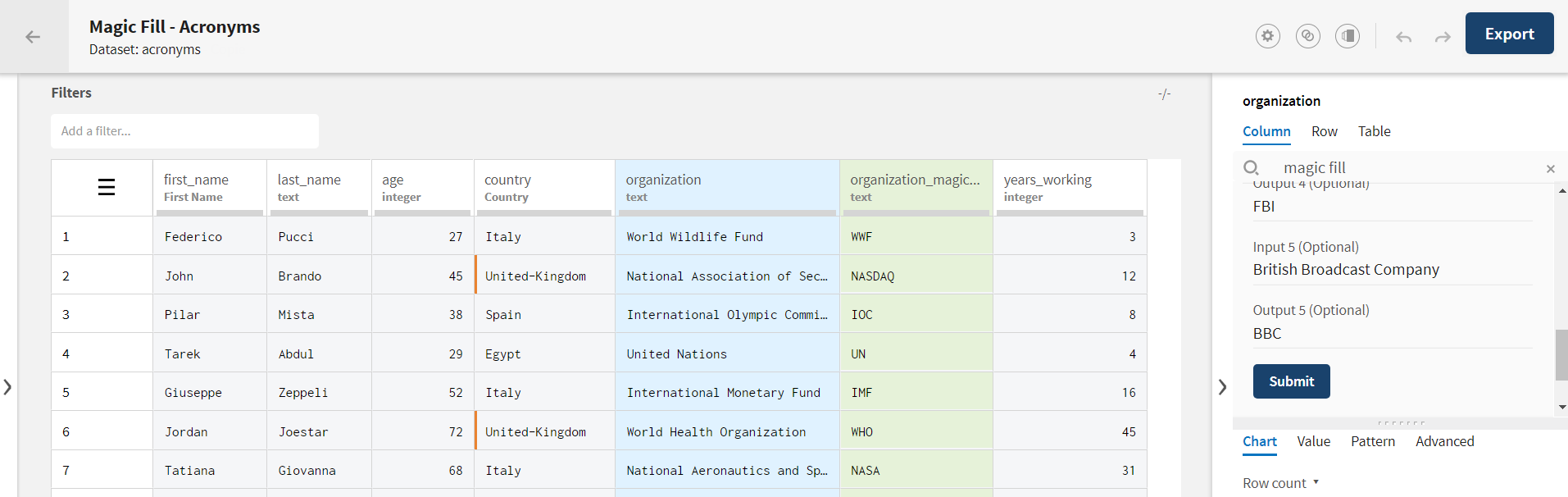
One of the most impactful features is the tool’s ability to recognize data types beyond simple strings or integers. Talend Data Prep uses semantic discovery to automatically identify "Email," "US Zip Code," "Credit Card Number," or "IBAN." Upon importing a dataset, the tool provides immediate visual profiling. It highlights quality issues such as empty cells, outliers, or invalid formats using a color-coded quality bar (Green for valid, Red for invalid, Orange for empty).
This shapes the workflow by moving "Data Discovery" from a separate research phase directly into the preparation interface. Users no longer need to run separate profiling queries; they see the health of their data the moment they open the file.
The Power of the Recipe System
Every action taken in Talend Data Prep—whether it is trimming whitespace, changing case, or merging columns—is recorded as a step in a "recipe." This is a fundamental departure from spreadsheet-based cleaning where changes are often destructive and untraceable.
A recipe acts as a live documentation of the data transformation. In a professional workflow, this enables:
- Reusability: A recipe created for a monthly sales report in January can be applied to February's raw data with a single click.
- Auditability: Every change is visible and can be undone or reordered without affecting the underlying source data.
- Collaboration: A data analyst can create a recipe and share it with a data engineer, who can then "operationalize" it by running it at scale within a Talend Studio job or a Qlik pipeline.
How the Tool Transforms Each Stage of the Data Lifecycle
The integration of Talend Data Prep into a corporate environment impacts the workflow across four distinct stages: ingestion, transformation, validation, and operationalization.
1. The Ingestion and Sampling Phase
In a typical 2026 enterprise workflow, data exists in silos: Snowflake warehouses, local Excel files, Salesforce records, and S3 buckets. Talend Data Prep allows users to pull samples from these sources. By working on a representative sample rather than the entire multi-terabyte dataset, the interface remains snappy and responsive. The "shaping" happens in real-time on the sample, which significantly reduces the feedback loop for the user.
2. Interactive Transformation
The workflow is shaped by "point-and-click" logic. If a user needs to obfuscate sensitive data to comply with privacy regulations (like GDPR or CCPA), they don't need to write a hashing function. They simply select the column and choose the "Mask sensitive data" function. This democratization of technical tasks allows non-developers to perform complex transformations that previously required specialized coding skills.
3. Collaborative Validation
Before data is sent to a BI tool like Power BI, Tableau, or Qlik Sense, it must be validated. Talend Data Prep facilitates a "shared" workflow. A business user can prepare the data and then share the preparation link with a supervisor. The supervisor can review the steps in the recipe to ensure the logic aligns with business rules (e.g., "Are we excluding internal test accounts from this revenue calculation?").
4. Operationalization and Scaling
This is where Talend Data Prep truly shapes the industrial data pipeline. Once a recipe is finalized, it can be exported to Talend Management Console (TMC). A data engineer can then incorporate this recipe into an automated batch job or a real-time streaming pipeline. This "Prototype-to-Production" workflow ensures that the work done by the business user is never wasted or manually re-entered by IT.
Comparing Talend Data Prep Implementation Models
As of 2026, Talend Data Prep is available in various configurations. Selecting the right model depends on the organization's scale and security requirements.
| Feature | Talend Data Prep Free Desktop | Talend Data Prep Cloud (Qlik) | Talend Data Prep On-Premise |
|---|---|---|---|
| Primary User | Individual Analysts | Enterprise Teams | High-Security Orgs (Gov/Banking) |
| Storage | Local Disk | Cloud Repository | Private Server/AWS VPC |
| Max Dataset Size | Limited by Local RAM | Scalable (Sampling used) | Scalable (Server-dependent) |
| Collaboration | None (File sharing only) | Full Sharing & Roles | Full Sharing & LDAP Sync |
| Automation | Manual Exports | Full Integration with TMC | Integrated with Talend Studio |
| Connectivity | Local Files (CSV/Excel) | SaaS, Databases, Cloud Warehouses | Full Enterprise Connectors |
Practical Impact on Data Governance
A common fear in decentralizing data prep is the creation of "Data Swamps"—unregulated, messy datasets that lead to inconsistent reporting. Talend Data Prep shapes the workflow to prevent this through built-in governance.
Because the tool is part of a larger ecosystem, IT administrators can define Role-Based Access Control (RBAC). They can specify who can see which datasets, who can create recipes, and who has the authority to promote a recipe to a production environment. This creates a "sandboxed" workflow where analysts have the freedom to explore and shape data without the risk of corrupting the "Golden Records" in the central data warehouse.
Furthermore, the integration with Talend Data Inventory provides a "Data Trust Score." As users shape data in Data Prep, the trust score for that dataset increases as errors are resolved and quality improves. This transparency allows stakeholders to see exactly how much cleaning has occurred before they trust the data for high-stakes decision-making.
Troubleshooting Common Workflow Bottlenecks
While Talend Data Prep streamlines most tasks, certain complex workflows require specific strategies:
- Handling Very Large Schemas: When dealing with tables containing hundreds of columns, the visual interface can become cluttered. The best practice is to use the "Columns" view to hide unnecessary fields early in the recipe, focusing the workflow only on relevant data points.
- Formula Complexity: While most transformations are point-and-click, some conditional logic (If-Then-Else) can become cumbersome. In these cases, it is often more efficient to use the "Python transformation" step (available in enterprise versions) to handle complex branching logic within the recipe.
- Sampling Bias: If a dataset is skewed, the default "top N rows" sample might not show all possible data errors. Users should utilize the "Random Sampling" or "Filter-based Sampling" options to ensure the recipe accounts for edge cases found deep within the dataset.
Integrating Talend Data Prep with Modern BI Tools
The final stage of the shaped workflow is the delivery of clean data to visualization platforms. Talend Data Prep supports direct exports to various formats. In 2026, the most common workflow involves:
- Direct Cloud Export: Sending the output of a recipe directly to a Snowflake table or a Databricks Delta table.
- Tableau/Qlik Integration: Exporting data in optimized formats (like .hyper or .qvd) to reduce the processing load on the BI tool.
- API Consumption: Using the Talend API to call a preparation recipe as a microservice, allowing third-party applications to receive cleaned data on demand.
Frequently Asked Questions
Does Talend Data Prep replace the need for SQL?
For most data cleaning and shaping tasks, yes. It allows users to perform joins, unions, aggregations, and string manipulations without writing a single line of SQL. However, SQL remains useful for complex initial data extraction from relational databases before the data enters the Talend environment.
Can I use Talend Data Prep for real-time data streaming?
While the design of the recipe is interactive and performed on batches or samples, the execution of the recipe can be integrated into real-time pipelines using Talend Pipeline Designer or Talend Management Console, allowing the "shaping" logic to be applied to streaming data.
How does Talend Data Prep handle data privacy?
The tool includes built-in semantic functions for PII (Personally Identifiable Information) discovery. Users can apply masking, shuffling, or hashing transformations as the first step in their workflow, ensuring that sensitive information is protected before the data is shared or used for analysis.
What is the difference between Talend Data Prep and Talend Studio?
Talend Studio is a comprehensive integrated development environment (IDE) for developers to build complex ETL/ELT jobs. Talend Data Prep is a lightweight, browser-based tool for business users. The two work together; a Data Prep recipe can be imported into Talend Studio to become part of a larger, more complex technical process.
Is the Free Desktop version still available in 2026?
While Talend has shifted focus toward cloud-integrated solutions under the Qlik umbrella, legacy versions of the desktop tool are sometimes maintained for offline use. However, for collaborative enterprise workflows, the Cloud-based "Data Preparation" module is the standard.
Final Recommendation for Implementation
To maximize the impact of Talend Data Prep on your workflow, start by identifying a single, high-frequency data bottleneck—such as a monthly financial reconciliation or a weekly lead-gen cleanup. Empower the business analysts closest to that data to build the initial "Recipe." Once validated, use the Talend Management Console to automate that recipe. This incremental approach demonstrates immediate ROI by freeing up your technical staff for higher-level architectural tasks while ensuring the business team has the clean data they need to drive strategy.
Image Gallery