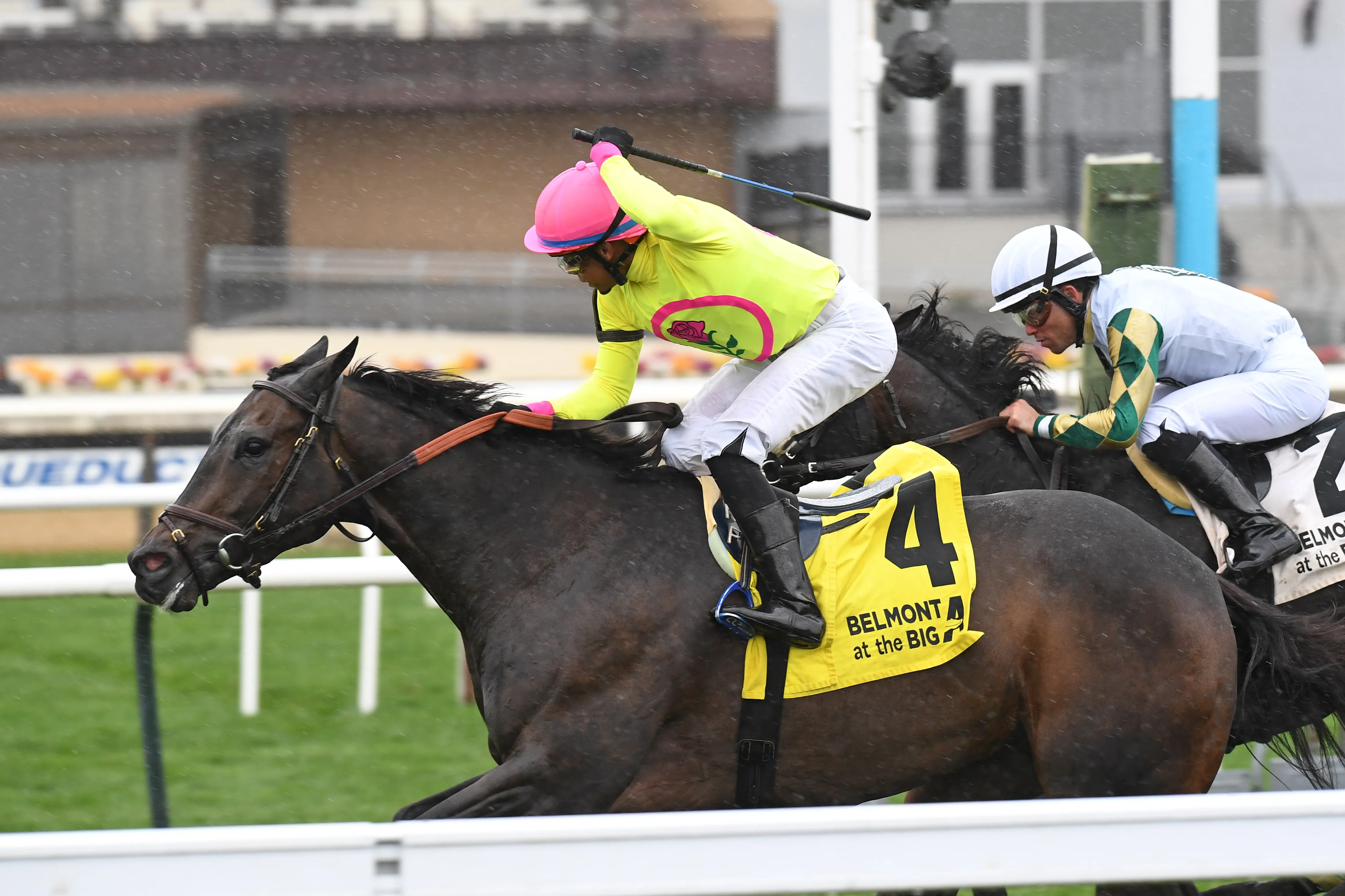
Belmont at Aqueduct Entries and Results for Today: Complete Race Day Guide
Today's Belmont at the Big A entries, morning-line odds, live changes, and official race results are published directly through the New York Racing Association (NYRA) and official racing form feeds. Bettors can track active post times,...
Today's Belmont at the Big A entries, morning-line odds, live changes, and official race results are published directly through the New York Racing Association (NYRA) and official racing form feeds. Bettors can track active post times, scratches, track conditions, jockey changes, and final pari-mutuel payouts in real time as Belmont Park racing operations temporarily run at Aqueduct Racetrack.
Contents
Operational Context
The phrase "Belmont at Aqueduct" (officially styled as Belmont at the Big A) refers to the arrangement where the New York Racing Association hosts traditionally designated Belmont Park spring, summer, and fall race meetings at Aqueduct Racetrack in South Ozone Park, Queens. This temporary operational consolidation accommodates the comprehensive modernization and rebuilding of Belmont Park's grandstand and track surfaces.
Accessing Official Today's Entries and Live Changes
Finding accurate entry data on race day requires consulting authorized sources that pull directly from Equibase, the official database of Thoroughbred racing in North America. Morning-line programs are drawn roughly 72 to 96 hours before race day, but entries remain fluid until the gates open due to scratches, jockey substitutions, and weather-driven surface transfers.
Official NYRA Digital Feeds and Overnight Sheets
The New York Racing Association provides digital race entries directly through its official web platform and mobile wagering app (NYRA Bets). Bettors should review the official "Overnight Sheet," which lists every registered horse, post position, designated equipment (blinkers on/off, front wraps), assigned weight, claiming tags, and conditions of eligibility.
Key items updated on the official NYRA feed throughout race morning include:
- Official Post Times: Scheduled post times often shift by several minutes depending on television broadcast requirements (FOX Sports / America's Day at the Races) or delays in prior races.
- Surface Designations: New York weather routinely alters race setups. Races scheduled for the outer or inner turf courses frequently move to the main dirt track, fundamentally changing the competitive field.
- Jockey and Weight Corrections: Last-minute overweight allowances or apprentice jockey weight claims (denoted by five-pound or ten-pound bugs) must be checked on the track’s official morning change sheet.
Scratches and Program Revisions
Equibase and NYRA release the official scratch sheet at roughly 10:00 AM Eastern Time on race morning. Scratches occur for various administrative and physical reasons:
- Veterinarian Scratches: Mandated by NYRA regulatory veterinarians during mandatory pre-race veterinary inspections to ensure equine safety.
- Trainer Scratches: Withdrawn by connections due to unfavorable track condition shifts or preferred entry in alternate upcoming races.
- Main Track Only (MTO) Entries: Horses designated as "MTO" enter turf races strictly as contingencies. If the stewards keep the race on the grass, MTO horses scratch automatically. If the race transfers to the dirt, MTO horses enter the starting gate, often invalidating earlier turf handicapping models.
- Also-Eligibles (AE): Horses placed on the AE list only join the field if regular entrants scratch before the designated late-scratch deadline.
Real-Time Belmont at Aqueduct Results and Pari-Mutuel Payouts
Race results transition through three distinct phases: unofficial finish, inquiry/objection review, and the declaration of "Official." Wagers are only paid out once the NYRA board of stewards posts the official sign.
Understanding Official Order of Finish
Aqueduct utilizes high-resolution digital finish-line photo sensors that capture vertical slices of the finish line down to millimeters. When two horses hit the wire in tight proximity, the placing judges inspect the digitized mirror images before posting the order.
If a race includes an incident of interference or a claimed foul, the stewards illuminate the "Inquiry" or "Objection" sign:
- Stewards' Inquiry: Initiated by the regulatory panel (comprising the NYS Gaming Commission steward, the Jockey Club steward, and the NYRA steward) when an infraction occurs during the running, particularly inside the stretch run.
- Jockey / Trainer Objection: Lodged via telephone from the scale house immediately following the gallop-out, alleging interference, bumping, or lane drifting that cost a runner a placing.
- Disqualification and Placing: In New York, the category system dictates that if a horse causes interference that robs another runner of an opportunity to achieve a better placing, the offending horse is disqualified and placed behind the horse it impeded.
Exotic Payouts and Carryover Pools
Aqueduct payouts follow the standard pari-mutuel calculation model. Bettors receive payouts based on pool distribution minus NYRA’s statutory takeout rate:
- Straight Pools (Win, Place, Show): Straight prices reflect a $2 minimum calculation across standard mutuel pools.
- Vertical Exotics (Exacta, Trifecta, Superfecta): Exacta base wagers start at $1; Trifectas run with a $0.50 minimum; Superfectas feature a $0.10 minimum ticket cost.
- Horizontal Exotics (Pick 3, Pick 4, Pick 5, Pick 6): NYRA’s signature wagers include the Early and Late Pick 5 (featuring an industry-low 15% takeout) and the Empire Six / Pick 6. If no bettor selects all winners in a designated Pick 6, a significant portion carries over to the subsequent race card, creating substantial equity for multi-race handicappers.
Comparing Belmont at the Big A Track Configurations
Because Belmont Park events are hosted at Aqueduct Racetrack, handicappers must analyze Aqueduct’s layout rather than Belmont’s traditional 1 1/2-mile "Big Sandy" main track. Aqueduct operates on a distinct three-tier track footprint.
| Track Surface | Circumference | Stretch Length | Typical Post Bias / Run Characteristics |
|---|---|---|---|
| Main Dirt Track | 1 1/8 Miles (9 Furlongs) | 1,155 Feet | Favors horses with tactical speed; wide sweeping turns give fair opportunity to closers in one-turn miles. |
| Outer Turf Course | 1 Mile (8 Furlongs) | 1,155 Feet | Wider radius turns; permits larger fields (up to 12 horses). Fair to balanced running styles; outside draws can be penalized in short routes. |
| Inner Turf Course | 7 Furlongs, 43 Yards | 1,060 Feet | Tighter turns; sharply rewards tactical rail speed and ground-saving trips. Deep closers frequently get compromised around the final turn. |
Handicapping a race cataloged as "Belmont at Aqueduct" requires recognizing that one-turn mile races (a staple of Belmont Park's original layout) are held around Aqueduct's main track configuration. Aqueduct features a 1,155-foot home stretch—one of the longest in the United States—which allows legitimate closers sufficient running room compared to tighter minor tracks, provided early pacesetters encounter pressure.
Step-by-Step Guide: Evaluating Racecards and Live Sheets Today
Navigating a full day of New York racing requires a structured routine from morning scratch verification to post-time odds monitoring.
Step 1: Verify the Morning Scratch and Weather Report
Begin tracking the card around 10:30 AM ET. Verify whether the turf courses are firm, good, yielding, or soft. If overnight rain occurred, monitor whether the stewards declare the main track "fast," "good," "muddy," or "sloppy" (sealed). Track maintenance crews at Aqueduct frequently seal the limestone base under wet conditions, which often creates an inside-speed bias.
Step 2: Track Surface Switches and Off-the-Turf Declarations
When races are pulled off the turf onto the dirt:
- Cross off scratches immediately, identifying which horses scratch due to surface changes.
- Note distance adjustments. Turf routes scheduled at 1 1/16 miles or 1 1/8 miles are routinely converted to alternate dirt configurations, such as one mile or 1 1/8 miles, based on starting chute availability.
- Check MTO (Main Track Only) entrants. MTO runners are often fresh dirt horses placed in turf conditions specifically to pounce on sloppy, transferred tracks.
Step 3: Monitor Live Odds Shifts Against Morning Lines
Morning lines are baseline estimates set by the track handicapper. Live board action indicates "smart money" and barn confidence:
- First-Time Starters: If a 2-year-old maiden from a prominent New York barn drops from an 8-1 morning line to 2-1 before post, the mutuel drop strongly signals sharp morning workout reports.
- Tote Board Overlays: Look for proven turf runners that slide upward in odds (e.g., morning line 3-1, currently hovering at 7-1) due to superficial public bias toward a hot jockey. These horses present betting overlays.
Step 4: Validate Equipment and Weight Changes
Check the official track monitor or NYRA feed for late changes:
- Blinkers On: Frequently indicates an intent to push aggressively for early speed from the break.
- Lasix Status: In New York, horses competing in stakes races (including graded events) are legally barred from receiving furosemide (Lasix) within 48 hours of post. Maiden and allowance claiming races generally permit Lasix; verify if an unproven runner receives first-time Lasix.
Technical Handicapping Factors at Aqueduct
Winning at Aqueduct requires tracking localized performance dynamics unique to the Ozone Park oval.
Soil Composition and Cushion Depth
Aqueduct's main dirt course consists of a sandy loam cushion over a clay base. During the colder shoulder months of early spring and late fall:
- Frozen Base / Sealed Surfaces: When moisture is sealed into the track to prevent waterlogging, the surface becomes firm and fast. Horses displaying high early foot that reach the rail first enjoy a notable mathematical advantage, as pursuers fight kickback.
- Harrowed Tracks: A loose, harrowed track creates a tiring cushion that drains early front-runners and allows sustained stalkers and closers to excel through the final 200 yards.
Jockey and Trainer Form Cycles
The New York jockey colony is widely recognized as the most competitive in North America. Track localized trainer-jockey partnerships:
- Top Circuit Trainers: Stable operations overseen by Todd Pletcher, Chad Brown, Linda Rice, Bill Mott, and Christophe Clement routinely target the Belmont at Aqueduct meet. Linda Rice often dominates dirt sprints and claiming ranks, while Chad Brown retains an exceptionally high win percentage on the Aqueduct inner and outer turf.
- Jockey Alignments: Watch for rider retention. When an elite rider stays on a horse despite having alternative mounts for high-profile stables in the same race, that decision serves as a key indicator of competitive intent.
Frequently Asked Questions
Why are Belmont Park races being run at Aqueduct Racetrack?
Belmont Park races are hosted at Aqueduct because Belmont Park is undergoing a multi-year redevelopment project to build a modernized grandstand and upgraded racing surfaces. The New York Racing Association temporarily operates its premier spring and fall Belmont programs at Aqueduct under the operational banner "Belmont at the Big A."
Where can I view official Belmont at Aqueduct results immediately after a race?
Official results are published immediately on the NYRA website (NYRA.com), the NYRA Bets wagering application, and Equibase.com. Results show the official order of finish, margin of victory, win-place-show mutuels, and all vertical and multi-race exotic payoffs within minutes of the race going official.
What happens to Pick 4, Pick 5, and Pick 6 tickets if a race moves off the turf?
When a turf leg of a horizontal multi-race wager transfers to the dirt course, rules set by the New York State Gaming Commission apply. In many instances, if a surface change occurs after wagering opens, the off-the-turf leg becomes an "all-win" (every ticket advances through that leg), or payouts are modified to reflect surface changes depending on when the change was formally posted relative to pool closure.
How do I identify Main Track Only (MTO) horses in today's entries?
MTO horses are marked with an "MTO" badge next to their entry names in the official NYRA race program and daily racing forms. These horses remain eligible to compete only if wet weather or poor turf conditions cause track stewards to move the scheduled turf contest to the main dirt surface; otherwise, they scratch automatically.
What is the minimum bet for exotic wagers at Belmont at Aqueduct?
The standard minimum wagers at the Belmont at the Big A meet are $1 for Exactas, $0.50 for Trifectas, Pick 3s, Pick 4s, and Pick 5s, $0.10 for Superfectas, and $1 for the Pick 6. Win, Place, and Show straight wagers require a $2 minimum at track windows and authorized mobile platforms.
Maximize Your Belmont at Aqueduct Race Day Strategy
Successfully profiting from today's Belmont at Aqueduct cards requires discipline, accurate real-time data, and tracking track surface adjustments. Check the official scratch sheets, verify weather and turf conditions, and log on to official feeds like NYRA or Equibase prior to the first post to capitalize on live changes, value overlays, and carryover pools.
Image Gallery