Understanding the Lexus Hybrid SUV MPG: A Comprehensive 2026 Guide
Lexus hybrid SUVs achieve fuel economy figures ranging from a combined 27 MPG in performance-oriented models to 44 MPG in compact variants. These ratings depend on the specific powertrain—whether it is a self-charging hybrid (HEV) or a...
Lexus hybrid SUVs achieve fuel economy figures ranging from a combined 27 MPG in performance-oriented models to 44 MPG in compact variants. These ratings depend on the specific powertrain—whether it is a self-charging hybrid (HEV) or a plug-in hybrid (PHEV)—as well as drivetrain configurations and aerodynamic factors inherent to each vehicle's size.
Contents
For decades, Lexus has positioned itself as a leader in luxury electrification. As of 2026, the brand’s SUV lineup has matured into a diverse ecosystem of hybrid technologies. To truly understand the MPG of a Lexus hybrid SUV, one must look beyond the window sticker and analyze how the Lexus Hybrid Drive system balances internal combustion with electric propulsion.
The Technology Behind Lexus Hybrid Efficiency
At the core of the Lexus efficiency advantage is the Lexus Hybrid Drive system, currently in its fifth generation for most models. Unlike traditional internal combustion engines (ICE) that rely on a mechanical transmission, most Lexus hybrids utilize an electronically controlled Continuously Variable Transmission (e-CVT).
The e-CVT does not use belts or pulleys; instead, it employs a planetary gear set to blend power from the gasoline engine and two electric motor-generators. This allows the engine to remain in its most efficient operating range—the Atkinson Cycle—more often. In an Atkinson cycle engine, the intake valve is held open slightly longer during the compression stroke, which improves thermal efficiency at the cost of some low-end power, which the electric motors immediately compensate for with instant torque.
The Role of "e-Four" All-Wheel Drive
Many Lexus hybrid SUVs feature the e-Four All-Wheel Drive (AWD) system. Traditional AWD vehicles use a heavy driveshaft running from the front to the rear, which increases mechanical friction and reduces MPG. The Lexus e-Four system eliminates the mechanical link, using a dedicated third electric motor on the rear axle. This motor only activates when traction is needed or during specific acceleration phases, preserving fuel economy during standard cruising.
Breaking Down the 2026 Lexus Hybrid SUV Lineup
The Lexus SUV stable is categorized by size and performance intent. Each tier offers a different MPG profile based on its weight and aerodynamic drag.
Compact and Subcompact Efficiency: UX and NX
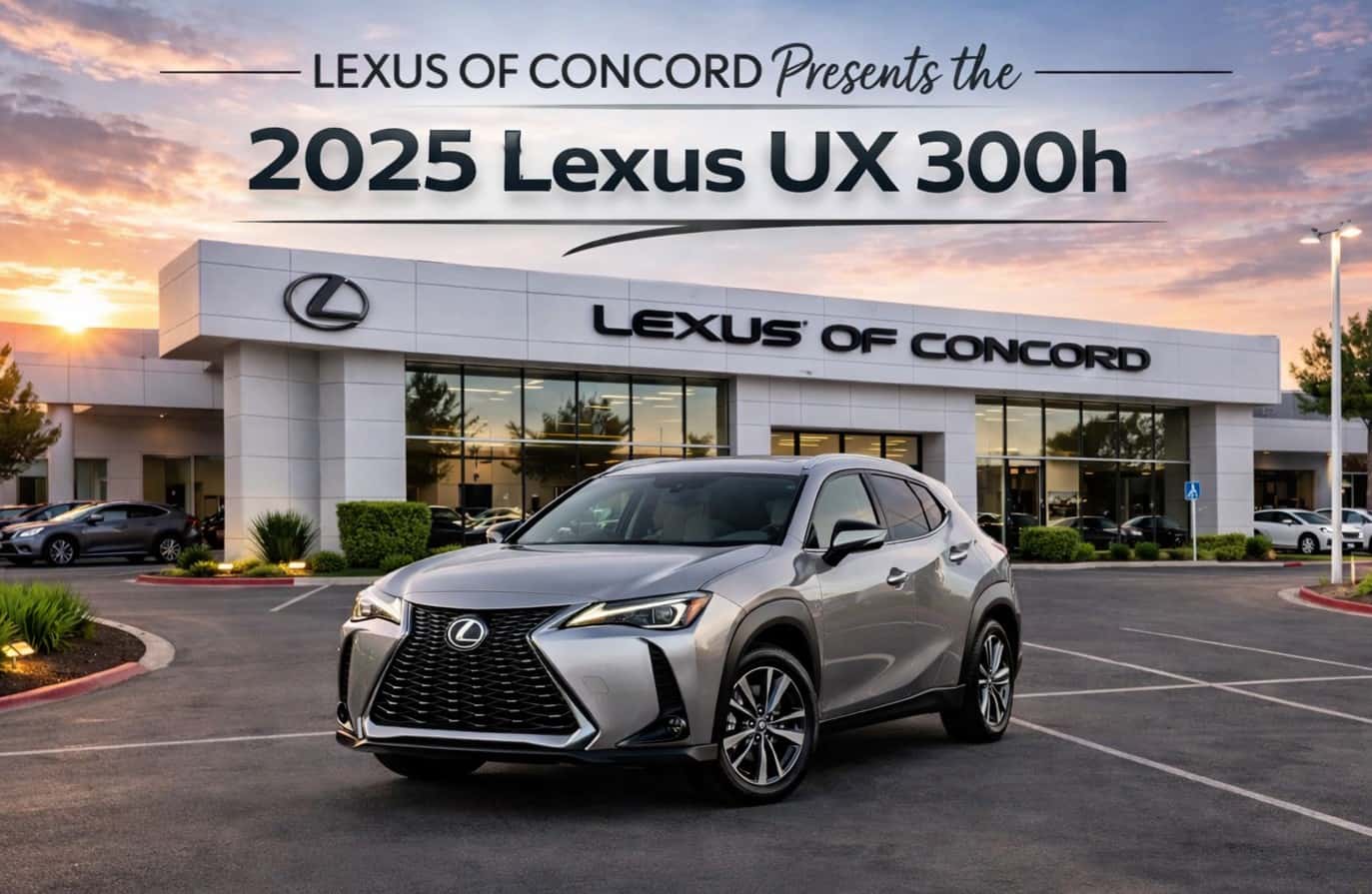
The Lexus UX 300h remains the efficiency champion of the lineup. As a subcompact crossover, its small footprint and lightweight chassis allow it to leverage a 2.0-liter four-cylinder hybrid system to its fullest potential. Owners can expect a combined rating of approximately 42 to 44 MPG, making it one of the most fuel-efficient luxury vehicles on the road.
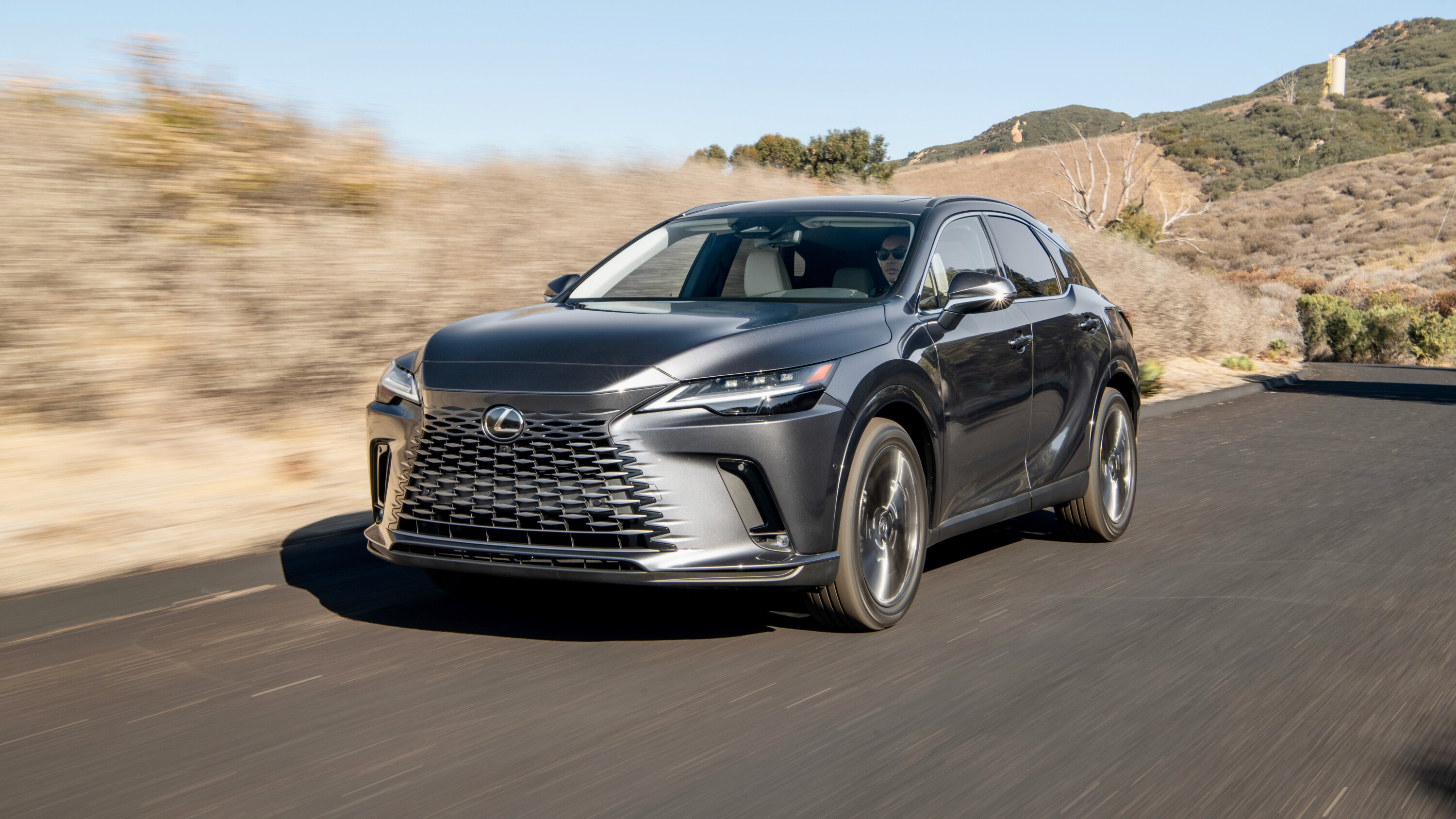
The Lexus NX 350h serves as the luxury brand's high-volume midsize-compact hybrid. Utilizing a 2.5-liter engine, it balances 240 total system horsepower with an EPA-estimated 39 to 41 combined MPG. The NX is often the benchmark for "real-world" efficiency, as its size is practical for families while maintaining fuel costs comparable to a much smaller economy car.
The Midsize Standard: Lexus RX
The RX remains the most recognizable Lexus SUV. For 2026, the RX offers two distinct hybrid paths:
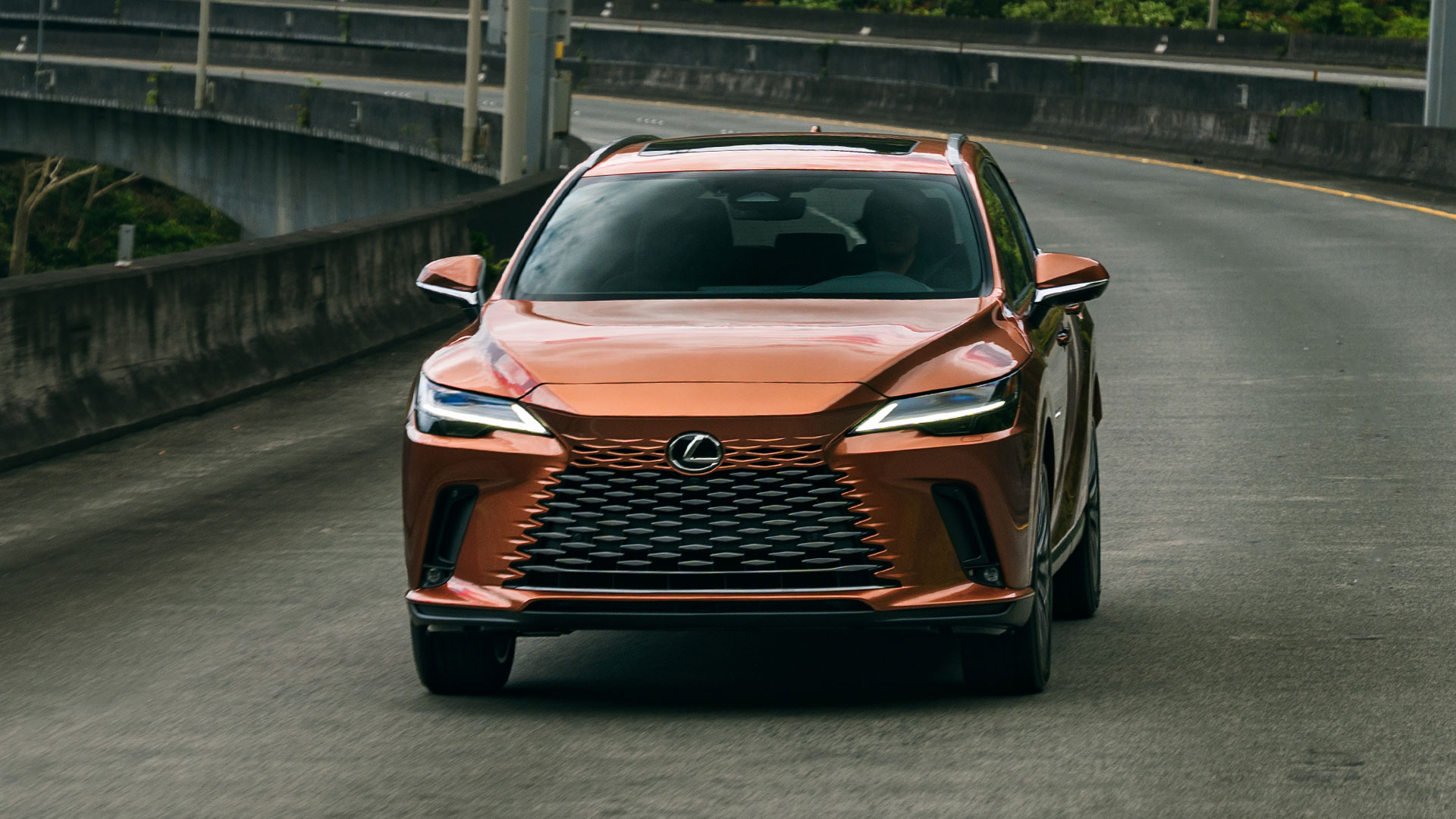
- RX 350h: This is the "efficiency-first" model. It uses the 2.5-liter hybrid system found in the NX but tuned for a larger chassis. It typically achieves 36 combined MPG.
- RX 500h F SPORT Performance: This model uses a different hybrid philosophy. Instead of an e-CVT, it pairs a 2.4-liter turbocharged engine with a 6-speed automatic transmission and a high-output rear electric motor (DIRECT4). Because it prioritizes torque and speed, its MPG is lower, hovering around 27 to 28 combined MPG.
Large Format Hybrids: TX and GX
The Lexus TX 500h caters to the three-row luxury market. Like the RX 500h, it utilizes a performance-hybrid setup to move its larger mass, resulting in roughly 27 to 28 MPG.
Newer to the hybrid fold is the Lexus GX 550h. As a body-on-frame SUV designed for off-road use, it utilizes the i-FORCE MAX hybrid system. While not an "efficiency" vehicle in the traditional sense, the hybrid components help it achieve a more respectable 20 to 22 combined MPG, which is a significant improvement over previous V8-powered iterations.
2026 Lexus Hybrid SUV MPG Comparison Table
| Model | Powertrain Type | Combined MPG / MPGe | Primary Fuel Type |
|---|---|---|---|
| UX 300h | Hybrid (HEV) | 43 MPG | Regular (87 Octane) |
| NX 350h | Hybrid (HEV) | 39 MPG | Premium (91 Octane) |
| NX 450h+ | Plug-in Hybrid (PHEV) | 84 MPGe / 36 MPG | Premium (91 Octane) |
| RX 350h | Hybrid (HEV) | 36 MPG | Premium (91 Octane) |
| RX 450h+ | Plug-in Hybrid (PHEV) | 82 MPGe / 35 MPG | Premium (91 Octane) |
| RX 500h | Performance Hybrid | 27 MPG | Premium (91 Octane) |
| TX 500h | Performance Hybrid | 27 MPG | Premium (91 Octane) |
| TX 550h+ | Plug-in Hybrid (PHEV) | 76 MPGe / 30 MPG | Premium (91 Octane) |
| GX 550h | Off-Road Hybrid | 21 MPG | Premium (91 Octane) |
Understanding MPG vs. MPGe in Plug-in Hybrids
Lexus "h+" models (NX 450h+, RX 450h+, and TX 550h+) are Plug-in Hybrids (PHEVs). Understanding their fuel economy requires looking at two different metrics:
- MPGe (Miles Per Gallon Equivalent): This represents the vehicle's efficiency when running solely on electricity. For example, the NX 450h+ offers approximately 37 miles of pure electric range. During those miles, the efficiency is rated in the 80s for MPGe.
- Gas-Only MPG: Once the battery is depleted to a certain threshold, the vehicle operates as a standard hybrid. At this point, the MPG drops to the mid-30s.
For drivers with short commutes who can charge daily, the "effective" MPG can be well over 100 if they rarely engage the gasoline engine. However, for long road trips, the MPG will settle into the standard hybrid range of 30–36 MPG depending on the model.
Factors That Influence Real-World Lexus Hybrid MPG
The EPA estimates provided by Lexus are calculated under specific laboratory conditions. In the real world, several factors can cause your actual MPG to deviate.
Wheel and Tire Selection
Lexus frequently offers larger wheel options (20-inch or 21-inch) on higher trim levels like the Luxury or F SPORT grades. Larger wheels are heavier (increased unsprung weight) and often feature wider tires with higher rolling resistance. Choosing the 21-inch wheels on an RX 350h can result in a loss of 1 to 2 MPG compared to the standard 19-inch wheels.
Ambient Temperature and HVAC Use
Hybrid batteries are sensitive to temperature. In extreme cold, the gasoline engine must run more frequently to generate heat for the cabin and to bring the battery up to its optimal operating temperature. Furthermore, running the air conditioning in summer draws power from the high-voltage battery, which eventually forces the engine to cycle on to recharge it.
Driving Style and "Pulse and Glide"
Hybrids reward a specific driving style. Rapid "jackrabbit" starts force the gasoline engine to provide maximum power, bypassing the electric-only EV mode. Conversely, using a "pulse and glide" technique—accelerating to speed and then lifting slightly to allow the electric motor to maintain that speed—can significantly boost MPG. Regenerative braking is also key; long, gradual braking periods allow the motor-generators to capture more kinetic energy to store in the battery.
Premium vs. Regular Fuel Requirements
A common point of confusion is the fuel type required. While the Lexus UX 300h is tuned for 87 octane (Regular), many other models like the NX, RX, and TX recommend or require 91 octane (Premium). Using regular fuel in a vehicle designed for premium can lead to reduced engine timing and slightly lower fuel efficiency, as the engine's computer compensates for the lower knock resistance. Always consult the owner's manual to ensure the MPG figures are not being compromised by the wrong fuel grade.
Frequently Asked Questions
Why is my Lexus hybrid MPG lower on the highway than in the city?
Unlike traditional gas cars, hybrids are generally more efficient in city driving. This is because city driving provides more opportunities for regenerative braking and allows the vehicle to spend more time in electric-only mode at lower speeds. On the highway, the gasoline engine must work constantly to overcome wind resistance, and there is little opportunity to capture energy through braking.
Does the Lexus Hybrid battery need to be replaced to maintain MPG?
Lexus hybrid batteries are designed to last the life of the vehicle, often supported by a 10-year/150,000-mile warranty. While a severely degraded battery would eventually impact MPG, modern lithium-ion and nickel-metal hydride packs used by Lexus are managed by sophisticated software that prevents deep discharges, ensuring efficiency remains stable for many years.
What is the difference between "Eco Mode" and "EV Mode"?
Eco Mode adjusts the throttle sensitivity and climate control settings to prioritize fuel savings, but the gasoline engine will still run as needed. EV Mode forces the vehicle to stay on electric power only, but it is limited to very low speeds (usually under 25 MPH) and very short distances. Using Eco Mode is the more effective way to improve overall MPG during a standard commute.
How does the DIRECT4 system affect fuel economy?
DIRECT4 is an advanced all-wheel-drive system found in performance models like the RX 500h. It constantly shifts torque between the front and rear axles to improve handling and stability. Because it uses more powerful motors and focuses on "dynamic" driving, it is less efficient than the standard e-Four system found in the 350h models.
Is the TX 550h+ more efficient than the TX 500h?
Yes, the TX 550h+ (Plug-in Hybrid) is generally more efficient because it can travel roughly 33 miles on electricity alone. Even after the battery is depleted, its hybrid tuning focuses more on efficiency than the performance-oriented 500h, though it is heavier due to the larger battery pack.
Final Recommendation for Buyers
When choosing a Lexus hybrid SUV based on MPG, the best value for most drivers is the NX 350h or RX 350h. These models provide the best balance of luxury, interior space, and high-30s fuel economy without the added cost and weight of the performance-tuned turbo-hybrids. If your daily commute is under 30 miles and you have access to a home charger, the PHEV (450h+) variants offer the potential to virtually eliminate gasoline consumption for daily use, despite their higher initial purchase price.
Image Gallery