Understanding Associate Degree Credit Requirements in 2026
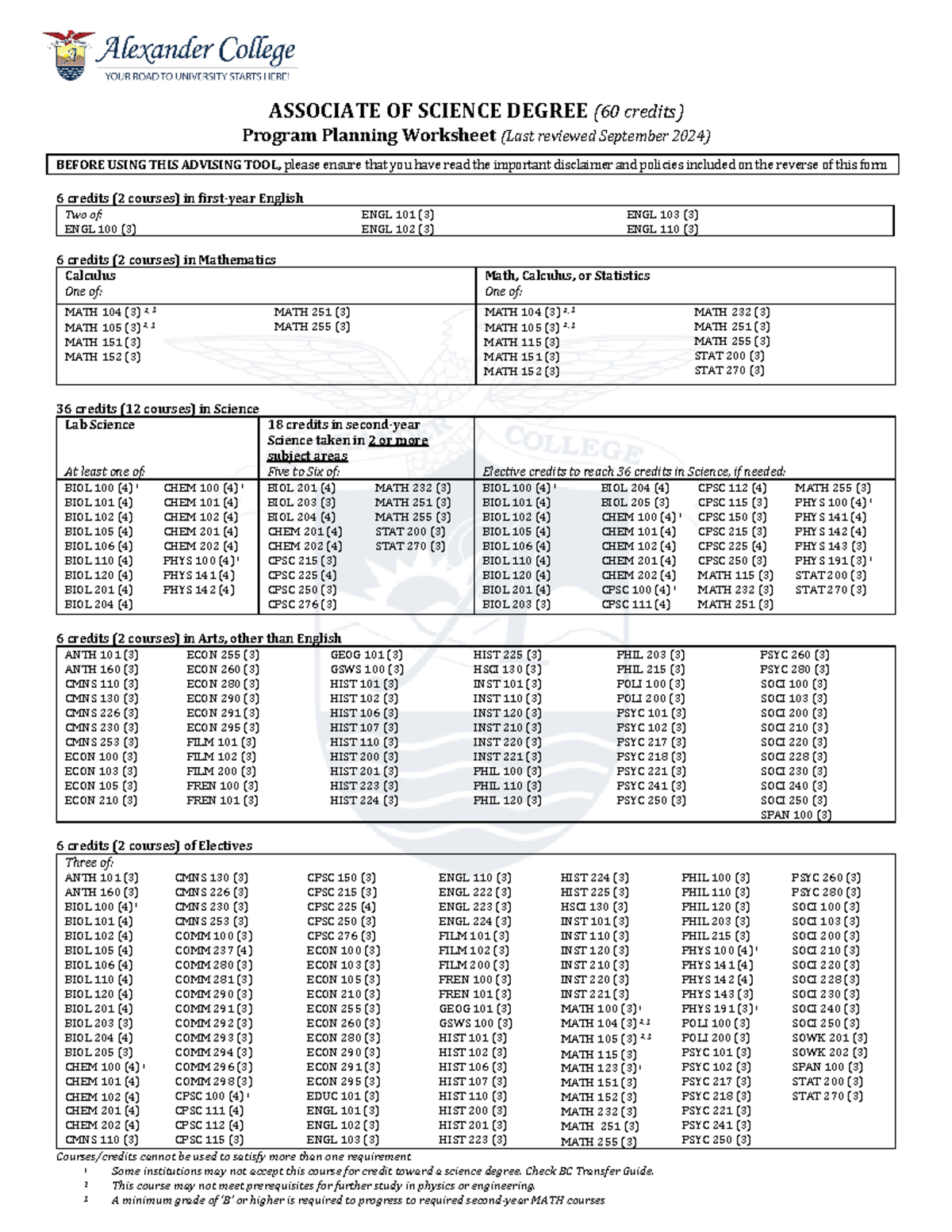
To earn an associate degree in 2026, students must typically complete a minimum of 60 semester credit hours or 90 quarter credit hours. This total is generally divided into three categories: general education requirements, major-specif...
To earn an associate degree in 2026, students must typically complete a minimum of 60 semester credit hours or 90 quarter credit hours. This total is generally divided into three categories: general education requirements, major-specific core courses, and elective units, all of which must meet specific institutional and regional accreditation standards for graduation.
Contents
The Standard Framework for Associate Degree Credits
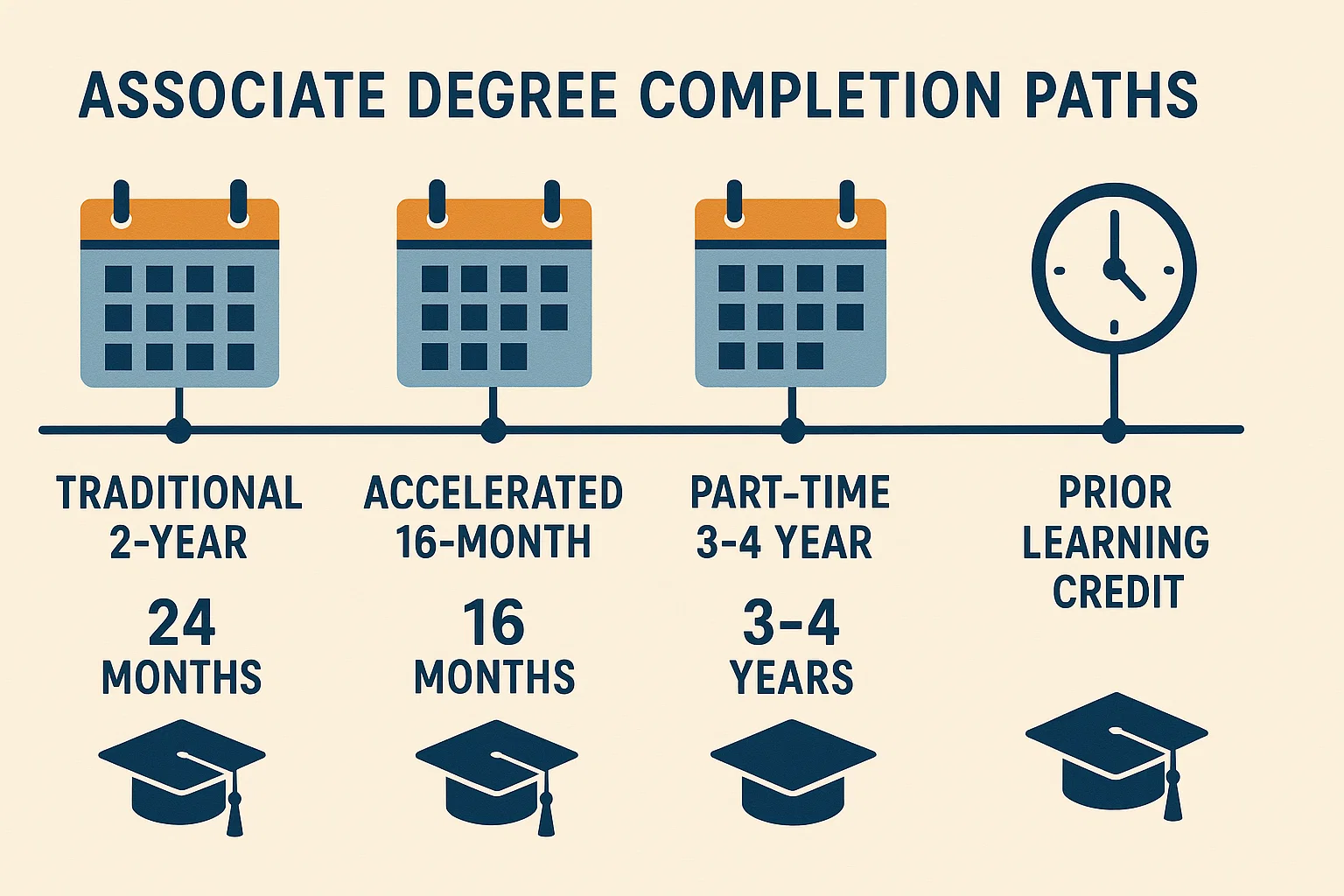
The associate degree serves as a foundational post-secondary qualification, typically designed to be completed in two years of full-time study. While specific institutional requirements vary, the 60-semester-credit benchmark remains the gold standard across the United States. This structure is not arbitrary; it is designed to represent approximately half of the requirements for a traditional 120-credit bachelor’s degree, allowing for a "2+2" pathway where students spend two years at a community college and two years at a university.
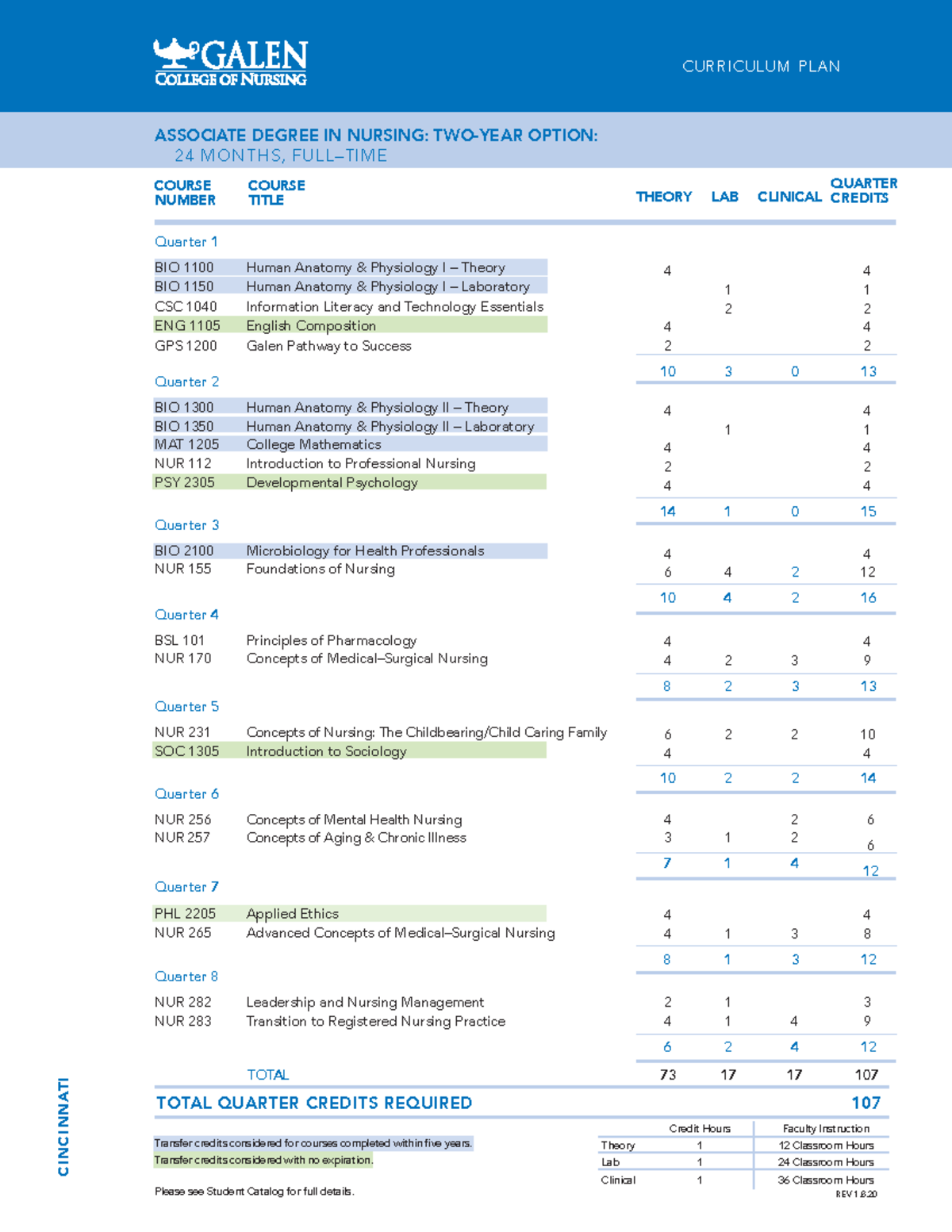
Credit hours are calculated based on the "Carnegie Unit" system. Traditionally, one semester credit hour represents approximately one hour of classroom instruction and two hours of out-of-class student work per week over a 15-week semester. For students on a quarter system—common in states like Washington and Oregon—the 90-credit requirement reflects shorter, more intensive terms, usually lasting 10 weeks. Understanding this distinction is vital for students planning to transfer between institutions that utilize different academic calendars.
In 2026, the delivery of these credits has become increasingly flexible. While the credit volume remains consistent, the method of acquisition often includes a mix of traditional seat-time, synchronous online sessions, and asynchronous competency-based modules. Regardless of the delivery format, the "credit" serves as the primary currency for academic progress and financial aid eligibility.
Breaking Down the Credit Categories
An associate degree is rarely a monolith of a single subject. Instead, it is a curated curriculum designed to provide both breadth and depth. The 60 credits are usually distributed across three primary pillars: General Education, Major Requirements, and Electives.
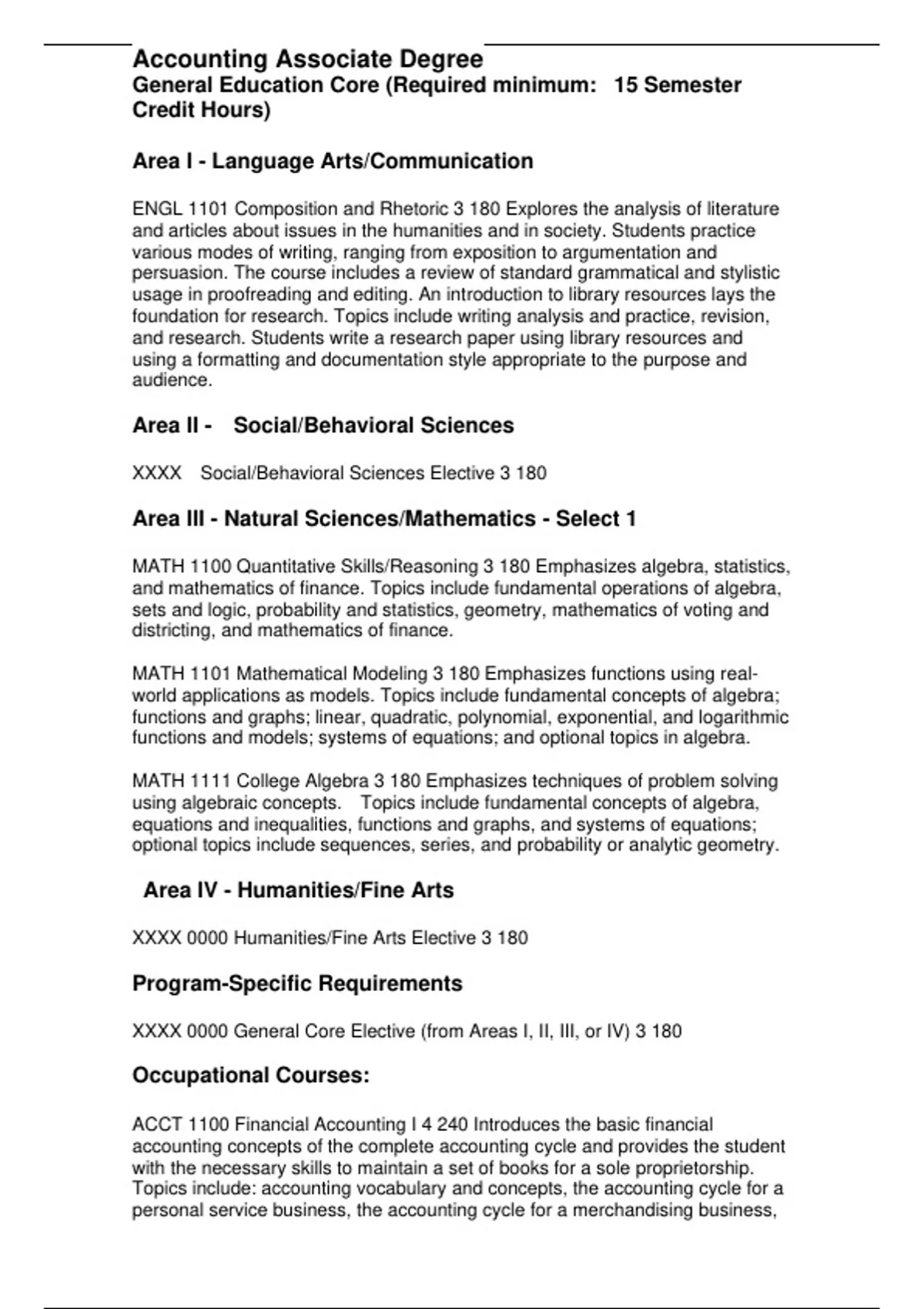
General Education Requirements (24–36 Credits)
General Education, or "Gen Ed," forms the bedrock of the degree. These courses are designed to ensure that every graduate possesses a baseline of "soft skills" and cultural literacy, regardless of their specific career path. In 2026, Gen Ed requirements typically focus on:
- Communication: English Composition I and II, and often a Public Speaking or Technical Writing course.
- Quantitative Reasoning: College-level Algebra, Statistics, or Math for Liberal Arts.
- Social and Behavioral Sciences: Psychology, Sociology, Economics, or Political Science.
- Humanities and Fine Arts: Philosophy, Literature, History, or Art Appreciation.
- Natural Sciences: Biology, Chemistry, or Physics, often requiring at least one laboratory component.
Major-Specific Core Requirements (18–30 Credits)
These are the courses that define the degree's focus. If a student is pursuing an Associate of Science in Nursing, the core will involve Anatomy, Physiology, and Microbiology. If they are pursuing an Associate of Applied Science in Cybersecurity, the core will focus on network security, ethical hacking, and digital forensics. These credits are often sequenced, meaning a student must pass "Introduction to Programming" before they can take "Data Structures."
Elective Credits (6–15 Credits)
Electives offer students the opportunity to explore interests outside their major or to add depth to their primary field of study. For transfer-oriented students, electives are often used to satisfy prerequisites for the junior-level courses they will encounter at a four-year university. It is a common mistake to view electives as "filler" classes; strategic elective selection can significantly shorten the time to a bachelor’s degree.
Variations by Degree Type
Not all associate degrees are created equal. The specific credit requirements and their distribution depend heavily on the type of degree being sought. The three most common types—Associate of Arts (AA), Associate of Science (AS), and Associate of Applied Science (AAS)—each serve different professional and academic goals.
| Degree Type | Primary Goal | Gen Ed Focus | Major Focus | Transferability |
|---|---|---|---|---|
| Associate of Arts (AA) | Transfer to a Liberal Arts BA | High (30+ credits) | Broad/Foundational | Very High |
| Associate of Science (AS) | Transfer to a STEM or Business BS | Moderate (24-30 credits) | Technical/Scientific | High |
| Associate of Applied Science (AAS) | Immediate Workforce Entry | Low (15-21 credits) | Occupational/Technical | Limited to Specific Schools |
| Associate of Fine Arts (AFA) | Creative Arts Transfer/Entry | Moderate | Portfolio/Studio-heavy | Moderate |
The Associate of Applied Science (AAS) is particularly distinct. Because it is designed to prepare students for immediate employment in fields like welding, dental hygiene, or automotive technology, it prioritizes "hands-on" major credits over general education. While an AA student might take three history courses, an AAS student might take only one, replacing the others with intensive technical labs.
Transfer Credits and Residency Requirements
Many students do not start their associate degree with zero credits. In 2026, the use of Transfer Credits is a standard part of the academic journey. Students may bring in credits from other accredited institutions, but they must navigate the "Residency Requirement."
The residency requirement dictates that a student must complete a minimum percentage of their degree at the institution granting the diploma. Most community colleges require at least 15 to 25% of the total credits (usually 15 semester hours) to be taken "in-residence." This ensures that the awarding institution has had sufficient oversight of the student’s academic performance.
Prior Learning Assessment (PLA)
Increasingly, colleges allow students to earn credit for what they already know. This is particularly relevant for adult learners. Methods for earning credit outside the classroom include:
- CLEP and DSST Exams: Standardized tests that allow students to "test out" of introductory courses.
- Advanced Placement (AP) and International Baccalaureate (IB): Credits earned during high school.
- Military Training: Credits awarded based on American Council on Education (ACE) recommendations for military occupational specialties.
- Portfolio Assessment: A process where students document work experience to prove they have mastered the learning objectives of a specific college course.
The Impact of Accreditation on Credit Value
For a credit to have value—both in the job market and for future transfer—it must come from an accredited institution. In the United States, the Department of Education recognizes several institutional accrediting agencies (formerly known as regional accreditors) such as the Higher Learning Commission (HLC) or the Southern Association of Colleges and Schools Commission on Colleges (SACSCOC).
Accreditation acts as a quality control mechanism. It ensures that "Introduction to Psychology" at one college covers the same fundamental concepts as the same course at another. If a student earns 60 credits from a non-accredited school, they may find those credits are "non-transferable" to a four-year university and may not be recognized by professional licensing boards. Always verify the accreditation status of a program via the Database of Accredited Postsecondary Institutions and Programs (DAPIP).
Remedial and Developmental Coursework
A common hurdle in meeting associate degree credit requirements is the need for developmental or remedial education. Upon entry, many students take placement tests in math and English. If their scores fall below college-level benchmarks, they are required to take developmental courses (often numbered below 100, such as MATH 095).
It is crucial to understand that remedial credits generally do not count toward the 60-credit graduation requirement. While they are necessary for progression and often required for financial aid eligibility (as they count toward "enrollment status"), they do not satisfy the "College-Level Math" or "English Composition" categories needed for the degree. This can extend the time to graduation beyond the traditional two years.
Common Obstacles to Meeting Requirements
Despite the seemingly straightforward 60-credit rule, many students find themselves with "excess credits"—meaning they have taken more than 60 units but still haven't met graduation requirements. This usually happens for three reasons:
- Changing Majors: When a student switches from a Nursing track to a Business track, many of their science-heavy core credits may no longer apply to their new degree requirements, becoming "lost" electives.
- Improper Advising: Taking classes that are not part of the "degree plan" or "guided pathway" can result in earned credits that do not move the needle toward graduation.
- Course Expiration: In highly technical fields like Information Technology or Allied Health, credits earned more than 7–10 years ago may be deemed "expired" by the institution because the technology or medical standards have changed significantly.
Frequently Asked Questions
Can I graduate with an associate degree in less than two years?
Yes. Students can accelerate their progress by taking maximum credit loads (usually 18 credits per semester), attending summer and winter intersession terms, or utilizing Prior Learning Assessments (PLA) and CLEP exams to bypass introductory requirements. Some "accelerated" associate programs are specifically designed to be completed in 12 to 16 months.
Does a 2.0 GPA count toward my credit requirements?
While you earn the "credits" for any course where you receive a passing grade (usually a D or higher), most institutions require a minimum cumulative GPA of 2.0 (a "C" average) to graduate. Furthermore, many competitive majors—especially in healthcare or engineering—require a minimum grade of "C" in all core major courses for those credits to satisfy degree requirements.
What happens if I have 60 credits but haven't taken a specific required class?
You cannot graduate. The 60-credit rule is a minimum quantity requirement, but the distribution of those credits is equally important. You must satisfy every specific "distribution area" (e.g., you must have a lab science, you must have a diversity-designated course) as outlined in your college's catalog for your specific catalog year.
Do "Life Experience" credits count toward the 60-credit total?
They can, but with limitations. Most colleges will only allow a certain number of credits (often 15 or 30) to be earned through non-traditional means like work experience portfolios or military service. These credits must still be mapped to specific courses within the college's curriculum to be applied to your degree audit.
Are certificate credits applicable toward an associate degree?
In many cases, yes. This is known as a "stackable credential" model. Many community colleges design their certificates to be the first 15–30 credits of a corresponding associate degree. For example, a student might earn a Certificate in Medical Coding and then apply all those credits directly toward an Associate of Applied Science in Health Information Management.
Final Recommendation: Utilizing the Degree Audit
To ensure you are meeting all associate degree credit requirements without wasting time or money, your most important tool is the Degree Audit Report. Accessible through your student portal, this live document tracks your progress against the specific requirements of your major.
Next Step: Schedule a meeting with an academic advisor at least once per semester. Verify that every course you register for satisfies a specific "bucket" in your degree audit. If you plan to transfer, obtain a "Transfer Equivalency Guide" or a "Memorandum of Understanding (MOU)" between your current college and your target university to ensure the 60 credits you earn now will be fully recognized toward your 120-credit bachelor’s degree later.
Image Gallery