Why Dogs Sleep With Their Ears Up: The Science of Canine Sleep Vigilance
Dogs sleep with their ears up primarily due to an evolutionary survival mechanism that allows them to remain alert to environmental sounds even while resting. This behavior, most common in prick-eared breeds, is supported by a complex...
Dogs sleep with their ears up primarily due to an evolutionary survival mechanism that allows them to remain alert to environmental sounds even while resting. This behavior, most common in prick-eared breeds, is supported by a complex network of 18 muscles that can maintain ear position to facilitate sound localization during light sleep stages.
Contents
The Evolutionary Foundation of Sleep Vigilance
The domestic dog (Canis lupus familiaris) shares a significant portion of its genetic makeup with the gray wolf. In the wild, sleep is a period of extreme vulnerability. Predators and rival packs are constant threats, and the ability to detect a breaking twig or a distant rustle can mean the difference between survival and death. This "sentinel" behavior has not been entirely bred out of domestic dogs, even in the safe environments of 2026 households.
When a dog sleeps with its ears in an upright or "perked" position, it is essentially keeping its primary radar system active. Unlike humans, who rely heavily on vision, a dog’s primary sense for environmental mapping is often auditory. By keeping the pinnae (the external part of the ear) upright, the dog maximizes the surface area available to capture sound waves. This allows the brain to process auditory data even when the dog is in a state of somnolence.
Evolutionarily, this is known as "passive monitoring." Even when the cognitive functions of the brain are slowing down for rest, the physical orientation of the ears ensures that the auditory cortex receives high-fidelity signals. If a sound exceeds a certain threshold of familiarity or volume, the dog can transition from deep sleep to full alertness in milliseconds—a feat of biological engineering designed for survival.
Anatomy of the Canine Ear: Why "Up" Is Possible During Rest
To understand why some dogs keep their ears up while sleeping, we must look at the specific anatomy of the canine ear. A dog's ear is controlled by at least 18 different muscles, which allow for a range of motion that far exceeds human capabilities. These muscles can tilt, rotate, and raise the ear independently.
The Role of the Scutiform Cartilage
In breeds with naturally erect ears, such as German Shepherds, Belgian Malinois, and West Highland White Terriers, the ears are supported by a firm but flexible base of scutiform cartilage. For these dogs, an "up" position is often the neutral or resting state of the ear. It takes more muscular effort for some of these dogs to pin their ears back than it does to leave them upright.
Muscle Tension and Tone
While we might assume that sleep requires total muscle relaxation, "muscle tone" remains present even during rest. In many dogs, the tonicity of the auricular muscles remains sufficient to keep the ears standing. This is particularly true during Non-Rapid Eye Movement (NREM) sleep, also known as light sleep or slow-wave sleep. During this phase, the body is not yet in the state of "atonia" (temporary muscle paralysis) that characterizes deep REM sleep.
Sleep Stages and Sensory Processing
Dogs do not sleep in one continuous block like humans; instead, they utilize a polyphasic sleep pattern consisting of multiple short bursts throughout the day and night. The position of their ears often changes depending on which stage of sleep they are currently experiencing.
Light Sleep (Slow-Wave Sleep)
During light sleep, a dog’s brain waves slow down, but they remain easily arousable. This is the stage where you will most frequently see ears standing straight up or even twitching in response to distant noises. The dog is resting its body, but its "radar" is fully operational. If you whisper your dog's name or move a ceramic bowl in the kitchen, those upright ears will likely rotate toward the source before the eyes even open.
REM Sleep and Atonia
When a dog enters Rapid Eye Movement (REM) sleep—the stage where dreaming occurs—the brain sends signals to relax the voluntary muscles to prevent the dog from physically acting out its dreams. In many dogs, this is when the ears might finally "flop" or lose their rigid upright posture. However, even in REM, the auditory system remains partially active. If a dog is dreaming about a chase, you may see the ears twitching or "flicking" upward as the brain processes internal stimuli as if they were external sounds.
The Impact of Breed and Ear Morphology
Not all dogs can sleep with their ears "up" in the traditional sense. The ability to do so is heavily dependent on the morphology of the breed.
- Prick Ears: Breeds like the Siberian Husky or Samoyed have ears that naturally stand upright. For them, sleeping with ears up is a default anatomical setting.
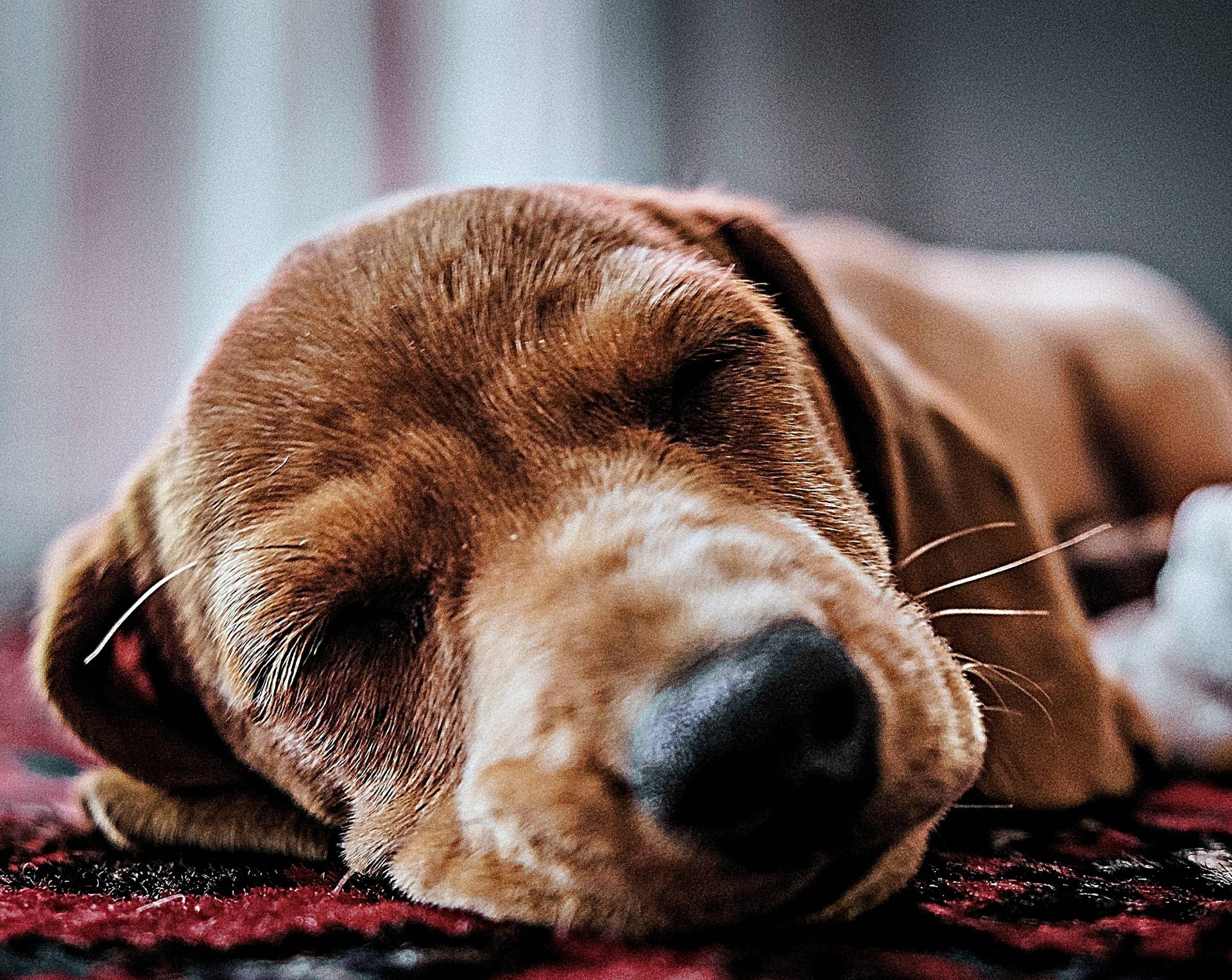
- Drop Ears: Breeds like the Basset Hound or Cavalier King Charles Spaniel have heavy, drooping pinnae. While they cannot stand their ears "up," they still exhibit vigilance by twitching the base of the ear or "lifting" the ear canal slightly to improve sound reception during sleep.
- Button and Rose Ears: Breeds like Bulldogs or Greyhounds have semi-erect ears. They may sleep with their ears partially lifted, reflecting a middle ground between total relaxation and high vigilance.
Comparison of Ear Positions and Physiological States
| Ear Position | Common Sleep Stage | Mental State | Biological Function |
|---|---|---|---|
| Fully Upright | Light Sleep (SWS) | High Vigilance | Maximum sound localization and environmental monitoring. |
| Relaxed/Side | Deep Sleep | High Comfort | Reduced monitoring; focus on physical recovery and growth. |
| Twitching/Flicking | REM Sleep | Dreaming | Processing internal/dream stimuli; reacting to "phantom" sounds. |
| Pinned Back | Disturbed Sleep | Stress/Anxiety | Often seen if the dog is sleeping in a loud or unfamiliar environment. |
Environmental Drivers: Temperature and Noise
Beyond evolution and anatomy, two environmental factors play a massive role in why a dog might keep its ears up while sleeping: thermoregulation and noise pollution.
Thermoregulation
Dogs do not sweat through their skin like humans; they primarily dissipate heat through panting and through their extremities—their paws and ears. The ears are highly vascularized, meaning they contain many small blood vessels. When a dog is warm, it may keep its ears upright and exposed to the air to help lower its core body temperature. By holding the ears up during sleep, the dog increases the surface area for convective cooling, allowing heat to escape more efficiently.
Modern Noise Environments
In 2026, household environments are often filled with high-frequency sounds that humans cannot hear but dogs can. From the hum of smart home hubs to the ultrasonic frequencies emitted by certain electronic devices, a dog’s ears are constantly bombarded. Sleeping with ears up allows the dog to categorize these "background" noises. If the noise profile changes—such as a stranger approaching the door or a sudden mechanical failure—the upright ears catch the change immediately, triggering the "startle response" that protects the household.
When to Monitor Your Dog's Sleeping Ear Position
While sleeping with ears up is generally a sign of a healthy, alert dog, changes in this behavior can sometimes indicate underlying issues. If a dog that usually sleeps with upright ears suddenly keeps them pinned back or flat, it may be experiencing ear pain, an infection (otitis externa), or significant stress.
Conversely, if a dog is "dead to the world" and never shows any ear movement or vigilance during sleep, it could be a sign of hearing loss, which is common in senior dogs. Owners should look for a balance: a dog should be able to relax and "flop" when they feel completely safe, but maintaining an upright ear during shorter naps is a normal and healthy sign of canine instinct.
Frequently Asked Questions
Do dogs hear everything while they are asleep?
Dogs do not process every sound with the same level of intensity, but their brains remain remarkably "tuned in" to specific frequencies. They utilize a sensory filtering process where the brain ignores "white noise" (like a fan) but reacts instantly to "significant" sounds (like a doorbell or their owner's voice). Their upright ears act as a physical amplifier for these significant sounds.
Why does my dog sleep with one ear up and one ear down?
This is often referred to as "half-alert" sleeping. It usually occurs when a dog is in a transitional sleep state or when the sound source is localized to one side. It can also be a matter of physical comfort, where the dog is resting one side of its head on a surface that forces one ear down while leaving the other free to monitor the room.
Can dogs control their ears while they are dreaming?
Yes. During REM sleep, the brain sends various signals to the muscles. While major motor functions are suppressed, smaller muscles—like those in the ears, paws, and snout—often "leak" movement. If a dog is dreaming of an auditory stimulus, the brain may trigger the auricular muscles to twitch or rise.
Does sleeping with ears up mean my dog is stressed?
Not necessarily. In most cases, it simply means the dog is in a light stage of sleep or is naturally inclined to be a "guardian." However, if the ears are pinned tightly against the head during sleep, accompanied by whimpering or tense body language, the dog may be experiencing a stressful dream or environmental discomfort.
Is it harder for floppy-eared dogs to stay alert?
Floppy ears do provide a physical barrier to sound waves, making it slightly more difficult for these breeds to pinpoint the exact direction of high-frequency noises compared to prick-eared breeds. However, floppy-eared dogs often compensate with a more sensitive sense of smell or by being more easily awoken by vibrations.
Practical Recommendations for Owners
To support your dog's natural sleep instincts and auditory health in 2026, consider the following actions:
- Provide "Quiet Zones": Ensure your dog has a sleeping area away from high-traffic electronics or appliances that emit high-frequency hums.
- Observe "Normal" Baseline: Get to know your dog's typical sleeping ear positions. A sudden change in "ear posture" is often the first sign of an ear infection or hearing change.
- Respect the Sentinel: If your dog is sleeping with its ears up, avoid startling them. Their brain is already in a state of high readiness, and a sudden touch can trigger an involuntary defensive snap. Always call their name softly before touching a sleeping dog.
- Maintain Ear Hygiene: Especially for dogs that keep their ears perked and open to the environment, regular checks for debris or redness are essential to ensure their primary sensory tool remains functional.
Image Gallery