Exploring 3ds Classic Games: Access, History, and Digital Preservation
Playing 3ds classic games requires navigating Nintendo's legacy handheld ecosystem, utilizing built-in Virtual Console libraries, backward compatibility features, and physical cartridge collections to experience decades of portable vid...
Playing 3ds classic games requires navigating Nintendo's legacy handheld ecosystem, utilizing built-in Virtual Console libraries, backward compatibility features, and physical cartridge collections to experience decades of portable video game history.
Contents
The Nintendo 3DS family of systems, launched originally in 2011, holds a unique place in video game history as a bridge between traditional dual-screen handheld gaming and glasses-free stereoscopic 3D technology. Beyond its native library of 3DS exclusives, the handheld line became famous for housing vast collections of classic titles spanning from the Nintendo Entertainment System (NES) up through the Game Boy Advance and Nintendo DS eras. Understanding how these classic games are structured, accessed, and maintained involves evaluating digital storefront realities, hardware limitations, and physical media variations.
The Evolution of Retro Gaming on Nintendo Handhelds
Nintendo has a long-standing tradition of re-releasing its historical catalog on newer hardware. The 3DS hardware architecture, powered by a combination of an ARM11 central processing unit and a dedicated PICA200 graphics processing unit, possessed enough horsepower to emulate earlier 8-bit and 16-bit systems natively rather than through purely software-driven emulation.
This native hardware support, particularly for Nintendo DS games through backward compatibility and Game Boy / Game Boy Color titles via the Virtual Console, created an exceptionally responsive retro gaming experience. Unlike streaming services or modern software emulators that add input lag, the 3DS utilized direct hardware execution for several older platforms. For instance, when running a Nintendo DS game, down-clocked hardware segments within the 3DS chip architecture physically replicated the original DS Lite environment, ensuring near-perfect compatibility rates for physical DS cartridges.
Categories of Classic Games on the 3DS Family
To understand the scope of retro titles available on the system, it helps to categorize them by their generation, release mechanism, and technical delivery method.
Virtual Console Releases
The Virtual Console service served as the primary digital marketplace for software spanning the NES, Game Boy, Game Boy Color, Game Gear, and TurboGrafx-16. Nintendo curated these releases carefully, adding specialized features such as:
- Rest Points: Temporary save states that allowed players to suspend gameplay at any moment.
- Display Modes: Options to view games in their original pixel resolution with crisp borders or stretch them to fill the upper widescreen display.
- Sleep Mode Functionality: Handled seamlessly by closing the clamshell design of the 3DS system.
Backward Compatibility
Physical media compatibility forms a massive pillar of the 3DS classic catalog. All models in the 3DS family—including the original 3DS, 3DS XL, 2DS, New 3DS, New 3DS XL, and New 2DS XL—accept physical Nintendo DS and Nintendo DSi cartridges. Because the 3DS shares a similar architectural lineage with its predecessor, these games run with complete asset fidelity, though region locking applies to DSi-enhanced software.
Ambassador Program and Exclusive Titles
In August 2011, following a significant price drop for the original 3DS, Nintendo launched the "Ambassador Program" for early adopters. This initiative granted participants free access to ten NES titles and ten Game Boy Advance titles. Notably, the GBA titles provided through this program run via native hardware mode, making them some of the most sought-after digital artifacts on the platform, as standard GBA Virtual Console releases were never made publicly available on the general 3DS eShop.
System Compatibility and Hardware Variations
Not all 3ds classic games run identically across every iteration of the hardware. Recognizing the differences between standard and "New" system revisions is essential for collectors and players alike.
| System Model | NES Virtual Console | SNES Virtual Console | Game Boy / GBC | GBA Ambassador Games | Nintendo DS Backward Compatibility |
|---|---|---|---|---|---|
| Nintendo 3DS / 3DS XL | Supported | Not Supported | Supported | Supported (Ambassador only) | Supported |
| Nintendo 2DS | Supported | Not Supported | Supported | Supported (Ambassador only) | Supported |
| New 3DS / New 3DS XL | Supported | Fully Supported | Supported | Supported (Ambassador only) | Supported |
| New 2DS XL | Supported | Fully Supported | Supported | Supported (Ambassador only) | Supported |
As detailed in the comparison table, Super Nintendo Entertainment System (SNES) Virtual Console games were restricted exclusively to systems equipped with the "New" hardware revision (featuring the faster quad-core CPU and additional RAM). Titles like Super Mario World or The Legend of Zelda: A Link to the Past required the extra processing overhead of the New 3DS chips to run at full speed without audio stuttering or frame drops.
The Digital Storefront Closure and Modern Accessibility
A critical factor for modern enthusiasts exploring 3ds classic games is the official closure of the Nintendo eShop for the 3DS family, which took place in March 2023.
While new digital purchases can no longer be made directly through the console interface, users who previously purchased digital titles retain the ability to redownload their software libraries and game updates. Consequently, physical cartridges, pre-existing digital accounts, and secondary market hardware have become the primary avenues for building and enjoying a classic game collection on the platform today.
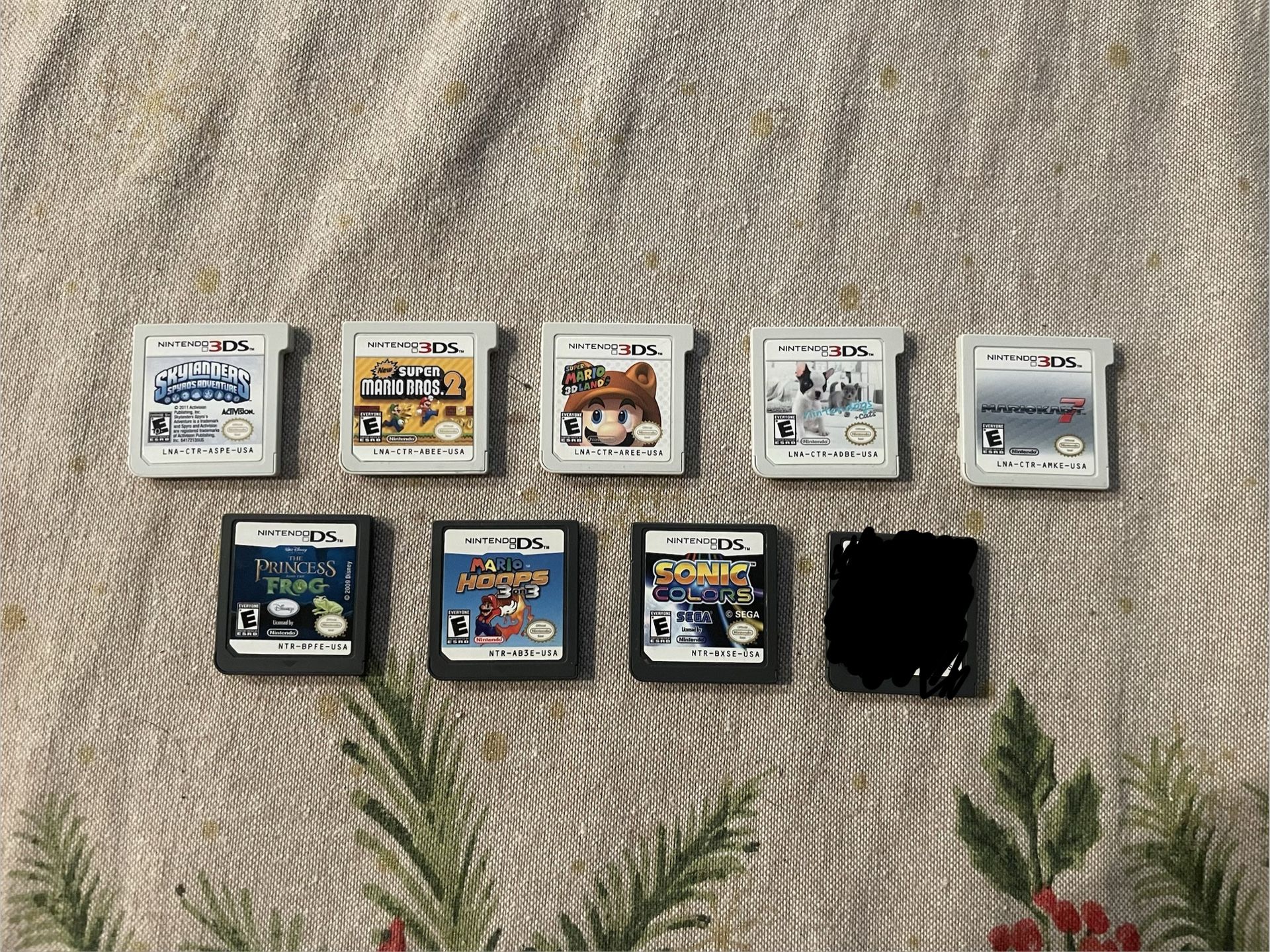
When acquiring physical Nintendo DS cartridges or 3DS systems on the secondary market, buyers should remain vigilant regarding counterfeit cartridges. Fake DS cartridges often utilize incorrect label fonts, lack the proper translucent plastic housing tint for infrared-enabled or specific functional carts, and may fail to save game progress correctly due to cheap flash memory components.
Frequently Asked Questions
Can standard 3DS systems play SNES classic games?
No. Super Nintendo Virtual Console releases require the upgraded processing power found exclusively in the New 3DS, New 3DS XL, and New 2DS XL systems. Original 3DS, 3DS XL, and 2DS models lack the necessary CPU architecture to run these specific 16-bit titles properly.
Are physical Game Boy cartridges compatible with the 3DS?
No. The physical cartridge slot on the 3DS family only accepts 3DS game cards and original Nintendo DS cartridges. Game Boy, Game Boy Color, and Game Boy Advance physical cartridges cannot be inserted into the system and must be accessed digitally via the Virtual Console or Ambassador software.
Do Nintendo DS games look blurry on the 3DS screen?
Because the native resolution of the Nintendo DS (256x192) does not scale with a clean integer multiple into the upper screen resolution of the 3DS, running DS games in their native pixel size leaves black borders around the image. Pressing and holding the Select or Start buttons while launching a DS game forces the system to display the game in its original, unscaled pixel aspect ratio to eliminate blurriness.
Can regional game versions be played across different 3DS consoles?
The 3DS family is region-locked. A North American console can only play physical North American region 3DS cartridges, while European systems are restricted to PAL region software. However, physical Nintendo DS cartridges are generally region-free, with only a small handful of DSi-enhanced titles enforcing regional restrictions.
Conclusion and Next Actions
Exploring 3ds classic games offers a rewarding window into handheld gaming heritage, provided you select the appropriate hardware revision for your preferred library. To begin or expand your collection, verify whether your system is a standard or "New" model to ensure compatibility with 16-bit SNES titles, inspect physical DS cartridges carefully for authenticity, and utilize native resolution display settings for optimal visual clarity.
Image Gallery