Why the Right Dog Training Ad Matters for Your Home
Selecting the right dog training ad goes beyond choosing a service provider; it shapes the daily safety, harmony, and structural dynamics of your household. When you welcome a dog into your home, behavioral alignment determines whether...
Selecting the right dog training ad goes beyond choosing a service provider; it shapes the daily safety, harmony, and structural dynamics of your household. When you welcome a dog into your home, behavioral alignment determines whether living spaces remain peaceful or become sources of chronic stress. A well-crafted training advertisement reflects a professional methodology that prioritizes positive reinforcement, clear communication, and customized home integration. By evaluating advertising messaging carefully, dog owners can avoid ineffective or punitive training methods that compromise animal welfare and household tranquility.
Contents
Understanding the Impact of Dog Training on Household Dynamics
The introduction of a canine companion fundamentally alters the domestic environment. Without proper behavioral guidance, natural instincts such as excessive barking, destructive chewing, and barrier frustration can destabilize a home. Dog training directly influences how a domestic space functions, transforming chaotic environments into structured settings where humans and pets coexist comfortably.
When evaluating a dog training service, the advertising materials serve as an initial diagnostic tool. Advertisements that emphasize behavioral science, clear goal-setting, and environmental management usually signal a professional who understands how dogs learn within domestic spaces. Conversely, ads promising instant fixes or relying on fear-based techniques often lead to behavioral suppression rather than genuine learning, creating long-term anxiety within the home.
The Connection Between Marketing Transparency and Behavioral Outcomes
Transparency in a training advertisement correlates strongly with the quality of instruction you will receive in your home. Professional trainers use their marketing to set realistic expectations regarding timeframes, owner participation, and methodology.
- Methodology Disclosure: Clear ads specify whether trainers use positive reinforcement, clicker training, or force-free principles.
- Scope of Service: Detailed descriptions indicate whether sessions occur in-home, at a facility, or via a hybrid model.
- Trainer Credentials: Mention of certifications from recognized bodies such as the Certification Council for Professional Dog Trainers (CCPDT) provides objective verification of skill.
Key Elements to Look for in a Quality Dog Training Advertisement
Navigating the landscape of pet services requires a discerning eye. Vague slogans and aggressive sales tactics often mask a lack of substantive methodology. A reliable training advertisement provides specific details about how behaviors are modified and how those lessons translate to your specific living situation.
In-Home Versus Facility-Based Advertising Claims
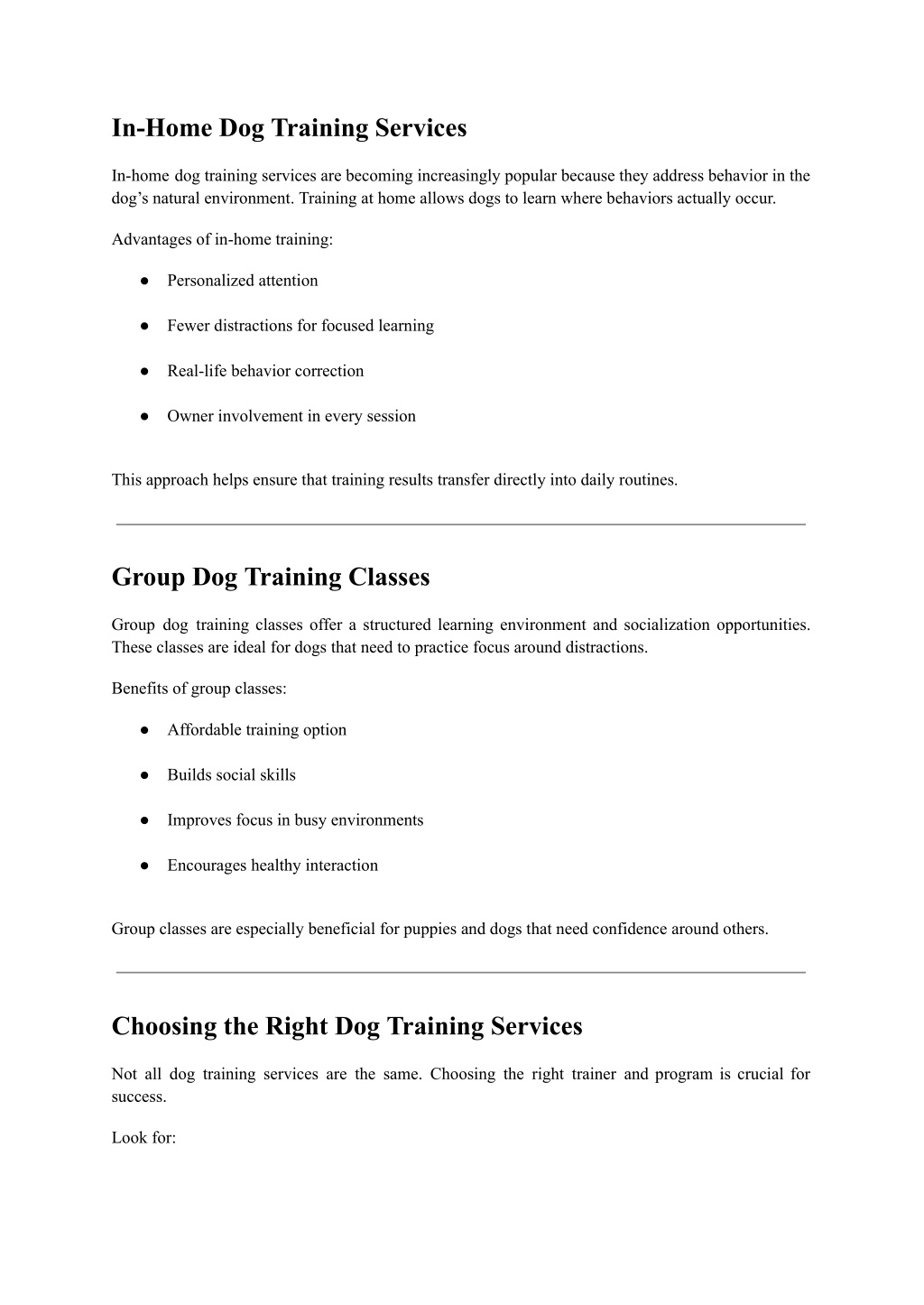
The location of training is a vital factor for domestic harmony. Many advertisements promote board-and-train programs where the dog leaves the home for several weeks. While convenient, this approach often fails to address the specific triggers present in your daily living environment.
| Training Type | Primary Advertising Focus | Domestic Impact | Best Suited For |
|---|---|---|---|
| In-Home Private Lessons | Customization, family participation, environmental triggers | High transfer of skills to daily routines; addresses household-specific issues | Household management, resource guarding, leash reactivity near home |
| Board-and-Train | Rapid obedience, immersion, behavior reset | Requires significant retraining for owners when the dog returns | Advanced obedience, working dog foundations, severe schedules |
| Group Class | Socialization, distractionproofing, cost-effectiveness | Teaches focus around other dogs and people in controlled settings | Basic manners, puppy socialization, public access skills |
Evaluating these claims requires looking past promotional guarantees. A credible advertisement for in-home training will explicitly state that human family members must participate actively in the learning process, as dogs heavily contextualize behavior based on human handlers.
Avoiding Common Pitfalls in Dog Training Marketing
The pet industry features varying degrees of regulation, allowing individuals to market themselves as behaviorists or trainers without formal qualifications. Advertisements can easily exploit emotional vulnerabilities in stressed pet owners by offering absolute guarantees.
Red Flags in Training Advertisements
- Guarantees of 100% Obedience: Living beings are dynamic; responsible trainers never guarantee absolute compliance under all future conditions.
- Undefined Proprietary Methods: Terms like "secret techniques" or "revolutionary psychological systems" often hide outdated, punishment-based methods that rely on physical intimidation.
- Absence of Continuing Education: A lack of mention regarding ongoing professional development or verifiable certifications indicates potential stagnation in modern behavioral science.
Understanding these pitfalls protects your household from methods that can damage the human-animal bond. Modern animal training relies heavily on applied behavior analysis, focusing on antecedents and consequences rather than dominance hierarchies.
Evaluating Trainer Credentials and Professional Standards
When a training advertisement captures your interest, the verification process begins. Professional standards within the industry are maintained by independent certifying organizations that require rigorous testing and continuing education units (CEUs).
Verifying Certifications and Ethical Codes
Legitimate trainers are typically transparent about their affiliations. Look for references to organizations such as the International Association of Animal Behavior Consultants (IAABC) or the CCPDT. These bodies enforce strict codes of ethics that prohibit abusive practices and mandate adherence to humane, evidence-based methodologies.
When reviewing an ad, check if the trainer lists specific continuing education achievements. Animal behavior science evolves rapidly, and trainers committed to modern standards continually update their knowledge base regarding canine cognition and stress signaling.
Integrating Training Outcomes into Daily Domestic Routines
A successful training program does not end when the professional leaves your home. The right advertisement will emphasize transference, ensuring that the skills taught during sessions become integrated into everyday household habits.
Practical Steps for Home Integration
- Establish Consistent Rules: Ensure all human members of the household use the same verbal cues and mechanical markers.
- Manage the Environment: Utilize baby gates, crates, and exercise pens to prevent rehearsing unwanted behaviors while training is underway.
- Schedule Short Practice Sessions: Integrate five-minute training intervals into daily routines, such as feeding times or transition periods before walks.
By selecting a service whose advertising promotes ongoing education for the owner, you build a sustainable framework for long-term domestic stability.
Frequently Asked Questions
Why do some dog training ads promise instant results while others require weeks of work?
Ads promising instant results often rely on aversive techniques that suppress behavior through fear or discomfort. This suppression makes the dog appear instantly compliant, but it does not address underlying emotional states like anxiety or aggression. Science-based training focuses on changing emotional responses and teaching alternative behaviors, which requires time, consistency, and structural repetition within the home.
How can I verify if the credentials listed in a dog training ad are legitimate?
You can verify professional credentials by visiting the official registry of the certifying organization named in the advertisement, such as the CCPDT or IAABC directory. Certified professionals maintain active status listings that you can search by name or geographic location to confirm their standing.
Is in-home dog training better than sending a dog away to a training facility?
In-home training is generally more effective for resolving issues tied directly to the domestic environment, such as door-bolting, resource guarding, or reactivity visible from living room windows. Board-and-train programs remove the dog from the context of the home, meaning owners often struggle to replicate the results once the animal returns.
What should I look for to ensure a trainer uses humane methods?
Look for explicit terminology in marketing materials such as "positive reinforcement," "force-free," "science-based," or "LIMA" (Least Intrusive, Minimally Aversive). Avoid trainers who advertise shock collars, prong collars, or physical corrections as primary tools for everyday domestic obedience.
How do I budget for professional dog training services in my home?
Budgeting depends on whether you choose private in-home coaching or group classes. Private coaching is typically billed hourly or packaged in multi-session bundles ranging from several hundred to over a thousand dollars, reflecting the customized attention given to your household dynamics and specific behavioral challenges.
Conclusion
Choosing the right dog training ad requires looking past marketing language to examine the underlying methodology, trainer credentials, and emphasis on home integration. By prioritizing science-based, humane approaches that involve all human members of the household, you secure not just obedience, but a harmonious living environment built on clear communication and mutual trust. Take the time to verify credentials, assess compatibility with your domestic routine, and invest in sustainable behavioral health for your home.
Image Gallery