Demystifying Farm Bureau Auto Insurance Online: Myths and Realities
Navigating Farm Bureau auto insurance online requires separating digital myths from operational realities. While many policyholders assume online portals offer instantaneous quotes and complete self-service for every state federation,...
Navigating Farm Bureau auto insurance online requires separating digital myths from operational realities. While many policyholders assume online portals offer instantaneous quotes and complete self-service for every state federation, the reality involves a decentralized network of independent state Farm Bureau structures with varying digital capabilities, unique membership prerequisites, and specific claims adjustment workflows.
Contents
Evaluating auto insurance options often leads consumers to explore regional and specialized carriers. Among these, the various state-level Farm Bureau organizations occupy a unique space in the American property and casualty market. Known historically for their deep roots in rural communities and agricultural advocacy, these insurers have adapted to the expectations of modern digital consumers. However, misinformation regarding how their online platforms function, how quotes are generated, and how policies are serviced remains widespread. Understanding the structural realities of these systems helps drivers make informed decisions, manage expectations regarding digital tools, and navigate coverage options effectively.
Understanding the Farm Bureau Structure and Digital Access
To evaluate Farm Bureau auto insurance online options accurately, one must first understand that there is no single, monolithic "Farm Bureau Insurance" company operating nationwide. Instead, the American Farm Bureau Federation is a network of independent state and county-level organizations. Each state Farm Bureau operates its own insurance affiliate—or partners with established carriers—meaning that the online experience, website architecture, mobile application availability, and policy management tools vary drastically depending on the state in which the policyholder resides.
This decentralized structure directly impacts what users encounter when visiting a Farm Bureau web portal. In states with larger rural populations or robust state insurance operations, the digital platform may offer sophisticated quoting engines, document upload portals, and e-signature capabilities. Conversely, in other jurisdictions, the website may serve primarily as a digital brochure designed to connect prospective clients with a local county office or a captive agent. Recognizing this variation prevents frustration for users expecting a uniform, nationwide e-commerce experience similar to direct-to-consumer digital-first insurers.
Common Myths Surrounding Farm Bureau Online Insurance
Misconceptions about purchasing and managing auto insurance through regional and fraternal organizations often deter potential customers or lead to false expectations. Analyzing these myths clarifies how digital tools actually integrate with traditional agency models.
Myth 1: You Can Buy a Policy Entirely Online Without Human Intervention
A prevailing assumption in modern digital insurance is that a customer can visit a website, input a few vehicle details, pay via credit card, and instantly print an insurance card without interacting with a human. While some state Farm Bureau websites allow users to complete an initial quote online, very few operate as frictionless, automated e-commerce platforms for final policy binding.
In practice, membership verification often creates a procedural speed bump. Because Farm Bureau insurance products are historically tied to organizational membership—which may require paying an annual membership fee to the county or state Farm Bureau—automated systems frequently require manual validation. Furthermore, state regulations, specific vehicle endorsements, and underwriting guidelines often mandate an agent review before a binder is officially issued.
Myth 2: Online Quotes Are Exact and Final
Many consumers treat online quote calculators as binding financial contracts. In reality, an online quote generated by an automated estimator tool is an estimate based on self-reported data.
When a driver submits their information online, the system typically pulls preliminary Motor Vehicle Reports (MVRs) and Comprehensive Loss Underwriting Exchange (C.L.U.E.) reports. However, final underwriting involves a comprehensive review of driving records, household drivers, vehicle identification numbers (VINs), and garaging locations. Consequently, the premium presented on a digital screen may differ from the final invoice once the underwriting department verifies all underwriting variables.
Myth 3: Online Portals Lack the Capabilities of Major National Carriers
Another extreme is the belief that because Farm Bureaus have historical agricultural roots, their digital portals are entirely antiquated. This is frequently false. Many state affiliates invest heavily in secure customer portals, mobile applications, paperless billing, electronic claims tracking, and roadside assistance request features. While user interface design and feature sets vary widely by state, policyholders can generally perform routine administrative tasks online, such as:
- Downloading proof of insurance cards (ID cards).
- Making secure monthly premium payments or setting up auto-pay.
- Viewing coverage declarations pages and policy documents.
- Submitting first notices of loss (FNOL) for auto claims.
Core Realities of Managing Farm Bureau Auto Policies Online
Navigating the operational realities of these platforms requires understanding prerequisites, technical workflows, and the balance between digital convenience and agent assistance.
Membership Prerequisites and Digital Verification
A defining characteristic of Farm Bureau insurance is the membership requirement. Unlike standard commercial carriers where anyone can purchase coverage, securing a policy typically requires active membership in the state Farm Bureau federation.
| Feature | Myth | Reality |
|---|---|---|
| Quoting Process | Fully automated, instant binding like direct-to-consumer web apps. | Often requires preliminary data collection followed by agent verification and membership confirmation. |
| Membership | Optional or verified automatically behind the scenes. | Mandatory annual fee separate from insurance premiums; verified during onboarding. |
| Policy Servicing | Entirely self-service with no human contact required. | Hybrid model combining online portals for payments/IDs with local agent support for adjustments. |
| Claims Handling | Handled exclusively through an impersonal national call center. | Frequently managed through regional or state-specific claims adjusters familiar with local repair networks. |
When interacting with a state Farm Bureau online, users must often input their membership number or purchase a membership simultaneously with initiating the insurance application. Digital onboarding flows are designed to prompt this verification step, ensuring that policyholders comply with the fraternal or organizational charters governing the insurance pool.
The Hybrid Service Model: Digital Tools Meet Local Agents
The primary reality of Farm Bureau auto insurance online is that digital tools are designed to supplement, rather than replace, the local agent network. While national direct writers eliminate agents to reduce overhead, Farm Bureau business models rely heavily on trusted agent relationships anchored in local communities.
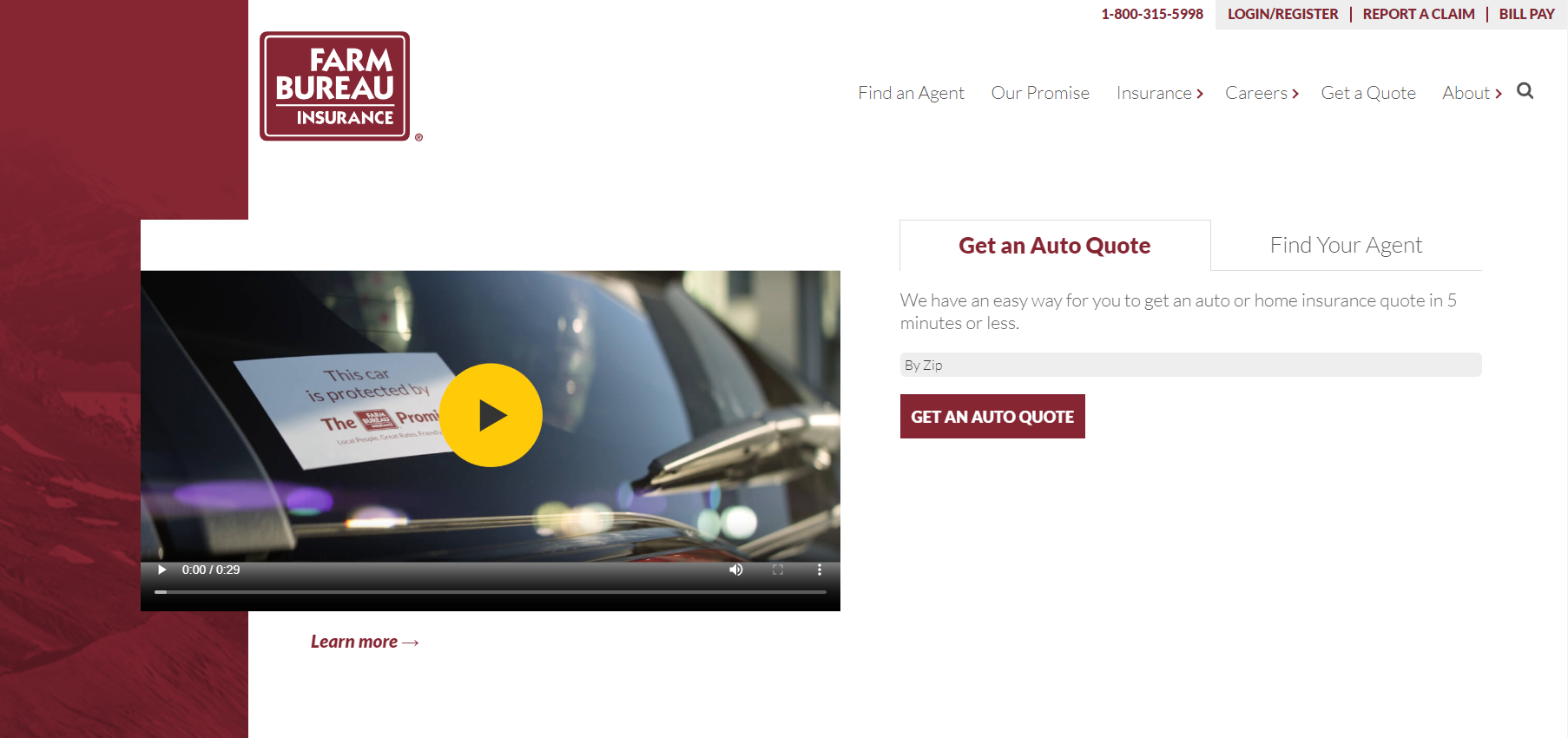
Consequently, online account management portals often feature a prominent "Find Your Agent" or "Contact Your Agent" module. If a policyholder needs to adjust liability limits, add a newly licensed teenage driver, or modify comprehensive and collision deductibles, the online portal may facilitate a change request that routes directly to the assigned local office for processing. This hybrid approach provides the convenience of 24/7 digital access for routine tasks while preserving professional advisory support for complex coverage decisions.
Evaluating Coverage, Costs, and Digital Value
When deciding whether to pursue a policy through these regional providers, consumers must weigh traditional insurance factors against the unique operational framework of the organization.
Premium Structures and Discounts
Auto insurance rates depend on a multitude of actuarial factors, including driving history, vehicle make and model, annual mileage, credit-based insurance scores (where permitted by state law), and coverage levels. Farm Bureau insurers generally offer standard discount tiers, such as:
- Multi-policy discounts (bundling auto with home, renters, or life insurance).
- Safe driver and accident-free discounts.
- Good student discounts for young drivers.
- Vehicle safety feature discounts (anti-lock brakes, passive restraints, anti-theft systems).
While online quoting tools can calculate these discounts automatically based on user inputs, verifying eligibility requires supporting documentation, such as report cards for student discounts or inspection forms for specific vehicle safety equipment.
Customer Service and Claims Experience
Digital efficiency is only as valuable as the support backing it up when an accident occurs. While online claims reporting tools allow policyholders to upload photos of vehicle damage, submit police reports, and track repair status digitally, the actual claims adjusting process relies on human expertise.
Because state Farm Bureaus operate regionally, their claims adjusters are often deeply familiar with local repair shop networks, regional parts availability, and state-specific legal environments. This regional focus can result in streamlined communication compared to massive national call centers, though experiences vary by state affiliate.
Frequently Asked Questions
Can I get an instant online auto insurance quote from every Farm Bureau?
No. Because state Farm Bureau organizations operate independently, their digital quoting capabilities vary. Some state sites offer immediate online estimates and binding capabilities, while others require you to submit your information to receive a callback or quote generated by a local agent.
Is Farm Bureau auto insurance open to the general public?
Generally, yes, but with a structural condition. While you do not need to be a farmer or work in agriculture to purchase coverage, you typically must join the Farm Bureau as a member. This usually involves paying a modest annual membership fee, which grants access to the insurance products along with other organizational member benefits.
Can I manage my auto policy and pay bills entirely through a smartphone?
Many state Farm Bureau affiliates offer dedicated mobile apps or mobile-optimized web portals. Through these interfaces, you can typically view digital insurance ID cards, make secure monthly premium payments, and report claims. However, complex policy changes often require speaking directly with your assigned agent.
How do online quotes compare to final policy prices?
Online quotes provide an estimate based on the information you provide at that moment. The final policy price may vary after the insurer runs formal background checks, verifies your driving record through state motor vehicle departments, and confirms your insurance loss history.
Are digital insurance ID cards accepted by law enforcement?
Yes. All U.S. states legally accept electronic proof of insurance displayed on a smartphone or mobile device during traffic stops or accident investigations, provided the digital card is issued by the licensed insurance carrier and contains all required policy details.
Practical Next Actions for Consumers
Drivers interested in exploring Farm Bureau auto insurance online should begin by visiting the official website of the Farm Bureau federation specific to their state of residence. Review the available digital tools, verify the membership requirements, and use the online quoting tool as a baseline benchmark. Because coverage needs, local agent availability, and state insurance regulations dictate the final value proposition, consumers should compare these digital estimates against alternative regional and national carriers to ensure comprehensive protection at a competitive price.
Image Gallery