Understanding the Definition of Boiler for Your Home
A home boiler is a closed pressure vessel that heats water or generates steam, which is then circulated through a network of pipes and radiators or underfloor tubing to warm a residential property. Unlike forced-air furnaces that blow...
A home boiler is a closed pressure vessel that heats water or generates steam, which is then circulated through a network of pipes and radiators or underfloor tubing to warm a residential property. Unlike forced-air furnaces that blow hot air through ductwork, traditional home boilers rely on hydronic or steam systems to provide steady, radiant heat.
Contents
Choosing or maintaining a heating system for a residential property begins with understanding the core definition of a boiler for your home. While many homeowners use the term "boiler" interchangeably with "furnace" or "water heater," a heating boiler occupies a distinct mechanical category with its own operational mechanics, efficiency metrics, and maintenance requirements. Grasping these fundamental differences ensures that you can make informed decisions regarding home heating installation, repairs, and energy management.
What is a Residential Boiler?
At its most fundamental level, a residential boiler is an enclosed metal vessel designed to transfer thermal energy from a combustion reaction or electrical element to water. Once heated, this water or steam is distributed throughout the living space via a closed-loop piping network.
The primary distinction between a boiler and a standard water heater lies in their application. While a water heater stores and heats domestic water for taps, showers, and appliances on an as-needed basis, a home heating boiler is part of a dedicated space-heating loop. The water inside a closed hydronic heating loop circulates continuously, releasing heat into rooms before returning to the boiler to be reheated.
How Hydronic and Steam Systems Operate
Residential boilers are generally categorized by the medium they use to transfer heat: hot water (hydronic) or steam.
- Hydronic (Hot Water) Systems: These boilers heat water—typically to temperatures between 140°F and 180°F—and use a circulator pump to push the hot water through baseboard heaters, cast-iron radiators, or radiant floor tubing. As the water passes through these emitters, it radiates heat into the room and returns to the boiler at a cooler temperature.
- Steam Systems: Less common in modern new construction but prevalent in older homes, steam boilers heat water until it boils and turns into vapor. This steam rises naturally through pipes to reach radiators without the aid of a mechanical pump. As the steam cools inside the radiator, it condenses back into water and flows back down to the boiler by gravity.
Core Components of a Home Boiler System
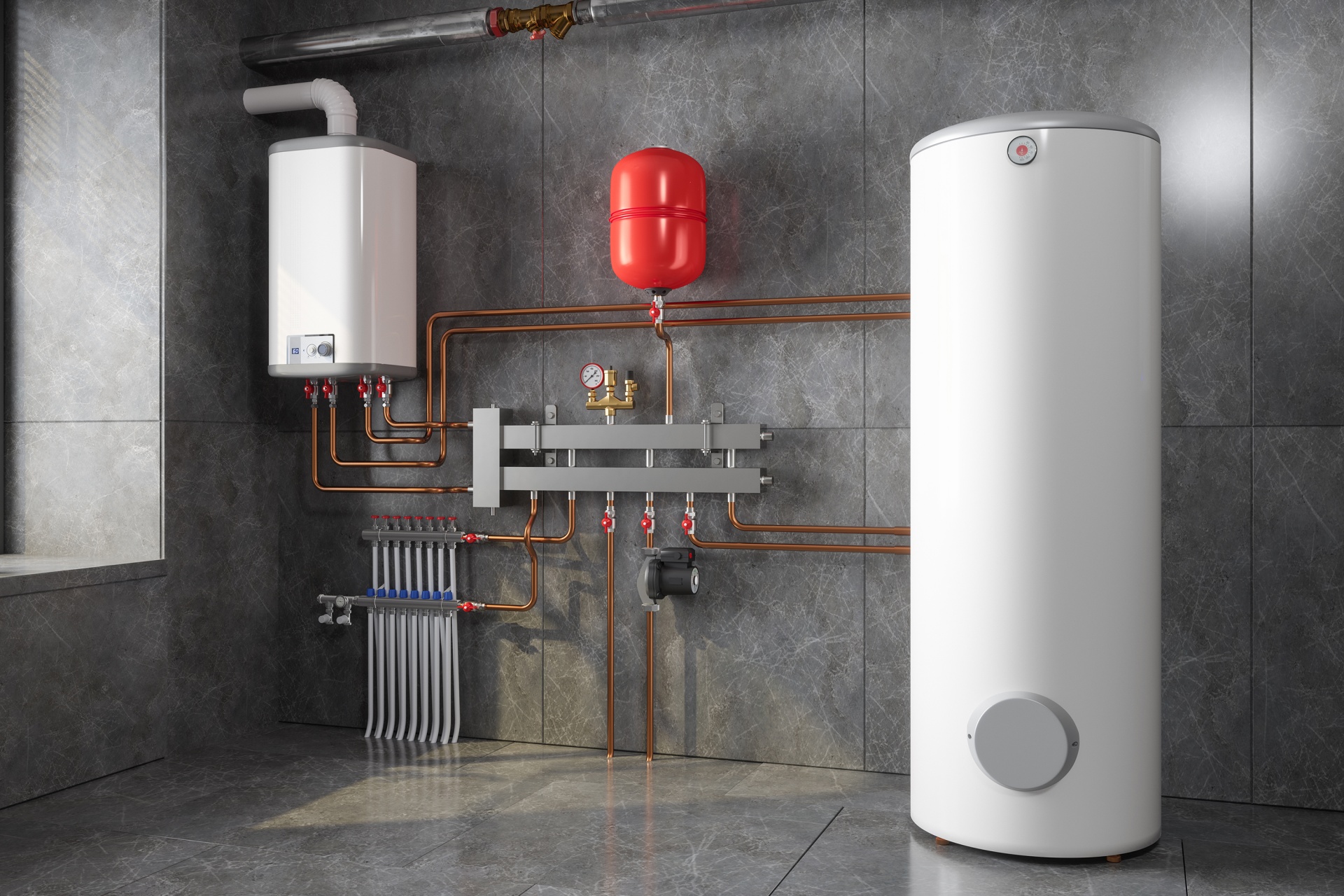
Understanding a boiler requires looking beyond the outer metal cabinet to examine the internal components that work together to generate and distribute heat safely.
Home Boiler System
- Heat Generation
- Burner (Gas/Oil/Electric)
- Heat Exchanger
- Combustion Chamber
- Aquastat / Pressure Relief
- Heat Distribution
- Circulator Pumps
- Radiators & Baseboards
- Piping Network
- Expansion Tank
- Heat Generation
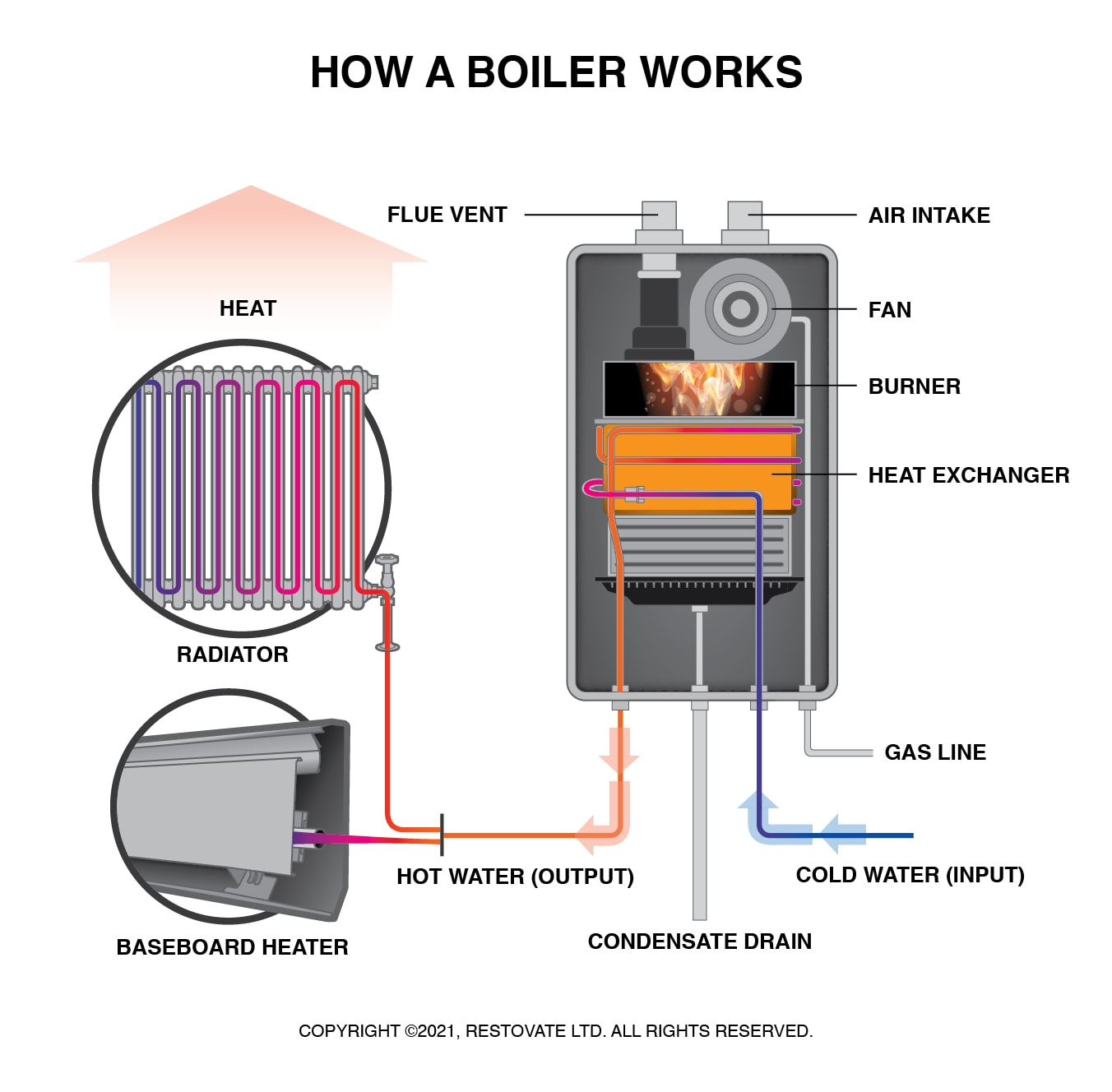
Burner and Combustion Chamber: The burner mixes fuel (such as natural gas, propane, or heating oil) with air and ignites it inside the combustion chamber, creating the thermal energy needed for the system.
Heat Exchanger: This metal barrier separates the hot combustion gases from the water. Thermal energy passes through the walls of the heat exchanger, warming the water without allowing combustion gases to mix with the heating supply.
Circulator Pump: Found exclusively in hydronic systems, this electric pump forces water through the closed piping loop, ensuring consistent flow and rapid heat delivery.
Expansion Tank: Water expands significantly as it heats up. The expansion tank absorbs this excess water volume, preventing dangerous pressure spikes within the closed piping system.
Aquastat: Serving as the boiler's thermostat brain, the aquastat monitors water temperature and signals the burner to turn on or off to maintain the desired indoor climate.
Pressure Relief Valve: A critical safety device designed to automatically open and vent steam or water if internal pressure exceeds safe operating thresholds.
Boilers Versus Furnaces: Key Differences
Homeowners often confuse boilers with forced-air furnaces. While both systems provide home climate control, their methods of heat transfer create entirely different living environments.
| Feature | Boiler (Hydronic / Steam) | Furnace (Forced Air) |
|---|---|---|
| Heat Medium | Hot water or steam | Heated air |
| Delivery Method | Radiators, baseboards, radiant floors | Ductwork and wall/floor registers |
| Air Quality Impact | Does not circulate dust, pollen, or allergens | Can blow dust and allergens; requires air filter changes |
| Heat Consistency | Radiant heat retains warmth longer; steady temperature | Cycles on and off, creating fluctuating air temperatures |
| Additional Uses | Can provide domestic hot water via indirect tanks | Strictly used for space heating |
Because boilers rely on radiant heat rather than blowing dry air, many homeowners report a more comfortable, even warmth. Radiated heat warms objects and people directly rather than merely heating the air, which helps prevent drafts and reduces airborne particulate circulation.
Energy Efficiency and Modern Technologies
Modern residential boilers have evolved significantly from the cast-iron behemoths of the past. Today's units feature advanced combustion technologies and high-efficiency ratings governed by the Annual Fuel Utilization Efficiency (AFUE) standard.
Understanding AFUE Ratings
AFUE measures how efficiently a boiler converts fuel into usable heat over the course of a typical heating season.
- Standard-Efficiency Units: Older or basic models typically achieve an AFUE rating of 80% to 82%, meaning 18% to 20% of the energy escapes up the flue.
- High-Efficiency Condensing Boilers: Modern condensing boilers achieve AFUE ratings of 90% to 95% or higher. They feature a secondary heat exchanger that extracts latent heat from water vapor in the exhaust gases before it escapes, causing the vapor to condense. Because of this high efficiency, condensing units often utilize PVC or polypropylene venting rather than traditional metal chimneys.
Common Maintenance and Safety Considerations
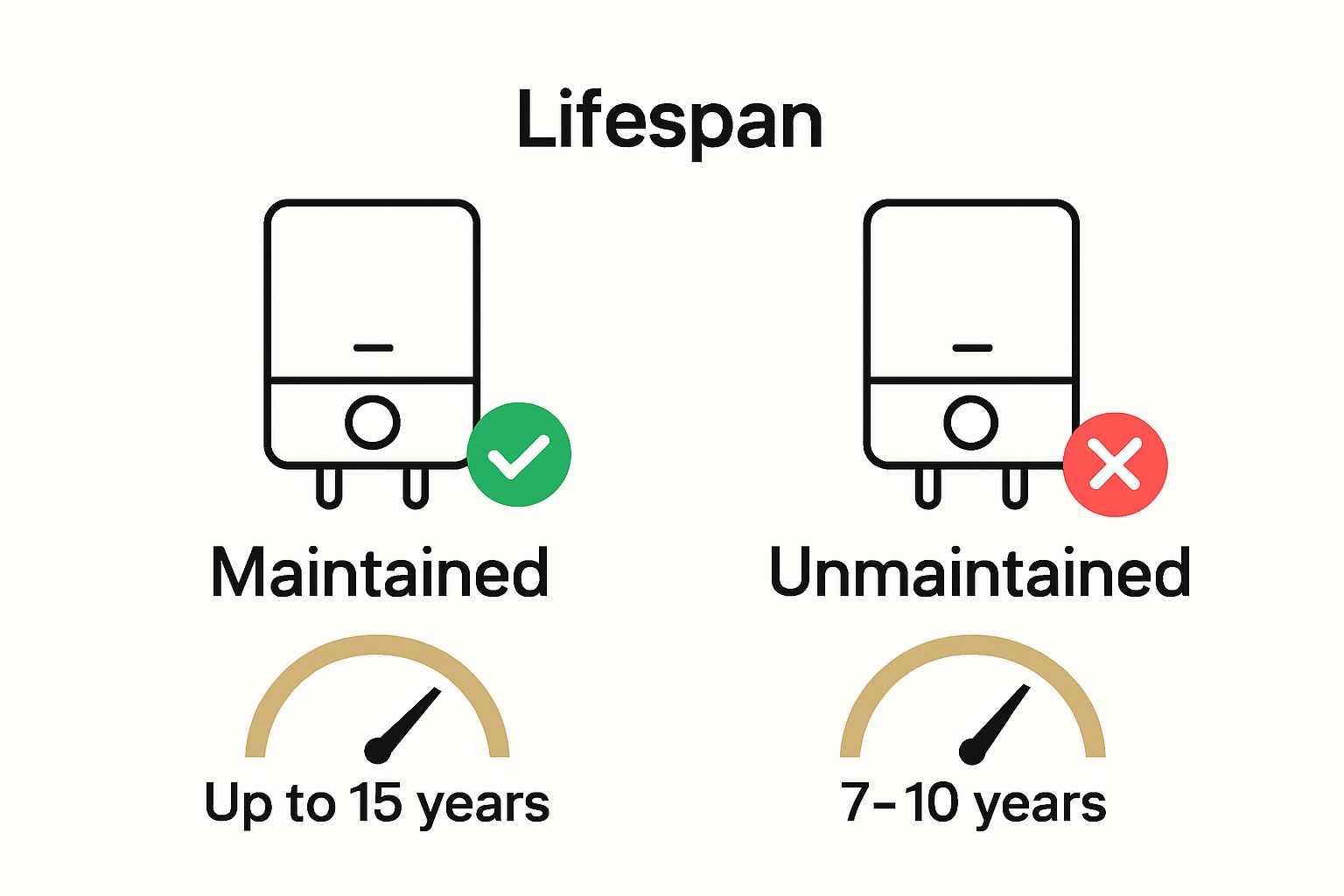
Like any major home mechanical system, boilers require routine preventive maintenance to ensure safe, reliable operation and to prolong their working lifespan. Neglecting service can lead to efficiency loss, unexpected breakdowns, or hazardous conditions.
- Annual Professional Tune-Ups: A qualified technician should inspect the burner, clean the heat exchanger, test safety controls (including the pressure relief valve and low-water cutoff), and check for gas or oil leaks before every heating season.
- Bleeding Radiators: In hydronic systems, trapped air pockets can prevent hot water from reaching certain radiators, leaving them cold at the top. Periodically opening the bleed valve on each radiator releases trapped air and restores proper water flow.
- Monitoring Water Pressure: Hydronic systems operate under specific pressure guidelines—usually between 12 and 15 PSI when cold. Homeowners should check the pressure gauge regularly and consult a professional if pressure drops repeatedly, which can indicate a leak in the loop.
- Carbon Monoxide Detectors: Because fossil-fuel boilers produce combustion gases, functional carbon monoxide detectors should be installed on every level of the home, particularly near sleeping areas and mechanical rooms.
Selecting the Right Boiler for Your Property
When replacing an aging boiler or installing a system in a new build, several factors determine the correct unit size and type:
- Fuel Availability: Natural gas is generally the most cost-effective and common fuel source where available. Propane and heating oil serve as reliable alternatives in rural areas without municipal gas lines, while electric boilers offer an option where fossil fuels are impractical, though typically at a higher operating cost.
- Proper Sizing (BTU Output): Boilers are measured in British Thermal Units (BTUs) of heating capacity. A professional Manual J load calculation—factoring in square footage, insulation levels, window placement, and local climate—is essential. An oversized boiler short-cycles, wasting energy and wearing out components prematurely, while an undersized unit struggles to maintain comfortable temperatures during severe winter weather.
- System Configuration: Determine whether your home's existing distribution network uses high-temperature baseboards, traditional cast-iron radiators, or modern low-temperature radiant floor tubing, as this dictates the water temperature requirements of the new boiler.
Conclusion and Next Actions
A home boiler is a durable, highly efficient heating appliance that warms living spaces through closed-loop circulation of hot water or steam. By understanding its core definition, components, and operational requirements, homeowners can better maintain their heating infrastructure and communicate effectively with service technicians. If you are experiencing inconsistent heating, rising energy bills, or planning a heating system replacement, schedule an evaluation with a licensed HVAC professional to perform a detailed load calculation and system inspection tailored to your home.
Image Gallery