Commercial General Liability for QA Engineers in 2026
Commercial General Liability (CGL) insurance for Quality Assurance (QA) engineers provides essential financial protection against third-party claims involving bodily injury, property damage, and personal or advertising injury. While QA...
Commercial General Liability (CGL) insurance for Quality Assurance (QA) engineers provides essential financial protection against third-party claims involving bodily injury, property damage, and personal or advertising injury. While QA professionals primarily focus on software integrity, CGL acts as a foundational safety net, often required by client contracts to mitigate physical and reputational risks occurring during on-site visits, hardware-software integration testing, or general business operations.
Contents
Understanding Commercial General Liability in the QA Context
In the technical landscape of 2026, the role of a Quality Assurance engineer has expanded beyond simple script execution. With the proliferation of Internet of Things (IoT) devices, embedded systems, and automated industrial tech, the line between software testing and physical impact has blurred. Commercial General Liability (CGL) is the standard insurance policy that protects your business from the "physical" world's mishaps, rather than the "digital" world's errors.
CGL is designed to cover the costs of legal defense and any settlements or judgments if a third party—such as a client, a delivery person, or a member of the public—sues you for damages. For a QA consultant or a small QA firm, this coverage is typically the first line of defense in a comprehensive risk management strategy.
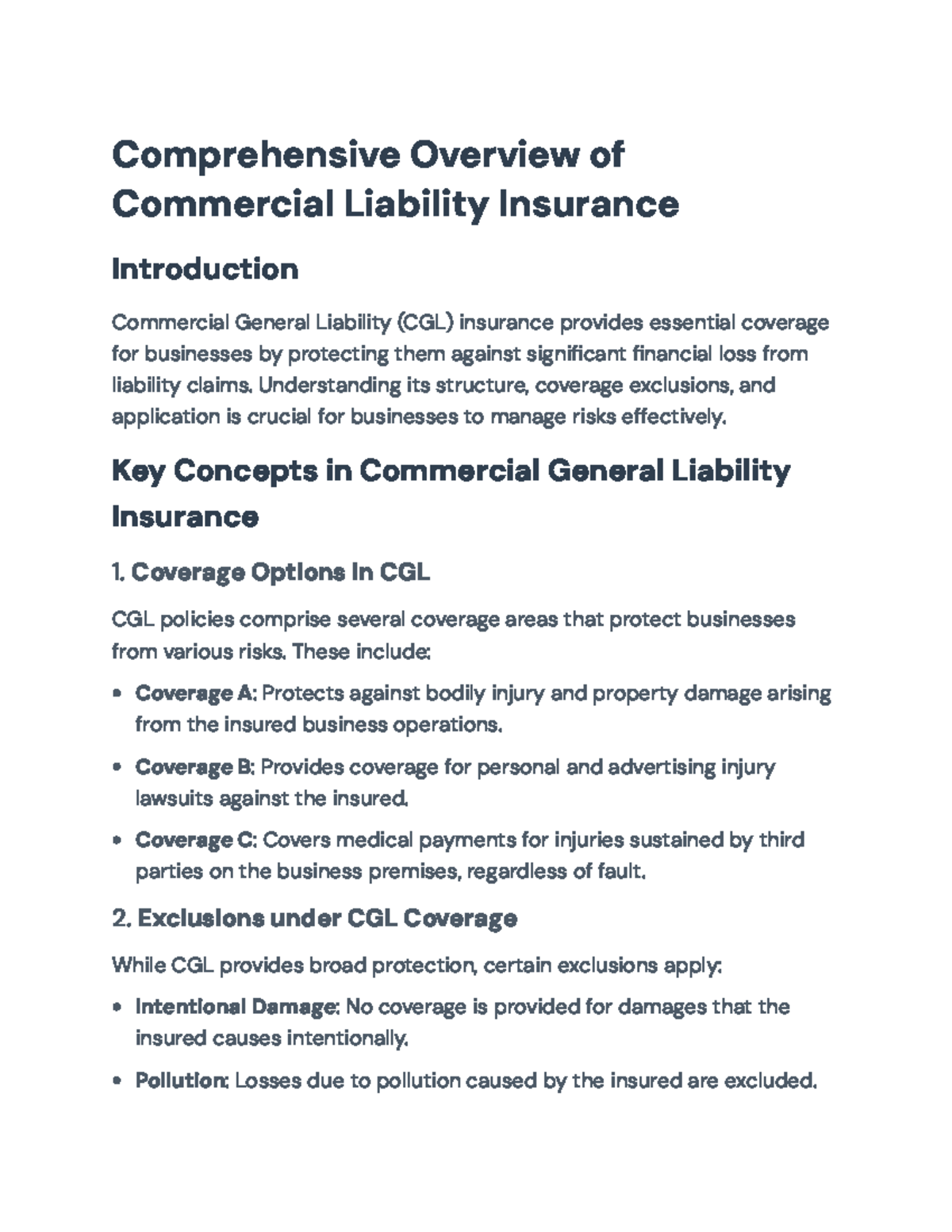
The Three Core Pillars of CGL Coverage
- Bodily Injury: This covers medical expenses, loss of services, and legal fees if someone is physically injured due to your business operations. For example, if a client visits your testing lab and trips over a poorly placed ethernet cable, resulting in a fractured wrist, your CGL policy would cover their medical bills and your legal defense if they sue.
- Property Damage: This addresses situations where you or your employees damage someone else’s physical property. If you are performing on-site performance testing at a client's data center and accidentally spill a beverage into a high-end server rack, causing it to short-circuit, CGL would cover the replacement costs of the hardware.
- Personal and Advertising Injury: This covers non-physical damages such as libel, slander, or copyright infringement in your advertisements. In the competitive QA market of 2026, if your marketing materials inadvertently disparage a competitor’s testing framework or use an image you don't have rights to, this portion of the policy provides protection.
Why QA Engineers Specifically Need CGL Insurance
A common misconception among software-focused professionals is that insurance is only necessary for those handling physical products. However, several factors make CGL a non-negotiable requirement for QA engineers today.
Contractual Obligations and Compliance
By 2026, nearly all enterprise-level Master Service Agreements (MSAs) and freelance platforms mandate proof of CGL insurance. Large corporations and government agencies will not permit a QA contractor to begin an engagement without a Certificate of Insurance (COI). This is not necessarily because they expect you to cause physical damage, but because their own corporate risk management policies require all vendors to be "fully insured" to shield the parent company from peripheral liability.
Hardware-Software Interaction (IoT and Robotics)
QA engineers working in sectors like medical devices, automotive technology, or smart home manufacturing face unique physical risks. If you are testing a firmware update for a robotic surgical arm or an autonomous vehicle sensor, a software glitch during the testing phase could lead to real-world property damage or physical harm. While Professional Liability (E&O) covers the reason for the glitch, CGL often covers the immediate physical impact resulting from that event, depending on how the policies are structured.
On-Site Presence and Client Interaction
Even in a remote-heavy environment, QA engineers often attend project kick-offs, hardware integration sessions, or stakeholder meetings. Any time you are on a client's premises, you represent a liability risk. Simple accidents—like dropping a heavy prototype on a client's floor or causing a fire with an uncertified testing power supply—fall squarely under CGL.
CGL vs. Professional Liability (Errors & Omissions)
It is critical for QA professionals to distinguish between General Liability and Professional Liability (often called E&O). This is the most frequent point of confusion in the tech insurance space.
| Feature | Commercial General Liability (CGL) | Professional Liability (E&O) |
|---|---|---|
| Primary Trigger | Physical accidents or personal injury. | Financial loss due to work mistakes or omissions. |
| Typical Claim | "I tripped in your office." | "Your missed bug caused a $1M system outage." |
| QA Specific Example | Damaging a prototype tablet during drop testing. | Failing to identify a critical security vulnerability. |
| Client Requirement | Almost always required for all vendors. | Specifically required for technical/consulting roles. |
| 2026 Market Trend | Standardized pricing; often bundled. | Increasingly complex due to AI-driven QA tools. |
For a QA engineer, Professional Liability is arguably more "important" for the specific work of finding bugs, but General Liability is the "gatekeeper" policy required to get through the door. Most experts recommend a "Business Owner’s Policy" (BOP), which bundles CGL with other coverages at a discounted rate.
Key Policy Components for 2026
When reviewing a CGL policy in 2026, QA engineers should look for specific clauses that align with modern technical consulting.
Additional Insured Endorsements
Clients will frequently ask to be named as an "Additional Insured" on your policy. This means that if a third party sues both you and the client for something you did, your insurance will defend the client as well. Ensure your policy allows for easy, often automated, generation of these endorsements, as they are a staple of modern contract execution.
Products-Completed Operations
This is a standard part of CGL that applies to the work you have already finished. If you leave a client site after setting up a hardware testing rig, and that rig falls over two days later and breaks a window, the "Completed Operations" portion of your CGL covers the claim.
Medical Payments (No-Fault Coverage)
This allows for small medical claims (usually under $5,000 or $10,000) to be paid out quickly without the need for a lawsuit. It is an excellent way to maintain client goodwill after a minor accident on your premises.
Calculating the Cost of Coverage in 2026
The cost of CGL insurance for a QA engineer is influenced by several variables. On average, a solo QA consultant in 2026 can expect to pay between $450 and $900 annually for a standard $1 million/$2 million policy (meaning $1 million per occurrence and a $2 million total limit).
Factors that influence your premium include:
- Revenue: Higher revenue often suggests a larger volume of work and higher potential for third-party interaction.
- Location: Rates vary by state and city due to local litigation trends and cost of living.
- Type of Testing: QA for "low-risk" software (like a mobile game) will typically cost less than QA for "high-risk" systems (like aviation software or banking infrastructure).
- Claims History: A clean record leads to lower premiums. In 2026, many insurers use automated risk assessment tools that scan public records for previous business disputes.
Common Exclusions to Watch For
While CGL is broad, it is not an "all-risk" policy. QA engineers must be aware of what is typically excluded to avoid dangerous coverage gaps:
- Professional Errors: As noted, CGL does not cover financial losses resulting from your failure to catch a bug or a delay in project delivery.
- Cyber Attacks: Data breaches, ransomware, and the loss of sensitive client data are excluded from standard CGL. You need a separate Cyber Liability policy or endorsement for this.
- Employee Injuries: If you have employees, CGL does not cover their work-related injuries. You must purchase Workers' Compensation insurance for that purpose.
- Intentional Acts: Damage caused intentionally by the policyholder is never covered.
How to Obtain and Manage CGL Insurance
By 2026, the process for obtaining CGL has become highly streamlined. Most QA professionals can secure a policy in under 30 minutes through digital-first commercial insurers.
- Assess Your Risk: Determine if you work with physical hardware, visit client sites, or have a physical office where clients meet you.
- Gather Documentation: Have your projected annual revenue, business address, and previous insurance details ready.
- Compare Quotes: Use an independent agent or a digital platform to compare at least three quotes. Look specifically at the "Total Occurrence Limit."
- Review the "Additional Insured" Process: Ensure the insurer provides a self-service portal for generating COIs, as you will likely need to provide these for every new contract.
- Audit Annually: As your QA business grows—perhaps moving from software testing into embedded systems or robotics—update your policy to reflect the increased physical risk profile.
Frequently Asked Questions
Does my homeowner's insurance cover my QA business?
Generally, no. Standard homeowner's or renter's insurance policies exclude business-related liability and equipment. If a client trips in your home office, your homeowner's policy will likely deny the claim, making a dedicated CGL policy necessary.
Can I get CGL if I work as a 1099 contractor?
Yes, and you most likely should. While some firms might cover you under their umbrella, most contracts specifically state that 1099 contractors must maintain their own independent CGL and Professional Liability insurance.
What is a "Business Owner’s Policy" (BOP)?
A BOP is a package that combines CGL with Commercial Property insurance. For a QA engineer, this is often cheaper than buying CGL alone and provides the added benefit of protecting your own business equipment (laptops, servers, testing devices) against theft or damage.
Is CGL required if I work 100% remotely?
Even for 100% remote QA engineers, CGL is almost always a contractual requirement. Clients use this requirement as a baseline for professional legitimacy. Furthermore, CGL provides "Personal and Advertising Injury" protection, which is relevant regardless of your physical location.
Does CGL cover my testing equipment if it is stolen?
No, standard CGL only covers damage to other people's property. To cover your own testing rigs, laptops, and specialized hardware, you need "Business Personal Property" coverage, which is usually included in a BOP.
Next Actions for QA Professionals
If you are currently operating without insurance or your current policy is up for renewal in 2026, your first step should be to review your active client contracts. Identify the specific liability limits required by your stakeholders. Most modern tech contracts require a $1,000,000 per occurrence limit. Once you have these requirements, seek out a policy that allows for "Blanket Additional Insured" endorsements, which will save you time and administrative fees as you scale your client base.
Image Gallery