Best Places to Retire Overseas in 2026: A Comprehensive Guide
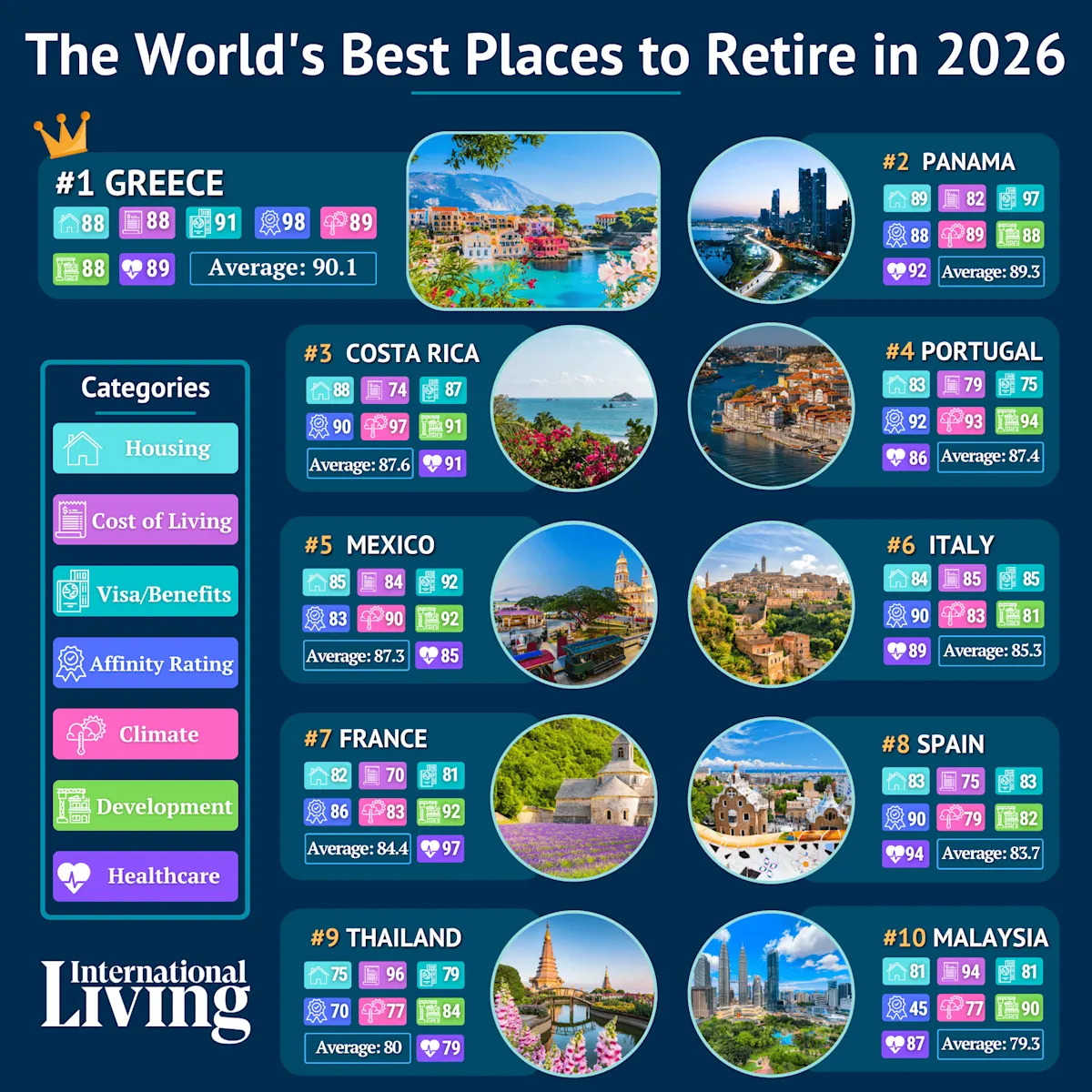
Choosing the best places to retire overseas in 2026 requires balancing personal lifestyle preferences with rigorous financial, legal, and healthcare considerations. Top-tier destinations like Portugal, Panama, and Mexico offer a high q...
Choosing the best places to retire overseas in 2026 requires balancing personal lifestyle preferences with rigorous financial, legal, and healthcare considerations. Top-tier destinations like Portugal, Panama, and Mexico offer a high quality of life, robust expat communities, and accessible residency pathways, provided retirees meet specific income and health insurance requirements.
Contents
As of 2026, the landscape of international retirement has shifted toward "lifestyle-first" destinations that offer a lower cost of living without sacrificing modern infrastructure. While the dream of living on a Mediterranean coast or in a tropical rainforest remains popular, the practicalities of visas, tax treaties, and global healthcare access are the primary drivers of successful relocation.
Core Criteria for Selecting an Overseas Retirement Destination
Identifying the "best" location is subjective, but several objective metrics determine the long-term viability of a country for retirees. Before looking at specific countries, it is essential to understand the four pillars of international retirement: residency requirements, cost of living, healthcare quality, and tax implications.
Residency and Visa Accessibility
Most countries do not allow foreigners to simply move in indefinitely without a specific visa. In 2026, many nations have streamlined "Retiree Visas" or "Passive Income Visas." These typically require proof of a stable monthly income (social security, pensions, or investment dividends) rather than a massive lump-sum investment. For example, the D7 Visa in Portugal and the Non-Lucrative Visa in Spain are popular because they cater specifically to those not seeking local employment.
Healthcare Infrastructure and Costs
Healthcare is often the most significant concern for retirees. Many top destinations offer a "dual" system: a public healthcare program (often accessible to residents for a low fee) and a high-quality private system. While Medicare does not cover services outside the United States, private international health insurance or local private plans in countries like Costa Rica or Thailand can provide world-class care at a fraction of U.S. costs.
Economic Stability and Cost of Living
A lower cost of living is a primary motivator for retiring overseas. However, "cheap" should not be confused with "value." A destination must offer a stable currency and manageable inflation. In 2026, retirees are increasingly looking at "value" destinations where their retirement savings can afford a higher standard of living—such as domestic help, frequent dining out, and high-quality housing—that might be out of reach in their home country.
Top Destinations for 2026: Regional Spotlights
1. Portugal: The European Gold Standard
Portugal continues to lead the rankings for European retirement in 2026. Its combination of safety, a temperate climate, and a welcoming culture makes it a perennial favorite. The D7 Visa remains the most accessible path for retirees, requiring a minimum passive income that aligns with the Portuguese national minimum wage.
While the "Golden Visa" program transitioned away from residential real estate investments in previous years, the D7 remains a stable option for those with pensions or Social Security. Cities like Lisbon and Porto offer vibrant urban life, while the Algarve region provides a classic coastal retirement experience. It is important to note that while the cost of living in Portugal is lower than in the U.S. or U.K., prices in major hubs have risen, making smaller cities like Coimbra or Braga attractive alternatives.
2. Panama: The Pensionado Powerhouse
Panama’s Pensionado Visa is widely considered the best retirement program in the world. As of 2026, it remains an "automatic" residency path for anyone with a lifetime pension of at least $1,000 per month (plus $250 for a spouse). The program offers significant legislated discounts on everything from utility bills and movie tickets to doctor visits and airline fares.
The country offers diverse climates: the bustling, cosmopolitan Panama City for those who want high-rise luxury and top-tier hospitals like Punta Pacifica (affiliated with Johns Hopkins), and the cooler, highland retreat of Boquete for those seeking an active, outdoor lifestyle. Panama also uses the U.S. Dollar, eliminating currency exchange risks for American retirees.
3. Mexico: Proximity and Diversity
Mexico remains the most popular destination for North Americans due to its proximity and the sheer variety of lifestyles available. From the colonial charm of San Miguel de Allende to the beachfront relaxation of Puerto Vallarta and the Riviera Maya, Mexico caters to every budget.
The residency process is relatively straightforward. The Temporary Resident Visa is usually the first step, requiring proof of economic solvency. After four years, this can be converted to Permanent Residency. Mexico’s private healthcare system is excellent in major cities, and many doctors are trained in the U.S. or Europe.
4. Spain: Culture and Infrastructure
Spain is an ideal choice for those who value infrastructure, public transport, and a deep cultural heritage. The Non-Lucrative Visa (NLV) is the primary vehicle for retirees. It prohibits the holder from working in Spain but allows for full-time residency.
The Costa del Sol and Alicante are famous for their sun-drenched beaches and established expat communities. However, 2026 has seen a surge of interest in Northern Spain (the "Green Coast") and cities like Valencia, which offer a lower cost of living than Madrid or Barcelona while maintaining an exceptionally high quality of life.
5. Thailand: The Affordable Luxury Choice
For those willing to travel further, Thailand offers an unparalleled cost-to-quality ratio. The Long-Term Resident (LTR) Visa and the standard Retirement Visa (Non-Immigrant O-A) provide pathways for those over 50.
Cities like Chiang Mai are hubs for wellness and affordable living, while islands like Koh Samui and Phuket offer tropical luxury. Thailand is world-renowned for "medical tourism," meaning retirees have access to five-star hospital facilities that rival the best in the West for significantly lower prices.
Comparative Overview of Top Retirement Destinations
| Country | Primary Visa Type | Approx. Monthly Budget (Couple) | Healthcare Quality | English Proficiency |
|---|---|---|---|---|
| Portugal | D7 (Passive Income) | $2,800 – $3,500 | Excellent (Public/Private) | Moderate/High |
| Panama | Pensionado | $2,000 – $3,000 | Good/High (City centric) | Moderate |
| Mexico | Residente Permanente | $2,000 – $3,200 | Very Good (Private) | Moderate |
| Spain | Non-Lucrative Visa | $3,000 – $4,500 | World-Class | Moderate |
| Thailand | Retirement (O-A) | $1,500 – $2,500 | Excellent (Private) | Moderate (Expat hubs) |
| Costa Rica | Pensionado | $2,500 – $3,500 | Very Good | Moderate/High |
Navigating Financial and Tax Obligations
Retiring overseas does not exempt citizens from their home country’s tax laws, particularly for U.S. citizens who are taxed on worldwide income regardless of where they live.
- U.S. Tax Filing: American retirees must still file annual tax returns with the Internal Revenue Service (IRS). They may qualify for the Foreign Earned Income Exclusion or Foreign Tax Credits to avoid double taxation.
- FBAR and FATCA: If you hold more than $10,000 in foreign bank accounts at any point during the year, you must file a Foreign Bank and Financial Accounts (FBAR) report.
- Local Taxes: Some countries, like Portugal, have historically offered tax incentives for new residents (such as the Non-Habitual Resident program), though these programs are frequently updated or replaced. Always consult a cross-border tax specialist before moving.
- Banking: Maintaining a home-country bank account is often necessary for receiving social security or pension payments, even if you use a local account for daily expenses.
Healthcare and Insurance Strategies
Medicare generally does not provide coverage outside the 50 states. Retirees must therefore decide between three main options:
- Local Private Insurance: Buying a policy within the destination country. This is often the most cost-effective but may have age limits or exclude pre-existing conditions.
- International Health Insurance: Comprehensive global policies (like those from Cigna Global or Bupa) that cover you in multiple countries, including occasional trips back home.
- Public Systems: Some countries allow legal residents to "buy into" the public healthcare system for a monthly fee (e.g., the Convenio Especial in Spain).
Common Mistakes to Avoid
- Buying Property Too Soon: It is highly recommended to rent for at least 6–12 months before purchasing real estate. A neighborhood that feels like paradise in the summer may be desolate or inconvenient in the winter.
- Ignoring the "Honey Moon" Phase: The first year of living abroad is often filled with excitement. The real test comes when dealing with local bureaucracy, maintenance issues, or language barriers.
- Underestimating the Language Barrier: While many expat hubs have English speakers, daily life (utilities, government offices, emergency services) usually requires the local language. Learning the basics is vital for integration and safety.
FAQ
Can I still collect Social Security if I retire overseas?
Yes, in most cases, the Social Security Administration (SSA) will send payments to retirees living abroad. There are very few countries (such as Cuba or North Korea) where payments cannot be sent. You can find specific country-by-country rules on the SSA international programs page.
Do I lose my citizenship if I get residency in another country?
No, obtaining a residency visa or even permanent residency in another country does not affect your original citizenship. Even if you eventually pursue dual citizenship through naturalization, most countries (including the U.S. and U.K.) allow you to keep your original passport.
What is the biggest challenge of retiring overseas?
Beyond the paperwork, the biggest challenge is often the "social transition." Moving away from family, friends, and familiar systems can be isolating. Successful retirees are those who actively join local groups, volunteer, or participate in the expat community.
How much money do I really need to retire overseas?
While some destinations are habitable on $1,500 a month, a comfortable retirement that includes travel, quality healthcare, and modern housing typically requires $2,500 to $4,000 per month for a couple. Always include a buffer for currency fluctuations and inflation.
Is it safe to retire overseas in 2026?
Safety is relative. Many of the top retirement destinations, like Portugal and Costa Rica, have lower violent crime rates than many major U.S. cities. However, "petty crime" like pickpocketing is common in tourist areas. It is essential to research specific neighborhoods rather than entire countries.
Next Steps for Prospective Retirees
To move from the planning phase to reality, begin by narrowing your list to two or three "finalist" countries. Schedule a "scouting trip" of at least three weeks to each location, staying in a local neighborhood rather than a resort. Use this time to visit grocery stores, check out local hospitals, and meet with a relocation or immigration attorney. Secure your financial records and ensure your passport has several years of validity remaining before beginning any visa application process.
Image Gallery