China's Fusion Reactor Program: Technical Breakthroughs, Key Facilities, and the Roadmap to Commercial Power
China's nuclear fusion program is driven by advanced magnetic confinement devices known as tokamaks, designed to replicate the energy-producing processes of the sun. Spearheaded by national facilities like EAST in Hefei and HL-2M in Ch...
China's nuclear fusion program is driven by advanced magnetic confinement devices known as tokamaks, designed to replicate the energy-producing processes of the sun. Spearheaded by national facilities like EAST in Hefei and HL-2M in Chengdu, the initiative focuses on achieving sustained high-confinement plasma, testing heat-resistant materials, and developing the engineering framework for grid-scale fusion power.
Contents
The Technological Architecture of Chinese Tokamaks
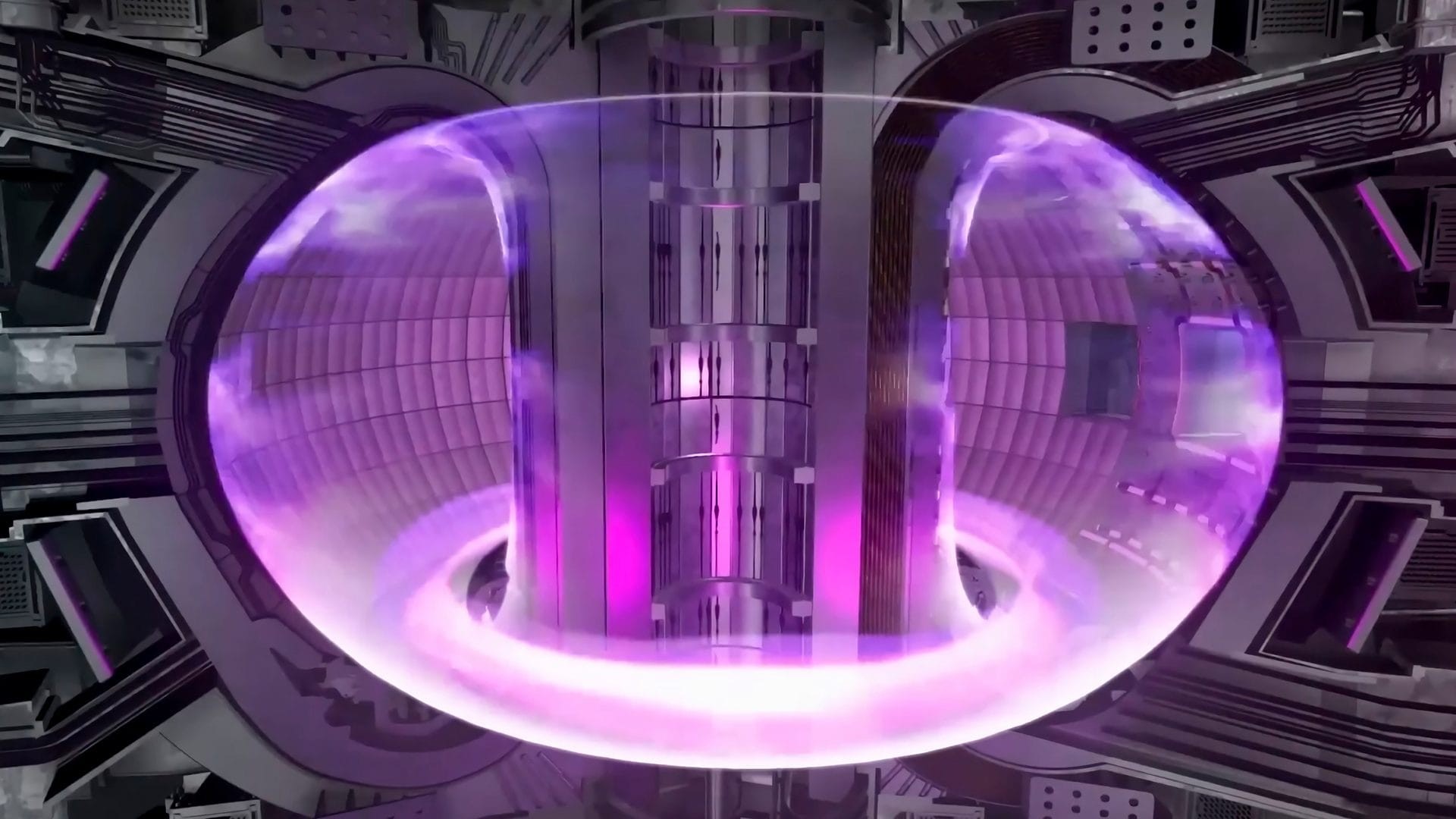
Magnetic confinement fusion relies on creating an environment where light atomic nuclei—typically isotopes of hydrogen such as deuterium and tritium—overcome electrostatic repulsion to fuse into heavier nuclei, releasing energy. To achieve this, gas is heated to temperatures exceeding 100 million degrees Celsius, transforming it into fully ionized plasma. Because no physical material can withstand direct contact with plasma at these temperatures, magnetic confinement devices use powerful magnetic fields to suspend and shape the plasma inside a doughnut-shaped vacuum vessel called a tokamak.
China's fusion strategy centers on optimizing tokamak physics across several core technological pillars:
- Superconducting Magnetic Coils: Tokamaks require intense magnetic fields to confine high-energy plasma. Early devices relied on resistive copper coils, which consume vast amounts of electrical power and generate excessive waste heat. Modern research devices utilize low-temperature superconducting (LTS) magnets, primarily niobium-titanium ($\text{NbTi}$) and niobium-tin ($\text{Nb}_3\text{Sn}$), cooled by liquid helium to near absolute zero (4.2 Kelvin). This eliminates electrical resistance, allowing for continuous, long-pulse operation. High-Temperature Superconducting (HTS) tapes made from barium copper oxide materials are also being integrated into next-generation designs to achieve higher magnetic fields in smaller footprints.
- Auxiliary Plasma Heating Systems: Reaching the ignition threshold requires heating plasma well beyond the capabilities of ohmic (resistive) heating alone. Chinese facilities employ a combination of heating mechanisms:
- Neutral Beam Injection (NBI): Accelerates high-energy neutral atoms into the plasma core, transferring kinetic energy through collisions.
- Electron Cyclotron Resonance Heating (ECRF): Uses high-frequency microwave radiation tailored to the resonance frequency of electrons in the magnetic field.
- Lower Hybrid Current Drive (LHCD) and Ion Cyclotron Range of Frequencies (ICRF): Radiates radiofrequency waves to drive non-inductive plasma currents and heat ions directly.
- Divertor and Heat Flux Management: The divertor is positioned at the bottom or top of the vacuum vessel to extract helium ash and heat exhaust while preserving plasma purity. The primary engineering challenge is enduring extreme localized heat loads, often exceeding 10 megawatts per square meter ($\text{MW/m}^2$). Facilities use actively cooled tungsten divertor plates to withstand these thermal stresses without melting or contaminating the core plasma.
- Plasma Heating & Confinement (Neutral Beam Injection, ECRF, LHCD, ICRF Heating)
- Vacuum Vessel & Fusion Core (High-Temperature Ionized Deuterium/Tritium Gas)
- Magnetic Field Confinement Array (Toroidal & Poloidal Superconducting Magnet Coils)
- Heat Exhaust & Impurity Removal (Water-Cooled Tungsten Divertor Assemblies)
Major Flagship Facilities and Operational Achievements
China’s fusion infrastructure consists of specialized research reactors, each targeted at distinct engineering and physical milestones along the developmental path.
Experimental Advanced Superconducting Tokamak (EAST / HT-7U)
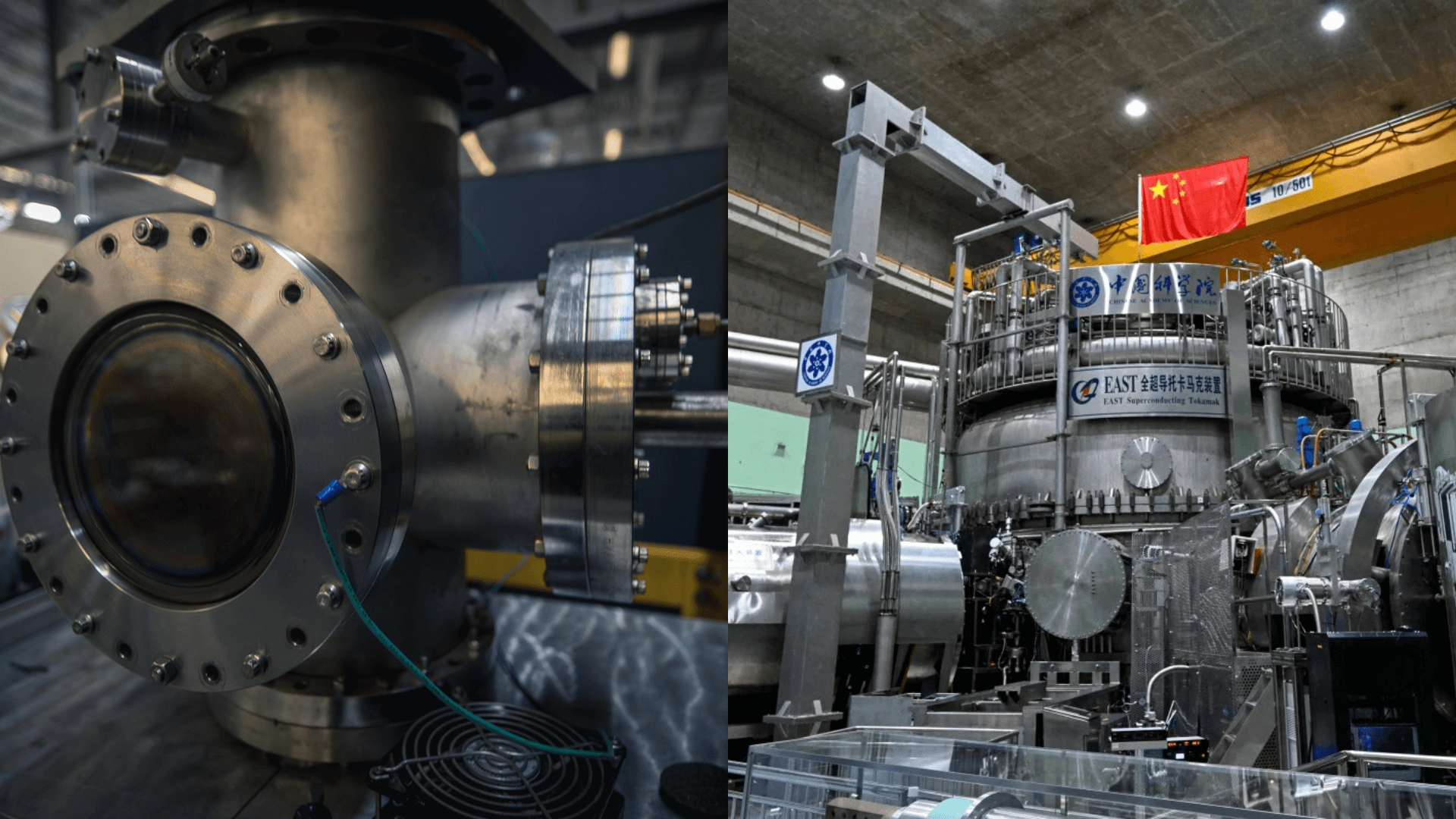
Located at the Institute of Plasma Physics under the Chinese Academy of Sciences (ASIPP) in Hefei, Anhui Province, EAST was commissioned in 2006 as the world's first fully superconducting tokamak with a non-circular D-shaped plasma cross-section. EAST serves as a primary testbed for long-pulse high-confinement mode (H-mode) plasma operations.
EAST has set key industry milestones for sustained plasma confinement:
- High-Temperature Plasma Duration: Maintained electron temperatures over 100 million degrees Celsius for extended durations, demonstrating the stability of internal heating profiles.
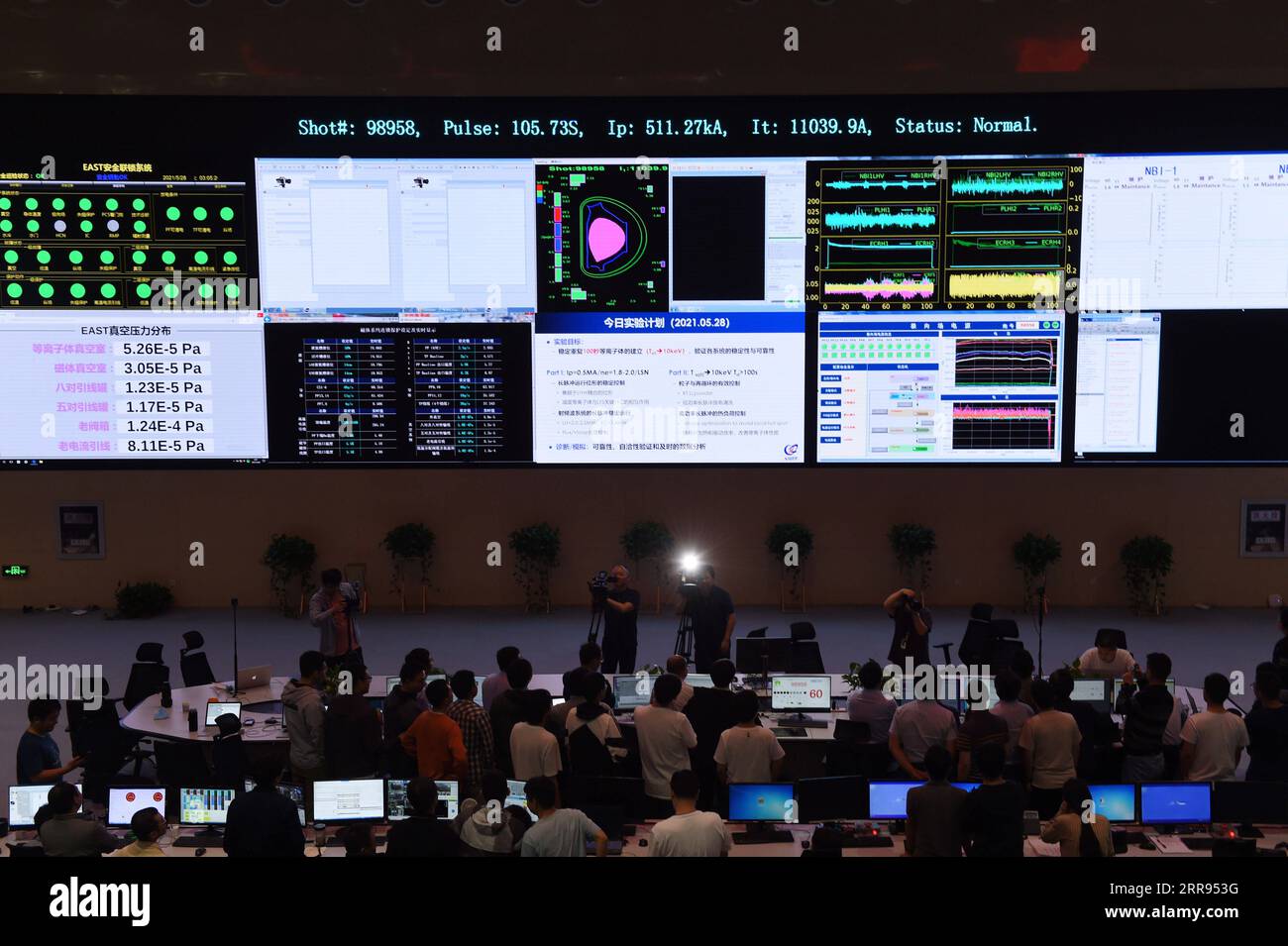
- Long-Pulse H-Mode Control: In 2021, EAST sustained high-confinement plasma for 1,056 seconds in long-pulse mode, followed by a sustained 403-second high-confinement H-mode operation achieved in April 2023. These operations demonstrate real-time control over magnetohydrodynamic (MHD) instabilities, radiofrequency wave driving, and active heat dissipation over extended periods.
HL-2M (Huanliu-2M)
Developed by the Southwestern Institute of Physics (SWIP) in Chengdu, Sichuan Province (operating under the China National Nuclear Corporation), HL-2M became operational in late 2020. Unlike EAST, which focuses primarily on ultra-long pulse steady-state operation, HL-2M is designed for high-beta, high-current plasma physics experiments.
HL-2M operates with a flexible magnetic configuration, capable of achieving plasma currents exceeding 2 to 2.5 megaamperes ($\text{MA}$) and plasma temperatures above 150 million degrees Celsius. Its specialized magnetic divertor architecture allows researchers to study advanced power-exhaust concepts and edge-localized mode (ELM) mitigation strategies required for future commercial fusion reactors.
BEST and CRAFT Infrastructure Support
To bridge the gap between experimental tokamaks and full-scale power plants, China constructed the Comprehensive Research Facility for Fusion Technology (CRAFT) in Hefei. CRAFT serves as an engineering testbed for scaling up reactor components, testing full-scale superconducting magnet coils, high-heat-flux divertor modules, and tritium breeding blankets.
Simultaneously, the Burning Plasma Experimental Superconducting Tokamak (BEST) project is designed to evaluate self-heating burning plasma physics, where the energy produced by fusion-generated alpha particles ($^4\text{He}$ nuclei) provides the primary heat required to maintain the reaction.
Technical Comparison of Primary Fusion Platforms
The following matrix compares China's key operational and planned fusion platforms against the International Thermonuclear Experimental Reactor (ITER) framework, highlighting physical parameters and target roles.
| Facility / Project | Location & Operator | Magnet Architecture | Major Radius ($R$) / Minor Radius ($a$) | Peak Magnet Field ($B_T$) | Target Plasma Temp / Peak Current | Primary Design Objective |
|---|---|---|---|---|---|---|
| EAST (HT-7U) | ASIPP, Hefei | Fully Superconducting ($\text{NbTi}$) | $1.85\text{ m} / 0.45\text{ m}$ | $\sim 3.5\text{ T}$ | $>100\text{ Million }^\circ\text{C}$ / $\sim 1.0\text{ MA}$ | Long-pulse steady-state H-mode plasma control. |
| HL-2M | SWIP, Chengdu | Copper Coils (Pulsed High Power) | $1.78\text{ m} / 0.65\text{ m}$ | $\sim 2.2\text{ T}$ | $>150\text{ Million }^\circ\text{C}$ / $>2.5\text{ MA}$ | High-beta physics, divertor heat exhaust studies. |
| BEST | Hefei, Anhui | Superconducting ($\text{Nb}_3\text{Sn} / \text{HTS}$) | $\sim 3.0\text{ m} / 0.90\text{ m}$ | $\sim 6.0\text{ T}$ | $>100\text{ Million }^\circ\text{C}$ / $\sim 3.0-5.0\text{ MA}$ | Burning plasma physics and alpha-particle heating. |
| CFETR (Phase I/II) | Planned (China) | Advanced Superconducting ($\text{Nb}_3\text{Sn} / \text{HTS}$) | $7.2\text{ m} / 2.2\text{ m}$ | $\sim 6.5 - 7.0\text{ T}$ | $>100\text{ Million }^\circ\text{C}$ / $>10.0\text{ MA}$ | Engineering test reactor bridging ITER to commercial DEMO. |
| ITER (Baseline) | Cadarache, France (Global) | Superconducting ($\text{NbTi} / \text{Nb}_3\text{Sn}$) | $6.20\text{ m} / 2.00\text{ m}$ | $5.3\text{ T}$ | $>150\text{ Million }^\circ\text{C}$ / $15.0\text{ MA}$ | Demonstrate net fusion energy gain ($Q \ge 10$). |
Engineering Challenges and Core Innovations
Moving from plasma confinement records to net-energy power production requires overcoming several persistent engineering constraints.
Plasma Disruptions and Edge-Localized Modes (ELMs)
High-confinement mode (H-mode) creates a steep pressure gradient at the edge of the plasma, acting like an insulating barrier. However, this pressure building can trigger periodic instabilities known as Edge-Localized Modes (ELMs). Uncontrolled ELMs eject rapid bursts of energy onto the reactor's inner wall, eroding materials and releasing impurities into the core.
Chinese research teams use Resonant Magnetic Perturbations (RMPs) and supersonic molecular beam injections to mitigate ELMs. By applying small, non-axisymmetric magnetic fields, researchers suppress large instabilities into manageable, micro-bursts that do not damage the vessel walls.
Material Science and First-Wall Armor
The first wall of the vacuum vessel must survive intense neutron bombardment. In a deuterium-tritium fusion reaction, $80%$ of the released energy is carried by high-energy neutrons ($14.1\text{ MeV}$). These neutrons pass through magnetic fields and collide directly with the structural wall, causing atomic displacement (measured in displacements per atom, or dpa) and helium embrittlement over time.
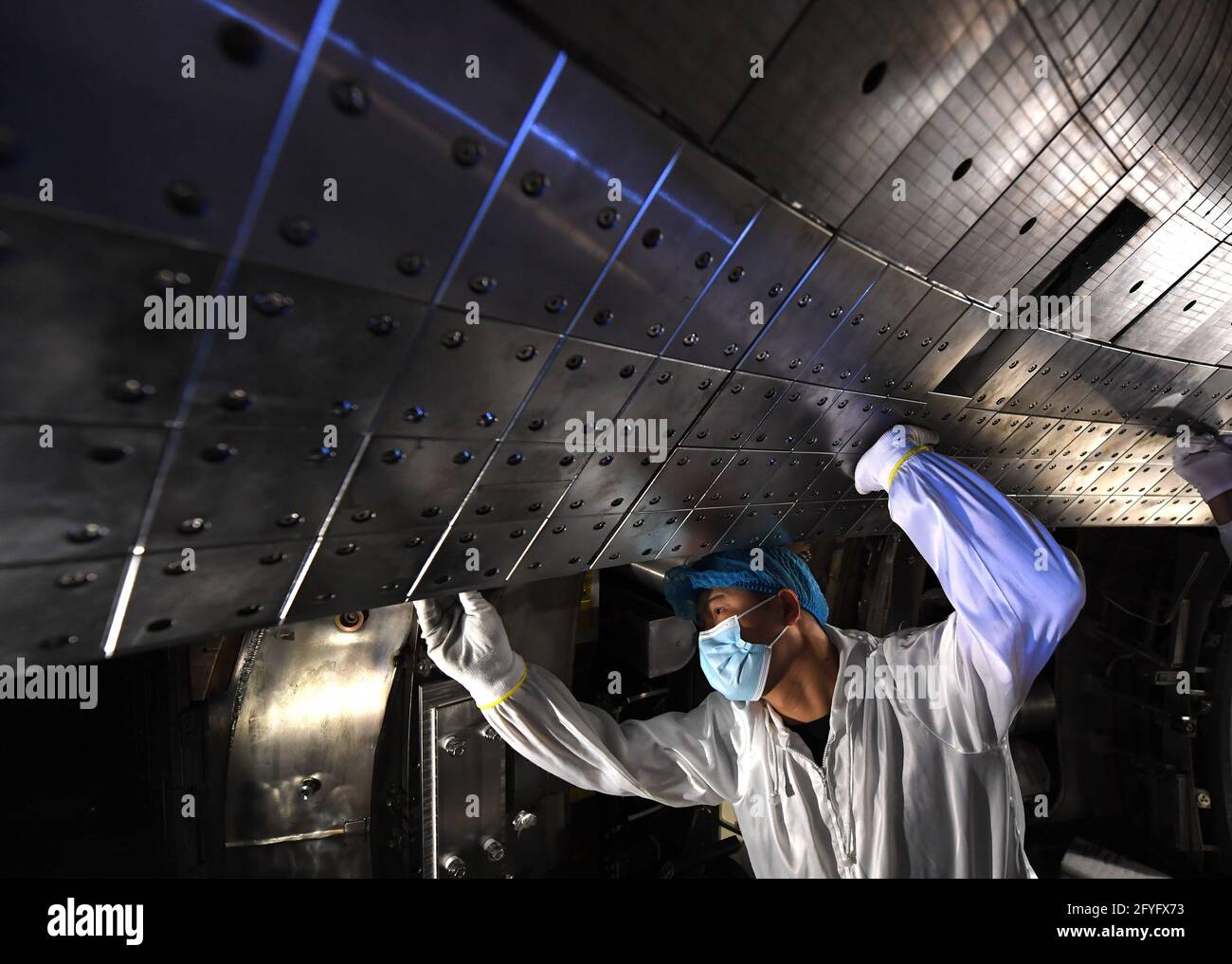
To address material degradation, facilities use solid tungsten armor, reduced-activation ferritic-martensitic (RAFM) steels, and silicon carbide ($\text{SiC}$) composites. China has concentrated significant research on CLAM steel (China Low-Activation Martensitic steel), designed to minimize long-term induced radioactivity under continuous neutron irradiation.
D-T Reaction Output Breakdown:
- 3.5 MeV Alpha Particle ($^4\text{He}$)
- Re-heats Core Plasma (Sustains Reaction)
- 14.1 MeV Fast Neutron
- Escapes Field Lines; Collides with Wall
- Heat Exchange & Fuel Breeding (CLAM Steel)
- Escapes Field Lines; Collides with Wall
Tritium Breeding and Fuel Cycle Autonomy
Deuterium is abundant in seawater, but tritium ($^3\text{H}$) is radioactive with a half-life of roughly 12.3 years and exists in minute natural quantities. A commercial fusion power plant must produce its own tritium to sustain the fuel cycle.
This is achieved using a tritium breeding blanket lining the vacuum wall. The blanket contains lithium compounds (such as lithium-lead alloys or ceramic lithium orthosilicates). When fusion neutrons strike lithium atoms, they induce a nuclear reaction that breeds tritium:
$$\text{Li}-6 + n \rightarrow ^4\text{He} + ^3\text{H} + 4.8\text{ MeV}$$
$$\text{Li}-7 + n \rightarrow ^4\text{He} + ^3\text{H} + n' - 2.5\text{ MeV}$$
Achieving a Tritium Breeding Ratio (TBR) greater than $1.05$—meaning the reactor produces more tritium than it consumes—is a core requirement for the planned China Fusion Engineering Test Reactor (CFETR).
The Roadmap to Grid Integration: CFETR and Commercial Timelines
China’s fusion strategy relies on a multi-stage developmental timeline designed to transition directly from laboratory experiments to commercial electrical production.
Phase 1: Experimental Validation (EAST, HL-2M, BEST)
The objective of this ongoing phase is to solve core physics challenges: maintaining steady-state plasma confinement, managing heat fluxes, and controlling instabilities. Data gathered from these platforms feeds directly into numerical simulations and structural engineering for future scale-up designs.
Phase 2: CFETR Engineering Test Reactor
The China Fusion Engineering Test Reactor (CFETR) is designed to bridge the gap between experimental devices like ITER and full commercial power plants (DEMO). The project is planned in two distinct operational phases:
- CFETR Phase I: Focuses on steady-state burning plasma operation, demonstrating stable self-heating physics and target output power of up to $200\text{ MW}$ without long-term reliance on external heating systems.
- CFETR Phase II: Upgrades magnetic field configurations and structural materials to scale fusion power output beyond $1\text{ GW}$ ($1,000\text{ MW}$), aiming to achieve net electrical power conversion and continuous self-sufficient tritium breeding ($\text{TBR} > 1.0$).
Commercial & Private Fusion Ventures
Alongside state-sponsored projects under the Chinese Academy of Sciences and CNNC, private enterprise and venture-backed entities have emerged within the domestic ecosystem. Companies such as Energy Singularity are constructing compact tokamaks utilizing High-Temperature Superconducting (HTS) magnets, aiming to accelerate developmental cycles and lower capital expenditures compared to large-scale state facilities.
Frequently Asked Questions
Are Chinese fusion reactors currently supplying electricity to the power grid?
No. Current Chinese fusion devices, including EAST and HL-2M, are experimental research facilities designed to study plasma physics, magnetic confinement, and material limits. They do not have steam turbines or electrical generators attached to produce net grid power. Grid integration is planned for later phases of the CFETR project and subsequent commercial DEMO reactors.
What is the difference between EAST and ITER?
EAST is an operational, medium-sized superconducting tokamak located in Hefei, China, primarily used for long-pulse high-confinement mode research. ITER is a much larger international tokamak currently under construction in Cadarache, France, supported by a global coalition including China, the EU, the United States, Russia, Japan, South Korea, and India. ITER aims to demonstrate a ten-fold power gain ($Q \ge 10$), producing $500\text{ MW}$ of fusion power from $50\text{ MW}$ of input thermal power.
Why are tokamak fusion reactors often called "artificial suns"?
Tokamaks are called "artificial suns" because they replicate the nuclear fusion process that powers the sun and other stars. In both cases, light atomic nuclei fuse under immense temperature and pressure to form helium, releasing energy. However, while the sun uses gravitational confinement, tokamaks rely on magnetic fields to compress and heat hydrogen gas.
What materials are used inside the vacuum chamber to resist high heat?
The plasma-facing components, particularly the divertor, are constructed from tungsten and tungsten-copper alloys due to tungsten's extremely high melting point ($3,422^\circ\text{C}$), low hydrogen retention, and resistance to erosion. Structural walls utilize specialized low-activation steels, such as CLAM steel, to handle high neutron fluxes without becoming long-term hazardous radioactive waste.
How does CFETR differ from existing experimental tokamaks?
CFETR is engineered as an operational engineering test reactor rather than purely a physics experiment. Unlike EAST or HL-2M, CFETR is designed for continuous power generation (hundreds of megawatts to gigawatt scale), full self-sufficient tritium breeding with an active blanket, and testing components under continuous, high-flux neutron environments over extended periods.
Strategic Direction for Fusion Energy Development
China's fusion power program relies on a phased progression from basic plasma physics to heavy industrial deployment. To monitor ongoing progress and key developments in this sector, observe the following technical milestones:
- CRAFT Test Facility Validation: Track component testing outputs from CRAFT in Hefei, specifically high-field HTS magnet performance metrics and divertor endurance test runs under target $20\text{ MW/m}^2$ thermal loads.
- BEST Burning Plasma Milestones: Monitor progress on the BEST project to observe transitions from external radiofrequency heating dependency to self-sustained alpha-particle heating ($Q > 1$).
- CFETR Structural Design Baselines: Watch for finalized engineering specifications regarding CFETR's tritium breeding blanket assembly and target dates for first-wall construction phase commitments.
EDITORIAL CATEGORY METADATA:
Image Gallery