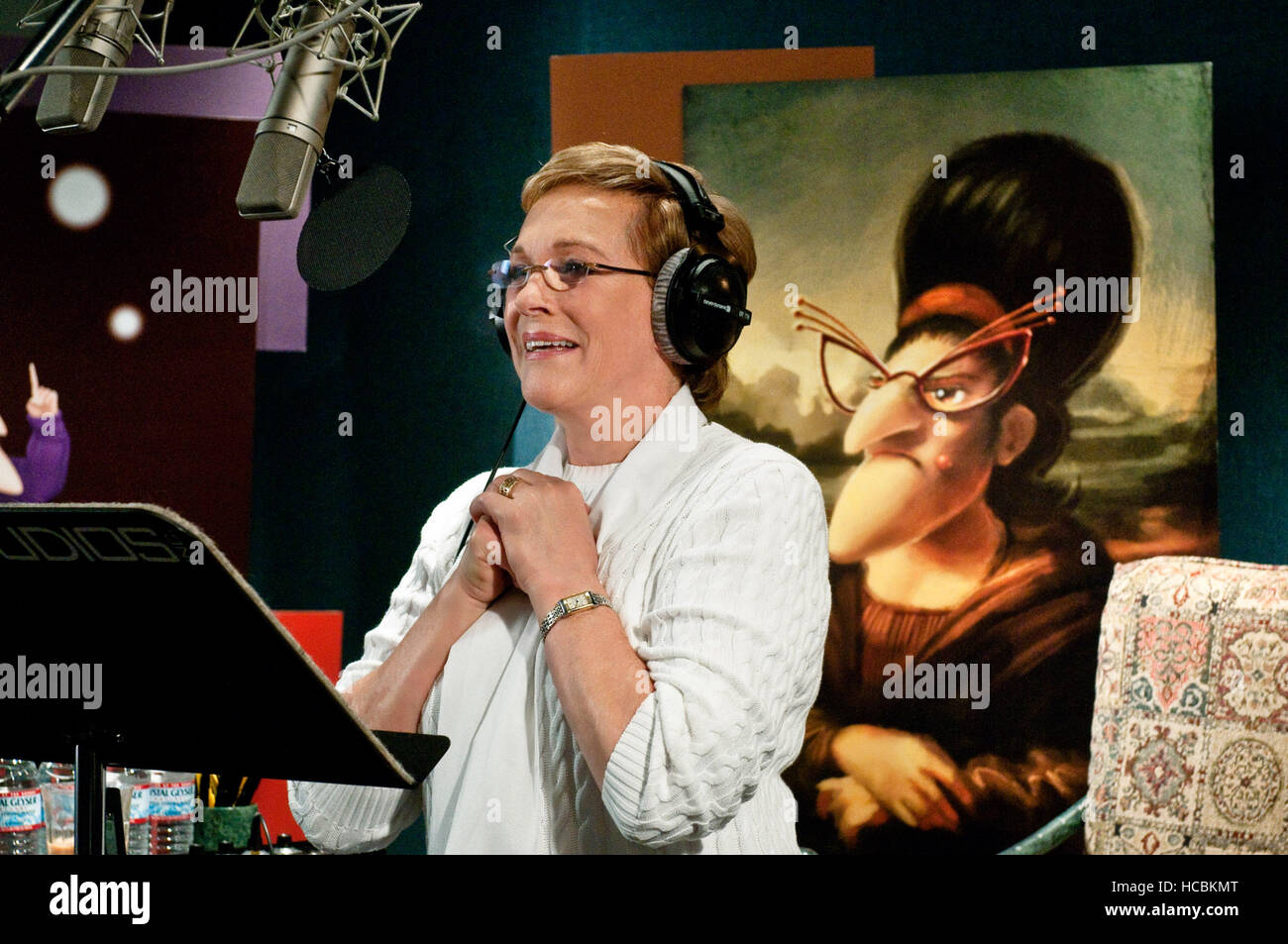
Julie Andrews in Despicable Me: A Voice Cameo That Divides Fans
Julie Andrews voices Marlena Gru, the cold and unimpressed mother of the franchise’s protagonist, Felonious Gru. While many viewers celebrate the casting as a brilliant subversion of Andrews’ wholesome "Mary Poppins" persona, others fi...
Julie Andrews voices Marlena Gru, the cold and unimpressed mother of the franchise’s protagonist, Felonious Gru. While many viewers celebrate the casting as a brilliant subversion of Andrews’ wholesome "Mary Poppins" persona, others find the character’s dismissive nature jarring or feel the legendary actress is underutilized in such a cynical role.
Contents
Since the debut of the original Despicable Me in 2010, the inclusion of Dame Julie Andrews in the Illumination Entertainment universe has remained one of the most discussed casting choices in modern animation. By 2026, the franchise has cemented itself as a global titan, yet the debate surrounding Andrews’ portrayal of Marlena Gru persists. To understand why this performance divides the fanbase, one must look at the intentional "casting against type" and how it clashes with the collective nostalgia associated with one of cinema's most beloved icons.
The Character of Marlena Gru: A Study in Maternal Indifference
Marlena Gru is the antithesis of the nurturing figures Julie Andrews portrayed in The Sound of Music or Mary Poppins. In the Despicable Me universe, Marlena is a retired martial arts expert who has spent her life being utterly unimpressed by her son’s villainous ambitions. From his childhood attempts to build rockets to his adult achievements as a master thief, Gru’s primary motivation is often rooted in a desperate desire for a "Great job!" from his mother—an accolade she rarely provides.
The character is characterized by a thick, vaguely Eastern European accent and a perpetually unimpressed "Eh" that punctuates Gru’s biggest moments. This coldness is central to Gru’s back-story; it explains his drive to be the "greatest villain" as a way to finally catch his mother’s eye. However, for fans who grew up seeing Andrews as the gold standard of maternal warmth and competence, seeing her play a character who actively ignores her child's emotional needs creates a unique form of cognitive dissonance.
Why the Casting Was Intentional
The producers at Illumination Entertainment, led by Chris Meledandri, were aware of the irony when they approached Andrews. Casting the world’s most famous "nanny" as a neglectful, sharp-tongued mother was a calculated move to inject humor into the film's adult-oriented subtext. This subversion is a staple of modern animation, where celebrity voices are often used to play against their established public images. For Andrews, who has spent decades being associated with perfection and grace, the role of Marlena offered a rare opportunity to play a comedic antagonist without the constraints of her usual "regal" roles.
Why Julie Andrews in Despicable Me Divides Fans
The "division" among fans isn't necessarily about the quality of the acting, which is universally praised for its precision and timing. Instead, the rift occurs between those who appreciate the meta-commentary of the casting and those who find the character’s persona too abrasive for the actress behind the voice.
The Pro-Marlena Camp: "A Masterstroke of Irony"
Supporters of the role argue that Andrews’ performance is one of the highlights of the franchise. They point to:
- Subversive Humor: The sheer absurdity of Maria von Trapp telling her son he is a failure is a layer of comedy that adds depth for adult viewers.
- Vocal Versatility: Andrews uses a lower register and a specific accent that makes her almost unrecognizable. This showcases her skill as a voice actor beyond her natural singing and speaking voice.
- Character Necessity: Without Marlena’s coldness, Gru’s character arc—specifically his eventual transformation into a loving father to Margo, Edith, and Agnes—would lack its emotional weight.
The Anti-Marlena Camp: "Wasted Potential or Too Cruel"
Critics of the role, or fans who feel "divided," often cite the following reasons:
- Wasted Talent: Some fans feel that hiring a legend like Julie Andrews for what amounts to a few minutes of screen time across multiple films is a waste of her potential. They would prefer to see her in a role that utilizes her warmth or her singing ability (though her vocal surgery in 1997 significantly limited her singing range).
- Discomfort with the Persona: For a segment of the audience, the character is simply too mean. Marlena’s dismissiveness toward a young, hopeful Gru in the flashbacks of Minions: The Rise of Gru (2022) was seen by some as crossing the line from "funny-mean" to "genuinely sad," making the association with Andrews uncomfortable.
- Inconsistent Screentime: Because Marlena is often treated as a "cameo" or a minor supporting character, fans are left wanting more development, leading to frustration regarding her presence in the marketing versus her presence in the actual films.
Appearance Timeline and Impact
Julie Andrews has appeared in several entries of the franchise. While her roles are often brief, they serve as pivotal moments for the narrative.
| Film | Release Year | Role Significance | Primary Fan Reaction |
|---|---|---|---|
| Despicable Me | 2010 | Primary motivation for Gru's moon heist. | Surprise and delight at the casting irony. |
| Despicable Me 2 | 2013 | Very brief appearance; background involvement. | Mixed; some felt she was barely in the movie. |
| Despicable Me 3 | 2017 | Plot catalyst; reveals the existence of Gru's twin, Dru. | Re-engaged fans; more substantial dialogue. |
| Minions: The Rise of Gru | 2022 | Explores the origins of her relationship with young Gru. | Divided; some found her treatment of young Gru too harsh. |
Technical Depth: The Art of the Voice Cameo
In the world of animation, a "voice cameo" often refers to a high-profile actor taking a small but memorable role. Julie Andrews’ work as Marlena Gru is technically a recurring supporting role, but the brevity of her scenes often leads fans to categorize it as a cameo.
From a technical perspective, Andrews’ performance is a masterclass in vocal characterization. Following her 1997 surgery, which resulted in the loss of her four-octave singing voice, Andrews shifted her focus toward acting and voice work. In the Despicable Me films, she demonstrates how to convey personality through cadence and breath rather than melody. Her "Marlena" voice is dry, brittle, and lacks the melodic lilt of her natural speaking voice. This technical choice is what makes the character so distinct; if she had used her "Queen Clarisse" voice from The Princess Diaries, the joke wouldn't have worked.
The division among fans also stems from the "Uncanny Valley" of voice acting. When the audience knows the voice belongs to an icon of kindness, the brain struggles to reconcile that voice with a character who is essentially a bad mother. This tension is exactly what the filmmakers intended, but it remains a polarizing creative choice.
The Evolution of Marlena in the 2020s
By 2026, the franchise has leaned further into the backstory of its villains. In Minions: The Rise of Gru, we see a younger Marlena who is even more active, showcasing her skills in martial arts. This added a layer of "coolness" to the character that appealed to younger audiences who might not have the same nostalgic attachment to Andrews’ 1960s films.
However, the "divisive" nature of the character remains because the franchise has never truly redeemed Marlena. Unlike Gru, who becomes a hero, Marlena remains largely the same: self-centered and unimpressed. For some, this is a refreshingly honest take on a "villain's mother." For others, it’s a missed opportunity for a heartwarming Julie Andrews moment that never comes.
Frequently Asked Questions
Is Julie Andrews actually the voice of Gru’s mom?
Yes, Dame Julie Andrews has voiced Marlena Gru in Despicable Me, Despicable Me 2, Despicable Me 3, and Minions: The Rise of Gru. She has remained consistent in the role since the franchise began in 2010, marking one of her longest-running associations with a single character in the later stages of her career.
Why do some fans dislike her character in the movies?
The primary reason for fan division is the character’s personality. Marlena Gru is depicted as cold, critical, and neglectful toward Gru. Fans who associate Julie Andrews with maternal, loving characters like Mary Poppins or Maria von Trapp find the mean-spirited nature of Marlena difficult to enjoy, even if they appreciate the acting.
Does Julie Andrews sing in any of the Despicable Me movies?
No, Julie Andrews does not sing in the Despicable Me franchise. Following a surgical procedure in 1997 that damaged her vocal cords, she has largely retired from professional singing. Her roles in the Illumination films focus entirely on her comedic timing and character voice work.
How much screen time does she have in the series?
Across the entire franchise, her screen time is relatively limited, usually totaling less than 10-15 minutes per film. This brevity is why many refer to her appearances as "extended cameos," though her characters often provide the crucial motivation or plot points needed to move the story forward.
Has Julie Andrews commented on playing Marlena Gru?
In various interviews, Andrews has expressed that she finds the role "wickedly funny." She has noted that playing a character so different from herself is a refreshing challenge and that she enjoys the humor the Illumination team brings to the script, regardless of how "mean" the character might be.
Practical Recommendation for Viewers
If you are a fan of Julie Andrews and are planning a Despicable Me marathon in 2026, it is best to approach her performance as a theatrical exercise in irony. Do not expect the warmth of her earlier films; instead, listen for the technical precision of her accent and the comedic timing she uses to deliver Marlena’s cutting remarks. Recognizing the role as a intentional subversion will help mitigate the "division" and allow you to appreciate why she remains one of the most respected voices in the industry.
Image Gallery