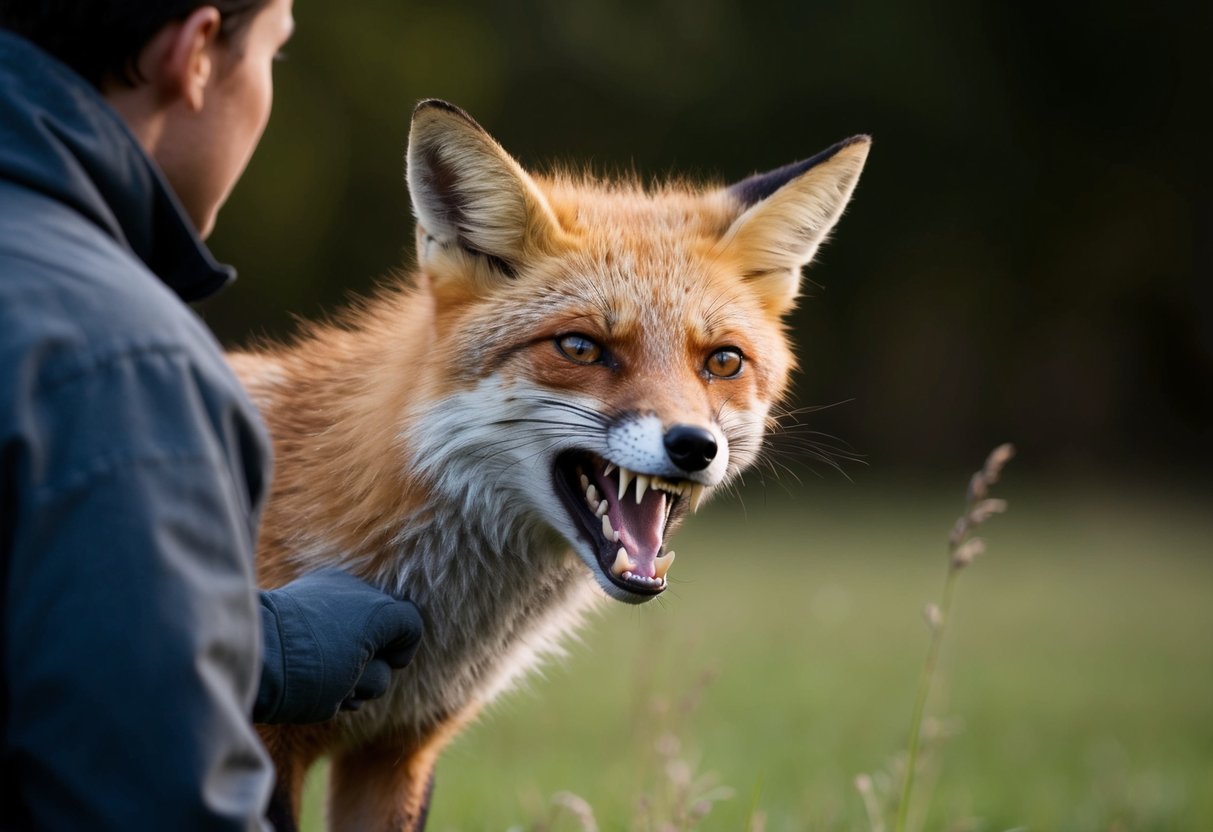
Understanding the Fox Bite Mark in Forensic Contexts
In forensic investigations, identifying a fox bite mark involves analyzing specific dental metrics, such as an intercanine distance typically ranging from 17mm to 25mm, and recognizing distinct "V-shaped" puncture patterns. These marks...
In forensic investigations, identifying a fox bite mark involves analyzing specific dental metrics, such as an intercanine distance typically ranging from 17mm to 25mm, and recognizing distinct "V-shaped" puncture patterns. These marks are most frequently encountered during post-mortem scavenging assessments, where distinguishing them from domestic dog or badger activity is critical for reconstructing the taphonomic history of remains.
Contents
The intersection of wildlife biology and forensic science has become increasingly relevant as urban sprawl brings humans and scavengers into closer proximity. In 2026, forensic odontologists and taphonomists rely on highly specific morphological markers to differentiate the "signature" of a fox from other medium-sized carnivores. Understanding the fox bite mark is not merely about identifying the species; it is about determining the sequence of events, identifying post-mortem artifacts, and occasionally addressing human-wildlife conflict cases.
Dental Anatomy and Morphology of the Red Fox
To understand the impressions left by a fox, one must first master the dental architecture of the species most commonly involved in forensic cases: the Red Fox (Vulpes vulpes). The red fox possesses a typical canid dental formula: 3.1.4.2 / 3.1.4.3, totaling 42 teeth. However, it is the morphology of the anterior teeth that carries the most forensic weight.
The Canines
The canines are the primary tools for puncturing and gripping. In foxes, these teeth are notably slender, elongated, and slightly curved. Unlike the robust, conical canines of a domestic dog or the powerful teeth of a badger, fox canines produce deep, narrow punctures. In a forensic context, these are often the most visible marks left on soft tissue and bone.
The Incisors and Carnassials
While canines create the primary puncture marks, the incisors are responsible for "nibbling" or stripping soft tissue from bone. The carnassial pair (the upper fourth premolar and lower first molar) is designed for shearing. When a fox scavenges a body, the carnassials leave distinct shearing or "scoring" marks on the cortical surface of the bone, which are often thinner and more delicate than those produced by larger canids.
Metrics of the Fox Bite: Intercanine Distance
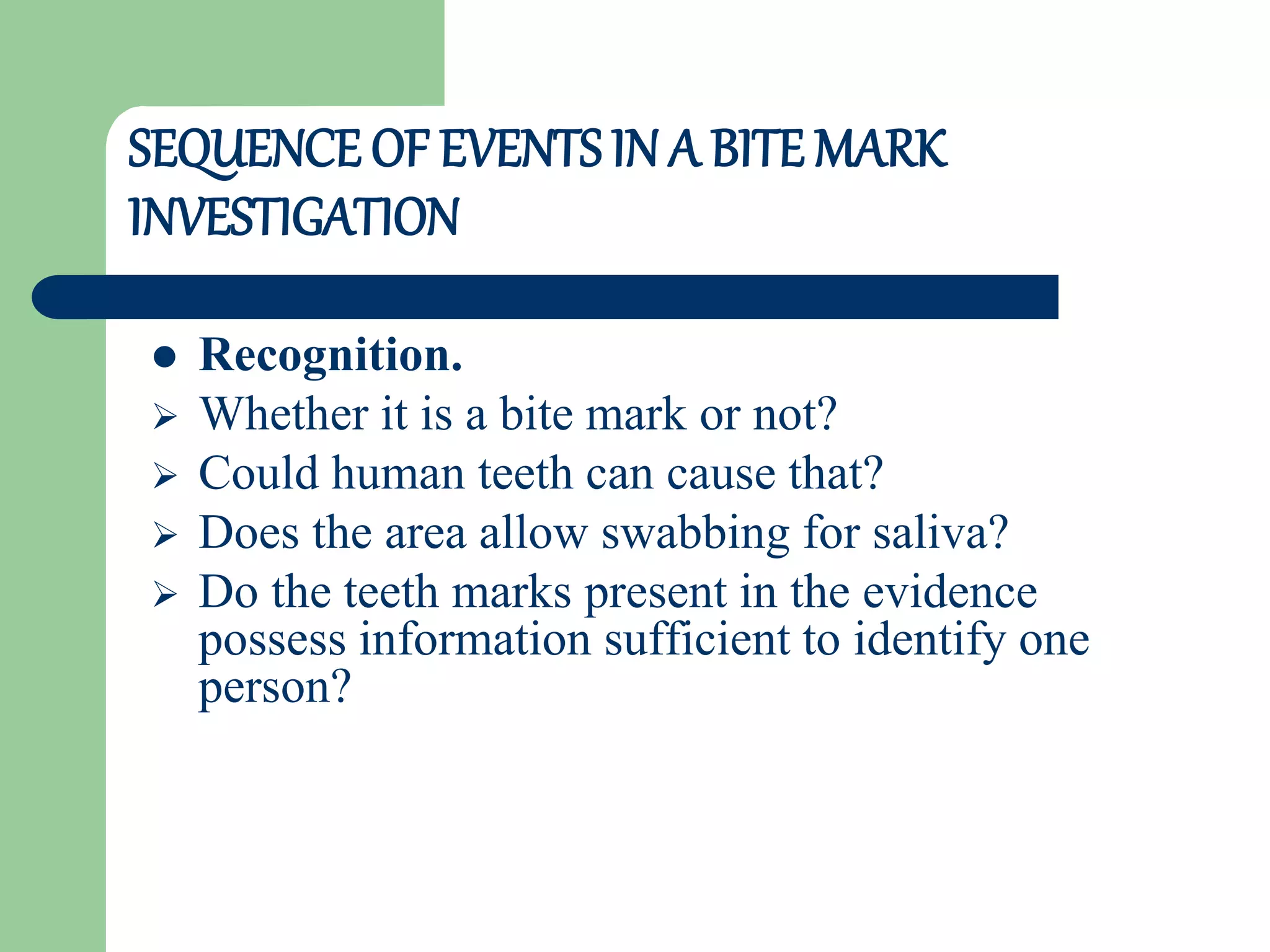
One of the primary diagnostic tools in forensic odontology is the measurement of the intercanine distance—the span between the tips of the maxillary (upper) or mandibular (lower) canines. This measurement acts as a biological "caliper" that helps investigators narrow down the list of potential scavengers.
In the red fox, the intercanine distance typically falls within the following ranges:
- Maxillary (Upper): 18 mm to 25 mm
- Mandibular (Lower): 16 mm to 22 mm
These measurements are significantly smaller than those of most medium-to-large domestic dogs, which generally exceed 30 mm. Conversely, they are larger than those of a domestic cat, which usually measures between 10 mm and 16 mm. When an investigator finds a set of four puncture marks (two upper, two lower) on a victim’s skin or a discarded garment, the intercanine breadth is the first data point used to exclude or include the fox as a contributor.
Distinguishing Fox Bite Marks from Other Species
Differential diagnosis is the cornerstone of forensic wildlife analysis. Misidentifying a fox bite for a domestic dog bite can lead to erroneous legal conclusions, especially in cases where a pet owner might be held liable for injuries.
| Feature | Red Fox (Vulpes vulpes) | Domestic Dog (Canis familiaris) | European Badger (Meles meles) |
|---|---|---|---|
| Puncture Shape | Narrow, oval, deep | Broad, circular, often bruised | Deep, massive, "crushing" |
| Intercanine Distance | 17–25 mm | Highly variable (usually >30 mm) | 22–30 mm (very robust) |
| Bone Damage | Pitting and light scoring | Heavy crushing and furrowing | Massive fracturing/splintering |
| Tissue Loss | Focused on small joints/face | Can involve large muscle masses | Significant "hauling" of tissue |
| Tooth Drag | Thin, linear "scores" | Wide, deep grooves | Broad and irregular |
Fox vs. Domestic Dog
Domestic dogs often leave "ragged" wounds due to a combination of biting and shaking. Their teeth are thicker, leading to more significant crushing of the underlying bone or subcutaneous tissue. A fox, by contrast, uses a more "surgical" approach. Because their jaw pressure is lower than that of larger canids, they rely on sharp, piercing punctures and localized nibbling.
Fox vs. Badger
In regions like the UK and Europe, badgers are frequent scavengers. Badger bites are far more destructive. A badger's skull is built for massive bite force, and their teeth often leave "crushing" fractures in the ribs or long bones that a fox simply cannot produce. Fox marks on bone are generally limited to "pitting" (small indentations) and "scoring" (linear scratches).
Taphonomic Impact: Scavenging Patterns
In many forensic cases, the fox is not a predator but a scavenger. Recognizing the specific patterns of fox scavenging is essential for distinguishing post-mortem damage from perimortem trauma (injuries occurring at or near the time of death).
Sequence of Consumption
Foxes typically target the "soft" areas of the body first. Forensic surveys indicate that scavenging usually begins with the face (lips, nose, and eyes) and the extremities (fingers and toes). The sharp canines are used to unzip the skin, while the incisors strip the tissue. If a body is found with missing phalanges and narrow puncture marks on the distal ends of the radius or ulna, fox activity is a primary suspect.
"V-Shaped" Bone Damage
When a fox gnaws on the ends of long bones (epiphyses), they often leave V-shaped notches. Because their jaw gape is limited compared to a wolf or a large dog, they cannot easily crush the shaft (diaphysis) of a femur or humerus. Instead, they focus on the softer, cancellous bone at the joints. The resulting damage appears as a series of neat, small punctures and scalloped edges along the bone margin.
Displacement of Remains
Foxes are known for "caching" behavior. They may remove small body parts—such as hands, feet, or even the mandible—and bury them or hide them in nearby brush for later consumption. This can lead to a "scatter" pattern at a crime scene. An investigator who understands fox behavior will look for "drag marks" or "linear dispersal" within a 50-to-100-meter radius of the primary recovery site.
Methodology for Forensic Analysis
Analyzing a suspected fox bite requires a systematic approach to ensure the evidence is admissible in a legal context.
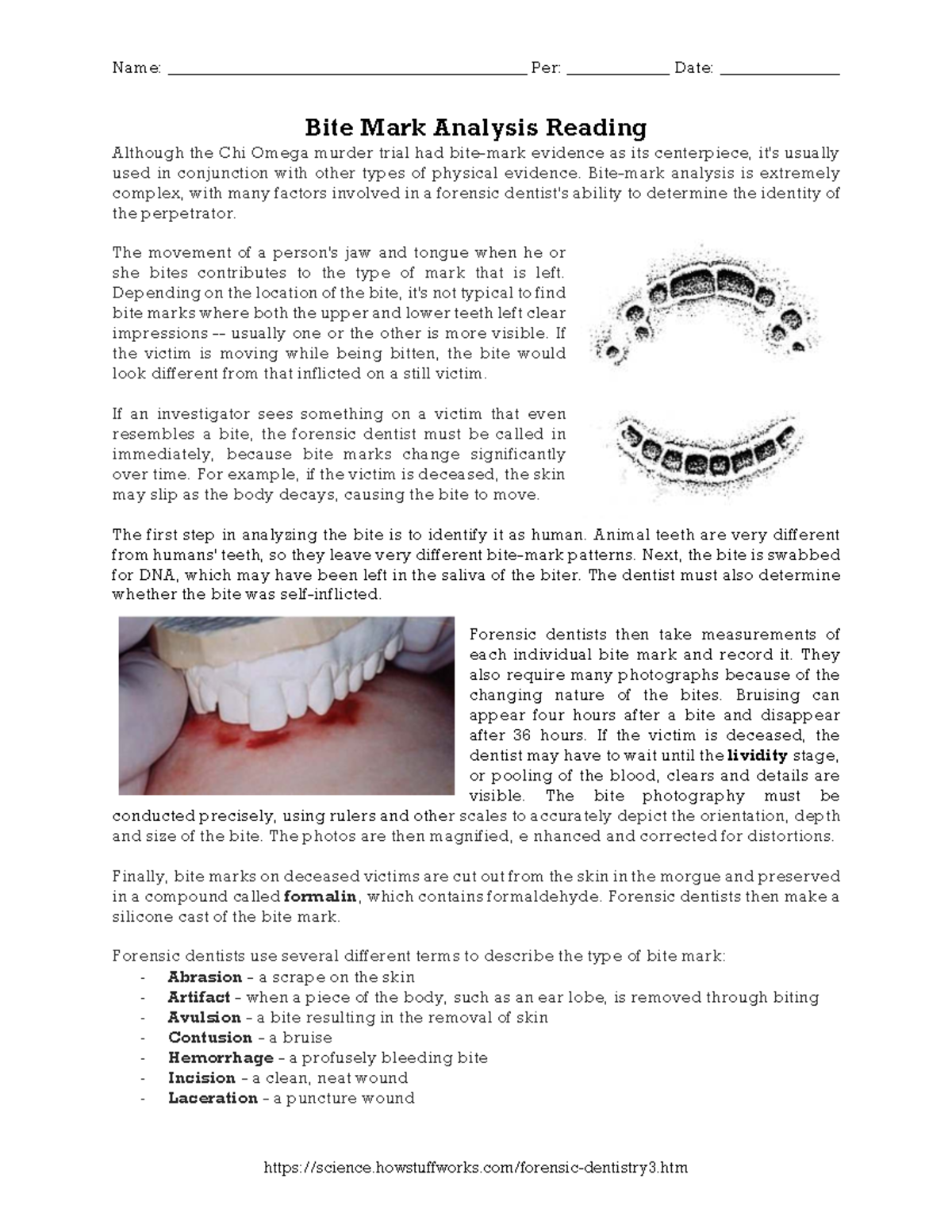
- Photography and Scaling: All bite marks must be photographed with a forensic scale (such as an ABFO No. 2 scale) placed in the same plane as the injury. This allows for accurate metric analysis of the intercanine distance.
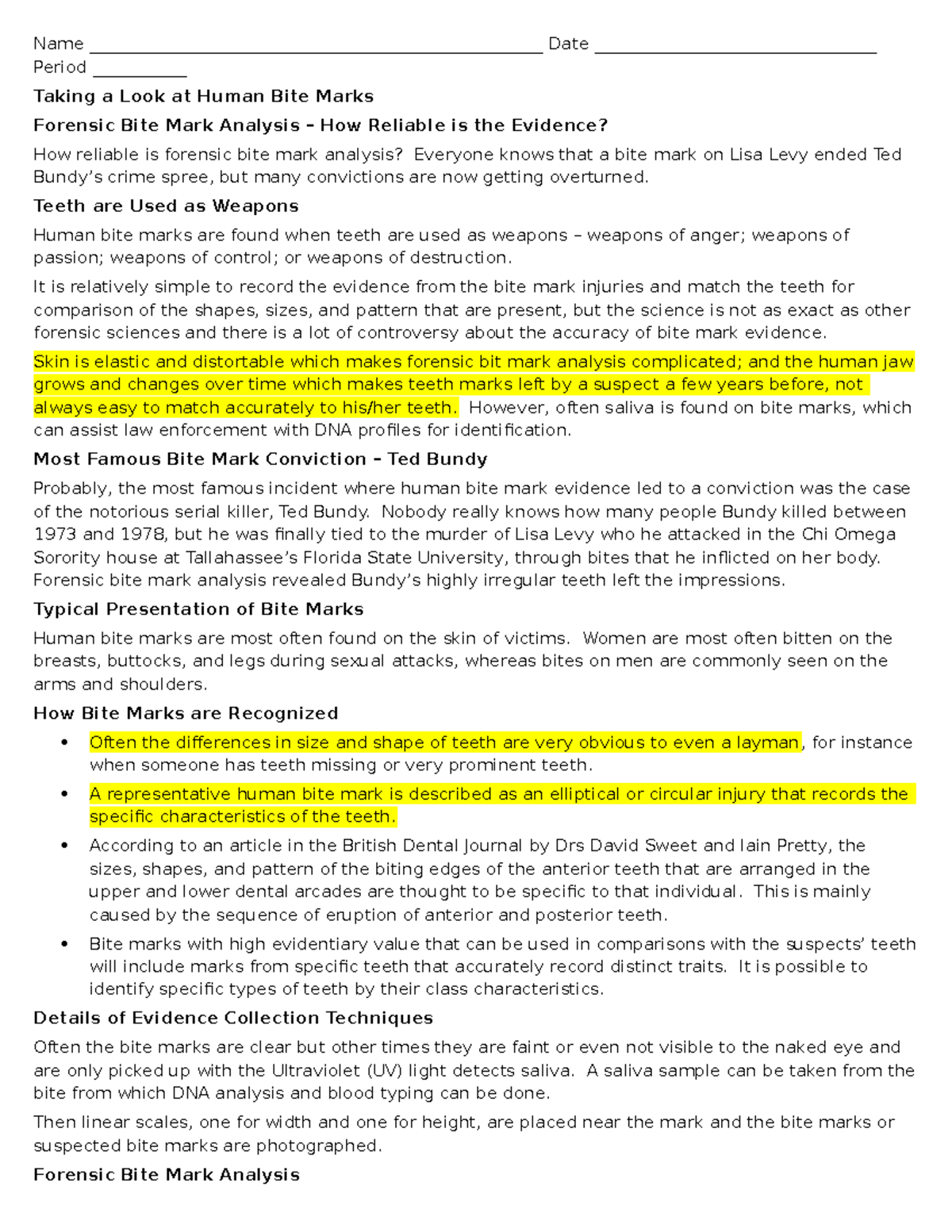
- Swabbing for DNA: Even if the morphology looks like a fox, DNA verification is the gold standard. Swabs should be taken from the "moist" areas of the bite mark to capture salivary amylase and epithelial cells from the animal. In 2026, rapid-sequence DNA kits can confirm the species (Vulpes vulpes) within hours.
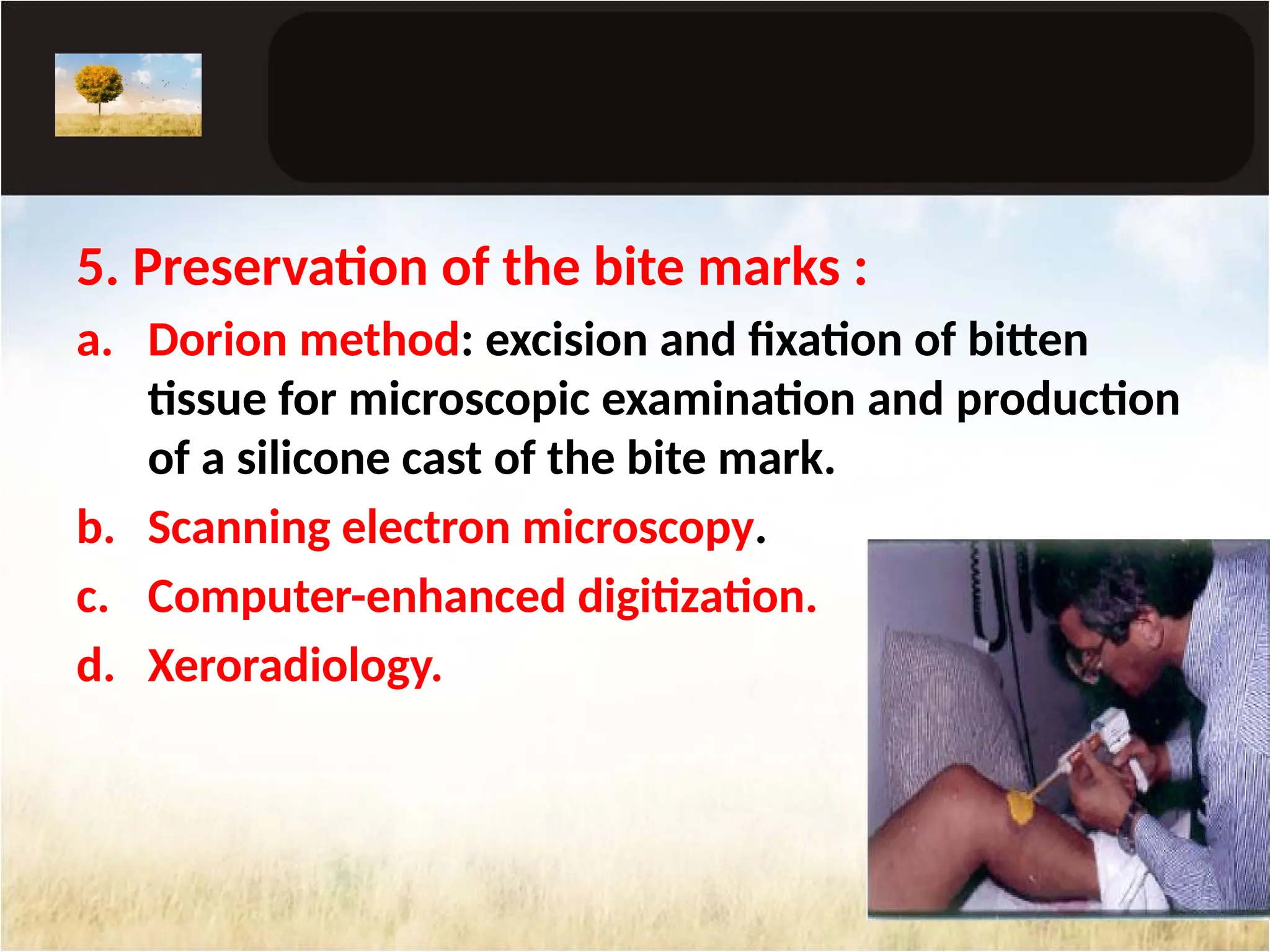
- Casting: If the bite marks are in a stable medium (such as deep soft tissue or even soil near the body), dental stone or silicone-based casting materials (like PVS) can create a three-dimensional replica of the dentition.
- Metric Comparison: Using digital software, the recovered bite pattern is overlaid with known fox dental templates. Analysts look for the "arch alignment"—the specific curvature of the tooth row.
Forensic Limitations and Challenges
While the intercanine distance is a strong indicator, it is not infallible. There is an overlap between the measurements of large foxes and very small dog breeds (such as Terriers). Furthermore, skin is an elastic medium. A bite mark can "shrink" or "stretch" depending on the body's state of decomposition, the angle of the bite, and the underlying muscle tension at the time of the incident.
Investigators must also be cautious of "superimposed" bites. In rural or wooded areas, a body may be scavenged by multiple species (e.g., a fox, then a crow, then a rodent). Deciphering these layered taphonomic signatures requires an experienced forensic anthropologist or odontologist who can distinguish the "pitting" of a canid from the "parallel grooves" left by the incisors of a rodent.
Legal and Investigative Significance
In criminal law, identifying fox activity can provide a "timeline of exposure." If a body shows no signs of scavenging in an area known for high fox density, it may suggest the body was recently deposited or was previously stored in an environment inaccessible to wildlife.
Furthermore, identifying a mark as a fox bite can clear a suspect. If a victim’s injuries were initially thought to be caused by a human-controlled weapon or a specific pet, proving the marks are post-mortem fox scavenging can change the entire direction of a homicide investigation.
Frequently Asked Questions
Can a fox bite break human bone?
Foxes generally do not have the bite force to fracture the shafts of large human bones like the femur or tibia. However, they can easily damage smaller bones such as ribs, vertebrae, and the bones of the hands and feet. They typically produce "pitting" and "scoring" rather than "crushing" fractures.
How do I tell a fox bite from a domestic cat bite?
The primary difference is size. A domestic cat has a much narrower intercanine distance (usually 10–16 mm) and much smaller, needle-like punctures. Fox punctures are deeper and the distance between the teeth is wider (17–25 mm).
Is DNA recovery possible from a fox bite on a decomposed body?
Yes, provided the area has not been heavily washed by rain or further contaminated. Forensic technicians swab the margins of the bite mark. Even if the body is decomposed, the animal's saliva often contains enough DNA for species identification using mitochondrial DNA analysis.
Do foxes attack living humans, leaving these marks?
While rare, "antemortem" (before death) fox bites do occur, usually in cases of rabid animals or "habituated" urban foxes. Antemortem bites are characterized by hemorrhaging (bruising) and vital reaction (inflammation) around the wound, whereas post-mortem scavenging marks show no signs of blood flow or healing.
What is the "puncture-to-pit" ratio in fox scavenging?
Foxes tend to produce a higher ratio of punctures (holes that penetrate the bone) to pits (indentations that do not penetrate) compared to larger canids. Because their teeth are slender, they penetrate cortical bone more easily than the blunt teeth of an older domestic dog.
Recommendations for Field Investigators
When encountering suspected wildlife interference at a scene, investigators should prioritize the preservation of the wound margins. Avoid cleaning the area until it has been swabbed for biological evidence. Documentation should include not just the bite itself, but the surrounding environment—look for fox scat, tracks, or "denning" behavior nearby.
For those requiring a definitive species determination, consulting a wildlife forensic specialist or a member of the American Academy of Forensic Sciences (AAFS) is recommended. Utilizing the 2026 digital databases for carnivore dentition can provide a statistical probability of species match, which is often required for expert witness testimony in legal proceedings.
Image Gallery